Canthaxanthin
Canthaxanthin is a ketocarotenoid, chemically beta,beta-carotene-4,4-dione, with the molecular formula C40H52O2 and a molar mass of 564.8 g/mol. It occurs naturally in some mushrooms, crustaceans and fish, and in the plumage of flamingos and other birds, but the commercial material is made by chemical synthesis. The two keto groups on the terminal rings shift its absorption to longer wavelengths than beta-carotene, giving an orange red to red shade rather than a yellow orange.
Unlike beta-carotene it has no provitamin A activity, so its role is purely as a pigment. Its principal industrial use is in animal feed, where it deposits in tissue: in poultry rations it deepens egg yolk and skin colour, and in salmonid and shrimp feed it contributes to flesh and shell pigmentation, usually alongside astaxanthin. Its use as a direct food colour is much narrower and is restricted in several major markets.
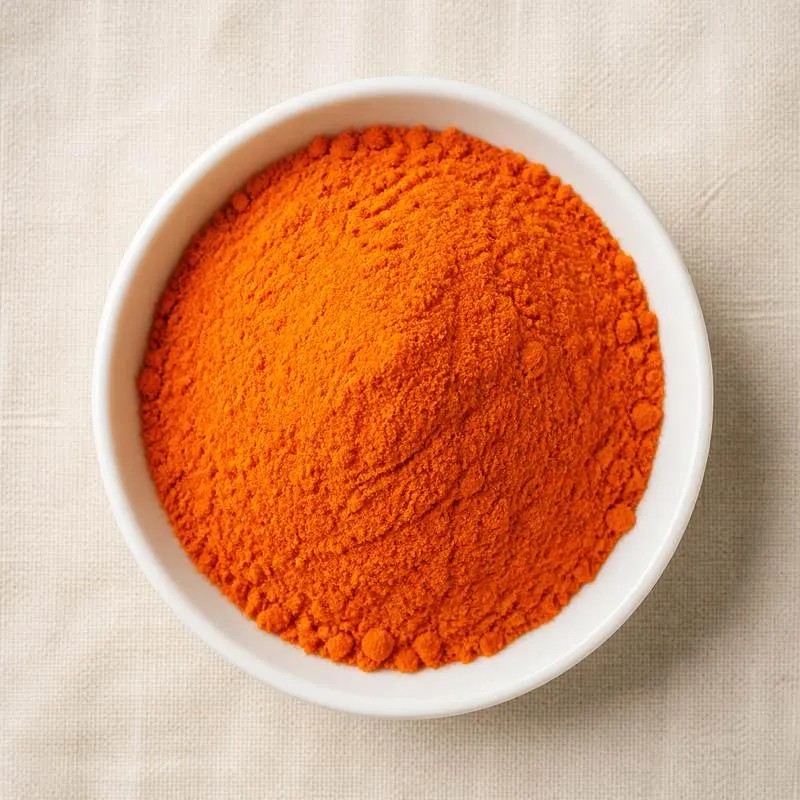
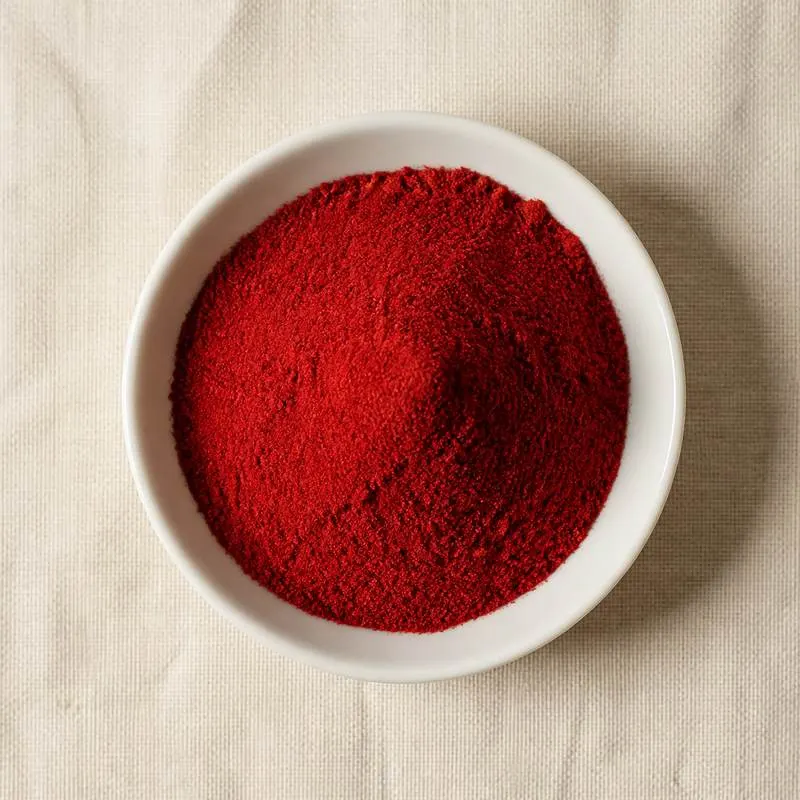
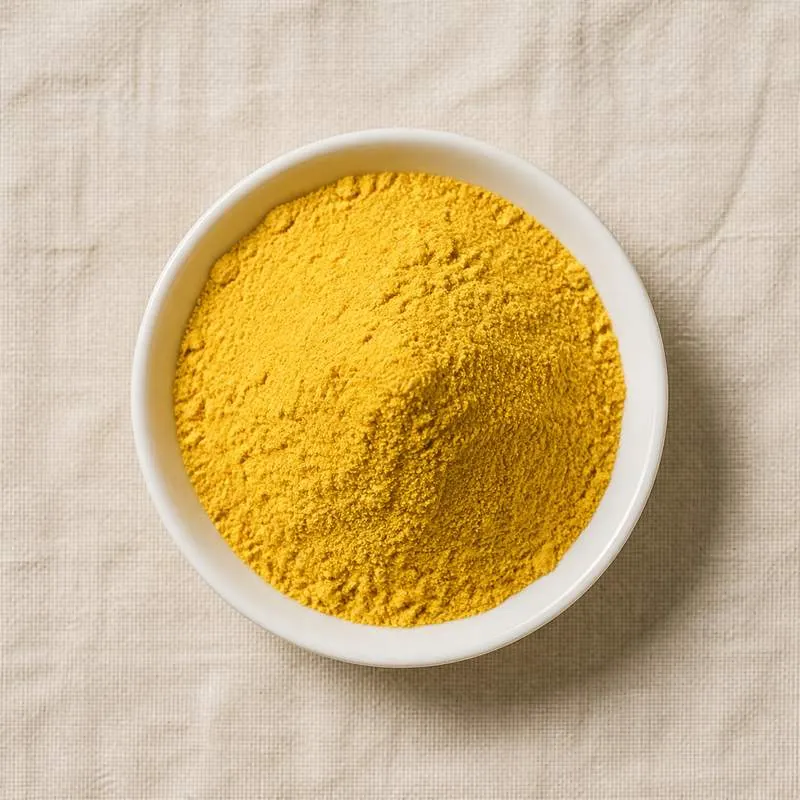
The pure substance is a dark violet to brown red crystalline powder with a metallic sheen. It is practically insoluble in water, sparingly soluble in oil and unstable to light, oxygen and heat in isolation, so it is almost never handled neat. Trade forms are cold water dispersible beadlets, oil suspensions and emulsions in which the crystal is finely divided and protected by an antioxidant and a matrix.
We source bulk Canthaxanthin from top China manufacturers for our partners. The manufacturer is in Guangdong. A smaller requirement can ship in a combined container with other ingredients.
Please send the grade you need, the volume and your destination port, and we will come back with a solution and a price.
or call +86-21-6858 0751
- Function
- Colorant
Specifications
| Item | Specification |
|---|---|
| Appearance | Dark violet to brown red crystalline powder |
| Assay, total colouring matter as canthaxanthin | 96.0% minimum |
| All-trans Isomer | 96% minimum of total canthaxanthin |
| Identification | Absorption maximum at 468 to 472 nm in cyclohexane |
| Melting Point | Approximately 210 degrees Celsius with decomposition |
| Subsidiary Colouring Matters | 5.0% maximum |
| Loss on Drying | 0.5% maximum |
| Sulphated Ash | 0.2% maximum |
| Residual Solvent, dichloromethane | 600 mg/kg maximum |
| Lead | 2 mg/kg maximum |
| Arsenic | 3 mg/kg maximum |
| Mercury | 1 mg/kg maximum |
| Cadmium | 1 mg/kg maximum |
| Total Plate Count | 1000 cfu/g maximum |
Common Markets Grades
Canthaxanthin is traded almost entirely as formulated preparations rather than as the crystal. Cold water dispersible beadlets at 10 percent canthaxanthin, built on a gelatin or modified starch matrix with sucrose or starch as a filler and stabilised with ethoxyquin or tocopherols, are the standard feed grade and are dosed directly into premix. Beadlets at 1 to 5 percent, on food acceptable matrices, are made for the limited food and pharmaceutical applications.
Oil suspensions at 5 to 20 percent are used where the base is fatty, and liquid emulsions are made for wet feed and for liquid dosing systems. Grades are further distinguished by the antioxidant system, which determines shelf life and which must match the destination market, since some stabilisers permitted in feed are not permitted in food. Particle size in the beadlet decides both dispersion and shade, and specifications state it alongside assay. Crystalline canthaxanthin at 96 percent or better is sold only as a raw material for downstream formulation.
Applications
- Layer hen feed, deepening egg yolk colour to the shade expected in a given market
- Broiler feed, colouring skin and shanks where a yellow to orange carcass is preferred
- Salmon and trout feed, contributing to flesh pigmentation alongside astaxanthin
- Shrimp and prawn feed, supporting shell colour development
- Ornamental fish and koi feed for colour enhancement
- Sausage and meat products in the narrow food categories where its use is authorised
- Pharmaceutical tablet coatings and capsule shells requiring an orange red pigment
- Blending component with beta-carotene and apocarotenal to build orange to red shades in feed premixes
- Pet food, where it reinforces the colour of extruded kibble
- Analytical and reference use as a carotenoid standard in feed and food testing
China Manufacturers of Canthaxanthin
Top Canthaxanthin manufacturers in China.
Company names and logos are the property of the manufacturers themselves. They are listed here because our own directory records them as producing this ingredient. A listing is not an endorsement by them, and we do not represent them or speak on their behalf.
Regulatory Status
In the United States, 21 CFR 73.75 lists canthaxanthin as a colour additive exempt from certification and defines conditions of use that include a quantitative limit on its use in food and provision for its use in broiler chicken feed and in salmonid fish feed to colour the resulting tissue. The listing also carries a labelling requirement for the additive itself. Because the food limit is specific and low, the intended use should be checked against the regulation before formulating.
In the European Union canthaxanthin is the food colour E 161g, authorised under Regulation (EC) No 1333/2008 but restricted to a very small number of food categories, in practice a single sausage type; identity and purity criteria are set in Regulation (EU) No 231/2012. The feed additive framework separately authorises it for poultry, salmon, trout and ornamental fish, with maximum contents set in those authorisations, and the European Food Safety Authority has issued opinions on both uses. JECFA has evaluated canthaxanthin and adopted specifications, and provisions appear in the Codex General Standard for Food Additives.
Manufacturing Process
Canthaxanthin is made by total chemical synthesis using the same carotenoid building block chemistry as industrial beta-carotene. A C15 phosphonium or phosphonate synthon bearing the oxidised terminal ring is prepared from a cyclic ketone intermediate, and two equivalents are coupled to a symmetrical C10 dialdehyde in a Wittig or Horner Wadsworth Emmons reaction, which builds the full C40 polyene chain in one condensation. The crude product is a mixture of cis and trans isomers.
The reaction mass is isomerised thermally in solution to drive the polyene to the all-trans form, which is the thermodynamically favoured and commercially specified isomer, then crystallised from a solvent such as dichloromethane and methanol. The crystals are washed, dried under vacuum and milled under an inert atmosphere. Formulation follows immediately: the milled crystal is dispersed in a warm solution of gelatin or modified starch with an antioxidant, homogenised to a fine and controlled droplet size, and spray dried or spray granulated onto a starch bed to give beadlets. The finished preparation is screened, packed under nitrogen and protected from light.