Cassia Oil
Cassia oil is the essential oil obtained by steam distillation of the bark, leaves and young twigs of Cinnamomum cassia, and it is the most concentrated commercial form of cinnamon aroma. Its composition is dominated by cinnamaldehyde, typically between seventy five and ninety percent, with cinnamyl acetate, coumarin, benzaldehyde and small amounts of eugenol making up most of the remainder.
That single dominant constituent explains its behaviour. Cinnamaldehyde is a reactive aldehyde, so the oil oxidises to cinnamic acid on exposure to air, darkens and thickens with age, and reacts with amines and with some packaging materials. It is also a strong contact sensitiser, so the neat oil is handled with skin and eye protection even though the finished food carries only traces. As an antimicrobial it is active against a broad range of bacteria and moulds, which is the basis of its use beyond flavour.
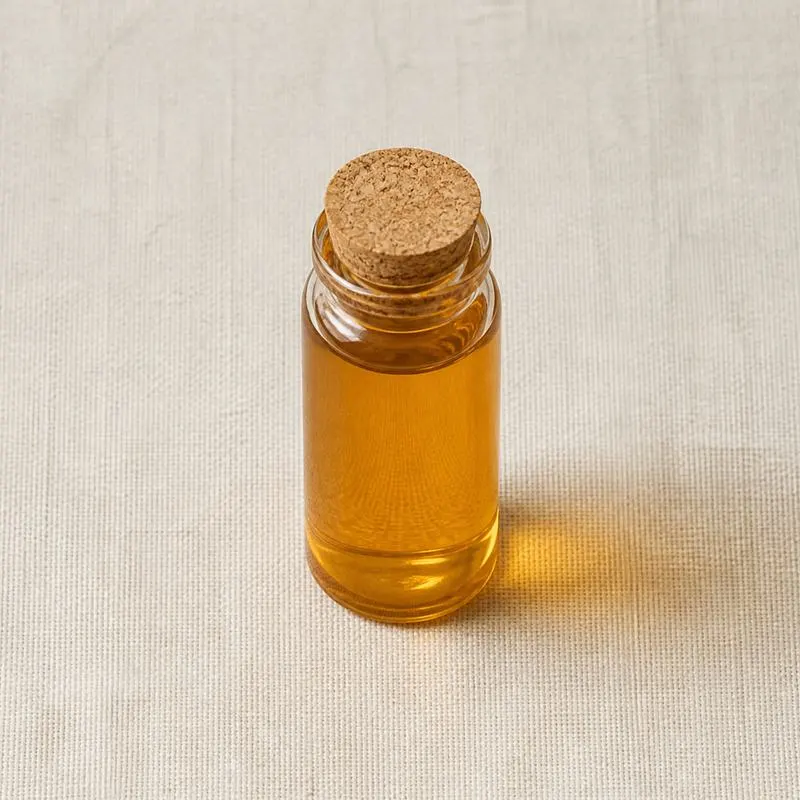
The oil is a yellowish to reddish brown liquid, more viscous and denser than most essential oils, with a specific gravity above one so that it sinks in water. It is practically insoluble in water and soluble in ethanol, vegetable oils and propylene glycol. Because it is potent and can be irritant at high concentration, it is almost always diluted, emulsified or encapsulated before it reaches a formulation.
We source bulk Cassia Oil from top China manufacturers for our partners. The manufacturer is in Hunan. A smaller requirement can ship in a combined container with other ingredients.
Please send the grade you need, the volume and your destination port, and we will come back with a solution and a price.
or call +86-21-6858 0751
- Function
- Flavours and Aromas
Specifications
| Item | Specification |
|---|---|
| Appearance | Clear yellowish to reddish brown mobile liquid |
| Odour | Characteristic warm sweet spicy cinnamon |
| Total aldehydes as cinnamaldehyde | 80.0 percent minimum |
| Identification by gas chromatography | Profile conforms to reference standard |
| Coumarin | To declared value for the grade |
| Specific gravity at 25 degrees Celsius | 1.045 to 1.070 |
| Refractive index at 20 degrees Celsius | 1.600 to 1.614 |
| Optical rotation at 20 degrees Celsius | Minus 1 to plus 1 degree |
| Solubility in 70 percent ethanol | Clear in 3 volumes |
| Acid value | 10 maximum |
| Water content | 0.5 percent maximum |
| Heavy metals as lead | 10 mg per kg maximum |
| Lead | 1 mg per kg maximum |
| Arsenic | 1 mg per kg maximum |
Common Markets Grades
The primary specification is cinnamaldehyde content, and lots are traded on an assay determined by gas chromatography, commonly declared as a minimum of seventy five, eighty or ninety percent. Origin is the second axis, with Chinese, Vietnamese and Indonesian oils each carrying a recognised profile, and plant part is the third, since bark oil, leaf and twig oil and whole plant oil differ in aldehyde level and in the amount of coumarin and benzaldehyde they carry.
Beyond the natural oil, redistilled and rectified grades have been vacuum fractionated to raise the aldehyde assay and remove colour and heavy residues, giving a paler and more stable product. Terpeneless and decolourised grades are produced for applications where colour is unacceptable. The market also carries emulsions, water dispersible preparations solubilised with polysorbate, spray dried powders on maltodextrin or modified starch, and cyclodextrin complexes, all of which exist because the neat oil disperses poorly and oxidises readily. Feed grade oil is traded separately at a lower assay, and synthetic cinnamaldehyde competes with the oil where a natural label is not required.
Applications
- Confectionery, particularly hot cinnamon sweets, chewing gum and lozenges, one of the largest flavour outlets
- Beverages, in cola style flavourings, mulled drinks and spiced teas, using a solubilised or emulsified form
- Bakery, where an encapsulated grade survives the oven and avoids inhibiting yeast
- Savoury seasoning blends and five spice compositions, replacing part of the ground bark
- Sauces and braising bases in Chinese cooking, giving the cinnamon note without particulate spice
- Meat and processed food preservation, relying on the antimicrobial activity of cinnamaldehyde
- Active packaging and edible coatings, where the vapour phase extends the shelf life of wrapped product
- Animal feed additives, used for palatability and gut health in poultry and swine
- Oral care products, toothpaste and mouthwash
- Fragrance and household product perfumery, a significant non food outlet
Brands Using Cassia Oil
Widely-distributed consumer products that list Cassia Oil on the ingredient label.
- doTERRACassia Essential Oil ↗Single essential oil steam distilled from Cinnamomum cassia bark, sold for aromatic and topical use.Label verified 2026-08-31
- Edens GardenCassia Essential Oil ↗Cassia essential oil sold as a 10 ml and 30 ml single oil, GC/MS tested, described as a spicy relative of cinnamon.Label verified 2026-08-31
Brand names, product names and logos are the property of their owners. They appear here as published evidence that the ingredient is used, taken from the brand's own label or website. Their appearance is not an endorsement, and it does not mean the brand buys from us or from any manufacturer listed on this site.
China Manufacturers of Cassia Oil
Top Cassia Oil manufacturers in China.
Company names and logos are the property of the manufacturers themselves. They are listed here because our own directory records them as producing this ingredient. A listing is not an endorsement by them, and we do not represent them or speak on their behalf.
Regulatory Status
In the United States cassia oil is a natural extractive that is generally recognised as safe for its intended use as a flavouring, and cinnamon bark oil and cassia oil appear in the listing of essential oils, oleoresins and natural extractives at 21 CFR 182.20. Cinnamaldehyde itself is a permitted synthetic flavouring substance under 21 CFR 172.515, so both the natural oil and the isolated aldehyde may be used, with the labelling term following the natural and artificial flavour definitions in 21 CFR 101.22.
In the European Union cassia oil is a flavouring preparation under the flavourings regulation and carries no E number. The practical constraint is coumarin, which is naturally present in the oil and is listed among the substances with maximum levels in the annex to that regulation for specified food categories, so the coumarin content of a given oil determines how much of it a formulation can carry. Cinnamaldehyde is an authorised flavouring substance on the Union list. Separately, the oil is a recognised skin sensitiser under chemical classification rules, which governs its packaging, labelling and transport as a substance even though the food application is unaffected. Codex covers the material through its guidelines on the use of flavourings, resting on evaluations by the Joint Expert Committee on Food Additives.
Manufacturing Process
Bark, leaves and young twigs are collected from coppiced cassia trees, chopped or coarsely milled to open the tissue, and in many plants soaked in water or lightly fermented for a period before distillation, which is traditional practice and raises the yield of free aldehyde. The charge is loaded into a stainless steel still and steam is passed through it, either as direct steam injection or by boiling water beneath a perforated grid. Volatile constituents are carried over with the steam, condensed in a tube or coil condenser and separated in a Florentine flask, where the cassia oil settles beneath the water rather than floating, because its density exceeds that of water.
Distillation runs for several hours, and the aqueous distillate is cohobated, that is returned to the still, so that the dissolved aldehyde it carries is recovered rather than lost. The crude oil is separated, dried over anhydrous salt or by settling, and filtered. Where a higher assay or a paler colour is required, the oil is rectified by vacuum fractional distillation, which strips the light benzaldehyde fraction and the heavy resinous residue and raises the cinnamaldehyde content. Finished oil is analysed by gas chromatography for aldehyde assay and profile, checked for specific gravity and refractive index, and filled under nitrogen into lined steel drums or amber glass, since air, light and iron all degrade it.