Benzaldehyde
Benzaldehyde is the simplest aromatic aldehyde, formula C7H6O and CAS number 100-52-7, consisting of a benzene ring bearing a single formyl group. It is the substance responsible for the odour of bitter almond and is one of the highest volume flavour chemicals in world trade.
Functionally it is the character impact compound for almond, cherry and marzipan, and it also carries the nutty, kernel like facet of apricot, peach and plum profiles. Its odour threshold is low but not extreme, so it is typically used at parts per million in finished food rather than at trace level. Above its optimum it turns sharp and medicinal.
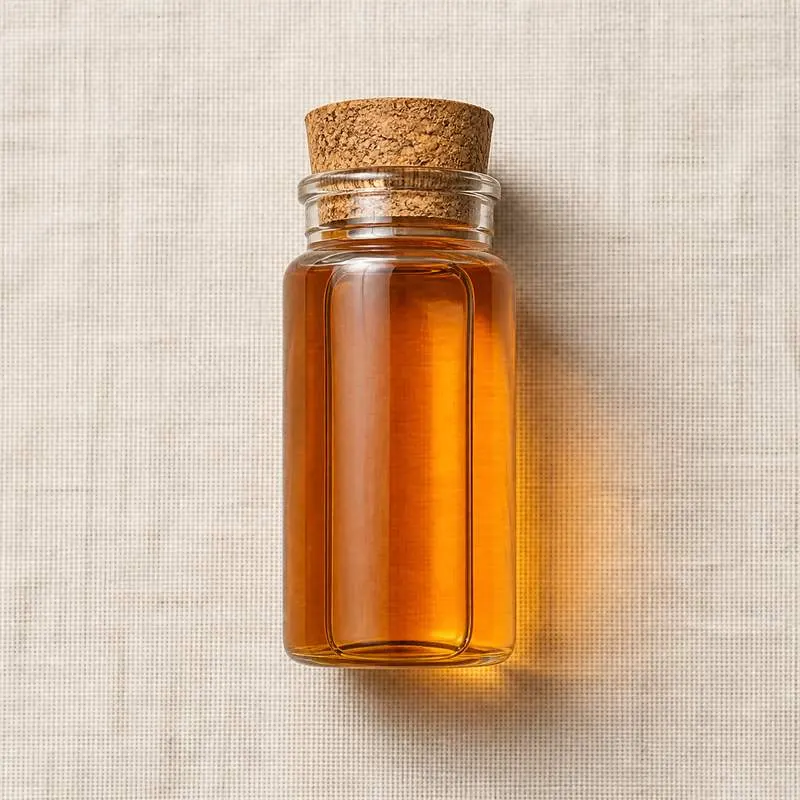
The commercial product is a clear colourless to pale yellow mobile liquid with a boiling point near 179 degrees Celsius and a density around 1.04. It is only slightly soluble in water, roughly 6 grams per litre, and is miscible with ethanol, propylene glycol, triacetin and edible oils. The aldehyde group oxidises readily in air to benzoic acid, which appears as white crystals in the drum and dulls the odour, so material is blanketed with nitrogen, kept full, and stored cool and dark.
We source bulk Benzaldehyde from top China manufacturers for our partners. The manufacturer is in Hubei. A smaller requirement can ship in a combined container with other ingredients.
Please send the grade you need, the volume and your destination port, and we will come back with a solution and a price.
or call +86-21-6858 0751
- Function
- Flavours and Aromas
Specifications
| Item | Specification |
|---|---|
| Appearance | Clear colourless to pale yellow liquid, free of suspended crystals |
| Odour | Characteristic bitter almond |
| Assay by GC | 99.0 percent minimum |
| Identification | Infrared and refractive index conform to reference |
| Refractive index at 20 C | 1.544 to 1.546 |
| Specific gravity at 25 C | 1.041 to 1.046 |
| Benzoic acid | 1.0 percent maximum |
| Chlorinated compounds as chlorine | Not more than 0.03 percent |
| Water by Karl Fischer | 0.2 percent maximum |
| Residue on evaporation | 0.05 percent maximum |
| Solubility in ethanol | 1 mL clear in 2 mL of 70 percent ethanol |
| Heavy metals as lead | 10 mg per kg maximum |
| Lead | 2 mg per kg maximum |
| Arsenic | 1 mg per kg maximum |
Common Markets Grades
Benzaldehyde is traded in several distinct grades. Synthetic food grade at 99 percent minimum assay, conforming to Food Chemicals Codex criteria and free of chlorinated residues, is the bulk of the flavour market. Technical grade, produced by the same route but without the chlorine free guarantee, goes to dye, pharmaceutical and agrochemical intermediate use and is not suitable for food.
Natural benzaldehyde is a separate and more costly product, sold under two origins. Material recovered from cassia oil by retro aldol cleavage of cinnamaldehyde carries natural status in most markets, while benzaldehyde obtained from the enzymatic hydrolysis of amygdalin in apricot, peach or bitter almond kernels is sold as natural bitter almond origin and commands the highest price. Natural grades are specified for benzene and hydrocyanic acid content, since the kernel route can carry cyanide through if stripping is incomplete. Ten percent and twenty percent dilutions in propylene glycol or triacetin are stocked for compounding, and spray dried encapsulated powders on maltodextrin or modified starch are used for dry mixes and bakery premixes.
Applications
- Almond and marzipan flavours for baked goods, where it is the single defining aroma chemical of the profile
- Cherry flavours in confectionery, syrups and liqueurs, providing the kernel note that distinguishes cherry from generic red berry
- Stone fruit compounds for apricot, peach and plum, contributing the pit character behind the lactone and ester body
- Amaretto and nut liqueur flavourings, both alcoholic and non alcoholic
- Bakery fillings and creams, usually in encapsulated form so the volatile survives oven bake
- Ice cream and dairy dessert flavours where a nutty almond top note is wanted
- Chewing gum and hard candy, where it holds up through high temperature cooking
- Soap, detergent and household fragrance for almond and cherry accords
- Intermediate for the synthesis of other flavour chemicals including benzyl alcohol, benzalacetone and cinnamaldehyde derivatives
- Analytical reference standard in gas chromatography for almond flavour authenticity work
China Manufacturers of Benzaldehyde
Top Benzaldehyde manufacturers in China.
Company names and logos are the property of the manufacturers themselves. They are listed here because our own directory records them as producing this ingredient. A listing is not an endorsement by them, and we do not represent them or speak on their behalf.
Regulatory Status
In the United States the Food and Drug Administration lists benzaldehyde as a synthetic flavouring substance generally recognised as safe under 21 CFR 182.60, and it carries FEMA GRAS number 2127. Food grade material is expected to meet the Food Chemicals Codex monograph, which sets limits on assay, chlorinated compounds and benzoic acid content.
In the European Union benzaldehyde appears in the Union list of flavouring substances under Regulation 1334/2008 and is permitted for general flavour use under good manufacturing practice. It carries no E number because flavourings sit outside the food additive framework. The Joint FAO and WHO Expert Committee on Food Additives has evaluated benzaldehyde in the group of benzyl derivatives and concluded there is no safety concern at current levels of intake, and the substance appears in the Codex inventory of flavourings. Where natural status is claimed, the material must satisfy the definition of a natural flavouring substance in the relevant jurisdiction, meaning it is obtained from vegetable starting material by physical, enzymatic or microbiological processes.
Manufacturing Process
Most synthetic benzaldehyde is made from toluene by one of two industrial routes. In the chlorination route, toluene is side chain chlorinated to benzal chloride, which is then hydrolysed with water or dilute alkali in the presence of an iron or zinc catalyst to give the aldehyde. This route is high yielding but leaves traces of chlorinated organics, so material destined for food is subjected to additional washing and fractionation and is certified chlorine free. In the direct oxidation route, toluene is oxidised in the vapour or liquid phase with air over a cobalt or manganese catalyst, giving benzaldehyde alongside benzoic acid and unconverted toluene, which are separated and recycled. The direct route avoids chlorine entirely and is favoured for flavour grade output.
Natural benzaldehyde is produced by two other routes. Cassia oil is treated under alkaline aqueous conditions so that cinnamaldehyde undergoes retro aldol cleavage into benzaldehyde and acetaldehyde, and the benzaldehyde is steam distilled off. Alternatively, defatted apricot or bitter almond kernel meal is slurried in water so that the kernel's own emulsin hydrolyses amygdalin into benzaldehyde, glucose and hydrogen cyanide, and the aldehyde is steam distilled and then scrubbed to remove cyanide. All routes finish with fractional vacuum distillation over a reducing agent to strip benzoic acid, followed by filtration, nitrogen blanketing and packing in lined steel drums.