Crude Corn Oil
Crude corn oil is the unrefined triglyceride oil expressed or extracted from maize germ, the embryo fraction that carries almost all of the oil in the kernel. It is an intermediate rather than a finished product: it is dark, cloudy, strongly flavoured and unsuitable for direct food use, and it is traded to refiners who will convert it into refined corn oil.
The fatty acid composition is dominated by linoleic acid at roughly 50 to 60 percent, with oleic acid around 25 to 30 percent and palmitic acid around 11 to 13 percent, giving an oil that is highly unsaturated, liquid at ambient temperature and correspondingly vulnerable to oxidation. Crude corn oil is notable for carrying the highest phytosterol content of the common vegetable oils, along with substantial tocopherols, and these are recovered as valuable co products during refining.
What distinguishes crude from refined oil is everything the refining train removes: phospholipid gums, free fatty acids formed by lipase action in the germ, carotenoid and chlorophyll pigments, waxes that cloud the oil on chilling, and volatile compounds carrying the maize odour. Free fatty acid content is the key traded parameter, since it determines refining loss. A second, distinct article also called crude corn oil is the oil recovered from distillers grains at fuel ethanol plants; it is much higher in free fatty acids and is used for feed and biodiesel rather than for food refining.
We source bulk Crude Corn Oil from top China manufacturers for our partners. The manufacturer is in Heilongjiang. A smaller requirement can ship in a combined container with other ingredients.
Please send the grade you need, the volume and your destination port, and we will come back with a solution and a price.
or call +86-21-6858 0751
- Function
- Texturisers
Specifications
| Item | Specification |
|---|---|
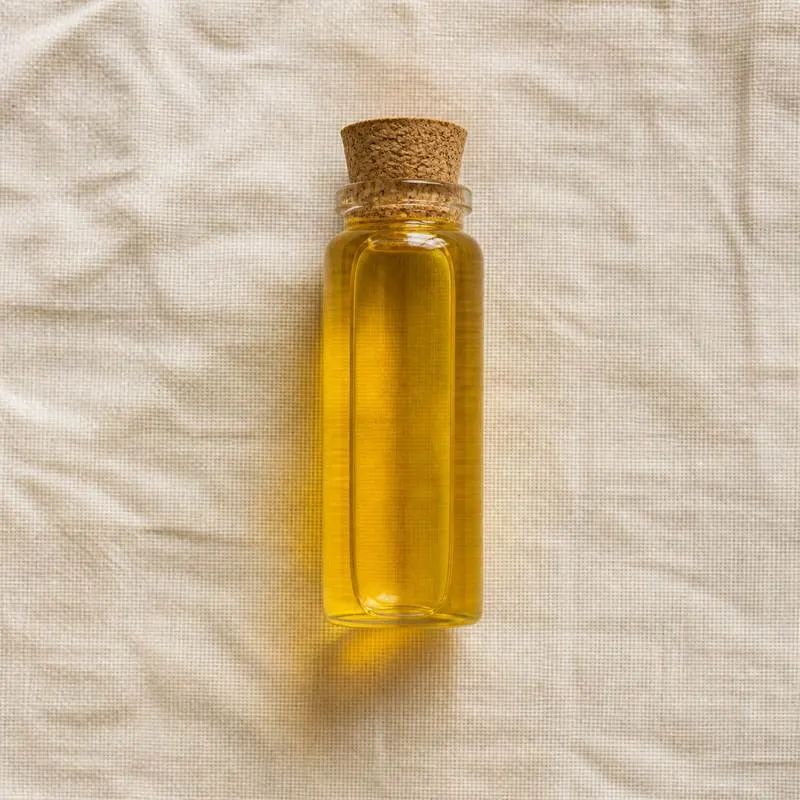
| Appearance | Dark amber to reddish brown oil, cloudy, with suspended fines |
| Odour | Characteristic maize, no burnt or solvent odour |
| Free fatty acids, as oleic | 3.0 percent maximum, wet milled grade |
| Moisture and volatile matter | 0.3 percent maximum |
| Insoluble impurities | 0.2 percent maximum |
| Peroxide value | 5.0 milliequivalents oxygen per kg maximum |
| Unsaponifiable matter | 2.8 percent maximum |
| Phosphorus | 500 mg/kg maximum |
| Iodine value | 103 to 135 |
| Saponification value | 187 to 195 mg KOH per g |
| Refractive index at 40 degrees Celsius | 1.465 to 1.468 |
| Residual hexane | 100 mg/kg maximum |
| Lead | 0.1 mg/kg maximum |
| Arsenic | 0.1 mg/kg maximum |
Common Markets Grades
The primary split is by origin. Wet milled crude corn oil, pressed and extracted from germ separated in a starch plant, is the food refining grade, comparatively low in free fatty acids because the germ is clean and processed quickly. Dry milled crude oil, from germ recovered in a degerminating mill, carries more bran and endosperm contamination and generally higher free fatty acids. Distillers corn oil, recovered by centrifuging thin stillage at an ethanol plant, runs at far higher free fatty acid levels and is sold into the biodiesel and animal feed markets rather than to food refiners.
Within each origin the traded specification depends on free fatty acids, moisture and impurities, unsaponifiable matter, peroxide value and colour, since these determine refining yield and the quality of the finished oil. Expeller pressed crude oil is offered separately from solvent extracted oil where a non solvent extracted declaration matters, and organic and non genetically modified certified crude oil is traded where identity preserved maize is used. Cold pressed corn oil is a separate niche article sold unrefined for direct consumption.
Applications
- Feedstock for edible oil refineries, where it is degummed, neutralised, bleached, winterised and deodorised into refined corn oil
- Source of corn oil lecithin, recovered from the gums removed in the degumming stage
- Source of phytosterols and tocopherols, concentrated in the deodoriser distillate and recovered for nutraceutical and vitamin E manufacture
- Biodiesel and renewable diesel manufacture, particularly the high free fatty acid distillers corn oil
- Animal feed energy supplement, sprayed onto compound feed and pellets to raise energy density
- Oleochemical manufacture, as a source of fatty acids for soaps, surfactants and lubricants
- Industrial drying oils, resins and alkyd paints, which use the high linoleic content
- Pet food coating, applied to extruded kibble for palatability and energy
- Cold pressed unrefined corn oil for direct culinary sale, in the small specialty grade
China Manufacturers of Crude Corn Oil
Top Crude Corn Oil manufacturers in China.

Company names and logos are the property of the manufacturers themselves. They are listed here because our own directory records them as producing this ingredient. A listing is not an endorsement by them, and we do not represent them or speak on their behalf.
Regulatory Status
Crude corn oil is an intermediate destined for refining rather than a finished food, and it is regulated accordingly. In the United States corn oil is a food fat treated as generally recognised as safe in its ordinary uses, and the Food Chemicals Codex carries a specification for corn oil covering identity, free fatty acids, peroxide value and unsaponifiable matter, which applies to the refined product. Facilities producing crude oil for food refining are subject to the preventive controls rules for human food; oil destined for feed or fuel falls under the animal food or fuel frameworks instead. Residual hexane in the extracted oil is controlled through good manufacturing practice, and refining removes it in any case.
In the European Union corn oil is a food regulated under general food law rather than under the additives framework, and it carries no E number. The relevant limits are those in the contaminants legislation, covering polycyclic aromatic hydrocarbons, erucic acid, mineral oil hydrocarbons. For refined oils there are also the glycidyl esters and chloropropanediol esters formed during high temperature deodorisation, which are addressed by refining practice rather than by the crude oil specification. Codex maintains a standard for named vegetable oils that includes maize oil, setting the fatty acid composition ranges and quality criteria used in international trade. Maize is not a declarable allergen.
Manufacturing Process
Maize germ is first separated from the kernel. In a wet milling plant the maize is steeped in warm dilute sulphur dioxide solution, coarsely milled, and the buoyant intact germ is floated off in hydrocyclones, washed and dried. In a dry milling plant the tempered kernel passes through a degerminator and the germ is recovered on aspirators and gravity tables, then dried. Drying matters because oil cannot be efficiently pressed or extracted from a wet feedstock, and because lipase in a damp germ continues to release free fatty acids.
The dried germ is cleaned, cracked and flaked between smooth rollers to rupture the oil bearing cells, then conditioned with steam to lower the oil viscosity and coagulate protein. It is fed to a screw press, which expresses the bulk of the oil mechanically and discharges a cake still holding 10 to 20 percent oil. That cake is flaked or expanded and passed to a countercurrent extractor where hexane dissolves the remaining oil. The hexane and oil miscella is distilled under vacuum to strip the solvent, which is condensed and returned to the extractor, while the extracted meal goes to a desolventiser toaster. The pressed and extracted oils are combined, screened to remove fines, and settled or centrifuged to drop out solids and moisture. The result is crude corn oil, which is checked for free fatty acids, moisture and impurities, and stored under nitrogen or with an antioxidant where it will be held before refining.