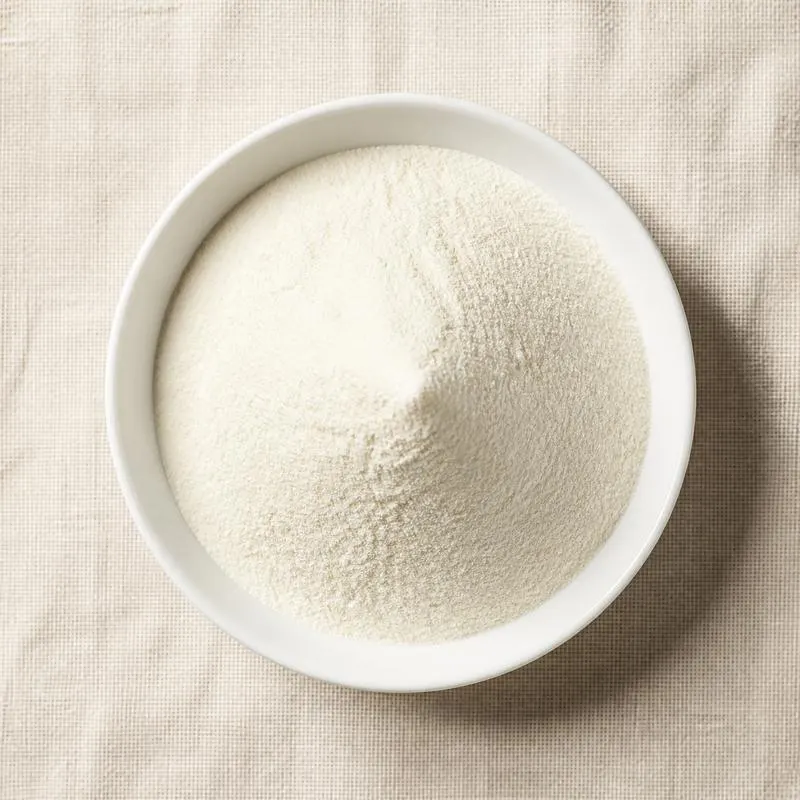
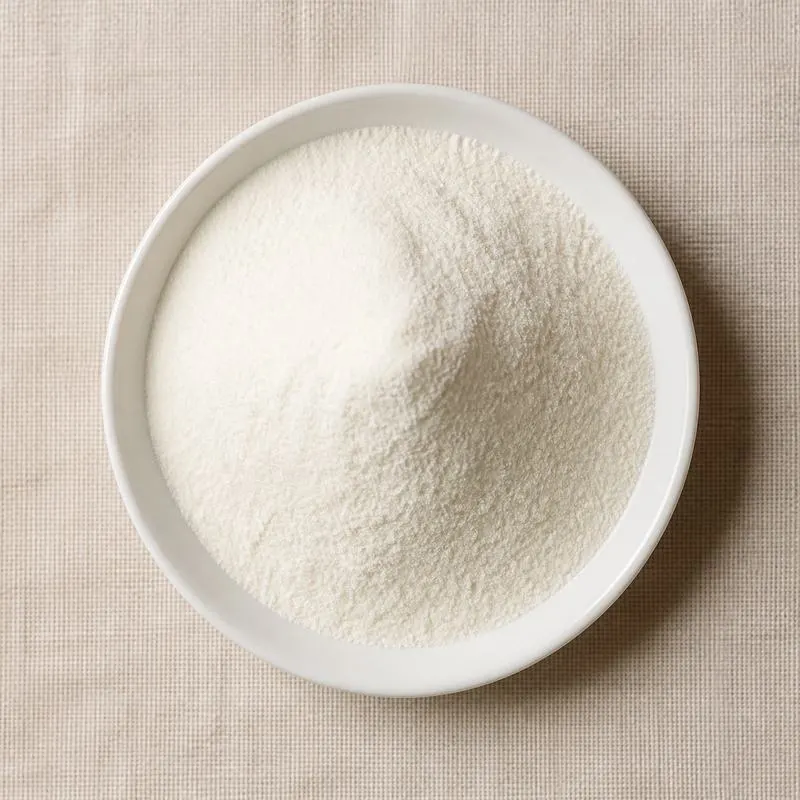
D-Biotin
D-Biotin is vitamin B7, also historically called vitamin H, sold to the food, supplement, pharmaceutical, cosmetic, and feed industries as the D-(+) enantiomer (CAS 58-85-5).
The molecule is a bicyclic compound consisting of a ureido ring fused to a tetrahydrothiophene ring bearing a valeric acid side chain. Only the natural D-(+) isomer is biologically active, and it serves as a covalent cofactor for the four carboxylase enzymes that catalyse carboxyl-group transfer in fatty acid, amino acid, and gluconeogenesis pathways.
We source bulk D-Biotin from top China manufacturers for our partners. The manufacturers are in Jiangxi and Zhejiang. For this ingredient the minimum order is 200 kg and a 20-foot container takes 10 MT, and a smaller requirement can ship in a combined container with other ingredients.
Please send the grade you need, the volume and your destination port, and we will come back with a solution and a price.
or call +86-21-6858 0751
- Minimum order
- 200 kg
- Qty in 20' FCL
- 10 MT
- Packaging
- 25 kg kraft paper bag with PE inner liner
- ISO 9001
- HACCP
- Halal
- Kosher
Specifications
| Item | Specification |
|---|---|
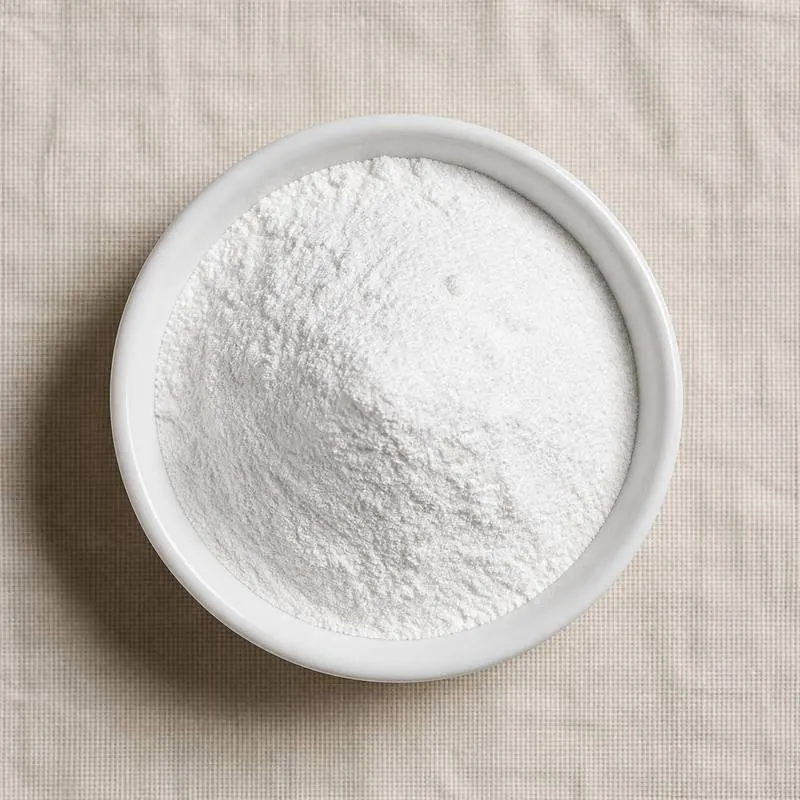
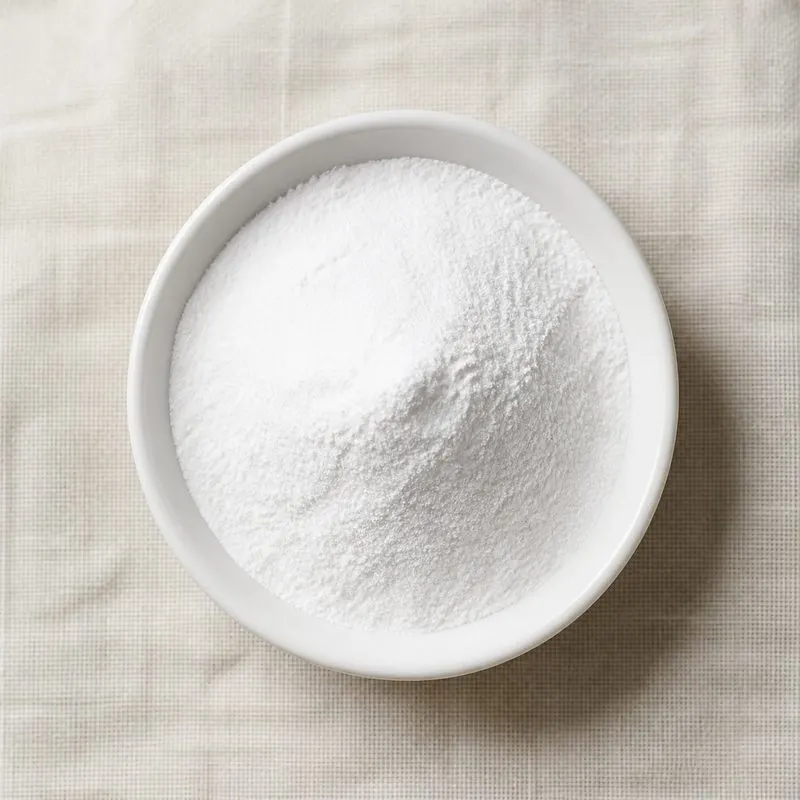
| Appearance | White or almost white, crystalline powder or colourless crystals |
| Purity/Assay (Food Grade) | ≥ 98% |
| Purity/Assay (Feed Grade) | ≥ 95% |
| Moisture/Loss on Drying | ≤ 5% |
| pH | 5.0 - 7.0 |
| Heavy Metals | ≤ 10 ppm |
| Lead | ≤ 2 ppm |
| Arsenic | ≤ 1 ppm |
| Total Plate Count | ≤ 1000 cfu/g |
| Yeast & Mold | ≤ 100 cfu/g |
Common Markets Grades
D-Biotin assays at 97.5 to 100.5 percent under the USP, Ph. Eur., and JP monographs.
The neat crystalline material is intensely active, with the adult recommended intake set at 30 mcg per day. Most users therefore buy 1 percent or 2 percent triturations on dicalcium phosphate, mannitol, or maltodextrin for accurate dosing in tablets, capsules, and premixes.
A 1 percent food-grade trituration is the standard premix for cereal fortification, infant formula, and multivitamin manufacture. A 2 percent trituration is produced for higher-dose hair, skin, and nail supplements where biotin is the headline ingredient at 5 to 10 mg per dose.
Cosmetic-grade D-biotin is produced for shampoo, conditioner, and serum applications, typically at 0.01 to 0.1 percent in the finished formula. Feed-grade D-biotin at 2 percent on a carrier is produced for poultry, swine, dairy, and equine premixes, where hoof and claw quality is the standard performance claim.
Applications
- Hair, skin, and nail supplements at 1 to 10 mg per dose, the dominant standalone B-vitamin category by retail value
- Multivitamin tablets, capsules, gummies, and powders as a B-complex component
- Prenatal vitamins to cover the higher requirement in pregnancy
- Infant formula and follow-on formula to meet Codex compositional standards
- Cereal and bakery fortification in countries with broad B-vitamin enrichment programs
- Clinical and enteral nutrition formulas for hospital and tube feeding
- Shampoo, conditioner, and scalp-treatment cosmetics positioned on hair-strength claims
- Skincare serums and creams marketed on barrier and elasticity support
- Animal feed premixes for poultry, swine, dairy cows, and horses
- Equine and dairy hoof-quality products where biotin is the established performance ingredient
- Pet food and treat formulations across dry, wet, and supplement formats
- Diagnostic and laboratory reagents that use the biotin-streptavidin binding for assay design
Brands Using D-Biotin
Widely-distributed consumer products that list D-Biotin on the ingredient label.
- VitafusionHair, Skin & Nails Multivitamin Gummy ↗A gummy supplying biotin in a three-gummy serving.Label verified 2026-05-24
- VitafusionExtra Strength Biotin Gummies ↗Single-ingredient biotin gummy supplement.Label verified 2026-05-24
- Nature's BountyBiotin 10,000 mcg Softgels ↗Single-nutrient high-strength biotin softgel; 10,000 mcg per softgel.Label verified 2026-05-24
- Nature MadeExtra Strength Biotin 2,500 mcg Softgels ↗Single-nutrient biotin softgel at 2,500 mcg per serving (USP Verified).Label verified 2026-05-24
- OLLYUndeniable Beauty Gummies ↗Beauty gummy with biotin, keratin, vitamin C and E for hair, skin, and nails.Label verified 2026-05-24
- HUM NutritionHair Sweet Hair Gummies ↗Hair growth gummy with biotin, folic acid, B-12, PABA and zinc.Label verified 2026-05-24
Brand names, product names and logos are the property of their owners. They appear here as published evidence that the ingredient is used, taken from the brand's own label or website. Their appearance is not an endorsement, and it does not mean the brand buys from us or from any manufacturer listed on this site.
China Manufacturers of D-Biotin
Top D-Biotin manufacturers in China.
 Jiangxi Tianxin Pharmaceutical Co., Ltd.16 ingredients in the directory
 Zhejiang NHU Company Ltd.25 ingredients in the directory
Company names and logos are the property of the manufacturers themselves. They are listed here because our own directory records them as producing this ingredient. A listing is not an endorsement by them, and we do not represent them or speak on their behalf.
How We Help Source D-Biotin
Direct Factory Sourcing
We run the whole process: selecting the manufacturer from the top Chinese food ingredient producers, negotiating the price, verifying quality, and coordinating the logistics. You deal with us instead of with several factories at once.
Original Packaging and Documents from the Manufacturer
The manufacturer sends your D-Biotin out of its own factory in the original packing, through to your destination port. The COA, COO, MSDS, TDS and any certifications reach you from the manufacturer as well.
Free Samples and Lead Time
We send 100 to 500 g free for your own laboratory to test and you cover only the courier, usually within 2 to 3 working days. ETD is usually within 7 to 15 days once the order is confirmed, and we check that date against the factory's own manufacturing schedule before we give it to you.
Combined Shipment
We can load D-Biotin together with other ingredients such as Vitamin C, Vitamin D3 and Vitamin E into one 20' FCL. If your quantity is small, we can also ship LCL.
Regulatory Status
D-Biotin is approved as a nutrient in essentially every regulated market.
In the European Union, Regulation (EC) No 1925/2006 authorises it for food fortification and Directive 2002/46/EC authorises it for food supplements. EFSA has not set a tolerable upper intake level, citing the absence of identified adverse effects from oral intake.
The U.S. Food and Drug Administration recognises biotin as GRAS under 21 CFR 184.1110. The Institute of Medicine has set an Adequate Intake of 30 mcg/day in adults and has not set an upper limit.
The FDA issued a safety communication in 2017 and updated guidance in 2019 warning that high-dose biotin supplements (5 to 10 mg) commonly used for hair and nail claims can interfere with streptavidin-biotin immunoassays used in clinical laboratories, particularly troponin and thyroid panels. Patients are advised to disclose biotin use before laboratory testing.
JECFA has reviewed biotin and assigned it acceptable nutrient status. Pharmacopoeial monographs appear in the USP, Ph. Eur., JP, and BP. Halal, Kosher, and vegan certifications are routinely available given the fully synthetic supply chain.
Manufacturing Process
D-Biotin is produced almost entirely by chemical synthesis. The molecule has three contiguous stereocenters in a fused bicyclic system, and the asymmetric synthesis is one of the more demanding industrial fine-chemical processes.
The dominant industrial route is the Sternbach synthesis developed at Hoffmann-La Roche and commercialized in 1949, with multiple subsequent process improvements. It builds the thiophane ring from fumaric acid via a chiral intermediate, installs the ureido ring, and attaches the valeric acid side chain through a thio-ether Grignard or Wittig coupling.
Several alternative routes have been operated, including the Goldberg-Sternbach variant, the Poetsch route from L-cysteine, and modern asymmetric catalytic syntheses developed in China during the 2000s and 2010s. All require careful control of stereochemistry to produce the active D-(+) enantiomer in pharmacopoeial purity.
The crude product is recrystallised from water or aqueous ethanol. Global capacity is concentrated in a small number of Chinese plants, and production economics favor scale because of the multi-step nature of the synthesis. DSM-Firmenich operates the principal Western capacity.