Dandelion P.e. Flavone
Dandelion P.E. flavone is a plant extract of Taraxacum officinale standardised on its flavonoid content, the abbreviation P.E. meaning plant extract in the trade. The flavonoid fraction of dandelion is dominated by luteolin and its 7-glucoside, together with apigenin, quercetin and chicoric and chlorogenic acids, and the assay quoted on the certificate is normally total flavones measured by ultraviolet spectrophotometry against a rutin or luteolin standard.
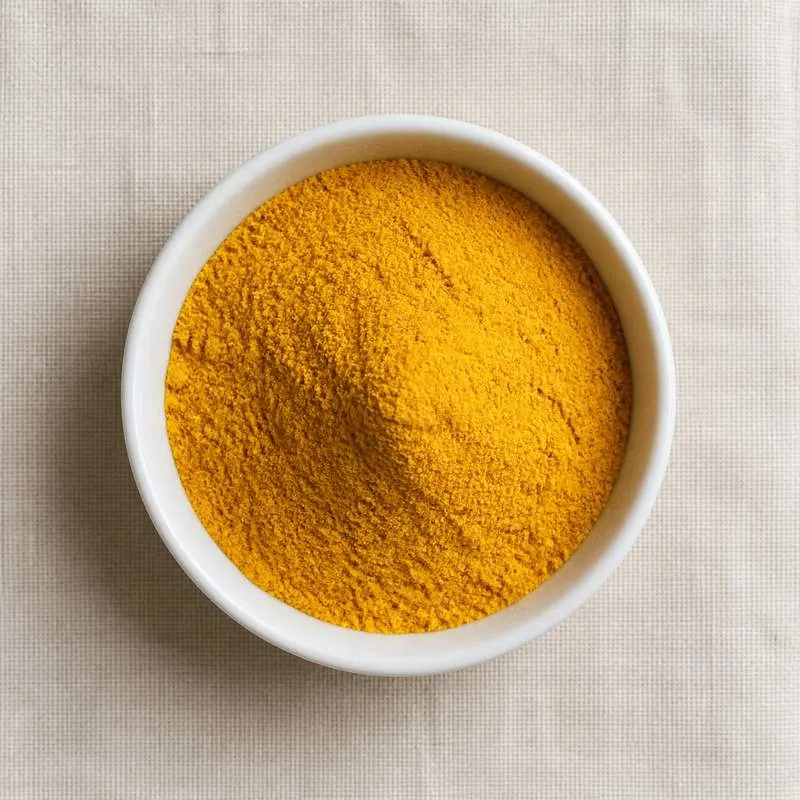
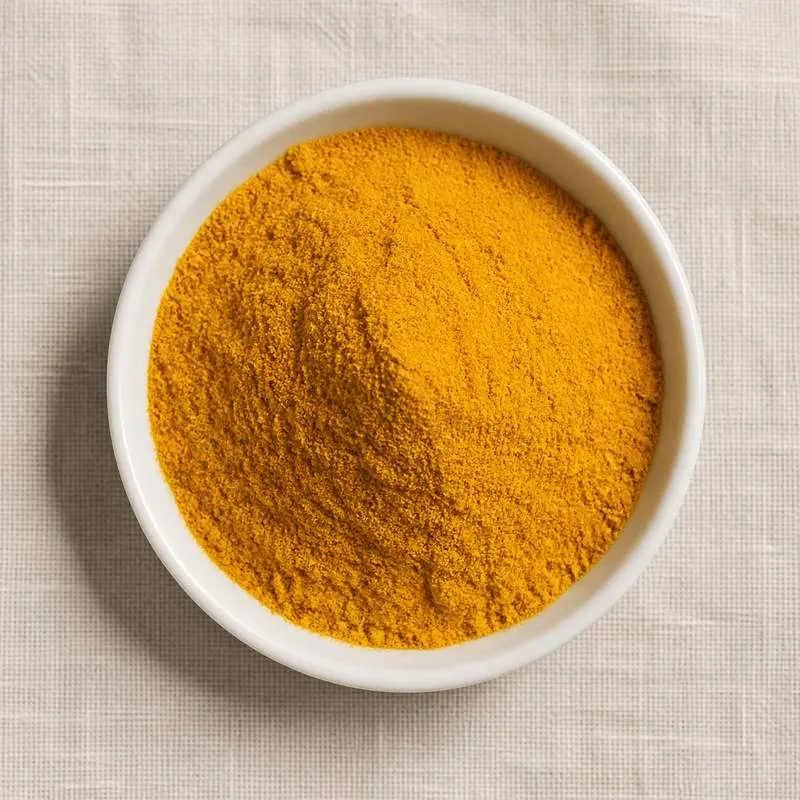
The extract is made from the whole plant, the leaf or the root depending on the intended profile. Leaf material is the richest in flavonoids, while root extracts carry more inulin and the bitter sesquiterpene lactones that give dandelion its characteristic taste. The powder is yellowish brown to brown, fine and free flowing, and carries a bitter, faintly grassy flavour that limits how much can go into an unmasked beverage.
Flavonoid glycosides such as luteolin-7-glucoside are moderately water soluble and dissolve well in hydroalcoholic systems, while the free aglycones are poorly soluble in water and need ethanol, glycerine or a surfactant to carry them. The fraction is reasonably heat stable but darkens under alkaline conditions and degrades on prolonged exposure to light and oxygen, so the powder is packed in opaque containers away from moisture.
We source bulk Dandelion P.e. Flavone from top China manufacturers for our partners. The manufacturer is in Shaanxi. A smaller requirement can ship in a combined container with other ingredients.
Please send the grade you need, the volume and your destination port, and we will come back with a solution and a price.
or call +86-21-6858 0751
- Function
- Plant extract
Specifications
| Item | Specification |
|---|---|
| Botanical Source | Taraxacum officinale, dried leaf and root |
| Appearance | Fine yellowish brown to brown powder |
| Total Flavones by UV | ≥ 4.0% |
| Identification | Conforms by TLC to reference extract |
| Extraction Solvent | Water and ethanol |
| Loss on Drying | ≤ 5.0% |
| Ash | ≤ 5.0% |
| Residual Solvent (Ethanol) | ≤ 5,000 mg/kg |
| Lead | ≤ 2.0 mg/kg |
| Arsenic | ≤ 1.0 mg/kg |
| Total Plate Count | ≤ 10,000 cfu/g |
| Yeast and Mould | ≤ 100 cfu/g |
| E. coli | Negative in 1 g |
| Salmonella | Negative in 25 g |
Common Markets Grades
The volume grades are ratio extracts without a marker claim, typically 4:1, 10:1 or 20:1 water or hydroalcoholic extracts of leaf, root or whole plant, sold where a broad botanical profile is wanted. Above these sit the standardised grades, quoted as total flavones at 2, 4, 5 or 10 percent by ultraviolet method, with 4 percent being the common trading specification. Extracts standardised on chicoric acid or on inulin content are traded separately, and the inulin grades are root-only material aimed at prebiotic applications.
Physical variants include spray dried powder as the standard form, a maltodextrin-carried grade for dry blending where the pure extract is too hygroscopic, granulated grades for sachet and tablet work, and fluid extracts at 50 to 60 percent solids for tinctures and liquid supplements. Plant part, extraction solvent and the analytical method used for the flavone figure all have to be stated, since a 4 percent ultraviolet result and a 4 percent HPLC result describe quite different material.
Applications
- Liver and digestive support supplements in capsule and tablet form, the largest outlet for the standardised powder
- Detox and diuretic herbal blends, where dandelion is one of several botanical components
- Herbal teas and instant tea granules, using the water-soluble spray dried grade
- Liquid tinctures and herbal drops, formulated from the fluid extract in a hydroalcoholic base
- Functional beverages and bitters, where the bitter note is used deliberately as part of the flavour
- Women's health and hormonal balance formulas, combined with other bitter and flavonoid-bearing botanicals
- Skin care serums and creams drawing on the antioxidant flavonoid fraction
- Companion animal digestive and liver supplements
- Herbal coffee substitutes made from roasted dandelion root, using the root extract for colour and body
China Manufacturers of Dandelion P.e. Flavone
Top Dandelion P.e. Flavone manufacturers in China.
Company names and logos are the property of the manufacturers themselves. They are listed here because our own directory records them as producing this ingredient. A listing is not an endorsement by them, and we do not represent them or speak on their behalf.
Regulatory Status
In the United States dandelion, listed as Taraxacum officinale, appears on the Food and Drug Administration list of substances generally recognised as safe for use as a natural flavouring and seasoning in 21 CFR 182.20, covering the root, leaf and dried herb. Standardised extracts are marketed as dietary ingredients under the Dietary Supplement Health and Education Act, with manufacture falling under 21 CFR Part 111. Structure and function claims are permitted; disease claims are not.
In the European Union dandelion root and herb have a long history of food use as a salad vegetable, a herbal infusion and a coffee substitute, so conventional extracts are handled as foods rather than under the novel food Regulation, although unusually concentrated or purified flavonoid fractions can require assessment. The European Medicines Agency has published herbal monographs covering dandelion root with herb, which places some presentations in the traditional herbal medicinal product route. No dandelion health claim appears on the EU register of authorised claims, so permitted labelling is limited. The Council of Europe has evaluated dandelion as a source of natural flavouring for food use.
Manufacturing Process
Manufacture begins with dried dandelion plant material, harvested and separated into leaf, root or whole plant according to the grade being made, then cleaned to remove soil and foreign matter and milled to a coarse powder. The milled herb is extracted by countercurrent percolation or repeated reflux with hot water or aqueous ethanol at 50 to 70 percent. Ethanol systems recover more of the flavonoid aglycones and leave behind much of the inulin, while pure water extraction is used when a high inulin root product is the target.
The combined liquor is filtered to remove plant debris and the ethanol is recovered under vacuum. For a standardised flavone grade the concentrate is passed over macroporous adsorption resin, which retains the flavonoids while sugars, salts and amino acids wash through; ethanol elution then releases the enriched fraction and this step sets the final assay. The eluate is concentrated under vacuum, adjusted to the declared flavone level with maltodextrin or by blending against reference material, then spray dried or vacuum belt dried, sieved to specification and packed under moisture barrier.