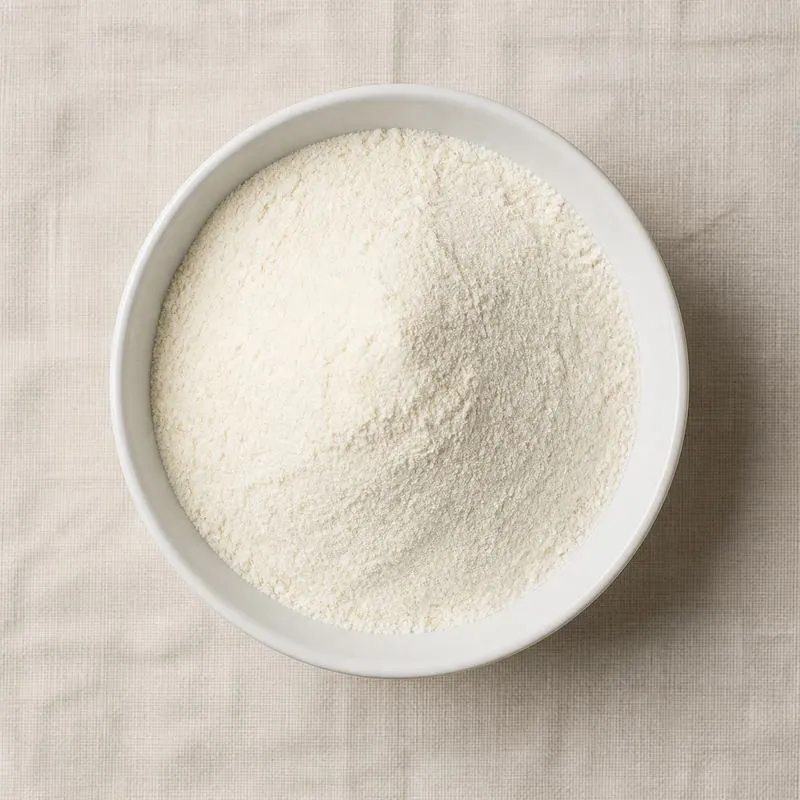
Heat Stable Egg Yolk
Heat Stable Egg Yolk is a spray-dried egg-yolk powder that has been processed to withstand the high temperatures of industrial baking and pasteurised food preparation without coagulating into hard, gritty particles.
The product retains the natural emulsifying lecithin, livetin proteins, and colour of fresh yolk while delivering a long shelf life and dry, free-flowing handling at ambient temperature.
We source bulk Heat Stable Egg Yolk from top China manufacturers for our partners. The manufacturer is in Anhui. A smaller requirement can ship in a combined container with other ingredients.
Please send the grade you need, the volume and your destination port, and we will come back with a solution and a price.
or call +86-21-6858 0751
- Packaging
- 25 kg kraft paper bag with PE inner liner
- ISO 9001
- HACCP
- Halal
- Kosher
Specifications
Grades / Types Available: Food Grade, Feed Grade
| Item | Specification |
|---|---|
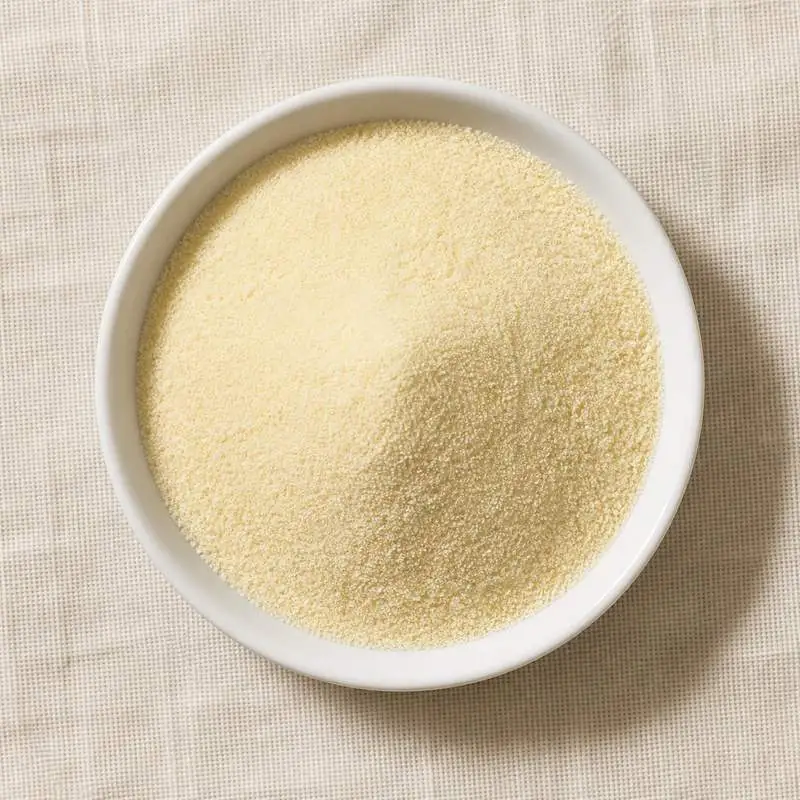
| Appearance | Yellow fine free-flowing powder |
| Moisture | ≤5.0% |
| Protein | ≥30.0% |
| Fat | ≥55.0% |
| Glucose (residual) | ≤0.1% |
| pH (10% sol.) | 6.0–6.6 |
| Browning Index (after 100°C/30min) | ΔE ≤3.0 |
| Solubility | ≥85% |
| Salmonella | Absent in 25g |
| Total Plate Count | ≤50,000 cfu/g |
| Peroxide Value | ≤5.0 meq/kg |
| Purity/Assay (Food Grade) | ≥ 50% |
| Viscosity | 100-200 mPa.s |
| Moisture/Loss on Drying | ≤ 5% |
| Particle Size/Mesh | 80-100 mesh |
| Ash | ≤ 5% |
| Heavy Metals | ≤ 10 mg/kg |
| Lead | ≤ 0.5 mg/kg |
| Arsenic | ≤ 0.5 mg/kg |
| Yeast & Mold | ≤ 100 cfu/g |
Common Markets Grades
Heat Stable Egg Yolk is graded in several functional tiers.
Standard spray-dried yolk is the baseline grade, used wherever heat exposure is moderate and rehydration is straightforward. It carries a typical moisture below 5 percent and fat above 55 percent on a dry basis.
Heat-stable yolk proper is differentiated by post-drying hot-room treatment or by enzymatic modification with phospholipase A2. The enzymatic version converts native phosphatidylcholine to lysophosphatidylcholine, dramatically improving emulsion stability at high temperatures and low pH.
Salted heat-stable yolk and sugared heat-stable yolk are produced for specific bakery and confectionery applications, where added salt or sucrose acts as a cryoprotectant and stabiliser during processing.
Glucose-reduced or desugared heat-stable yolk is the standard for prolonged storage and high-temperature use, as residual glucose otherwise drives rapid Maillard browning during drying and storage.
Applications
- Industrial mayonnaise and salad-dressing manufacture, including hot-fill formats
- Bakery emulsifier for cakes, muffins, brioche, and sweet enriched doughs
- Custard and pastry-cream powders and instant mixes
- Pasta and egg-noodle enrichment
- Ice cream and frozen-dessert emulsion stabilisation
- Sauces, including hollandaise, bearnaise, and shelf-stable bottled formats
- Ready-meal binders and battered or breaded coatings
- Croissant, danish, and viennoiserie egg wash
- Confectionery aerated centres and toffees
- Pet food and treat formulation for fat and protein delivery
- Encapsulating matrix for flavour and oil-soluble vitamins
- Meat patties, fish cakes, and surimi binding
China Manufacturers of Heat Stable Egg Yolk
Top Heat Stable Egg Yolk manufacturers in China.
Company names and logos are the property of the manufacturers themselves. They are listed here because our own directory records them as producing this ingredient. A listing is not an endorsement by them, and we do not represent them or speak on their behalf.
How We Help Source Heat Stable Egg Yolk
Direct Factory Sourcing
We run the whole process: selecting the manufacturer from the top Chinese food ingredient producers, negotiating the price, verifying quality, and coordinating the logistics. You deal with us instead of with several factories at once.
Original Packaging and Documents from the Manufacturer
The manufacturer sends your Heat Stable Egg Yolk out of its own factory in the original packing, through to your destination port. The COA, COO, MSDS, TDS and any certifications reach you from the manufacturer as well.
Free Samples and Lead Time
We send 100 to 500 g free for your own laboratory to test and you cover only the courier, usually within 2 to 3 working days. ETD is usually within 7 to 15 days once the order is confirmed, and we check that date against the factory's own manufacturing schedule before we give it to you.
Combined Shipment
We can load Heat Stable Egg Yolk together with other ingredients such as Collagen Peptide, Soy Protein Isolate and Fish Collagen Peptide into one 20' FCL. If your quantity is small, we can also ship LCL.
Regulatory Status
Egg-yolk powder is recognised as a safe food ingredient in all major markets.
In the United States, USDA inspection under the Egg Products Inspection Act covers dried egg yolk and modified dried egg yolk, and FDA enzyme regulations recognise individual processing aids such as phospholipase A2.
The European Union covers egg products under Regulation (EC) 853/2004 with hygiene rules in Regulation (EC) 852/2004. Regulation (EC) 1332/2008 permits phospholipase-treated yolk as a normal food ingredient when the enzyme meets its criteria.
Codex covers egg products in the general standards for food hygiene and in dedicated technical regulations on processed egg products in major dairy- and egg-exporting countries.
Egg allergen labelling is mandatory in all major jurisdictions. Salmonella control is the primary microbiological criterion and is enforced by both producer and customer testing.
Manufacturing Process
The starting material is fresh liquid egg yolk recovered on high-speed breaker lines that separate yolk from white. The yolk fraction is filtered, chilled, and held under refrigeration.
Desugaring is then applied. Yeast fermentation or glucose oxidase plus catalase treatment removes the small amount of free glucose that otherwise would drive Maillard browning during drying and storage.
For enzymatic heat-stabilisation, food-grade phospholipase A2 is dosed into the desugared yolk under controlled pH and temperature. The enzyme hydrolyses phosphatidylcholine at the sn-2 position, generating lysophosphatidylcholine and a free fatty acid. The reaction is stopped by heat inactivation.
The treated yolk is pasteurised at conditions validated to inactivate Salmonella, typically 60 to 64 degrees Celsius for several minutes, then concentrated lightly if needed.
Spray drying follows in a tower with an integrated fluid bed, producing a free-flowing yellow powder. Post-drying hot-room conditioning at controlled temperature for several days completes the heat-stabilisation profile.