Kidney Bean Extract
Kidney bean extract is a protein preparation from the seed of Phaseolus vulgaris, standardised on its alpha-amylase inhibiting activity. The active constituent is phaseolamin, a glycoprotein that binds pancreatic alpha-amylase and slows the hydrolysis of dietary starch to maltose, which is the basis of the whole commercial category and the reason the material is sold as a starch neutraliser or carbohydrate blocker.
Because the active is a protein rather than a small molecule, the extract behaves quite differently from a botanical polyphenol extract. Activity is expressed in inhibitor units per gram rather than as a percentage, it is lost on heating above roughly 60 degrees Celsius, at extreme pH and on prolonged exposure to moisture, and it cannot be assumed from protein content alone.
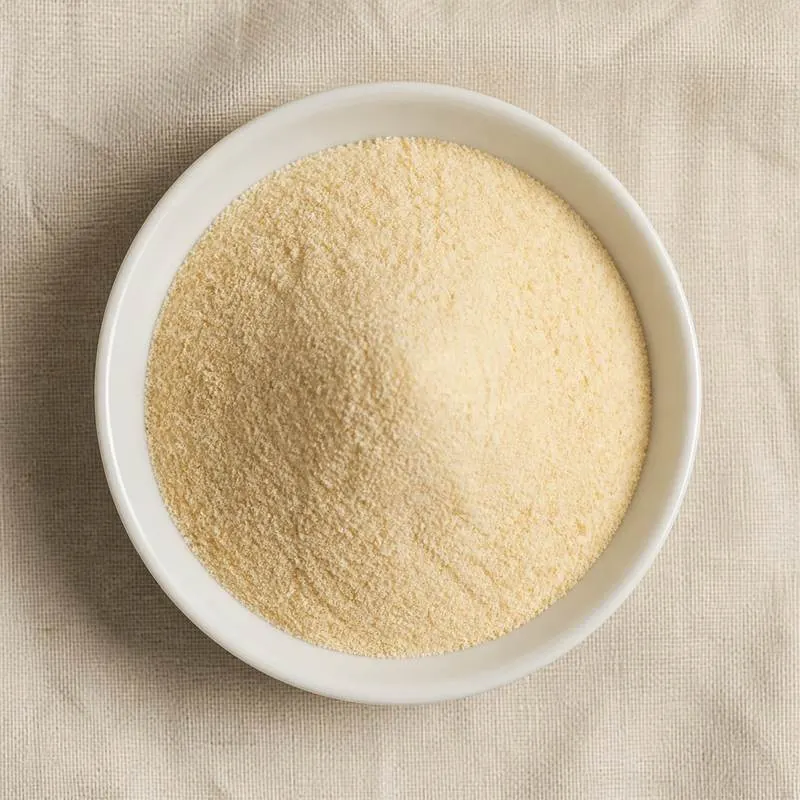
The commercial powder is off white to light beige, mildly beany in aroma, and disperses rather than fully dissolving in water. Raw kidney beans also contain phytohaemagglutinin, a lectin that is toxic if not destroyed, so removal or inactivation of the lectin fraction is a mandatory part of the process and a routine specification point. The powder is hygroscopic and is packed under a moisture barrier and stored cool.
or call +86-21-6858 0751
- Function
- Plant extract
Specifications
| Item | Specification |
|---|---|
| Appearance | Off white to light beige fine powder |
| Odour and Taste | Mild beany, bland |
| Alpha-amylase Inhibitory Activity | ≥ 3,000 units per gram |
| Protein (N x 6.25) | ≥ 50.0% |
| Identification | Conforms by enzyme inhibition assay and electrophoresis |
| Phytohaemagglutinin | ≤ 100 HAU per gram |
| Loss on Drying | ≤ 6.0% |
| Total Ash | ≤ 8.0% |
| Starch | ≤ 10.0% |
| Particle Size | 100% through 80 mesh |
| Lead | ≤ 1.0 mg/kg |
| Arsenic | ≤ 1.0 mg/kg |
| Cadmium | ≤ 0.5 mg/kg |
| Total Plate Count | ≤ 5,000 cfu/g |
| Yeast and Mould | ≤ 100 cfu/g |
| E. coli | Negative |
| Salmonella | Absent in 25 g |
Common Markets Grades
Grades are quoted on alpha-amylase inhibitory activity, most commonly at 1,000, 3,000 or 5,000 units per gram measured by a defined enzymatic assay, and the specification names the assay method and reference because results are not comparable between methods. Simple ratio extracts and milled whole bean flour are traded alongside these and carry little or no measurable inhibitory activity, so the distinction matters commercially.
Every grade states a phytohaemagglutinin or lectin limit, since the lectin and the amylase inhibitor are both proteins from the same bean and a process that preserves one can carry the other through. Physical forms cover spray dried and vacuum dried powder at 80 mesh, granulated material for tablet and capsule manufacture, and enteric coated versions where the protein is to survive gastric acid. Organic certified and non-GMO documented bean is widely available, and the bean variety is stated because white kidney bean is the usual source.
Applications
- Weight management supplements in capsule and tablet form, the dominant outlet for the extract
- Carbohydrate management formulations taken with starch containing meals
- Blood glucose support blends, combined with chromium, cinnamon and berberine
- Meal replacement and satiety products in the weight control category
- Functional beverages and drink powders positioned on carbohydrate control
- Chewable and gummy supplement formats, where processing temperature must be kept low
- Sports nutrition products aimed at body composition
- Clinical and dietetic nutrition products formulated around slower starch digestion
Brands Using Kidney Bean Extract
Widely-distributed consumer products that list Kidney Bean Extract on the ingredient label.
Brand names, product names and logos are the property of their owners. They appear here as published evidence that the ingredient is used, taken from the brand's own label or website. Their appearance is not an endorsement, and it does not mean the brand buys from us or from any manufacturer listed on this site.
Regulatory Status
In the United States kidney bean extract is sold as a dietary ingredient under the Dietary Supplement Health and Education Act, and phaseolamin preparations have been the subject of new dietary ingredient notifications on that basis. There is no food additive regulation and no colour additive listing, so use in conventional food would rest on a GRAS conclusion for the specific preparation. Claims are confined to structure and function statements, and the Federal Trade Commission has taken action over unsupported weight loss claims in this category, so substantiation is a live commercial issue. Raw or undercooked kidney bean material is a recognised food safety hazard because of phytohaemagglutinin, which is why the lectin specification is central.
In the European Union the extract carries no E number because it is not an additive. Phaseolus vulgaris bean is a common food with a long history of consumption, so a simple bean preparation is not novel, but a concentrated protein fraction standardised on enzyme inhibitory activity and produced by chromatographic fractionation may fall within Regulation 2015/2283 on novel foods, and market access depends on the status of the specific preparation. Any health claim relating to carbohydrate absorption would require authorisation under Regulation 1924/2006, and claims of this type have not been authorised. Codex has a standard for certain pulses covering the raw commodity.
Manufacturing Process
Dried white kidney beans are cleaned, dehulled and milled to a flour, then defatted where necessary. The flour is slurried in water at controlled pH and low temperature, since the target protein denatures with heat, and held with agitation so that the soluble albumin fraction, which carries both the amylase inhibitor and the lectin, passes into solution. Insoluble starch and fibre are removed on a decanter centrifuge, and the supernatant is clarified by filtration.
The separated proteins are then fractionated. Ammonium sulphate or ethanol precipitation at defined cut points, followed by ion exchange or affinity chromatography, separates the amylase inhibitor from phytohaemagglutinin, which has different charge and binding behaviour, and the lectin fraction is discarded. Some processes instead apply a controlled heat or enzymatic treatment tuned to destroy the lectin while retaining most inhibitor activity, and every batch is tested against a lectin limit regardless of route. Salts are removed by diafiltration, the retentate is concentrated by ultrafiltration at ambient temperature, standardised to a target activity, blended with a carrier where specified, and freeze dried or spray dried at the lowest workable inlet temperature. Powder is assayed for inhibitory activity and lectin, then packed under nitrogen with a desiccant.