L-Ferrous Lactate
L-ferrous lactate is the iron(II) salt of L-(+)-lactic acid, formula Fe(C3H5O3)2, normally traded as the dihydrate or trihydrate. It has two quite distinct commercial roles: as a bioavailable iron source for food fortification and supplements, and as the colour retention agent that turns ripe olives the uniform glossy black expected of the Californian style pack.
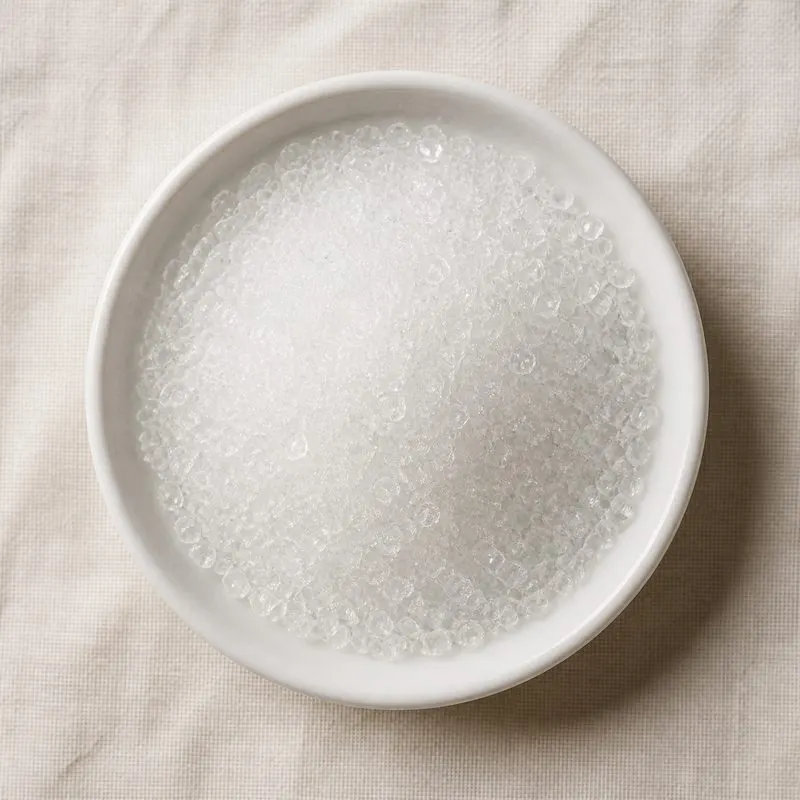
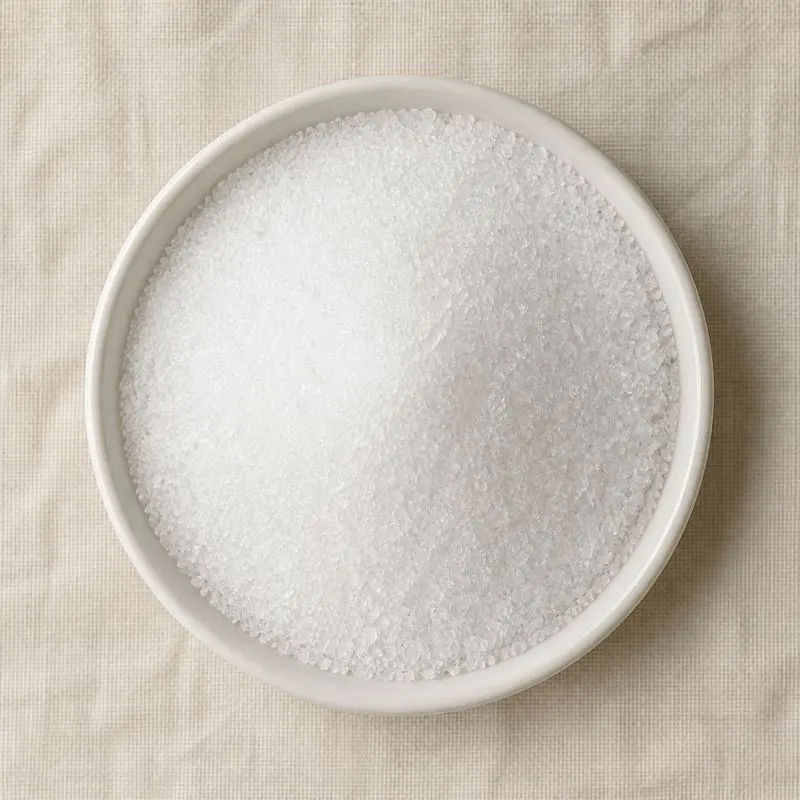
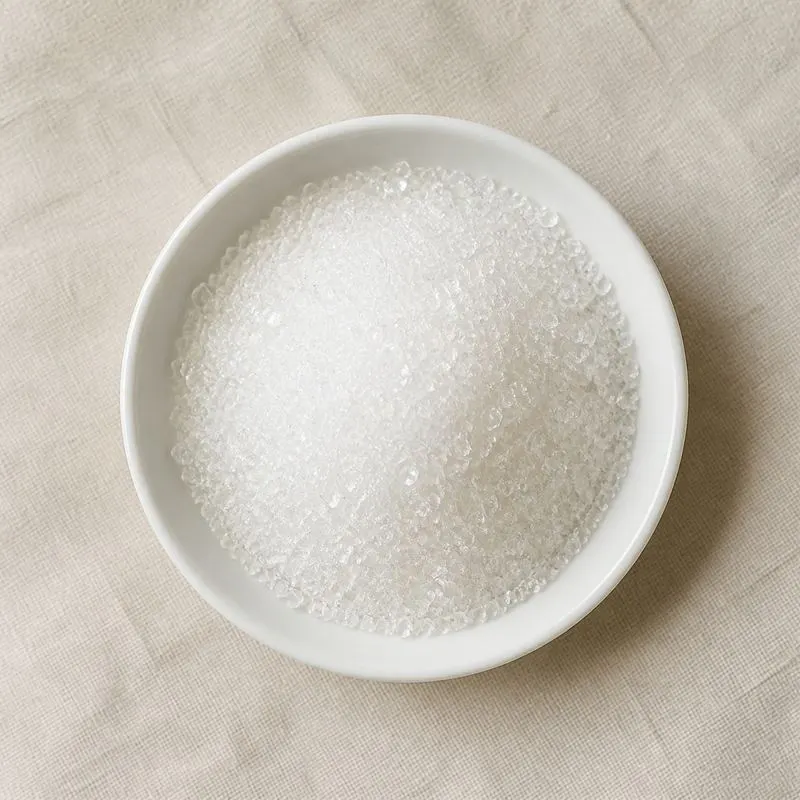
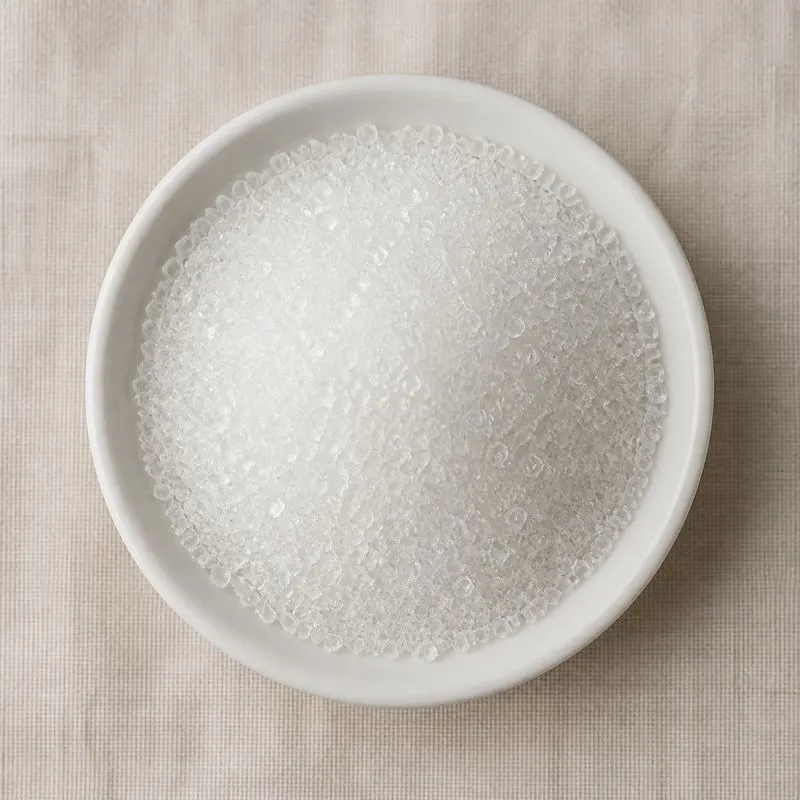
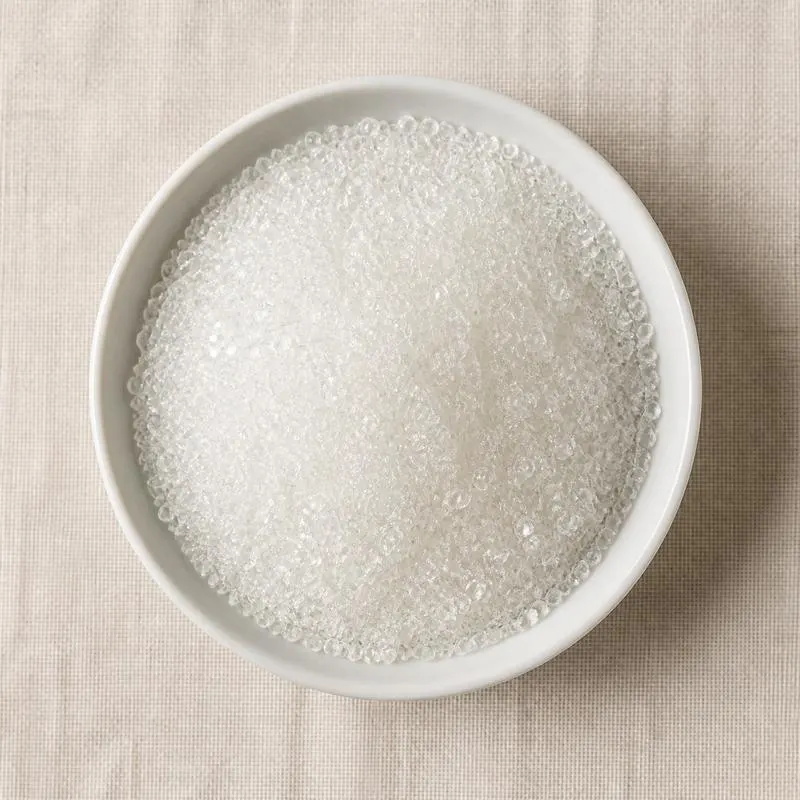
The material is a greenish-white to pale green crystalline powder or granule with a slight characteristic odour and a mildly ferrous, saline taste. Iron content runs at roughly 19 to 24 percent depending on hydrate state, and fortification is dosed on that figure rather than on the assay. Solubility in water is moderate, in the region of 3 to 5 g per 100 mL at room temperature, better than the carbonate and considerably better tolerated in the gut than ferrous sulphate at equivalent iron.
The dominant handling issue is oxidation. Ferrous iron oxidises readily to the ferric state in air and in solution, particularly at neutral and alkaline pH, producing a brown discolouration and a loss of the properties for which the salt was bought. Solutions darken within hours unless protected, so the powder is packed under nitrogen in sealed containers and the salt is added late in a process and generally into an acidified system.
We source bulk L-Ferrous Lactate from top China manufacturers for our partners. The manufacturer is in Jiangxi. A smaller requirement can ship in a combined container with other ingredients.
Please send the grade you need, the volume and your destination port, and we will come back with a solution and a price.
or call +86-21-6858 0751
- Function
- Acidulant
Specifications
| Item | Specification |
|---|---|
| Appearance | Greenish-white to pale green crystalline powder |
| Assay, dried basis | Not less than 96.0 percent |
| Elemental Iron | 19.0 to 24.0 percent, declared per lot |
| Identification | Positive for iron and for lactate |
| Ferric Iron | Not more than 0.6 percent |
| Optical Purity, L isomer | Not less than 98.0 percent |
| Loss on Drying, 100 degrees Celsius | Not more than 18.0 percent |
| pH, 2 percent solution | 4.5 to 6.5 |
| Lead | Not more than 2 mg per kg |
| Arsenic | Not more than 3 mg per kg |
| Mercury | Not more than 1 mg per kg |
| Total Plate Count | Not more than 1000 cfu per g |
| Yeast and Mould | Not more than 100 cfu per g |
| Salmonella | Absent in 25 g |
Common Markets Grades
Food and supplement grade L-ferrous lactate at 96 percent minimum assay on the dried basis is the standard article, with iron content and ferric iron content both declared per lot, since ferric iron is the practical indicator of how well the material has been protected. The olive processing trade takes essentially the same specification, sometimes with a tighter limit on ferric iron because partial oxidation shows up directly as an uneven or brownish fruit colour.
Pharmaceutical grade to pharmacopoeial monographs is produced for iron tablets and syrups with tighter microbiological and heavy metal limits. Physical grades follow the dosage form: fine powder for capsules, sachets and food fortification premixes, and granular material of roughly 30 to 80 mesh for direct compression tabletting. Encapsulated and lipid coated versions are traded separately, made to protect the iron from oxidation and to prevent it from catalysing rancidity and colour change in the surrounding food, and these carry less iron in exchange.
Applications
- Ripe black olives, as the colour retention agent that fixes and evens the black colour after lye treatment and aeration
- Iron fortification of flour, cereals and bakery products, as a source that tastes better than ferrous sulphate
- Iron supplement tablets, capsules and syrups, where tolerance is better than the sulphate at equivalent elemental dose
- Fortified beverages and plant based milks, using the moderate solubility to keep iron in suspension without heavy sediment
- Infant and follow-on formula, as a permitted iron source, subject to the tighter trace element limits of that category
- Meal replacement and clinical nutrition powders, as the iron component of a mineral premix
- Dairy products and cheese analogues, where the mild flavour avoids the metallic note other iron salts contribute
- Animal feed and pet food premixes, as a bioavailable iron source
- Salt and condiment fortification programmes, generally in the encapsulated form to protect the iron in storage
China Manufacturers of L-Ferrous Lactate
Top L-Ferrous Lactate manufacturers in China.

Company names and logos are the property of the manufacturers themselves. They are listed here because our own directory records them as producing this ingredient. A listing is not an endorsement by them, and we do not represent them or speak on their behalf.
Regulatory Status
In the United States ferrous lactate is used as an iron source for nutrient addition to conventional foods and in dietary supplements, and it is recognised as a permitted iron source for that purpose. Lactic acid itself is affirmed as generally recognised as safe under 21 CFR 184.1061, and its use as a colour stabiliser in ripe olives is an established application in the olive processing trade. A pharmacopoeial monograph covers the pharmaceutical grade. Because the salt is used both as a nutrient and as a colour retention agent, the applicable clearance depends on which function is being claimed in the finished product.
In the European Union Regulation (EC) No 1333/2008 authorises ferrous lactate as food additive E 585, with identity and purity criteria in Regulation (EU) No 231/2012, and permits it as a colour retention agent specifically in olives darkened by oxidation. Directive 2002/46/EC separately lists it among the iron sources permitted in the manufacture of food supplements, and Regulation (EC) No 1925/2006 lists it among the sources that may be added to foods. JECFA has evaluated the lactate salts and concluded that no numerical limit is required, and ferrous lactate is listed in the Codex General Standard for Food Additives as a colour retention agent.
Manufacturing Process
Manufacture starts from L-lactic acid produced by anaerobic fermentation of a carbohydrate feedstock, usually glucose from maize or cassava starch, with homofermentative Lactobacillus strains selected for high optical purity. The acid is recovered from the broth, decolourised on activated carbon and polished by ion exchange, since any carried-over colour or trace metal shows up in the finished iron salt.
The purified acid is then reacted with a source of ferrous iron. Reduced iron powder, ferrous carbonate or ferrous hydroxide is added to the acid solution in a stirred reactor operated under a nitrogen blanket, because the whole process has to exclude oxygen. Where iron powder is used the reaction evolves hydrogen and is run with careful venting. A small quantity of a reducing agent such as ascorbic acid may be carried in the liquor to hold the iron in the ferrous state. The reaction is taken to a slight excess of iron so that no free lactic acid remains, and unreacted metal and insolubles are filtered off through a closed filter.
The clear liquor is concentrated under vacuum at moderate temperature, then crystallised by controlled cooling, still under inert gas. The slurry is centrifuged, washed with deoxygenated water, and dried in a nitrogen swept fluid bed or vacuum dryer. The dried crystal is milled, screened and packed immediately into sealed, nitrogen flushed containers, since exposure at this stage is what generates the ferric iron that the specification limits.