L-Lactic Acid
L-lactic acid is 2-hydroxypropanoic acid in its L-(+) optical form, formula C3H6O3, the isomer produced by mammalian metabolism and by most industrial lactic fermentations. It is the mildest of the common food acids in flavour terms, giving a soft, rounded, slightly dairy sourness rather than the sharp attack of citric acid, and it doubles as an effective antimicrobial and pH control agent.
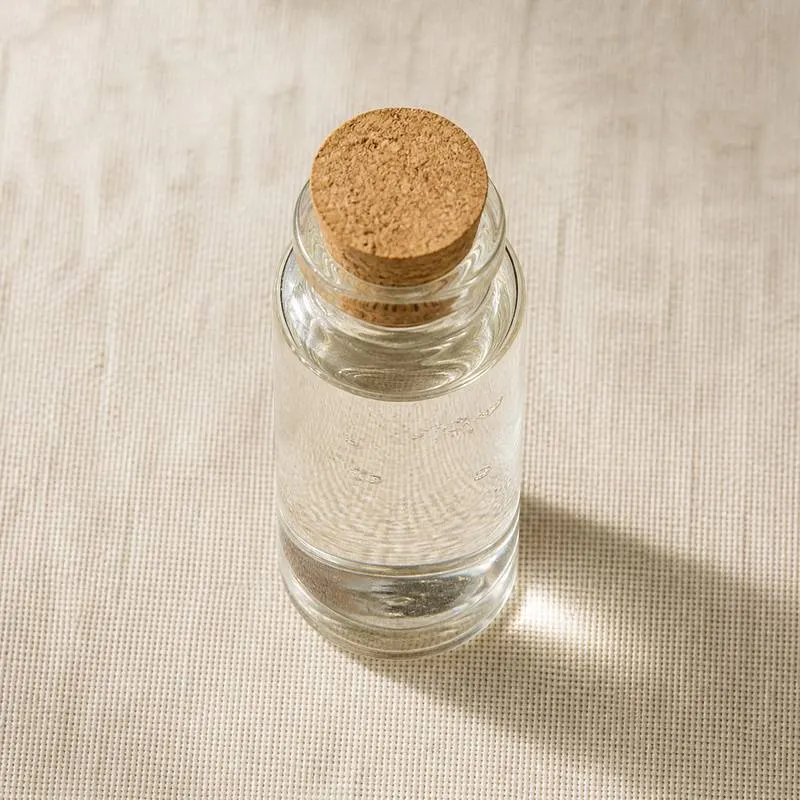
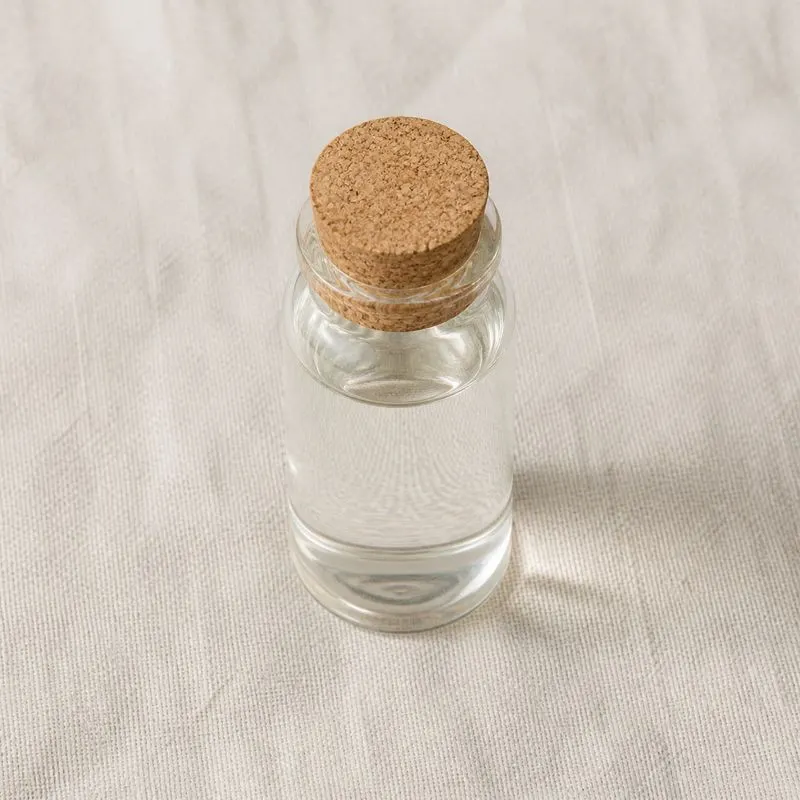
It is traded almost exclusively as an aqueous solution, most commonly at 80 or 88 percent, because the pure anhydrous acid is difficult to isolate and readily forms lactoyl lactate and higher oligomers on concentration. The solution is a clear, colourless to pale yellow syrupy liquid, odourless or nearly so, fully miscible with water and with ethanol, and strongly hygroscopic. A one percent solution measures about pH 2.4, and the acid has a pKa of 3.86, which makes it an efficient buffer in the range where most acidified foods sit.
Its antimicrobial action comes from the undissociated molecule crossing the microbial cell membrane, so it is much more effective at low pH than titratable acidity alone would suggest. The acid is thermally stable through pasteurisation and retorting, does not volatilise during cooking, and is non-browning, which is why it is used where a stable acidity is needed over a long shelf life.
We source bulk L-Lactic Acid from top China manufacturers for our partners. The manufacturer is in Jiangxi. A smaller requirement can ship in a combined container with other ingredients.
Please send the grade you need, the volume and your destination port, and we will come back with a solution and a price.
or call +86-21-6858 0751
- Function
- Acidulant
Specifications
| Item | Specification |
|---|---|
| Appearance | Clear colourless to pale yellow syrupy liquid |
| Assay as Lactic Acid | 80.0 to 82.0 percent, or 88.0 to 90.0 percent by grade |
| Identification | Positive for lactate |
| Optical Purity, L isomer | Not less than 98.0 percent |
| Colour, platinum cobalt scale | Not more than 50 |
| Specific Gravity, 25 degrees Celsius | 1.19 to 1.21 at 88 percent |
| Residue on Ignition | Not more than 0.1 percent |
| Reducing Sugars | Not more than 0.1 percent |
| Chloride | Not more than 0.02 percent |
| Sulphate | Not more than 0.05 percent |
| Lead | Not more than 0.5 mg per kg |
| Arsenic | Not more than 1 mg per kg |
| Total Plate Count | Not more than 100 cfu per g |
| Yeast and Mould | Not more than 50 cfu per g |
Common Markets Grades
Concentration is the first line of the specification. Eighty and eighty eight percent solutions are the standard food articles, with 50 percent offered where lower viscosity and easier winter pumping matter and 90 percent traded where freight cost per unit of acid dominates. Colour, measured on the platinum cobalt scale, and residual sugar are the practical quality markers, since a dark or sweet smelling lot indicates incomplete purification of the fermentation liquor.
Above food grade sit heat stable, pharmaceutical and polymer grades. Heat stable grades are specified for applications that will be heated hard, since ordinary grades darken. Pharmaceutical grade meets United States Pharmacopeia and European Pharmacopoeia monographs and is used in dialysis and infusion solutions and in topical preparations. Polymer grade, made to a very high optical purity of 99.5 percent L isomer or better and to tight limits on residual metals, is the feedstock for polylactic acid manufacture and commands its own specification, since even small quantities of the D isomer disrupt the crystallinity of the finished polymer.
Applications
- Carcass and meat decontamination sprays, as an antimicrobial applied to beef and poultry surfaces before chilling
- Ready to eat meats and cooked sausage, as a shelf life extender controlling Listeria monocytogenes and lactic spoilage flora
- Pickles, olives and acidified vegetables, as an acidulant that gives a softer sourness than acetic acid
- Beverages and fruit drinks, where the mild flavour suits dairy and cream based products that citric acid would curdle or sharpen
- Brewing, for wort and mash acidification and for adjusting the pH of the finished beer within purity law constraints
- Confectionery, particularly hard boiled sweets, where its low volatility and non-hygroscopic salts suit the cook
- Bakery and sourdough, as an acidifier that reproduces part of the fermented flavour profile without a long proof
- Manufacture of the lactate salts of sodium, potassium, calcium, magnesium and zinc, a large downstream outlet
- Polylactic acid manufacture, as the monomer feedstock, using the high optical purity polymer grade
- Personal care and topical preparations, as a humectant and mild exfoliant
Brands Using L-Lactic Acid
Widely-distributed consumer products that list L-Lactic Acid on the ingredient label.
- The OrdinaryLactic Acid 10% + HA ↗Lactic acid is the second item in the ingredient list of this exfoliating serum, after water and ahead of glycerin and sodium hyaluronate crosspolymer.Label verified 2026-08-31
- The OrdinaryLactic Acid 5% + HA ↗A milder version of the same alpha hydroxy acid serum, built on lactic acid with Tasmanian pepperberry extract as an anti-irritant.Label verified 2026-08-31
- NaturiumAHA Exfoliating Mask 10% ↗This clay-based mask is formulated with glycolic and lactic acids to resurface skin.Label verified 2026-08-31
Brand names, product names and logos are the property of their owners. They appear here as published evidence that the ingredient is used, taken from the brand's own label or website. Their appearance is not an endorsement, and it does not mean the brand buys from us or from any manufacturer listed on this site.
China Manufacturers of L-Lactic Acid
Top L-Lactic Acid manufacturers in China.

Company names and logos are the property of the manufacturers themselves. They are listed here because our own directory records them as producing this ingredient. A listing is not an endorsement by them, and we do not represent them or speak on their behalf.
Regulatory Status
In the United States lactic acid is affirmed as generally recognised as safe under 21 CFR 184.1061, with functions given as flavour enhancer, flavouring agent, pH control agent, curing and pickling agent, solvent and vehicle, at levels consistent with good manufacturing practice, and the section excludes its use in infant foods and infant formula other than for pH adjustment. Its use as an antimicrobial intervention on meat and poultry carcasses is separately reviewed and permitted by the United States Department of Agriculture at defined concentrations and application points. A United States Pharmacopeia monograph covers the pharmaceutical grade.
In the European Union Regulation (EC) No 1333/2008 authorises lactic acid as food additive E 270, with identity and purity criteria in Regulation (EU) No 231/2012, and permits it quantum satis across most categories, though it restricts use in foods for infants and young children, where only the L form is acceptable. Its application as a carcass decontamination treatment on bovine meat is authorised under a separate Commission regulation with defined conditions of use. JECFA has evaluated lactic acid and concluded that a numerical limit is not required, and it is listed in the Codex General Standard for Food Additives as an acidity regulator.
Manufacturing Process
Essentially all commercial lactic acid is made by fermentation rather than by synthesis, and the fermentation route is the only one that gives a single optical isomer. A refined carbohydrate feedstock, typically glucose or high dextrose syrup from maize or cassava starch, or sucrose from cane or beet, is sterilised and fed to an anaerobic fermenter with a nitrogen source and growth factors. Homofermentative Lactobacillus strains selected for producing the L isomer at high optical purity convert essentially all the sugar to lactic acid over one to three days at around 40 to 45 degrees Celsius.
Because the culture is inhibited by its own product, the broth is neutralised as fermentation proceeds, classically with calcium hydroxide, which forms calcium lactate in solution. At the end of the run the broth is heated to kill the organism and clarified by centrifugation and membrane filtration to strip biomass and residual protein. The calcium lactate liquor is then acidified with sulphuric acid to release free lactic acid and precipitate calcium sulphate, which is filtered off. Newer plants avoid the gypsum by-product by neutralising with ammonia or sodium base and recovering the acid by electrodialysis, reactive extraction or ion exchange.
The crude acid is decolourised over activated carbon, polished through ion exchange, and purified by vacuum evaporation and, for the higher grades, by short path or molecular distillation of the methyl ester followed by hydrolysis. The finished acid is standardised to the target concentration, filtered through a polishing filter and filled.