L-Glutathione
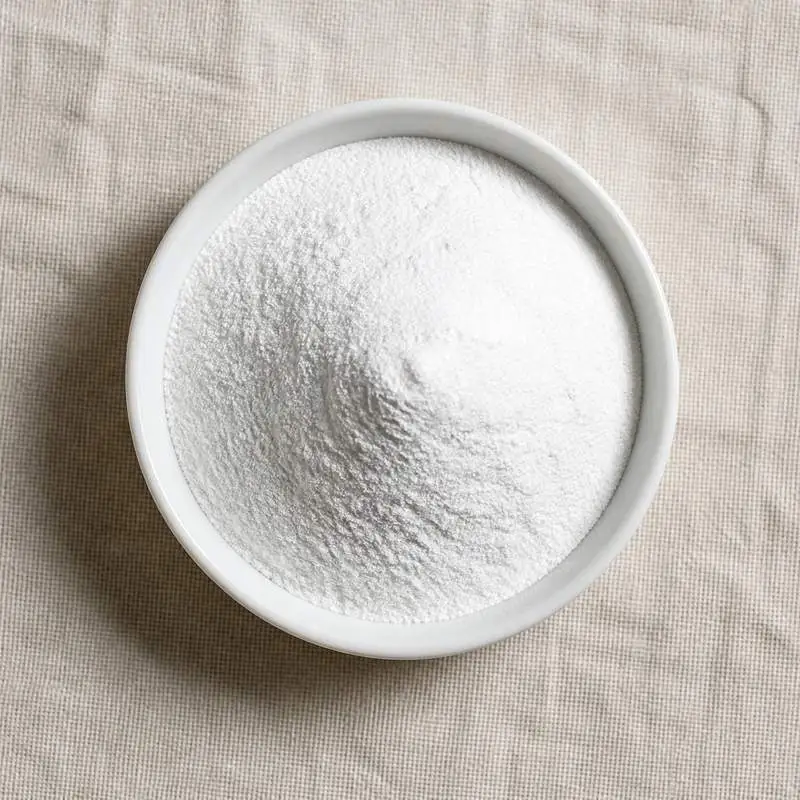
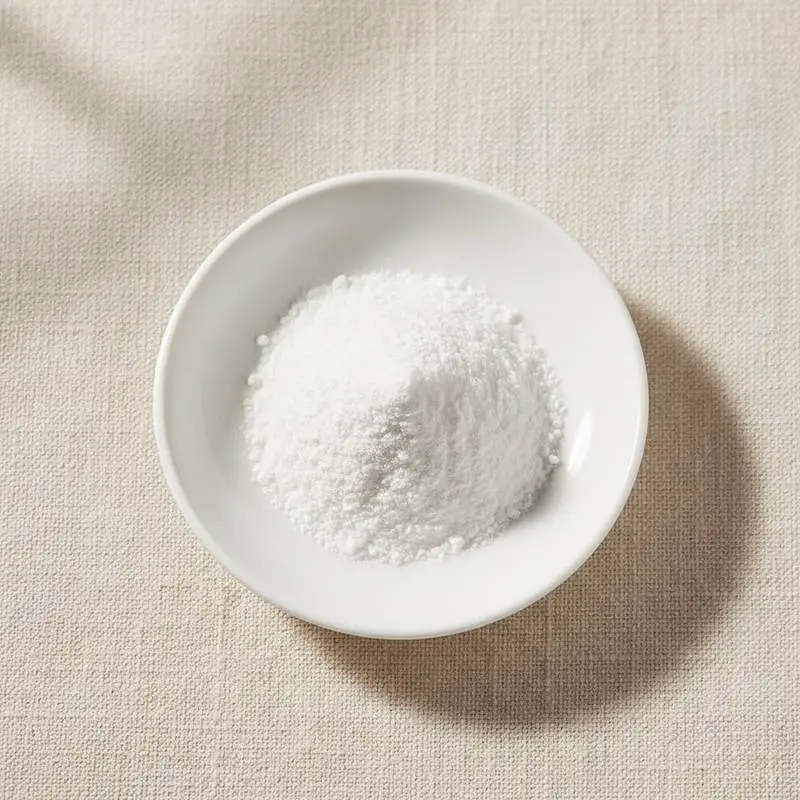
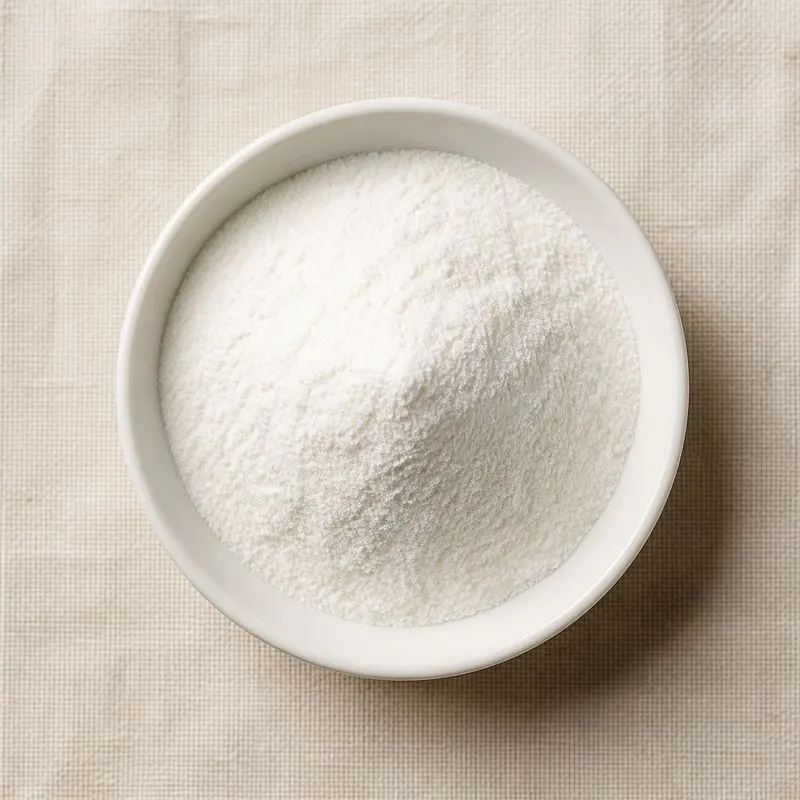
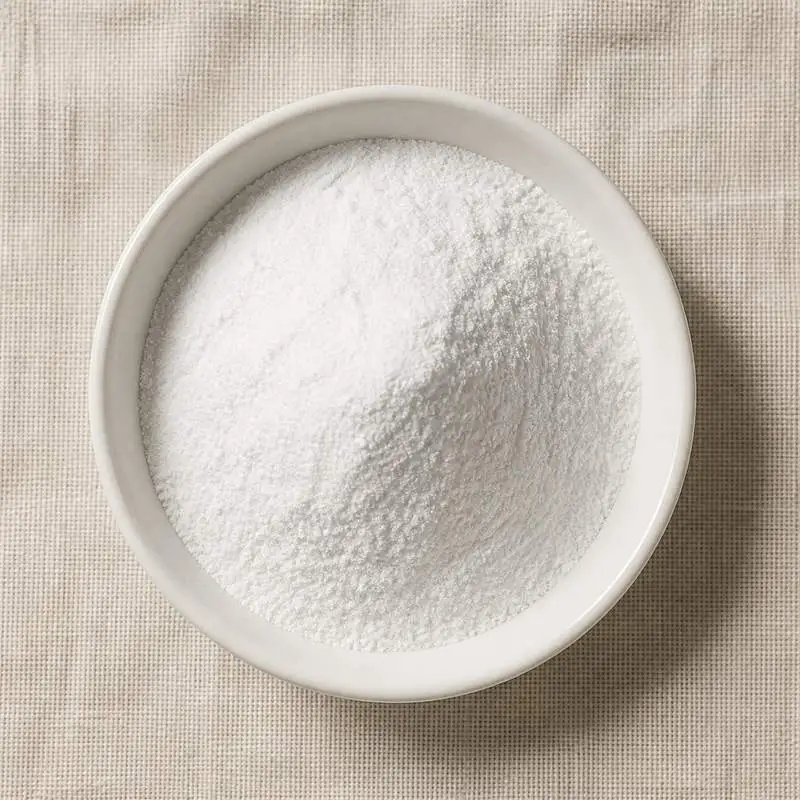
L-Glutathione is the tripeptide gamma-L-glutamyl-L-cysteinylglycine, a naturally occurring thiol compound found in almost every living cell and produced commercially by yeast fermentation. It is a white to off-white crystalline powder with a faint sulphurous odour and a slightly acidic taste, and it is the principal intracellular antioxidant of the cell, the sulphydryl group on its cysteine residue being the reactive site.
The unusual gamma peptide bond between glutamate and cysteine, formed on the side chain carboxyl rather than the alpha carboxyl, makes the molecule resistant to ordinary peptidases and is the structural feature that allows it to accumulate inside cells. In food and supplement use it functions as an antioxidant and, in savoury applications, as a kokumi compound, contributing mouthfulness and continuity of flavour by acting at the calcium sensing receptor rather than by carrying a taste of its own.
Glutathione is freely soluble in water and practically insoluble in ethanol and other organic solvents, and aqueous solutions are most stable in the mildly acidic range around pH 4 to 6. The reduced form oxidises to the disulphide glutathione disulphide on exposure to air, metal ions and elevated pH, so the powder is packed under nitrogen in light-resistant containers and formulations that must retain the reduced form are protected with a chelating agent or an ascorbate system.
We source bulk L-Glutathione from top China manufacturers for our partners. The manufacturers are in Jilin and Guangdong. A smaller requirement can ship in a combined container with other ingredients.
Please send the grade you need, the volume and your destination port, and we will come back with a solution and a price.
or call +86-21-6858 0751
- Function
- Nutraceutical
Specifications
| Item | Specification |
|---|---|
| Appearance | White to off-white crystalline powder |
| Odour | Faint characteristic sulphurous odour |
| Assay, reduced glutathione, dry basis | 98.0 to 101.0 percent |
| Identification by infrared and HPLC | Retention time and spectrum correspond to reference standard |
| Specific rotation | Minus 15.5 to minus 17.5 degrees |
| Oxidised glutathione | Not more than 1.0 percent |
| Loss on drying | Not more than 0.5 percent |
| Residue on ignition | Not more than 0.1 percent |
| pH, 1 percent aqueous solution | 2.5 to 3.5 |
| Chloride | Not more than 0.02 percent |
| Total plate count | Not more than 1000 cfu/g |
| Yeast and mould | Not more than 100 cfu/g |
| Escherichia coli | Absent in 1 g |
| Salmonella | Absent in 25 g |
Common Markets Grades
Two chemical forms are traded. Reduced glutathione, the active thiol form, is the article sold for supplement and food use at assay levels of 98 percent minimum and commonly 98.5 percent, with the oxidised disulphide controlled as a related substance. Oxidised glutathione, glutathione disulphide, is a separate and more expensive article used mainly in cosmetics and research. Both are offered as food grade against pharmaceutical grade, the pharmaceutical article carrying tighter residual solvent, endotoxin and particle limits and manufactured under pharmaceutical quality systems.
Within food grade, the material comes as a standard crystalline powder, as a fine milled powder for capsule and sachet blending, and as a granulated direct compression grade agglomerated with a diluent for tabletting. Yeast extract preparations standardised on their glutathione content are a distinct and much less concentrated article used for kokumi seasoning. Enteric coated, cyclodextrin complexed and liposomal preparations exist as finished delivery formats built on the same crystalline starting material rather than as separate manufacturing grades.
Applications
- Antioxidant and skin-tone supplement capsules and tablets, the largest single outlet for the crystalline material
- Effervescent tablets and drink sachets, where the acidic effervescent matrix helps hold the thiol in the reduced state
- Savoury seasoning and bouillon, contributing kokumi mouthfulness and thickness to reduced-salt and reduced-fat formulations
- Processed meat and retort dishes, reinforcing the perception of body lost during thermal processing
- Plant protein foods, masking the drying, thin finish of soy and pea protein bases
- Bakery dough conditioning, small additions of the thiol reducing dough elasticity and shortening mixing time in biscuit and cracker doughs
- Functional beverages and shots, usually combined with vitamin C to slow oxidation of the free thiol
- Sports and recovery formulations, sold alongside N-acetylcysteine and glycine as glutathione precursor systems
- Oral films and sublingual tablets designed to bypass gastrointestinal hydrolysis of the peptide
- Cell culture and fermentation media as a redox buffer, outside food use
Brands Using L-Glutathione
Widely-distributed consumer products that list L-Glutathione on the ingredient label.
- CodeageLiposomal Glutathione+ ↗Capsules delivering 1000 mg of reduced L-glutathione per serving with vitamin C and coenzyme Q10.Label verified 2026-08-31
- NutricostS-Acetyl-L-Glutathione ↗Each capsule serving supplies 100 mg of S-acetyl-L-glutathione, an acetylated form of the tripeptide.Label verified 2026-08-31
- Double Wood SupplementsLiposomal Glutathione Supplement ↗Glutathione encapsulated in a liposomal carrier and sold as a standalone antioxidant capsule.Label verified 2026-08-31
- Jarrow FormulasGlutathione Reduced 500 mg ↗Veggie capsules of reduced glutathione, described on the page as an intracellular thiol tripeptide.Label verified 2026-08-31
Brand names, product names and logos are the property of their owners. They appear here as published evidence that the ingredient is used, taken from the brand's own label or website. Their appearance is not an endorsement, and it does not mean the brand buys from us or from any manufacturer listed on this site.
China Manufacturers of L-Glutathione
Top L-Glutathione manufacturers in China.
 Bicells Science Ltd.5 ingredients in the directory
 Shenzhen Readline Biotech Co., Ltd.1 ingredient in the directory
Company names and logos are the property of the manufacturers themselves. They are listed here because our own directory records them as producing this ingredient. A listing is not an endorsement by them, and we do not represent them or speak on their behalf.
Regulatory Status
In the United States L-glutathione has been the subject of GRAS notifications to FDA for use as an ingredient in specified food categories and in dietary supplements, and FDA has responded with no objection letters for defined preparations produced by yeast fermentation at stated use levels. It is also a lawful dietary ingredient in supplements marketed under the Dietary Supplement Health and Education Act, having been present in the market before the relevant cut-off date. Glutathione is not permitted as an injectable drug ingredient outside approved products, and FDA has taken action against compounded injectable skin-lightening preparations, which is a separate matter from its oral food and supplement status.
In the European Union L-glutathione is not an authorised food additive and has no E number; it is used as a food ingredient and as a nutrient source in food supplements, subject to national rules on substances used in supplements, which differ between member states. The European Food Safety Authority has assessed glutathione-related health claim applications and the claims examined have not been authorised, so no health claim may accompany the ingredient in the Union. Preparations of glutathione produced by novel processes or presented in novel forms may require evaluation under Regulation (EU) 2015/2283. In the Codex system JECFA has evaluated glutathione as a flavour-modifying substance rather than as a preservative or colour, and no Codex commodity standard applies specifically to it.
Manufacturing Process
Industrial glutathione is made by fed-batch fermentation of selected strains of Saccharomyces cerevisiae or Candida utilis that have been developed for high intracellular accumulation of the tripeptide. Molasses or glucose serves as the carbon source and the medium is supplemented with the constituent amino acids, cysteine in particular, since cysteine availability limits the rate of the first synthetase step. The fermentation is run aerobically with controlled feeding for two to three days, after which the biomass carries glutathione at a few percent of its dry weight.
Cells are harvested by centrifugation and washed, then the tripeptide is released by hot water treatment, autolysis or mechanical disruption. The lysate is clarified by centrifugation and filtration to remove cell debris, and the clear liquor is loaded onto ion exchange resin, where glutathione is adsorbed and then eluted as a concentrated fraction. The eluate is desalted, decolourised over activated carbon, concentrated under vacuum at low temperature, and crystallised by the addition of ethanol under nitrogen. Crystals are separated by centrifuge, washed, vacuum dried at moderate temperature, milled and sieved, then packed under nitrogen. A separate chemical synthesis route through protected glutamyl-cysteine and glycine coupling exists but is little used at food scale.