L-Glutathione Reduced
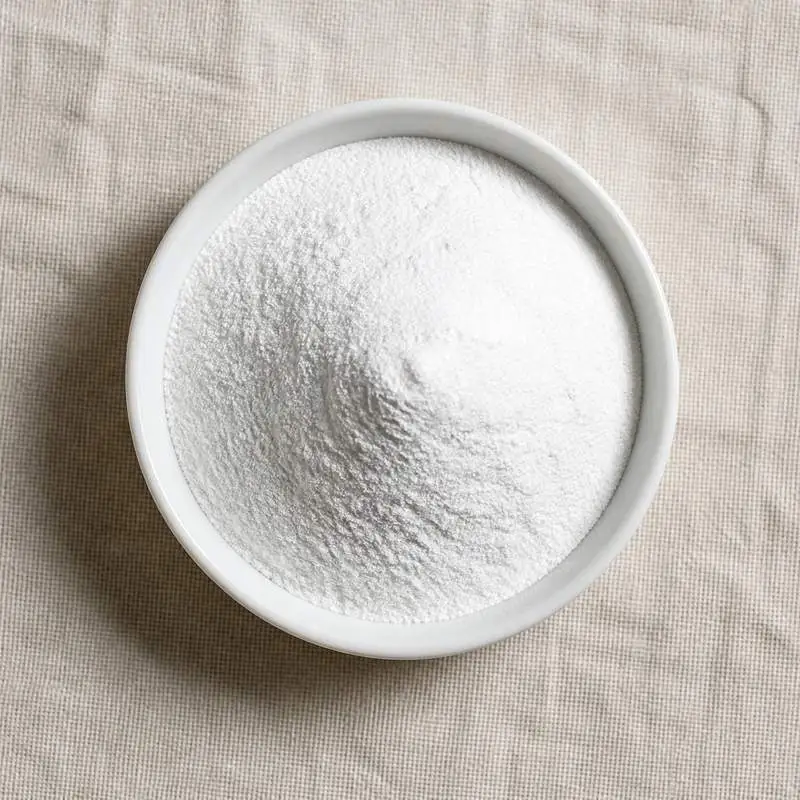
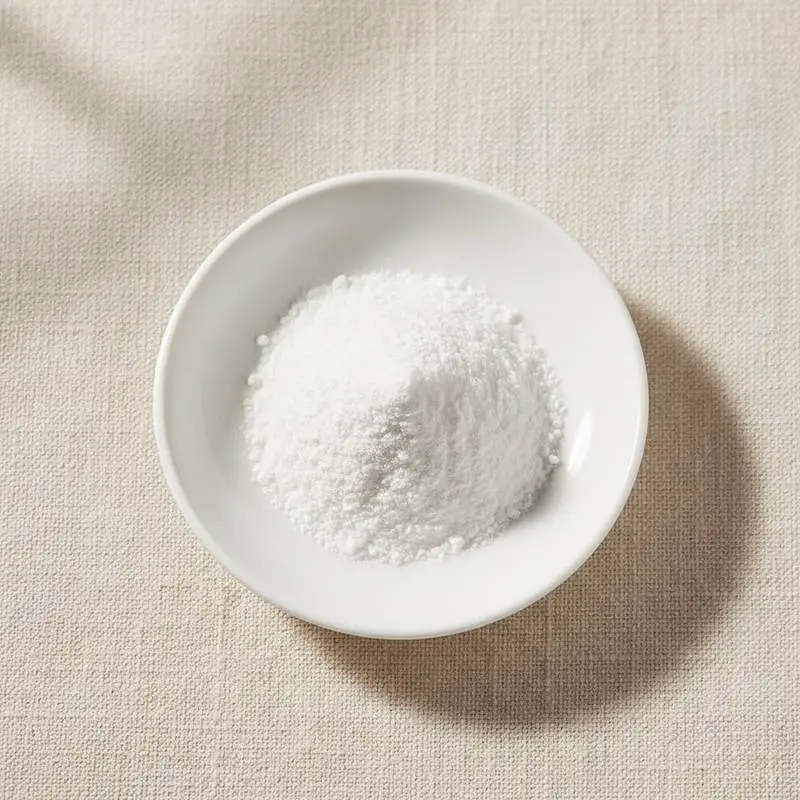
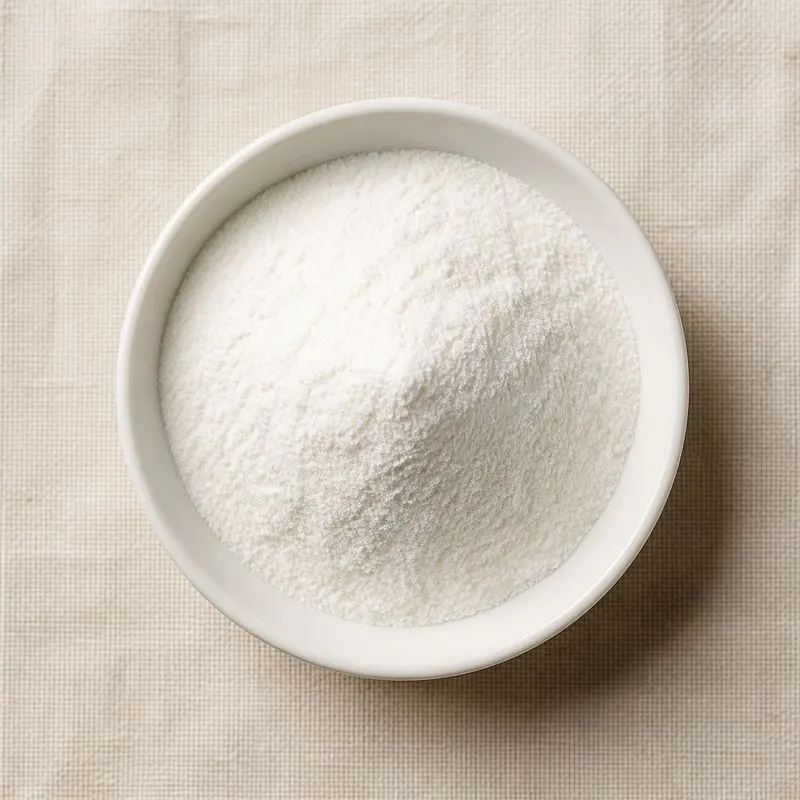
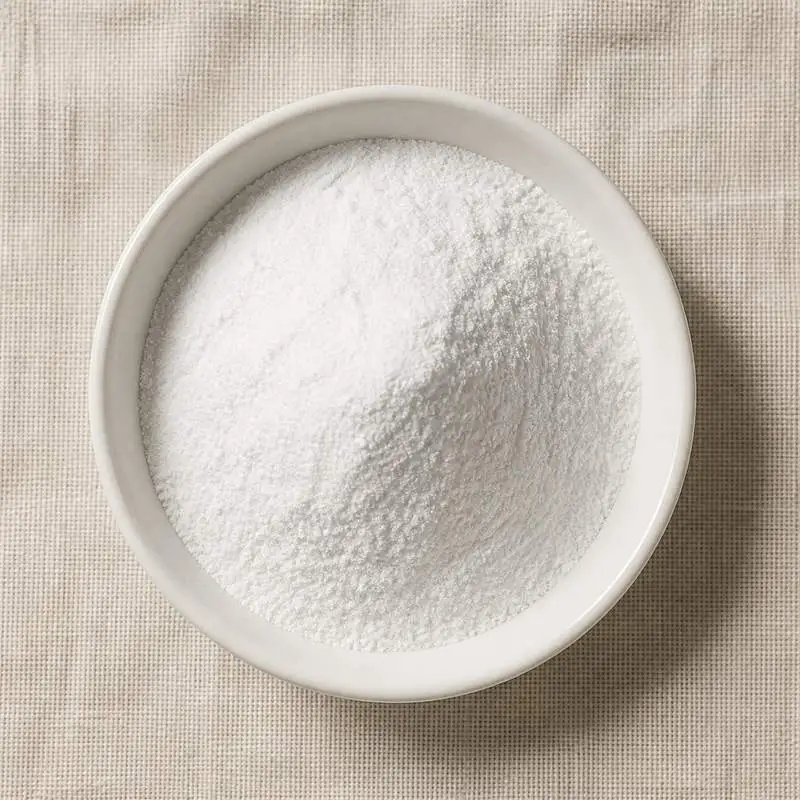
L-Glutathione reduced, abbreviated GSH, is the thiol form of the tripeptide gamma-L-glutamyl-L-cysteinylglycine, distinguished from the oxidised disulphide form by a free sulphydryl group on the cysteine residue. It is the biologically active species and the one specified for food and supplement use, sold as a white crystalline powder that is freely soluble in water and practically insoluble in ethanol.
The free thiol is what makes the compound useful and also what makes it fragile. It donates a hydrogen atom to reactive oxygen species and to lipid radicals, and in doing so pairs with a second molecule to form glutathione disulphide, so the reduced content of a batch falls whenever the material is exposed to air, transition metal ions, alkaline conditions or heat in solution. Specification for the reduced grade therefore always carries an explicit limit on oxidised glutathione alongside the assay, and this is the practical difference between a reduced grade and a general glutathione article.
In food systems the reduced form performs two separate jobs. It scavenges oxygen and quenches radicals, slowing oxidative browning and off-flavour formation, and it acts as a kokumi agent in savoury products, deepening the perception of body and persistence. In dough it functions as a reducing agent, cleaving disulphide crosslinks in gluten and softening the dough. Aqueous solutions hold best in the mildly acidic range, and dry powder stored cool under nitrogen retains its reduced content for the stated shelf life.
We source bulk L-Glutathione Reduced from top China manufacturers for our partners. The manufacturer is in Anhui. A smaller requirement can ship in a combined container with other ingredients.
Please send the grade you need, the volume and your destination port, and we will come back with a solution and a price.
or call +86-21-6858 0751
- Function
- Nutraceutical
Specifications
| Item | Specification |
|---|---|
| Appearance | White crystalline powder, free from visible foreign matter |
| Assay, reduced glutathione, dry basis | Not less than 98.0 percent |
| Identification | HPLC retention and infrared spectrum match reference standard |
| Oxidised glutathione | Not more than 1.0 percent |
| Specific rotation | Minus 15.5 to minus 17.5 degrees |
| Loss on drying | Not more than 0.5 percent |
| Residue on ignition | Not more than 0.1 percent |
| pH, 1 percent aqueous solution | 2.5 to 3.5 |
| Free glutamic acid | Not more than 0.5 percent |
| Ammonium | Not more than 0.02 percent |
| Total plate count | Not more than 1000 cfu/g |
| Yeast and mould | Not more than 100 cfu/g |
| Escherichia coli | Absent in 1 g |
| Salmonella | Absent in 25 g |
Common Markets Grades
The reduced material is traded in food grade and in pharmaceutical grade. Food grade is specified at 98.0 percent minimum assay on the dried basis with oxidised glutathione held at or below 1.0 percent, and it is the grade used in supplements, seasonings and beverage powders. Pharmaceutical grade meets the same assay but adds controls on residual solvents, bacterial endotoxin, sterility where relevant and particulate matter, and is produced for injectable and ophthalmic preparations.
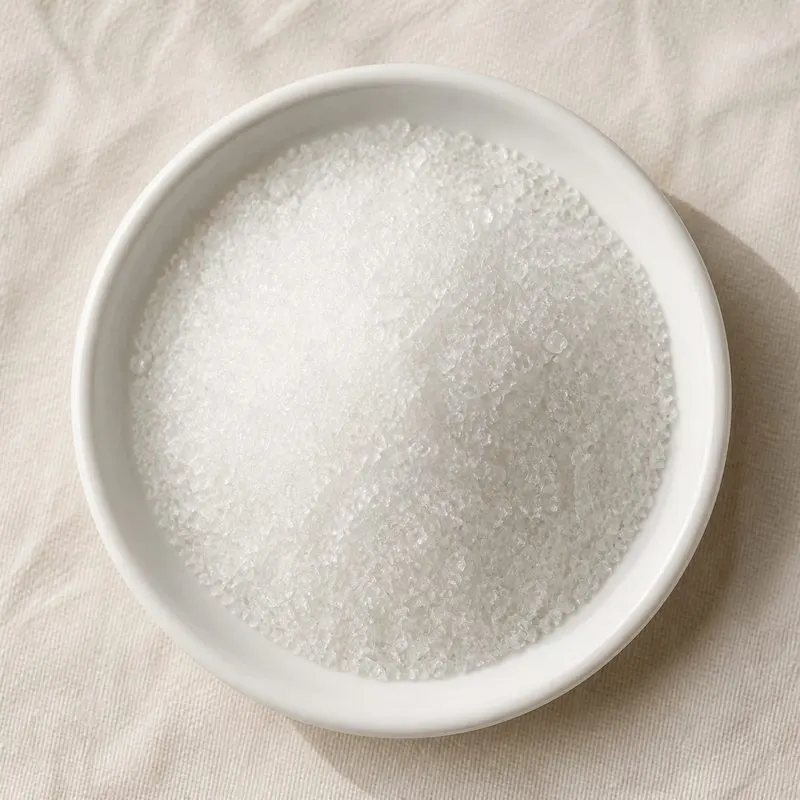
Physical forms follow the application. Standard crystalline powder is the base article; a fine milled grade at 80 to 120 mesh is used where dissolution speed or blend uniformity in a capsule matters; a granulated direct compression grade carrying a diluent is used for tablets. Sodium and other salt forms of the reduced peptide are offered where a less acidic solution is needed. Coated and microencapsulated versions, usually with a lipid or a modified starch shell, are sold where the thiol has to survive an oxidising matrix or a long shelf life, and yeast extracts standardised on reduced glutathione content serve the seasoning trade at far lower concentration.
Applications
- Antioxidant supplement capsules, tablets and sachets, the principal outlet for the reduced grade
- Effervescent and instant drink powders, where the acidic matrix and rapid consumption limit oxidation of the free thiol
- Oral films and sublingual tablets intended to deliver the intact peptide across the buccal mucosa
- Bouillon, sauce and savoury seasoning blends, where reduced glutathione supplies kokumi thickness and continuity
- Salt-reduced and fat-reduced processed foods, restoring the sense of body lost when those components are cut
- Biscuit and cracker dough, where the thiol reduces gluten disulphide bonds, cutting mixing time and dough elasticity
- Fruit and vegetable processing aids, where the reducing action slows enzymatic browning in cut produce and juice
- Wine and juice antioxidant treatment, protecting aroma compounds against oxidative loss
- Sports recovery and liver support formulations, formulated with glycine and N-acetylcysteine as precursor systems
- Cell culture media as a defined redox component, outside food use
Brands Using L-Glutathione Reduced
Widely-distributed consumer products that list L-Glutathione Reduced on the ingredient label.
- Jarrow FormulasGlutathione Reduced 500 mg ↗Supplies reduced glutathione at 500 mg per veggie capsule as the sole active ingredient.Label verified 2026-08-31
- BulkSupplements.comGlutathione Capsules (Reduced Form) ↗Capsules of reduced glutathione sold as a single-ingredient antioxidant.Label verified 2026-08-31
- CodeageAmen Glutathione-SR+ ↗Formulated with L-glutathione (reduced) in a time-release matrix of hydroxypropyl methylcellulose, fenugreek galactomannans and sunflower lecithin.Label verified 2026-08-31
- CodeageNanofood Liquid Liposomal Glutathione ↗A lemon-flavoured liquid supplying reduced glutathione in a phospholipid liposomal complex.Label verified 2026-08-31
Brand names, product names and logos are the property of their owners. They appear here as published evidence that the ingredient is used, taken from the brand's own label or website. Their appearance is not an endorsement, and it does not mean the brand buys from us or from any manufacturer listed on this site.
China Manufacturers of L-Glutathione Reduced
Top L-Glutathione Reduced manufacturers in China.

Company names and logos are the property of the manufacturers themselves. They are listed here because our own directory records them as producing this ingredient. A listing is not an endorsement by them, and we do not represent them or speak on their behalf.
Regulatory Status
In the United States reduced L-glutathione produced by yeast fermentation has been the subject of GRAS notifications for defined food uses, to which FDA has responded with no objection letters, and it is a lawful dietary ingredient for supplements under the Dietary Supplement Health and Education Act on the basis of marketing before the statutory cut-off. Use as a flavour-modifying ingredient in savoury products rests on that GRAS basis rather than on a food additive regulation. Injectable and infused glutathione preparations sit outside this status and are regulated as drugs.
In the European Union reduced glutathione carries no E number and is not on the list of authorised food additives; it is placed on the market as a food ingredient and, in supplements, under the national provisions each member state applies to substances other than vitamins and minerals. The European Food Safety Authority has examined health claims relating to glutathione and none has been authorised for use, so the ingredient is sold without claim in the Union. Novel preparations, including new physical forms or new production organisms, are assessed under Regulation (EU) 2015/2283. JECFA has considered glutathione within its work on flavouring agents rather than as an additive, and Codex has no commodity standard for the substance.
Manufacturing Process
The reduced peptide is made by aerobic fed-batch fermentation of high-yielding strains of Saccharomyces cerevisiae or Candida utilis on a molasses or glucose medium supplemented with the three constituent amino acids. Cysteine feeding is controlled closely, since it drives the rate-limiting gamma-glutamylcysteine synthetase step and free cysteine is itself unstable in an aerated broth. The culture accumulates glutathione intracellularly over roughly sixty to eighty hours.
Downstream processing is designed around keeping the thiol reduced. Biomass is separated and washed cold, then lysed by hot water treatment or mechanical disruption, and the lysate is clarified. From that point the liquor is handled under nitrogen with chelating agent present to suppress metal-catalysed oxidation. Glutathione is captured on ion exchange resin, eluted, desalted by electrodialysis or nanofiltration, and decolourised over activated carbon. The purified solution is concentrated under vacuum at low temperature and crystallised by controlled addition of ethanol. Where a batch shows elevated disulphide, a reduction step with a food compatible reductant is applied before crystallisation. Crystals are centrifuged, washed with cold ethanol, dried under vacuum below sixty degrees Celsius, milled, sieved and packed under nitrogen in foil laminate with oxygen scavenger.