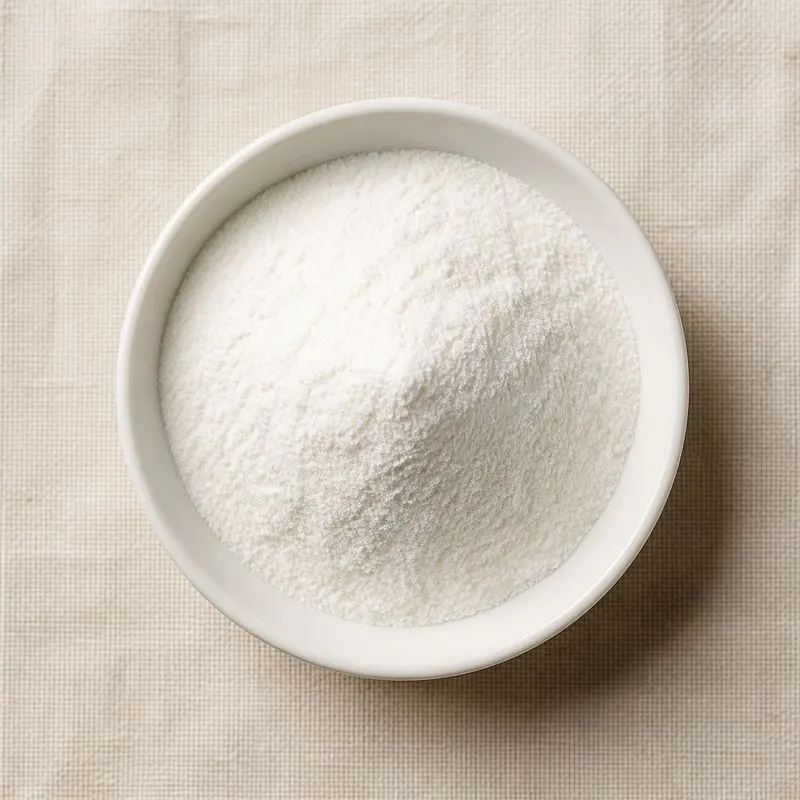
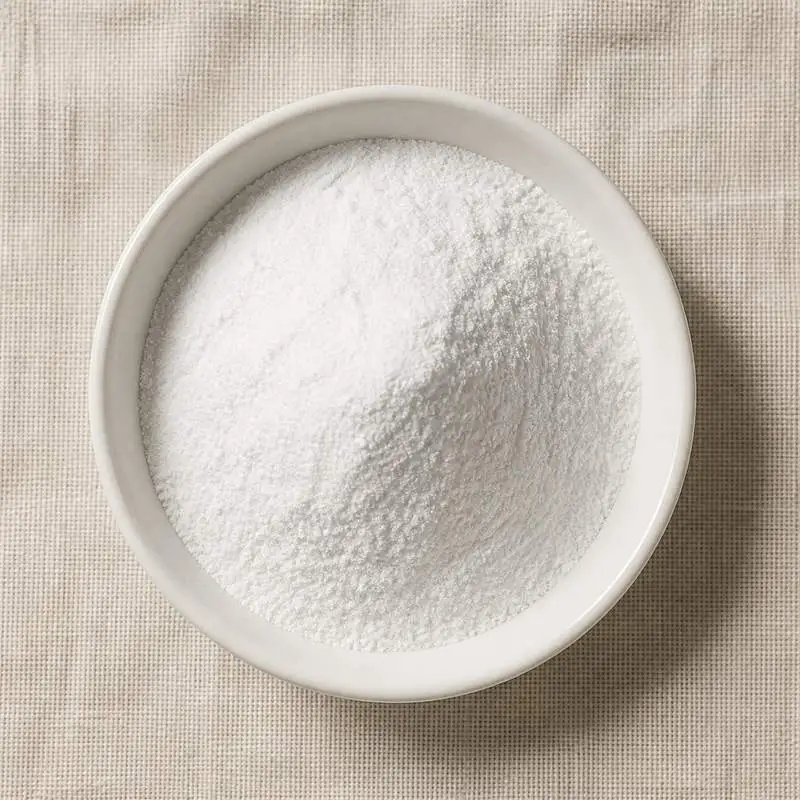
Lyophilized Royal Jelly
Lyophilized royal jelly is fresh royal jelly, the glandular secretion produced by the hypopharyngeal and mandibular glands of nurse honey bees, from which the water has been removed by freeze drying. Fresh jelly runs about 60 to 70 percent water, so freeze drying concentrates it roughly threefold and converts a perishable viscous cream into a stable free flowing powder.
In composition the dried product is around 12 to 15 percent lipid, 30 to 40 percent protein, 25 to 35 percent sugars and 2 to 3 percent ash. Its two characteristic markers are 10 hydroxy 2 decenoic acid, a medium chain unsaturated fatty acid unique to royal jelly and used as the assay basis for the entire trade, and the major royal jelly proteins, a family of nine glycoproteins that account for most of the protein fraction. Freeze drying is preferred over spray or vacuum drying because those thermal routes degrade both the proteins and the marker acid.
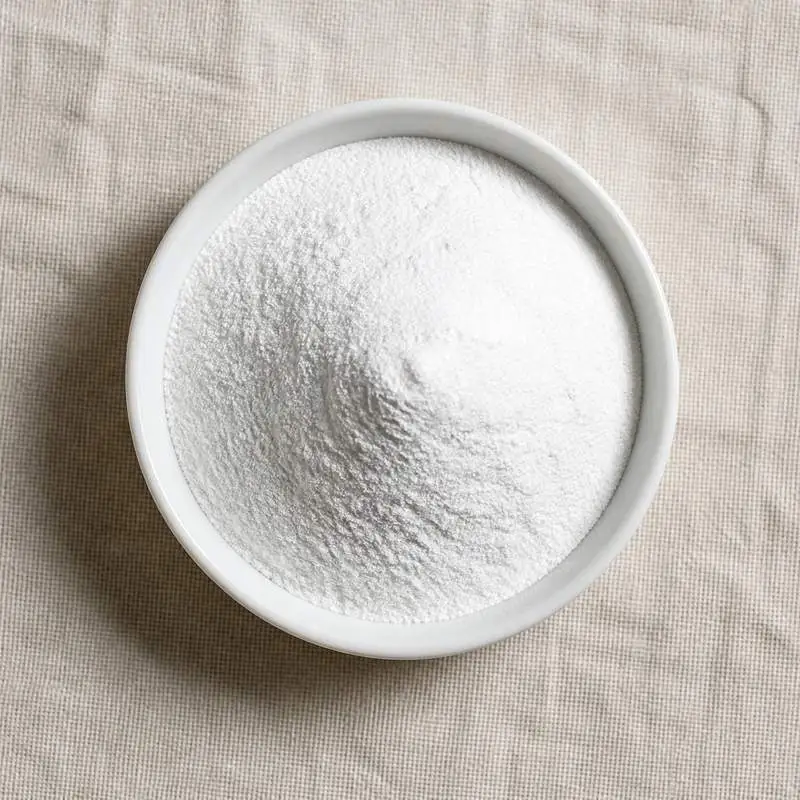
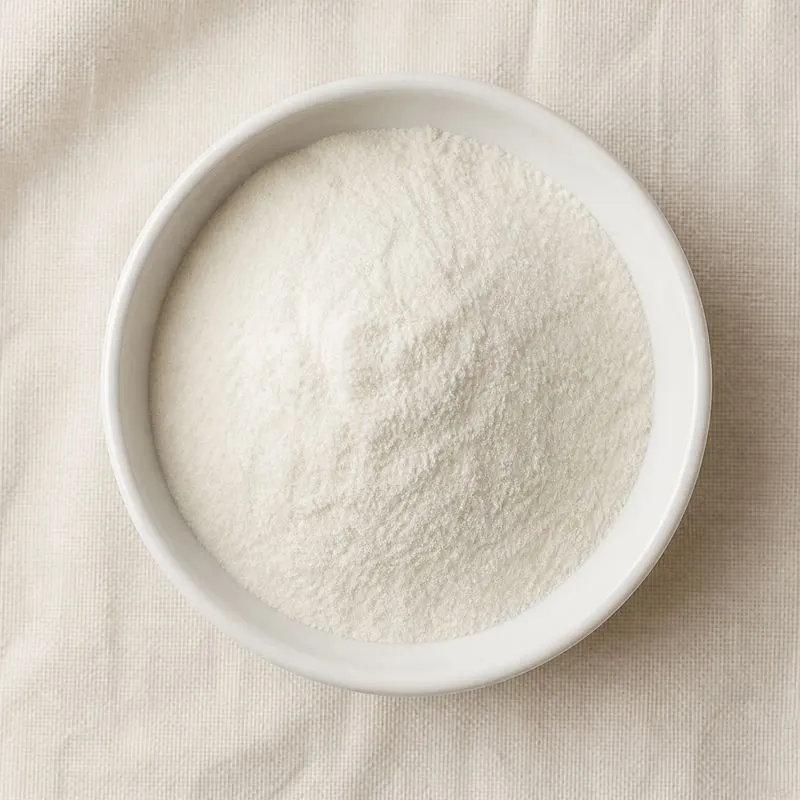
The powder is white to pale cream with a sharp acidic and slightly pungent odour, partly soluble in water leaving a fine protein and lipid suspension, and hygroscopic. It is stored cold and protected from light and oxygen, since the marker acid and the protein fraction both decline measurably in warm ambient storage.
We source bulk Lyophilized Royal Jelly from top China manufacturers for our partners, working with several of them. The manufacturers are in Zhejiang and Hebei. A smaller requirement can ship in a combined container with other ingredients.
Please send the grade you need, the volume and your destination port, and we will come back with a solution and a price.
or call +86-21-6858 0751
- Function
- Nutraceutical
Specifications
| Item | Specification |
|---|---|
| Appearance | White to pale cream free flowing powder |
| Odour and Taste | Characteristic sharp acidic, slightly pungent |
| 10 Hydroxy 2 Decenoic Acid | Not less than 5.0 percent on dry powder |
| Identification | HPLC profile conforms to royal jelly reference |
| Moisture | Not more than 5.0 percent |
| Crude Protein | Not less than 30.0 percent |
| Total Sugars | 25.0 to 35.0 percent |
| Ash | Not more than 3.0 percent |
| pH (10 percent suspension) | 3.4 to 4.5 |
| Particle Size | Not less than 95 percent through 80 mesh |
| Lead | Not more than 0.5 mg/kg |
| Arsenic | Not more than 0.5 mg/kg |
| Chloramphenicol | Not detected at 0.3 micrograms per kg |
| Total Plate Count | Not more than 10000 cfu/g |
| Yeast and Mould | Not more than 100 cfu/g |
| E. coli | Absent in 1 g |
| Salmonella | Absent in 25 g |
Common Markets Grades
Trade grading rests almost entirely on 10 hydroxy 2 decenoic acid content. The common commercial tiers for lyophilized powder are 3.0 percent, 4.0 percent, 5.0 percent and 6.0 percent minimum on the dry powder, corresponding roughly to fresh jelly of 1.4 to 2.0 percent, with higher figures traded at a premium for supplement use. Water content of the powder is normally specified at 5 percent or below, and total sugars, protein and ash are declared alongside.
Physical grades cover unmilled freeze dried cake, standard milled powder for capsule filling, and micronised powder for tablets and beverage sachets. Standardised blends exist in which the powder is blended with maltodextrin or lactose to a fixed marker acid figure so that downstream dosing stays constant across crops. Organic certified material is traded where the apiary and forage area meet organic rules. Pesticide residue and antibiotic screening, particularly for chloramphenicol and nitrofurans, is a routine part of the traded specification rather than an optional test.
Applications
- Capsules and tablets sold as general tonics, where the powder is dosed directly on its marker acid content
- Combination supplements with propolis and bee pollen, marketed as apitherapy ranges
- Women's health and menopause formulations, one of the larger traditional positions for royal jelly
- Beverage sachets and instant powders, where micronised grades disperse without the handling problems of fresh jelly
- Functional honey and honey paste blends, where the powder is stirred into honey as a fortifier
- Traditional Chinese and Japanese health foods, where royal jelly has a long established consumer position
- Skin care creams, serums and masks, where the protein and lipid fraction is used as a conditioning ingredient
- Confectionery such as lozenges and chewables, where a dry form is essential and fresh jelly cannot be used
- Infant and geriatric nutrition products in markets where royal jelly is a traditional fortifier
- Analytical reference material for marker acid method development and crop authentication work
Brands Using Lyophilized Royal Jelly
Widely-distributed consumer products that list Lyophilized Royal Jelly on the ingredient label.
Brand names, product names and logos are the property of their owners. They appear here as published evidence that the ingredient is used, taken from the brand's own label or website. Their appearance is not an endorsement, and it does not mean the brand buys from us or from any manufacturer listed on this site.
China Manufacturers of Lyophilized Royal Jelly
Top Lyophilized Royal Jelly manufacturers in China.
 Hangzhou Youither Bioscience Co., Ltd.6 ingredients in the directory
 Hengliang Apiculture4 ingredients in the directory
 Yi Pin Tang Pharmaceutical Shijiazhuang Co., Ltd.3 ingredients in the directory
Company names and logos are the property of the manufacturers themselves. They are listed here because our own directory records them as producing this ingredient. A listing is not an endorsement by them, and we do not represent them or speak on their behalf.
Regulatory Status
In the United States royal jelly is sold as a dietary ingredient under the dietary supplement framework, marketed with structure function claims rather than disease claims. It is not an approved food additive and has no independent generally recognised as safe listing, and the Food and Drug Administration has taken enforcement action against royal jelly products carrying disease claims. Because royal jelly is a recognised cause of allergic reactions, including asthma and anaphylaxis in sensitised people, advisory labelling is a normal commercial practice in most markets.
In the European Union royal jelly is a traditional food rather than a novel food, having a documented history of consumption before 1997, so it does not require novel food authorisation. The European Food Safety Authority assessed health claims proposed for royal jelly and authorised none, so no health claim may be made on European labels. As a product of animal origin from bees, imported royal jelly must come from an approved third country establishment and is subject to veterinary residue controls. Chloramphenicol, nitrofurans and other unauthorised veterinary drugs are the substances most often detected at border control. Codex has no commodity standard for royal jelly, although several national and regional standards define its composition and marker acid content.
Manufacturing Process
Collection starts in the apiary. Colonies are made queenless and given grafting frames of plastic or wax cups, each holding a young larva. Nurse bees flood the cups with royal jelly, and the frames are removed after roughly 66 to 72 hours, at the point of maximum accumulation. The larvae are lifted out and the jelly is drawn from each cup by vacuum aspirator or spatula into chilled food grade containers. From the moment of harvest the material is held at refrigeration or frozen, since the marker acid and the protein fraction degrade at ambient temperature.
At the processing plant the pooled fresh jelly is thawed under control, filtered through a coarse screen to remove wax fragments, larval remains and cup debris, then homogenised to a uniform cream and sampled for marker acid, moisture and residues. The homogenate is spread in trays and frozen hard, usually below minus 30 degrees Celsius, then loaded into a freeze drier where primary drying sublimes the ice under deep vacuum at a shelf temperature held low enough to keep the product below its collapse point. Secondary drying at a slightly raised shelf temperature removes bound water to the target residual moisture. The dried cake is broken and milled under low humidity, sieved to the required particle size, blended across sub lots to a uniform marker acid figure, then packed in aluminium foil laminate under nitrogen and stored cold.