Royal Jelly
Royal jelly is the secretion of the hypopharyngeal and mandibular glands of nurse honeybees, Apis mellifera, which is fed to all larvae for their first days and to the queen larva throughout development. It is harvested from queen cells, where the bees deposit far more of it than the larva consumes, and is the only bee product that is a glandular secretion rather than a collected or transformed plant material.
Composition is roughly 60 to 70 percent water, 12 to 15 percent protein, 10 to 16 percent sugars and 3 to 6 percent lipids in the fresh material. The protein fraction is dominated by the major royal jelly proteins, of which royalactin is the best characterised, and the lipid fraction by short chain hydroxy fatty acids. The most important of these is 10-hydroxy-2-decenoic acid, known as 10-HDA, which occurs in no other natural material and is therefore both the authenticity marker and the potency specification for the whole trade.
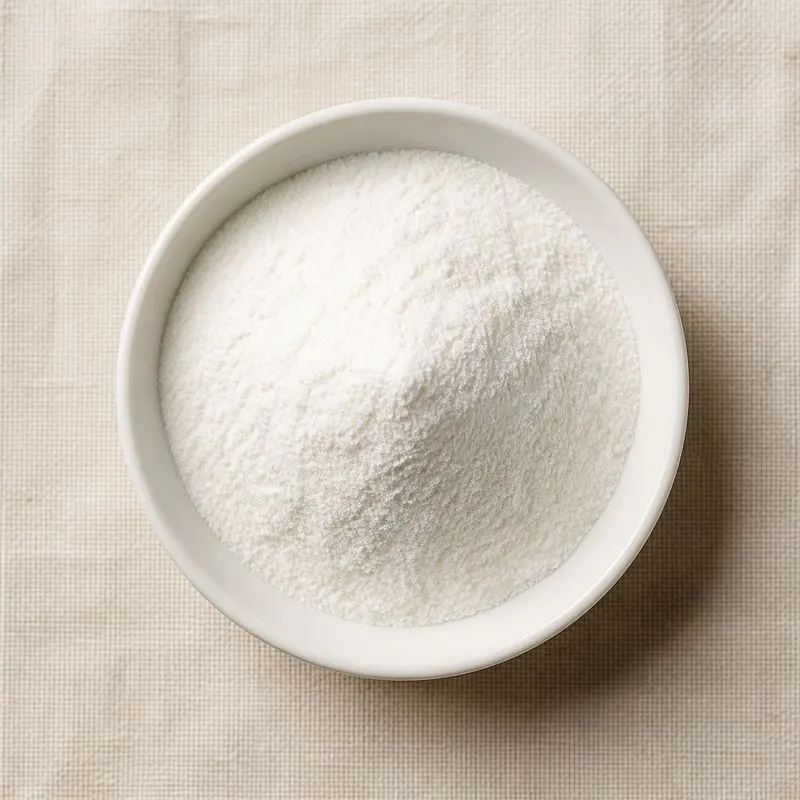
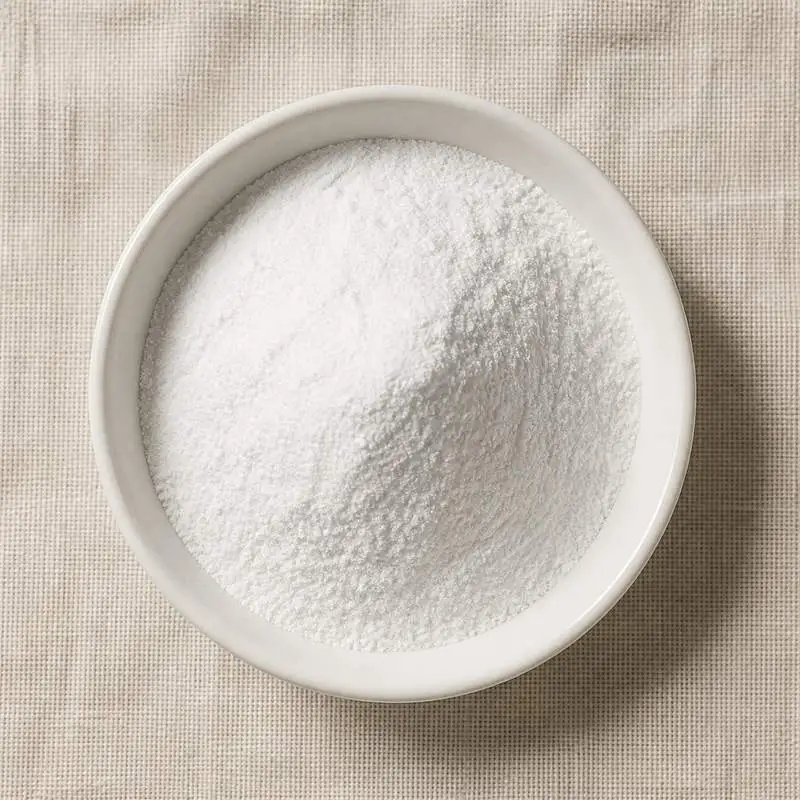
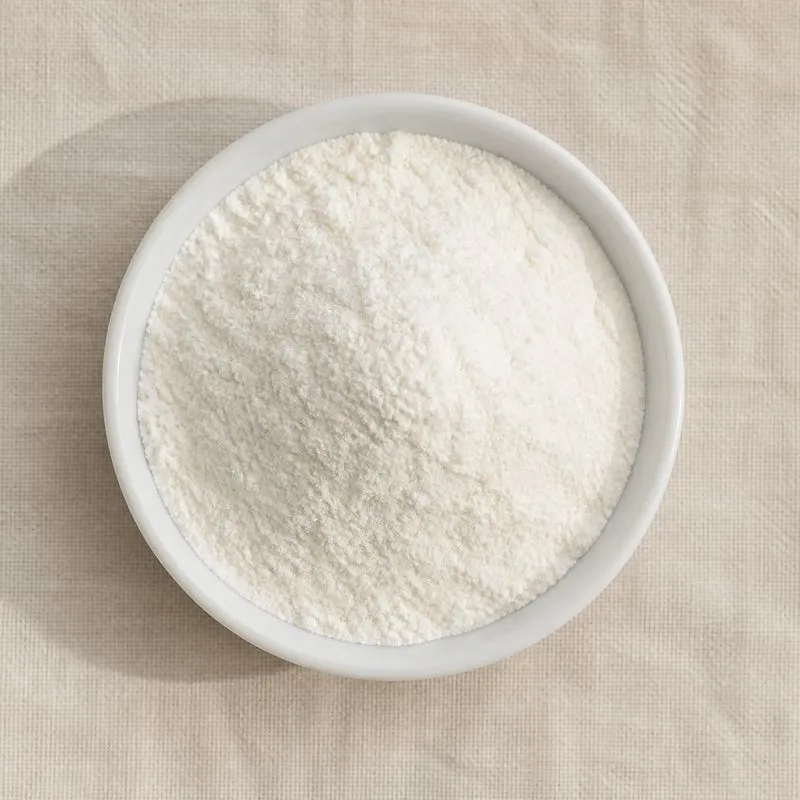
Fresh royal jelly is a viscous, slightly grainy milky white to pale yellow cream with a sharply acidic, phenolic taste and a pH between 3.6 and 4.2. It is partly soluble in water, giving a turbid dispersion rather than a solution, since a substantial part of the protein is insoluble at its native pH. It is highly perishable: 10-HDA and the proteins degrade at ambient temperature, so fresh material is held frozen at minus eighteen degrees Celsius or below from the apiary onward, and lyophilised powder, at roughly one third the weight of the fresh product, is the stable trading form.
We source bulk Royal Jelly from top China manufacturers for our partners. The manufacturer is in Henan. A smaller requirement can ship in a combined container with other ingredients.
Please send the grade you need, the volume and your destination port, and we will come back with a solution and a price.
or call +86-21-6858 0751
- Function
- Nutraceutical
Specifications
| Item | Specification |
|---|---|
| Appearance | Viscous milky white to pale yellow cream, slightly grainy |
| Odour and taste | Characteristic sharp acidic and phenolic |
| Identification | 10-HDA present by HPLC, protein profile conforms to reference |
| 10-hydroxy-2-decenoic acid, fresh basis | 1.4 percent minimum |
| Moisture | 62.0 to 68.5 percent |
| Crude protein, dry basis | 27.0 percent minimum |
| Total sugars, dry basis | 20.0 to 45.0 percent |
| Lipids, dry basis | 8.0 percent minimum |
| Ash | 2.0 percent maximum on dry basis |
| pH | 3.4 to 4.5 |
| Furosine | Conforms to fresh material reference |
| Starch and added sugars | Not detected |
| Lead | 0.5 mg/kg maximum |
| Antibiotic residues | Not detected at method limit of quantification |
| Total plate count | 1,000 cfu/g maximum |
| Yeast and mould | 100 cfu/g maximum |
| Escherichia coli | Absent in 1 g |
| Salmonella | Absent in 25 g |
Common Markets Grades
The two commercial forms are fresh frozen royal jelly and freeze dried powder. Fresh grades are traded on 10-HDA content on the as-is basis, commonly with a floor of 1.4 percent, on moisture, and on the freshness indicators furosine and the ratio of certain sugars, which rise when the material has been held warm or adulterated. Lyophilised powder is traded on 10-HDA on the dry basis, typically 4.0 to 6.0 percent, and is described by its concentration factor, usually three to one against the fresh material.
Beyond that split, buyers specify standardised powders blended with maltodextrin or lactose to a fixed 10-HDA declaration, encapsulated and microencapsulated grades protected against oxidation, and royal jelly in honey, a suspension at a stated percentage that is a consumer product rather than an ingredient. Water soluble grades, produced by enzymatic hydrolysis of the protein fraction, are traded where clarity in a beverage is required.
Adulteration control is a grade attribute in its own right in this category. Buyers routinely specify tests for added sugars and starch, for foreign protein, and increasingly for the stable isotope ratio of the carbon, because dilution and substitution are persistent problems in the trade. Organic certified material is available where the apiary and the surrounding forage area meet the organic beekeeping rules.
Applications
- Food supplements in capsule, tablet and softgel form, the largest outlet, dosed on a declared 10-HDA content
- Fresh royal jelly retail packs, sold frozen or chilled in small glass jars for direct consumption
- Royal jelly in honey blends, where the jelly is suspended in honey at a stated percentage for a shelf stable consumer format
- Liquid tonic vials and oral ampoules, a dominant format in East Asian and southern European markets
- Functional beverages and shots, where hydrolysed water soluble grades avoid the turbidity of native material
- Combination bee product formulations, blended with propolis, bee pollen and honey
- Skin care and cosmetic formulation, where royal jelly and its protein fraction are used in creams and serums
- Hair and scalp products, where the protein and vitamin fraction is used for conditioning positioning
- 10-HDA isolation, where the acid is separated as a purified active for cosmetic and supplement use
Brands Using Royal Jelly
Widely-distributed consumer products that list Royal Jelly on the ingredient label.
- CarlyleRoyal Jelly 2,500 mg Capsules ↗Capsule supplying 2,500 mg of royal jelly per serving in a 120 count bottle.Label verified 2026-08-31
- Bee Healthy FarmsRoyal Jelly Capsules 1000 mg ↗Each capsule holds 334 mg of concentrated royal jelly, stated as equivalent to 1000 mg of raw royal jelly.Label verified 2026-08-31
Brand names, product names and logos are the property of their owners. They appear here as published evidence that the ingredient is used, taken from the brand's own label or website. Their appearance is not an endorsement, and it does not mean the brand buys from us or from any manufacturer listed on this site.
China Manufacturers of Royal Jelly
Top Royal Jelly manufacturers in China.

Company names and logos are the property of the manufacturers themselves. They are listed here because our own directory records them as producing this ingredient. A listing is not an endorsement by them, and we do not represent them or speak on their behalf.
Regulatory Status
In the United States royal jelly is used as a dietary ingredient under the Dietary Supplement Health and Education Act, with manufacture subject to current good manufacturing practice at 21 CFR Part 111, and as a conventional food ingredient on the basis of its history of food use. It has no food additive regulation of its own. The FDA has taken enforcement action against royal jelly products bearing disease treatment claims, since such claims make the product an unapproved drug, and labelling is limited to structure and function statements. Royal jelly is a recognised cause of serious allergic reactions, including asthma and anaphylaxis, particularly in people with existing atopy, and although it is not one of the major allergens requiring declaration in the United States, advisory labelling is normal industry practice. Imported material is subject to the general import controls and to the honey and bee product economic adulteration screening the agency applies.
In the European Union royal jelly has a long history of consumption and is not a novel food. It is placed on the market as a food supplement under Directive 2002/46/EC, and Regulation (EC) No 1924/2006 governs health claims made for it; the European Commission has authorised no claim relating to royal jelly, so permitted communication is limited. Australia and New Zealand require a warning statement on royal jelly products about the risk of severe allergic reactions, and comparable advisory labelling is applied voluntarily in several EU markets. Bee products intended for human consumption are covered by the hygiene rules for food of animal origin and by the residue monitoring requirements for veterinary medicines, with residues of antibiotics used in beekeeping a standing control point. Internationally, ISO 12824 sets out specifications and test methods for royal jelly, including the determination of 10-HDA, and is the reference most contracts are written against; Codex Alimentarius has a standard for honey but none for royal jelly.
Manufacturing Process
Production depends on manipulating the colony into rearing queens continuously. A queenless production colony is given a frame of artificial queen cups into which one day old larvae are grafted, either by hand with a grafting tool or by confining the queen so that she lays directly into the cups. The nurse bees respond by flooding the cells with royal jelly. Harvest is at 64 to 72 hours after grafting, the point at which the deposit is largest, since the larva begins to consume it rapidly after that.
At harvest the cell walls are trimmed, the larva is lifted out with forceps or a vacuum tool, and the jelly is drawn from each cell by suction pump or spatula into a chilled collection vessel. Everything from this point is a cold chain problem: the material is passed through a fine sieve or filter to remove wax, cell debris and larval fragments, homogenised gently, and either filled into containers and frozen immediately at minus eighteen degrees Celsius or lower, or held chilled for a short transfer to the drying plant.
Freeze drying is the standard route to a stable product. Fresh jelly is spread in trays and frozen hard, then the water is sublimated under vacuum at a shelf temperature kept low enough that the proteins do not denature and the 10-HDA is not lost, typically over twenty four to forty eight hours. The dried cake is milled gently, sieved, assayed for 10-HDA and moisture, and blended with carrier where a standardised declaration is required. Powder is packed under nitrogen in foil laminate with desiccant and held cool and dark. Water soluble grades take an additional step before drying, in which the protein fraction is hydrolysed with a food grade protease and the insoluble residue removed by filtration.