Maltotetraose
Maltotetraose is the linear tetrasaccharide made of four glucose units joined by alpha 1,4 glycosidic bonds, the four unit member of the malto oligosaccharide series that runs from maltose through maltotriose and beyond. It is not isolated as a pure crystalline sugar for food use; the commercial article is maltotetraose syrup, a starch hydrolysate in which the tetrasaccharide is the dominant component, typically at 50 percent or more of the dry solids.
What makes it commercially interesting is a combination of properties that no other starch sugar offers together. Its sweetness is low, roughly 20 to 30 percent that of sucrose, so it can be used at high solids without making a product sweet. Its molecular size sits in a window where the syrup has low viscosity and low hygroscopicity yet still depresses freezing point usefully. It is only slowly digested, since it is hydrolysed at the intestinal brush border rather than absorbed directly, so it releases glucose gradually. And it markedly slows starch retrogradation, which is the mechanism of bread staling.
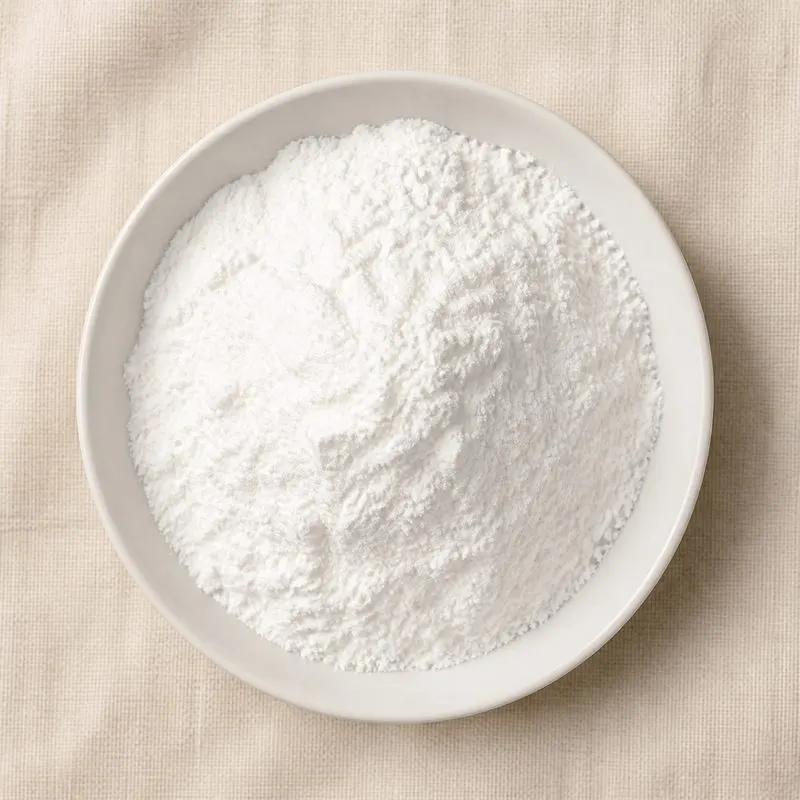
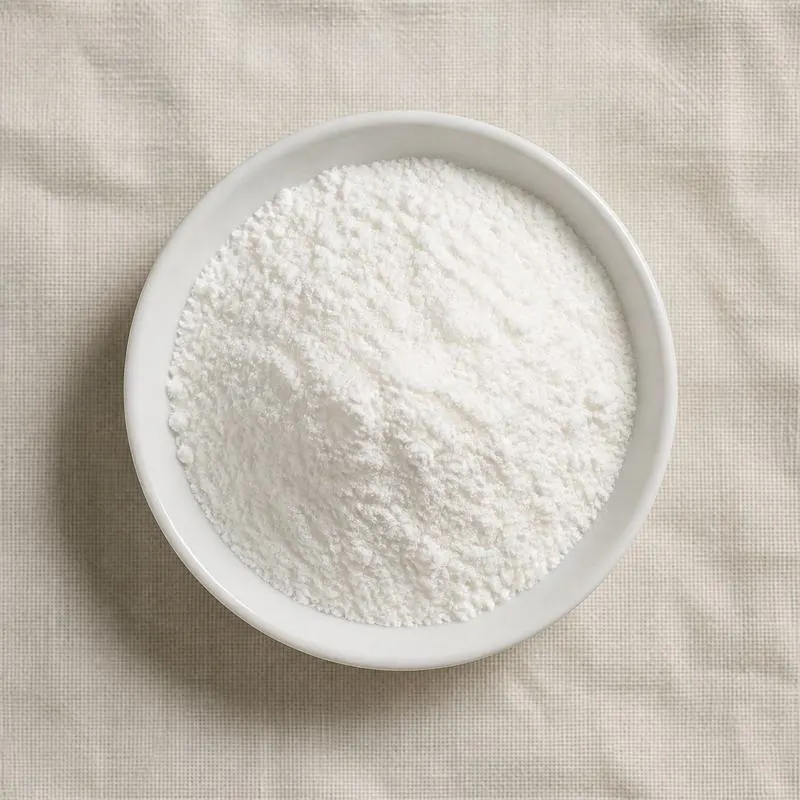
The syrup is a clear, colourless to pale straw liquid at 70 to 75 percent solids, and is also sold spray dried as a white free flowing powder. It is stable to heat and to acid, does not crystallise on storage, and browns less readily than a glucose or maltose syrup of comparable solids because it carries far fewer reducing ends per unit weight.
We source bulk Maltotetraose from top China manufacturers for our partners. The manufacturer is in Shandong. A smaller requirement can ship in a combined container with other ingredients.
Please send the grade you need, the volume and your destination port, and we will come back with a solution and a price.
or call +86-21-6858 0751

- Function
- Texturisers
Specifications
| Item | Specification |
|---|---|
| Appearance | Clear colourless to pale straw syrup, free of suspended matter |
| Odour and taste | Bland, faintly sweet, no off note |
| Maltotetraose on dry solids | 50.0 percent minimum by HPLC |
| Maltose and maltotriose on dry solids | 25.0 percent maximum |
| Glucose on dry solids | 2.0 percent maximum |
| Dry solids | 75.0 plus or minus 1.0 percent |
| Dextrose equivalent | 25 to 35 |
| Colour | 30 ICUMSA units maximum |
| pH, 10 percent solution | 4.5 to 6.0 |
| Sulphated ash | 0.3 percent maximum on dry solids |
| Protein, dry basis | 0.1 percent maximum |
| Lead | 0.5 mg/kg maximum |
| Arsenic | 0.5 mg/kg maximum |
| Total plate count | 1000 cfu/g maximum |
| Yeast and mould | 100 cfu/g maximum |
| E. coli | Absent in 1 g |
| Salmonella | Absent in 25 g |
Common Markets Grades
Grades are specified by the maltotetraose content of the dry solids, with 50 percent and 60 percent minimum as the common trade points and higher purity fractions made for research and analytical use. The balance is made up of maltose, maltotriose, maltopentaose and higher oligosaccharides, and the full saccharide profile by HPLC is part of the specification because it determines sweetness, viscosity and freezing point behaviour.
Physically the material is offered as a syrup at 70 to 75 percent solids and as a spray dried powder, the latter for dry mixes and tabletting. Dextrose equivalent, colour in ICUMSA units, pH and ash are specified as for any starch hydrolysate. Chromatographically enriched grades, in which the tetrasaccharide fraction has been separated on a simulated moving bed unit rather than simply produced by a selective enzyme, are traded where a higher purity is required. Analytical reference standards of pure maltotetraose are a separate laboratory article sold in gram quantities.
Applications
- Bakery, where it slows starch retrogradation and extends the soft eating quality of bread and cake
- Sports and clinical nutrition, as a slowly released carbohydrate delivering sustained glucose without the osmotic load of a monosaccharide
- Frozen desserts and ice cream, depressing the freezing point and controlling ice crystal growth at low sweetness
- Beverages and jellies, adding body and solids without adding sweetness
- Confectionery, suppressing sugar crystallisation and controlling water activity
- Retort and chilled sauces, contributing mouthfeel where a sweeter syrup would unbalance the flavour
- Spray drying and encapsulation carriers, where low viscosity at high solids is the requirement
- Reduced sugar formulations, replacing part of the sucrose solids while keeping the texture
- Analytical standards and enzyme assays, in the purified form, particularly for amylase activity determination
China Manufacturers of Maltotetraose
Top Maltotetraose manufacturers in China.

Company names and logos are the property of the manufacturers themselves. They are listed here because our own directory records them as producing this ingredient. A listing is not an endorsement by them, and we do not represent them or speak on their behalf.
Regulatory Status
Maltotetraose syrup is a starch hydrolysate and is regulated as a food rather than as a food additive. In the United States it falls within the general status of glucose syrups and malto oligosaccharide preparations, which are treated as generally recognised as safe in their ordinary food uses, and the closest published specifications are those of the Food Chemicals Codex for corn syrup and for maltodextrin. The enzymes used, the alpha amylase, the maltotetraose forming amylase and the pullulanase, are processing aids that are themselves affirmed as generally recognised as safe or the subject of GRAS notifications, and they are inactivated and removed before the product is finished.
In the European Union the syrup is regulated under the sugars framework and general food law and carries no E number, being described as glucose syrup or as a malto oligosaccharide syrup according to its dextrose equivalent and composition. The food enzymes used in its manufacture are subject to the EU food enzyme authorisation framework, and do not require declaration on the finished product where they have no technological function in it. Codex maintains standards for sugars covering glucose syrup and dried glucose syrup, which set the compositional basis for international trade in starch hydrolysates of this type.
Manufacturing Process
Manufacture rests on a specific enzyme rather than on a specific feedstock. Refined starch, usually maize or potato, is slurried at about 30 to 35 percent solids and liquefied with a thermostable alpha amylase in a jet cooker at around 105 to 110 degrees Celsius, which gelatinises the granules and cleaves the chains to soluble dextrins. The liquefaction is deliberately held to a low dextrose equivalent, because taking it too far leaves too little substrate of the right chain length for the next stage.
The liquefied dextrin solution is cooled and dosed with a maltotetraose forming amylase, an exo acting enzyme originally isolated from Pseudomonas species, which cleaves four glucose units at a time from the non reducing ends of the chains and so accumulates maltotetraose rather than the broad distribution an ordinary amylase would give. A debranching pullulanase is normally added alongside it, because the alpha 1,6 branch points of amylopectin block the exo enzyme and opening them substantially raises the yield. The reaction is held for several hours and tracked by HPLC until the target composition is reached, then stopped by heating. The hydrolysate is filtered to remove protein and residual solids, decolourised over granular activated carbon and demineralised on cation and anion exchange resin. Where a higher purity grade is required, the refined liquor is passed through a simulated moving bed chromatographic separator that enriches the tetrasaccharide fraction and recycles the rest. The product is then evaporated under vacuum to syrup solids, or spray dried to a powder.