Organic Flour
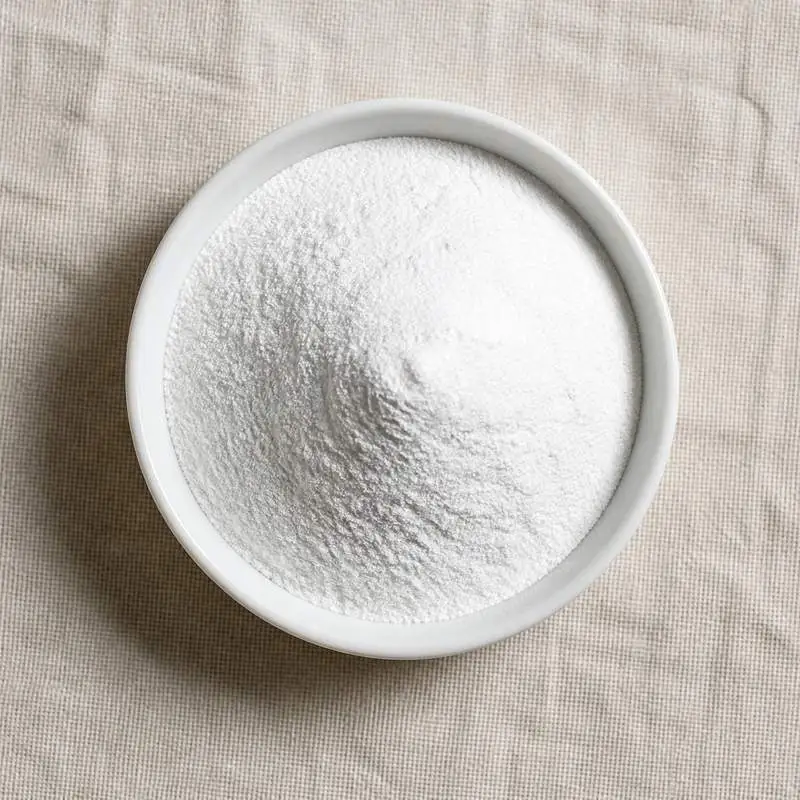
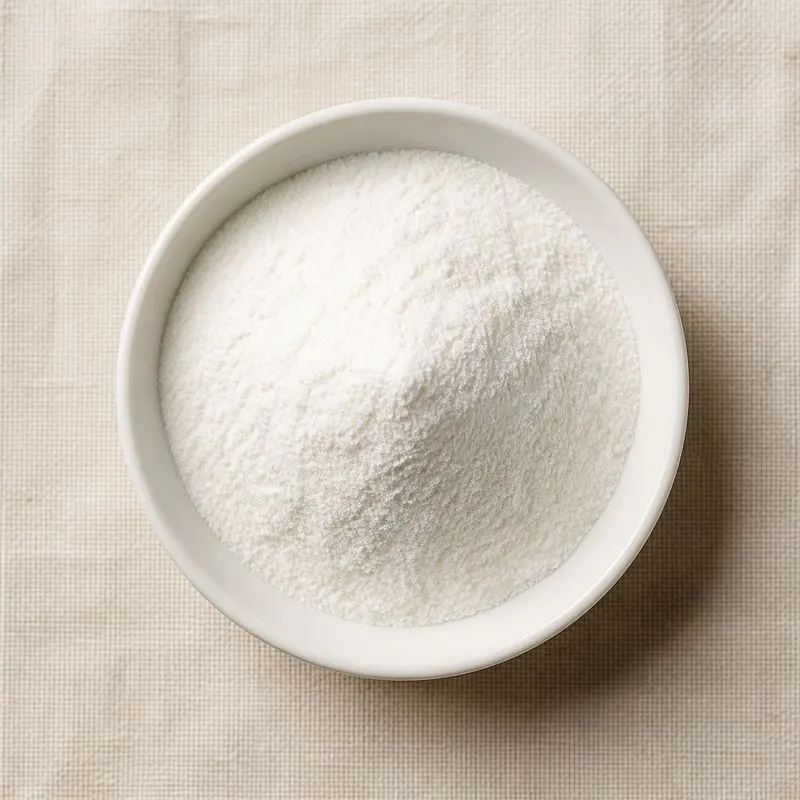
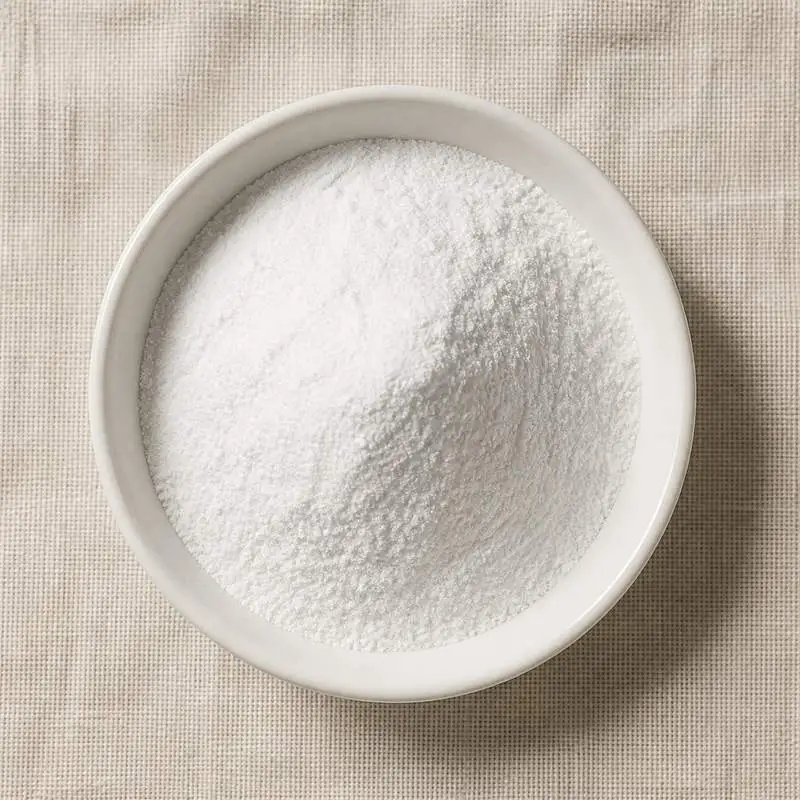
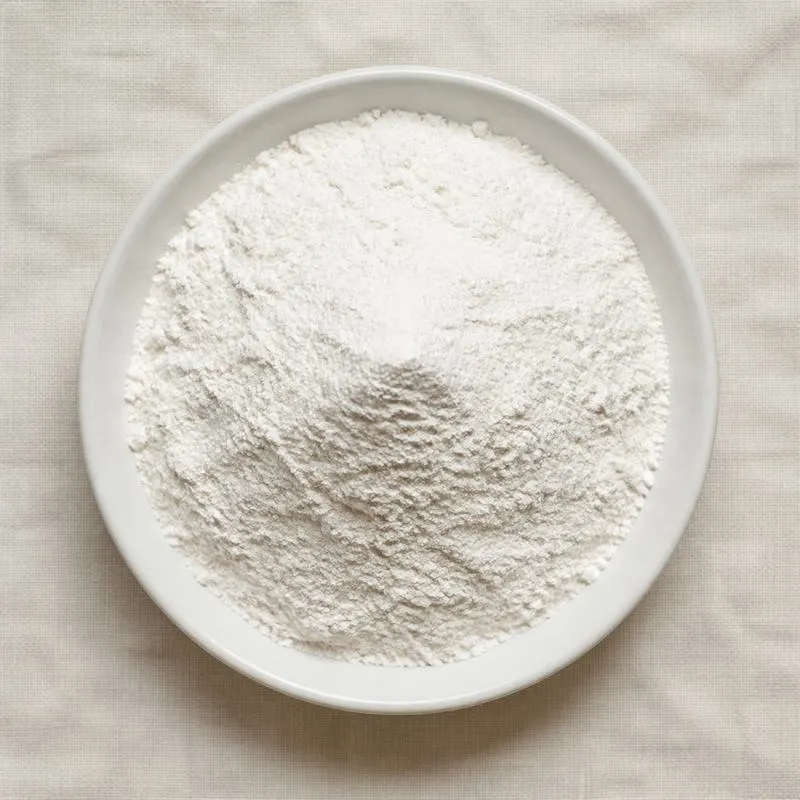
Organic flour is milled cereal endosperm, most often from common wheat, Triticum aestivum, produced from grain grown and handled under certified organic rules that exclude synthetic pesticides, synthetic fertilisers and genetically modified seed. It is a free flowing white to cream powder, milled without the bleaching, bromate or synthetic enrichment treatments permitted in conventional flour.
Its function in food rests on two components. Starch, at roughly 70 to 75 percent of the flour, gelatinises on heating and sets the crumb structure. The gluten forming proteins glutenin and gliadin, at 9 to 14 percent depending on the wheat class, hydrate and develop into the viscoelastic network that traps fermentation gas and gives dough its extensibility and elasticity.
Flour is insoluble in water; it hydrates and swells rather than dissolving, absorbing 55 to 65 percent of its weight in water depending on protein and damaged starch content. Its keeping quality is limited by lipase and lipoxygenase activity in the residual germ and bran fractions, so wholemeal grades turn rancid faster than white grades. Untreated organic flour matures naturally over several weeks after milling, during which its baking performance improves.
We source bulk Organic Flour from top China manufacturers for our partners. The manufacturer is in Inner Mongolia. A smaller requirement can ship in a combined container with other ingredients.
Please send the grade you need, the volume and your destination port, and we will come back with a solution and a price.
or call +86-21-6858 0751
- Function
- Nutraceutical
Specifications
| Item | Specification |
|---|---|
| Appearance | Free flowing powder, white to cream, free of lumps |
| Identification | Conforms to milled Triticum aestivum endosperm |
| Moisture | 14.5 percent maximum |
| Protein, 14 percent moisture basis | 10.5 to 12.0 percent |
| Ash, dry basis | 0.55 percent maximum |
| Wet gluten | 26.0 percent minimum |
| Falling number | 250 seconds minimum |
| Particle size | 98 percent through 180 micron sieve |
| Lead | 0.2 mg/kg maximum |
| Arsenic | 0.5 mg/kg maximum |
| Cadmium | 0.1 mg/kg maximum |
| Deoxynivalenol | 750 ug/kg maximum |
| Total plate count | 50,000 cfu/g maximum |
| Yeast and mould | 1,000 cfu/g maximum |
| Escherichia coli | Absent in 1 g |
| Salmonella | Absent in 25 g |
Common Markets Grades
Flour is graded first by extraction rate, the proportion of the grain retained after milling. White flour at roughly 72 to 76 percent extraction carries endosperm only; wholemeal flour at 100 percent extraction returns all the bran and germ; and intermediate brown or high extraction grades sit between the two. Ash content is the practical measure of extraction, running from about 0.45 percent in white flour to 1.5 percent or more in wholemeal.
The second axis is protein, which follows the wheat class. Soft or cake grades at 8 to 9.5 percent protein suit biscuits and cakes, all purpose grades at 10 to 11.5 percent cover general baking, and strong bread grades at 12 to 14 percent from hard wheat carry the gluten strength for yeast raised dough. Alongside these, buyers specify stone ground against roller milled, heat treated flour for ready to eat applications, malted flour with added diastatic malt, and self raising grades carrying a chemical leavening system. Non wheat organic flours from spelt, rye, oat, rice and buckwheat are traded on the same extraction and mesh basis, and organic certification is an overlay on any of these specifications.
Applications
- Yeast raised bread and roll production, where gluten development in strong grades traps fermentation gas and sets loaf volume
- Cakes, biscuits and short pastry, where low protein soft grades limit gluten formation and keep the crumb tender
- Noodle and pasta manufacture, where protein quality determines cooking tolerance and bite
- Batters and coatings for fried foods, where flour builds viscosity and forms a crisp shell on frying
- Sauces, soups and gravies, where flour is used as a starch thickener, usually after cooking out in fat as a roux
- Baking premixes and dough conditioners, where flour is the carrier for enzymes, leavening and minor ingredients
- Breakfast cereals and extruded snacks, where the flour is the starch base for the extruded matrix
- Pet food and animal treat manufacture, where flour binds and structures the extruded or baked piece
- Wheat gluten and wheat starch production, where flour is washed to separate the two fractions
- Home baking retail packs, where untreated organic flour is sold as an unbleached, unenriched consumer product
Brands Using Organic Flour
Widely-distributed consumer products that list Organic Flour on the ingredient label.
- Bob's Red MillOrganic Unbleached White All-Purpose Flour ↗An organic wheat flour sold unbleached, unenriched and never bromated for general baking.Label verified 2026-08-31
- Anthony's GoodsOrganic Buckwheat Flour ↗USDA certified organic flour milled from buckwheat grown and packed in the United States.Label verified 2026-08-31
Brand names, product names and logos are the property of their owners. They appear here as published evidence that the ingredient is used, taken from the brand's own label or website. Their appearance is not an endorsement, and it does not mean the brand buys from us or from any manufacturer listed on this site.
China Manufacturers of Organic Flour
Top Organic Flour manufacturers in China.
Company names and logos are the property of the manufacturers themselves. They are listed here because our own directory records them as producing this ingredient. A listing is not an endorsement by them, and we do not represent them or speak on their behalf.
Regulatory Status
In the United States wheat flour is a standardised food defined in 21 CFR 137, which sets out the identity of flour, bromated flour, enriched flour and whole wheat flour and the treatments each may receive. Organic flour is normally sold as unbleached and unenriched, since the synthetic bleaching agents and most synthetic vitamin forms used for enrichment are not permitted under the US Department of Agriculture National Organic Program, 7 CFR Part 205, which certifies the farm, the mill and every handler in the chain. Wheat is a major food allergen and must be declared under the Food Allergen Labelling and Consumer Protection Act, and flour is not a ready to eat food, so labelling and handling assume a cooking step.
In the European Union flour is an ordinary food under general food law rather than an additive, and Regulation (EU) 2018/848 controls organic production and labelling. Cereals and milling fractions are subject to statutory maximum levels for mycotoxins, particularly deoxynivalenol, zearalenone and ochratoxin A, with tighter limits for products intended for infants and young children, and to maximum residue levels for pesticides. Cereals containing gluten are listed among the allergens that must be declared under the Food Information to Consumers Regulation. Codex Alimentarius maintains a standard for wheat flour covering moisture, ash, protein and contaminant provisions, and its guidelines for organically produced foods provide the international reference behind organic equivalence arrangements.
Manufacturing Process
Organic grain arrives from certified farms and is sampled for moisture, protein, falling number and contaminants before intake. It is cleaned on scalpers, aspirators, destoners, magnets and optical sorters to remove straw, stones, other seeds and damaged or mould affected kernels, then scoured to abrade dirt from the crease. Conditioning follows: water is added and the grain is tempered for twelve to twenty four hours so that the bran toughens and the endosperm softens, which lets the two separate cleanly.
Milling itself is a gradual reduction on a train of paired steel rolls. Corrugated break rolls open the kernel and scrape endosperm from the bran, and after each pass the stock is lifted by pneumatic conveying to sifters and purifiers that split it by particle size and density. Coarse endosperm particles, the semolina and middlings, are then ground finer on smooth reduction rolls in successive passes. The many resulting streams are recombined to hit the target ash and protein for each grade, and wholemeal is made either by grinding the whole kernel on stone mills or by returning the bran and germ streams to the white flour. Finished flour is sifted through a final security sieve, passed over magnets and metal detectors, and either bulk loaded or bagged. Organic status is maintained by running certified grain on flushed and documented lines, segregated from conventional stock throughout.