Polyanionic Cellulose
Polyanionic cellulose, usually abbreviated to PAC, is a highly substituted and uniformly derivatised sodium carboxymethyl cellulose. It is made from purified cellulose by the same etherification chemistry as ordinary carboxymethyl cellulose, but is taken to a higher degree of substitution, typically 0.9 and above, with tighter control over how evenly the carboxymethyl groups are distributed along the chain.
That uniformity is what separates PAC from technical grade carboxymethyl cellulose. Evenly substituted chains dissolve completely rather than leaving gel-like undissolved blocks, so PAC gives clear filtered solutions, and the dense anionic charge makes it far more tolerant of dissolved salts and of calcium and magnesium hardness. In seawater or a saturated brine, where standard carboxymethyl cellulose loses viscosity and precipitates, PAC continues to hydrate and hold viscosity. It also forms a thin low permeability filter cake on a porous surface, which is the basis of its dominant industrial use.
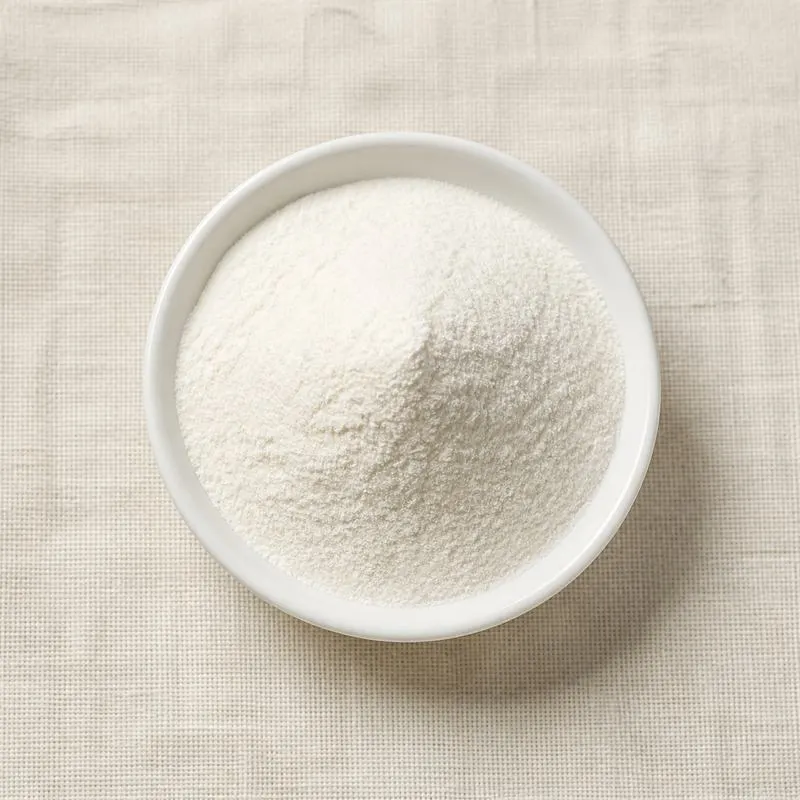
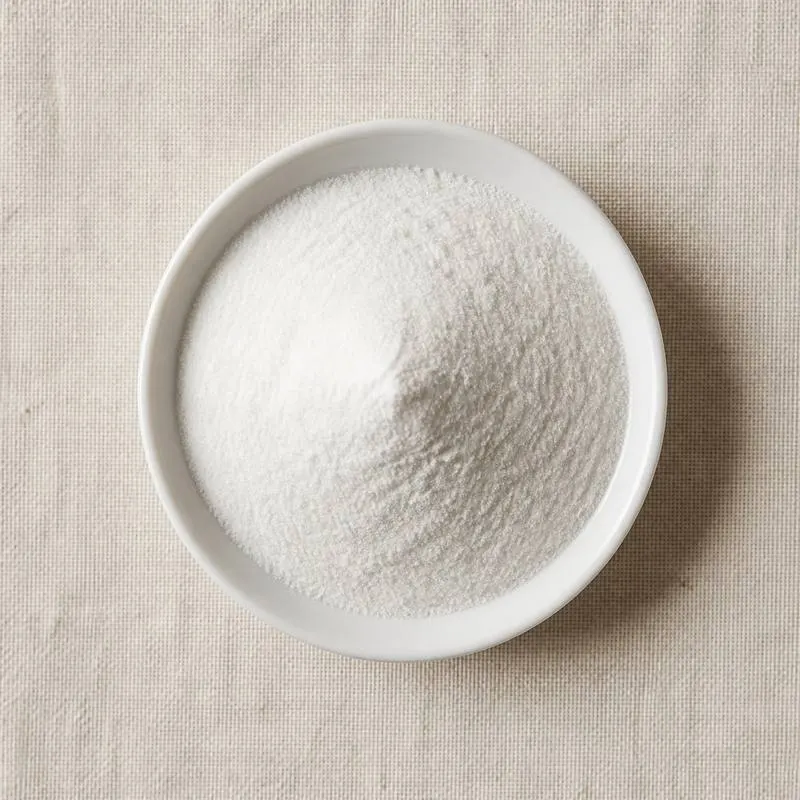
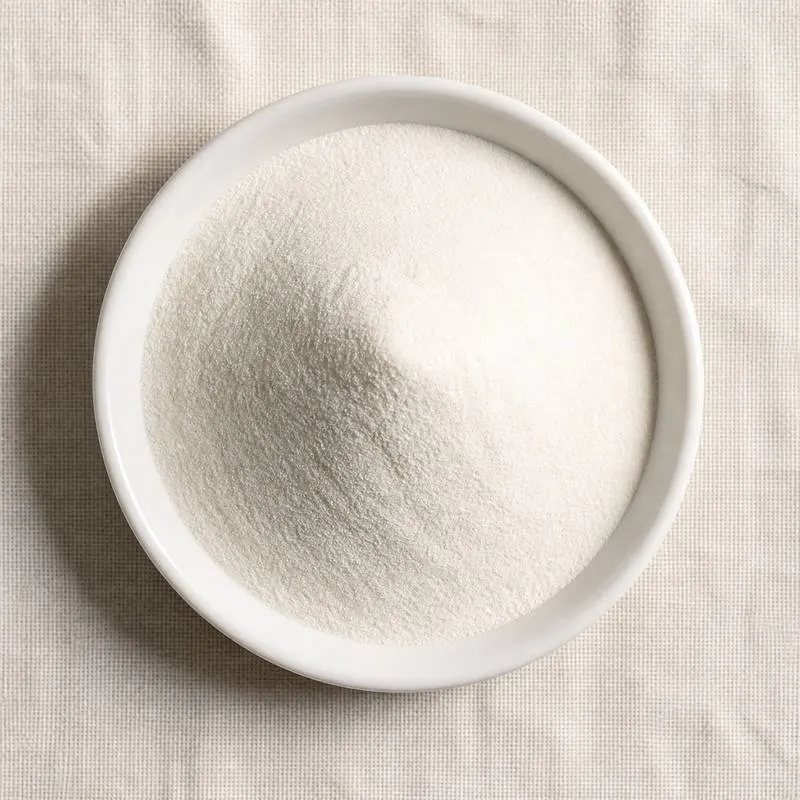
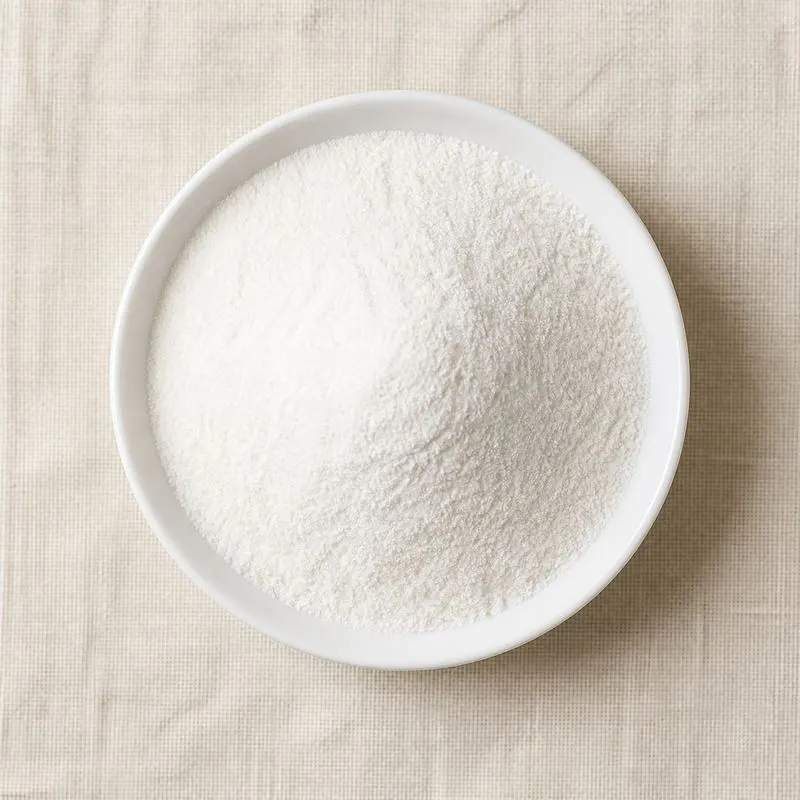
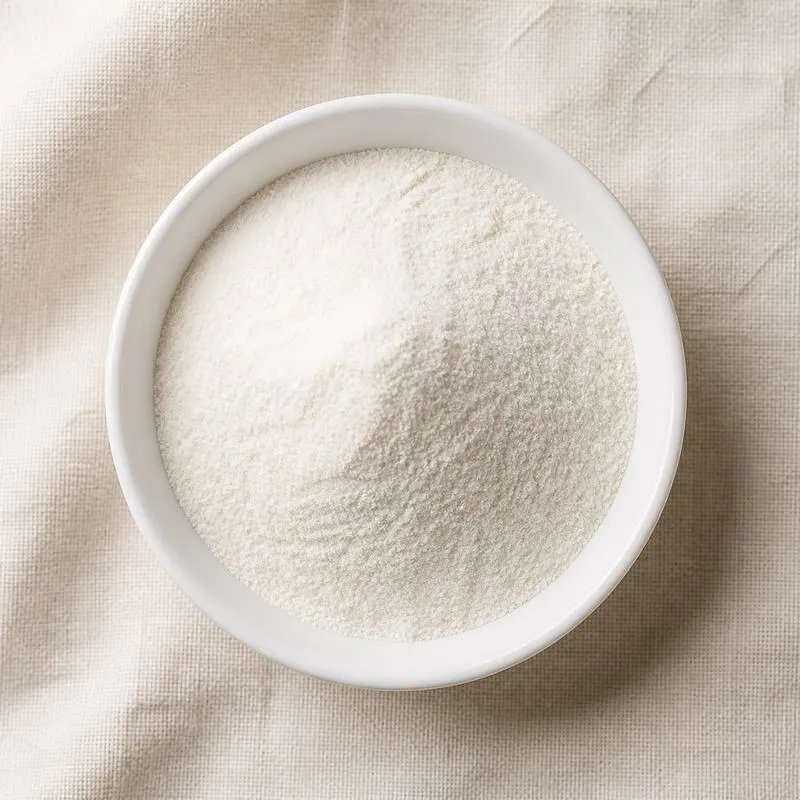
PAC is a white to cream fibrous powder or granule, soluble in cold and hot water, and non-ionic in behaviour only at very low pH where the carboxylate groups protonate. Solutions are pseudoplastic, shear thinning strongly, and are stable between about pH 6 and 10. Two viscosity families are traded, a high viscosity grade for rheology and a low viscosity grade for fluid loss control.
We source bulk Polyanionic Cellulose from top China manufacturers for our partners, working with several of them. The manufacturers are mostly in Shandong, Chongqing and Hebei. A smaller requirement can ship in a combined container with other ingredients.
Please send the grade you need, the volume and your destination port, and we will come back with a solution and a price.
or call +86-21-6858 0751
- Function
- Thickener / Hydrocolloid
Specifications
| Item | Specification |
|---|---|
| Appearance | White to cream free-flowing powder or granule |
| Identification | Positive for carboxymethyl cellulose and for sodium |
| Degree of Substitution | 0.90 to 1.20 |
| Purity as sodium carboxymethyl cellulose | Not less than 95.0% |
| Viscosity, 1% solution at 25 degrees Celsius | 1,000 to 2,000 mPa s for the high viscosity grade |
| Filtrate Loss, API standard cell | Not more than 10 mL |
| Moisture | Not more than 10.0% |
| pH, 1% solution | 6.5 to 8.5 |
| Sodium Chloride | Not more than 1.0% |
| Sodium Glycolate | Not more than 0.4% |
| Particle Size | Not less than 95% through 80 mesh |
| Lead | Not more than 2 mg/kg |
| Arsenic | Not more than 3 mg/kg |
| Total Plate Count | Not more than 5,000 CFU/g |
| Yeast and Mould | Not more than 500 CFU/g |
| Salmonella | Absent in 25 g |
Common Markets Grades
PAC is traded chiefly as PAC HV, the high viscosity grade used to build rheology, and PAC LV, the low viscosity grade used for filtration control where added viscosity is unwanted. Both are specified by the viscosity of a 1 percent solution, by degree of substitution, by purity as sodium carboxymethyl cellulose content, and by filtrate loss in a standard test cell. Technical or oilfield grade dominates the volume and carries a lower purity floor, with the balance being sodium chloride and sodium glycolate from the reaction.
A refined food grade is also produced on the same route, purified by alcohol washing to a higher assay and controlled for residual glycolate and chloride, and that grade is regulated and traded as sodium carboxymethyl cellulose rather than under the PAC name. Buyers should state which is required, because the oilfield and food specifications differ substantially in purity, microbiology and heavy metals despite the identical chemistry. Regular and fine mesh, and dust-suppressed granular versions for handling, are offered within each grade.
Applications
- Water based drilling fluids, controlling filtrate loss into the formation by depositing a thin impermeable filter cake on the borehole wall
- Drilling fluid rheology, using the high viscosity grade to suspend barite weighting material and carry cuttings to surface
- Saltwater and saturated brine drilling systems, where its salt tolerance keeps viscosity that carboxymethyl cellulose would lose
- Well completion and workover fluids, providing viscosity in clear brines without solids
- Shale inhibition, coating clay surfaces to reduce hydration and borehole instability
- Ceramic and refractory bodies as a binder and plasticiser for extrusion and pressing
- Welding electrode and mineral processing formulations as a suspending and binding agent
- Paper coating and surface sizing, giving film strength and holding water in the coating colour
- Detergent formulation as an anti-redeposition agent on cotton fabric
- Food and beverage thickening and stabilising, where the refined grade is used and is declared as sodium carboxymethyl cellulose
China Manufacturers of Polyanionic Cellulose
Top Polyanionic Cellulose manufacturers in China.
 Anqiu Eagle Cellulose Co., Ltd.2 ingredients in the directory
 Chongqing Lihong Fine Chemicals Co., Ltd.2 ingredients in the directory
 Dongying Linguang New Materials Technology Co., Ltd.2 ingredients in the directory
- Inter Chemical (Shijiazhuang) Co., Ltd.2 ingredients in the directory
 YUCMC Co., Ltd.2 ingredients in the directory
Company names and logos are the property of the manufacturers themselves. They are listed here because our own directory records them as producing this ingredient. A listing is not an endorsement by them, and we do not represent them or speak on their behalf.
Regulatory Status
The great majority of polyanionic cellulose is used in oilfield and industrial applications, which are outside food additive regulation and are instead covered by chemical registration and workplace safety rules, including registration under the European chemicals regulation and hazard communication requirements where they apply.
Refined material intended for food is regulated as sodium carboxymethyl cellulose. In the United States it is affirmed as generally recognised as safe under 21 CFR 182.1745 for use as a food ingredient, subject to the purity conditions given there. In the European Union it is authorised as E466 sodium carboxymethyl cellulose under the food additives regulation, with purity criteria covering degree of substitution, sodium chloride and sodium glycolate content, and heavy metals, and it is generally permitted at quantum satis in the categories where it is allowed. Codex and JECFA recognise the substance as INS 466. Pharmacopoeial monographs for carboxymethylcellulose sodium exist in the European Pharmacopoeia and the United States Pharmacopeia. Material sold on an oilfield specification is not suitable for food use, and a food application requires the food grade with its own certificate of analysis.
Manufacturing Process
Purified cellulose, either cotton linter pulp or a high alpha cellulose wood pulp, is shredded and steeped in aqueous sodium hydroxide in an alcohol slurry medium, most often isopropanol or ethanol. This alkalisation swells the fibre and converts the cellulose hydroxyl groups to the more reactive alkoxide form. The use of an alcohol slurry rather than a dry kneader is what allows the reagents to reach every part of the fibre, and it is the reason a slurry process yields the uniform substitution that defines PAC.
Sodium monochloroacetate is then added and the reactor is heated to around 60 to 75 degrees Celsius for one to two hours, so that etherification attaches carboxymethyl groups to the cellulose chain. Sodium chloride and sodium glycolate are formed as by-products. The crude product is neutralised with acid, then washed repeatedly with aqueous alcohol, which dissolves the salts while leaving the polymer insoluble, and this wash train sets the finished purity. Oilfield grades take a shorter wash than food grades. The washed cake is desolventised, dried in a hot air or fluid bed dryer, milled to the specified mesh, sieved and blended to a uniform viscosity before packing. Recovered alcohol is distilled and returned to the process.