Powdered Butter
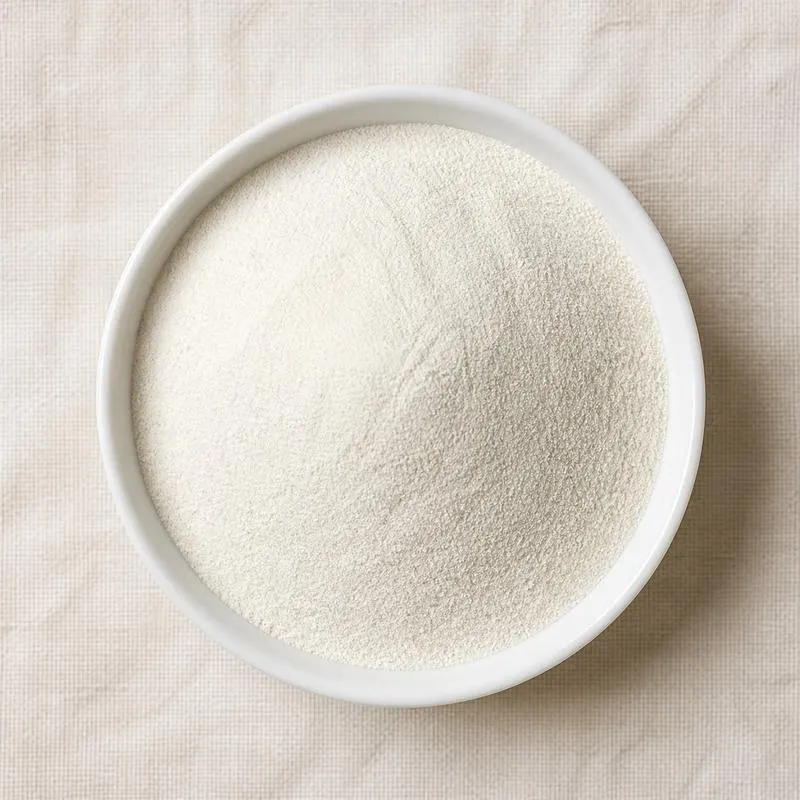
Powdered butter, generally traded as butter powder, is a dried dairy ingredient made by spray drying an emulsion of butterfat with milk solids and a carbohydrate carrier. It converts a refrigerated, perishable fat into a free flowing ambient stable powder that can be handled in dry blending lines.
The powder is a matrix rather than a simple dried fat. Butterfat, usually as butter or as anhydrous milk fat, is emulsified with skimmed milk powder, sodium caseinate or milk protein concentrate and with maltodextrin, and during drying the carbohydrate and protein form a wall around each fat droplet. That encapsulation is what keeps the fat from oxidising and from making the powder greasy, and the proportion of fat left outside the wall, measured as free fat, is the single most useful predictor of how well a butter powder will keep and flow.
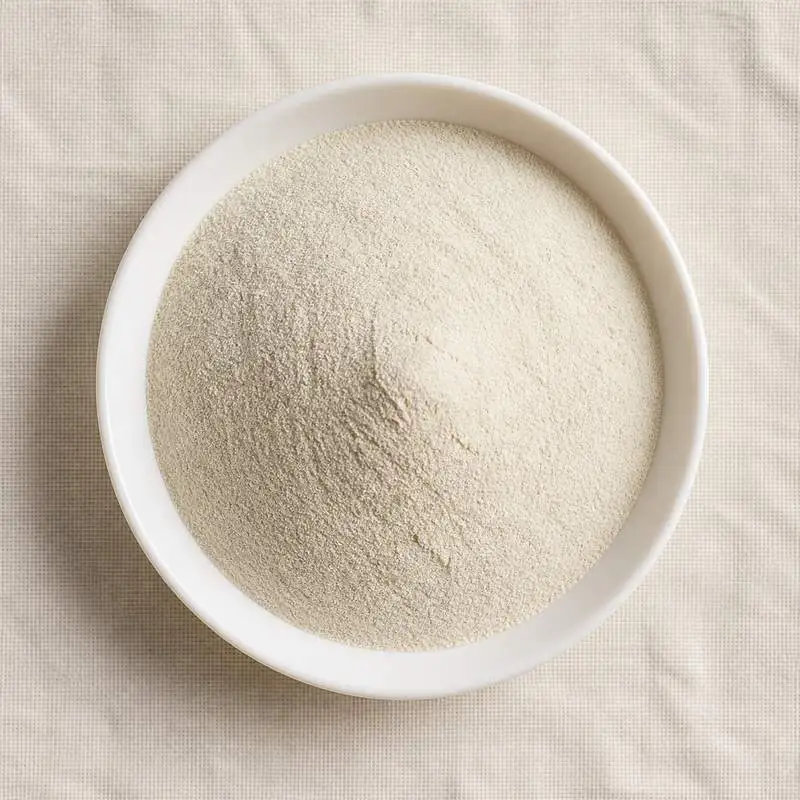
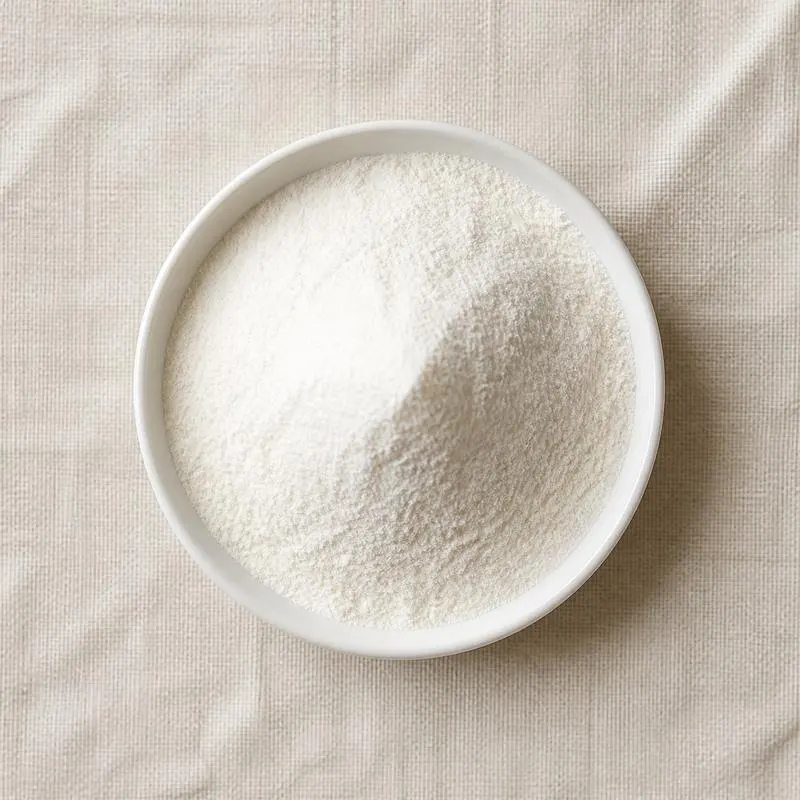
Fat content typically runs between 50 and 80 percent. The powder is off white to pale cream with a clean dairy aroma, and it reconstitutes in warm water to an emulsion rather than a true solution. Flavour intensity is limited by the fact that many butter volatiles are lost in drying, so most commercial powders carry an added butter flavour to restore the character.
We source bulk Powdered Butter from top China manufacturers for our partners. The manufacturer is in Guangdong. A smaller requirement can ship in a combined container with other ingredients.
Please send the grade you need, the volume and your destination port, and we will come back with a solution and a price.
or call +86-21-6858 0751
- Function
- Flavours and Aromas
Specifications
| Item | Specification |
|---|---|
| Appearance | Free flowing powder, free from lumps and foreign matter |
| Colour | Off white to pale cream |
| Odour and flavour | Clean dairy and buttery, free from rancid or scorched notes |
| Fat content | Declared per grade, typically 50.0 to 80.0 percent |
| Free fat | 5.0 percent of total fat maximum |
| Moisture | 3.0 percent maximum |
| Protein | Declared per formula, tolerance plus or minus 1 percent |
| Particle size | 95 percent through 40 mesh |
| pH of 10 percent reconstitution | 6.4 to 7.0 |
| Peroxide value of extracted fat | 1.0 meq/kg maximum |
| Lead | 0.5 mg/kg maximum |
| Total plate count | 10,000 cfu/g maximum |
| Yeast and mould | 50 cfu/g maximum |
| Coliforms | 10 cfu/g maximum |
| Salmonella | Absent in 25 g |
Common Markets Grades
Fat level is the first grading axis, with grades commonly offered around 50, 60, 70 and 80 percent fat, and higher fat grades giving more richness but poorer flow and shorter shelf life. The carrier system is the second, since powders built on skimmed milk solids taste more complete and carry lactose and milk protein, while powders built mainly on maltodextrin and caseinate are blander, cheaper and more tolerant in dry blends.
Beyond that, buyers separate cultured butter powders, made from cultured cream or with an added cultured dairy flavour, from sweet cream types, and separate salted from unsalted. Flavour enhanced grades carrying an added butter flavour are distinguished from plain ones. Instant or agglomerated grades are produced where the powder must disperse quickly in cold water, and free flowing grades carrying an anticaking agent are separated from untreated ones. Organic and non genetically modified positions are run as segregated lines.
Applications
- Bakery premixes for cake, biscuit and pastry, where a dry fat simplifies handling
- Popcorn and snack seasonings, applied as a topical butter flavoured powder
- Instant sauces, soups and gravy mixes needing dairy richness on reconstitution
- Instant mashed potato and side dish mixes
- Seasoning blends for foodservice and retail
- Confectionery and caramel systems, contributing dairy notes and fat
- Nutritional and meal replacement powders as a fat and flavour source
- Dry beverage mixes such as instant coffee and cocoa drinks
- Retail baking mixes sold to consumers
- Pet food coatings where a dairy palatant is used
China Manufacturers of Powdered Butter
Top Powdered Butter manufacturers in China.
Company names and logos are the property of the manufacturers themselves. They are listed here because our own directory records them as producing this ingredient. A listing is not an endorsement by them, and we do not represent them or speak on their behalf.
Regulatory Status
In the United States butter powder is a dairy ingredient. Butter itself has a standard of identity, and dried dairy blends are manufactured under the general food safety preventive controls together with the pasteurisation requirements applying to milk products. Carriers, emulsifying salts and anticaking agents used in the formula are permitted food additives or generally recognised as safe substances, each declared on the ingredient list, and any added flavour is declared as natural or artificial flavour. Milk is a major food allergen and must be declared.
In the European Union the product is a composite dairy ingredient subject to the animal products hygiene framework, which governs establishment approval, pasteurisation and traceability of the milk raw material. Milk is a listed allergen under the food information regulation and must be emphasised in the ingredient list. Emulsifying salts such as the phosphates and citrates, and anticaking agents such as silicon dioxide, carry their own E numbers and conditions of use as authorised additives, while Regulation (EC) No 1334/2008 covers flavourings, which carry no E number. Codex has standards for milk fat products and for milk powders that set the compositional reference used in export specifications.
Manufacturing Process
Butter or anhydrous milk fat is melted and held at around 50 to 60 degrees Celsius. In a separate vessel the aqueous phase is prepared by dissolving skimmed milk powder, sodium caseinate or milk protein concentrate together with maltodextrin, any emulsifying salt and any added flavour, and it is hydrated with agitation. The two phases are combined under high shear to form a coarse emulsion, then passed through a two stage high pressure homogeniser, which reduces the fat droplets to a size small enough to be encapsulated cleanly during drying. Droplet size at this point largely determines the free fat of the finished powder.
The emulsion is pasteurised, held briefly, and fed to a spray drier through a pressure nozzle or a rotary atomiser. Drying is carried out with a hot inlet and a controlled low outlet temperature, since excess heat scorches the dairy solids and drives off the volatile flavour compounds. Powder is collected from the chamber and from the cyclones, cooled in a fluid bed, and optionally agglomerated in the same bed to improve dispersibility. Anticaking agent is added where the grade calls for it, and the powder is sieved, metal checked and packed into foil laminate bags inside cartons or drums, usually with a nitrogen flush because the fat is the limiting factor for shelf life.