Pterostilbene
Pterostilbene is a methylated stilbene, chemically trans-3,5-dimethoxy-4'-hydroxystilbene, with formula C16H16O3 and molar mass 256.30 g/mol. It is the dimethyl ether of resveratrol, and replacing two phenolic hydroxyls with methoxy groups makes it substantially more lipophilic and considerably more resistant to the rapid glucuronidation that limits resveratrol, which is the basis of its commercial positioning.
It occurs naturally in blueberries, in grapes and in the heartwood of Pterocarpus marsupium, the Indian kino tree from which it takes its name, though natural levels are far too low for extraction to be economic and essentially all traded material is made by chemical synthesis.
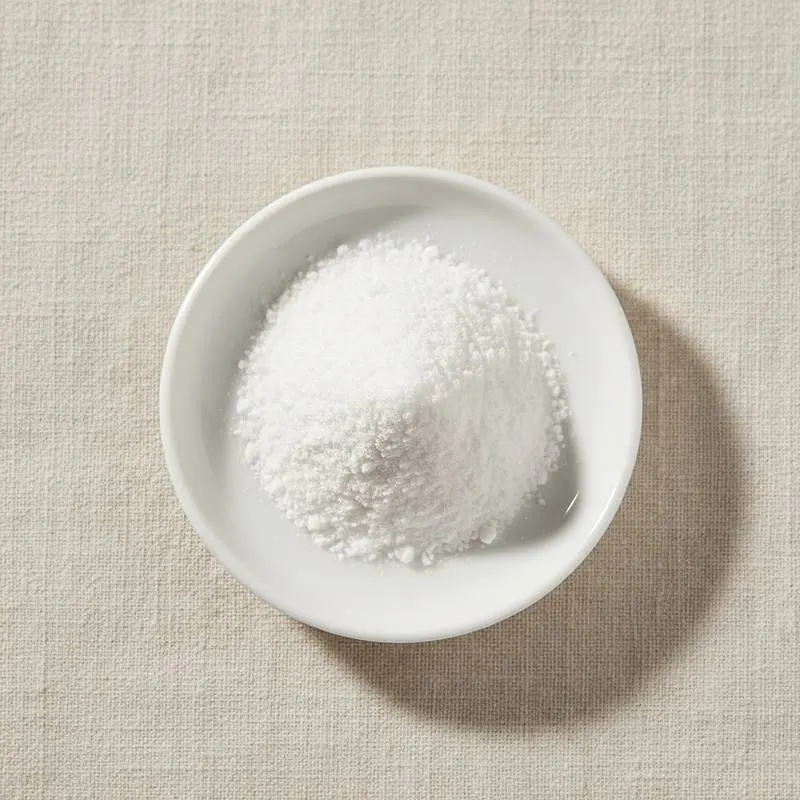
Commercial pterostilbene is a white to off white crystalline powder with a faint characteristic odour, practically insoluble in water and freely soluble in ethanol, propylene glycol and dimethyl sulphoxide. It is notably more stable to heat and oxidation than resveratrol, which suits it to tableting and to food applications, but like all stilbenes it isomerises from the trans to the inactive cis form under ultraviolet light, so it is handled and packed in light resistant containers.
We source bulk Pterostilbene from top China manufacturers for our partners. The manufacturer is in Guangdong. A smaller requirement can ship in a combined container with other ingredients.
Please send the grade you need, the volume and your destination port, and we will come back with a solution and a price.
or call +86-21-6858 0751
Specifications
| Item | Specification |
|---|---|
| Appearance | White to off white crystalline powder |
| Assay (HPLC) | ≥ 99.0% |
| trans Isomer Content | ≥ 98.5% of total |
| Identification | Conforms by HPLC retention, infrared and UV spectrum |
| Melting Range | 89 to 93°C |
| Loss on Drying | ≤ 0.5% |
| Residue on Ignition | ≤ 0.2% |
| Particle Size | 100% through 80 mesh |
| Residual Ethanol | ≤ 0.5% |
| Residual Toluene | ≤ 890 mg/kg |
| Palladium | ≤ 10 mg/kg |
| Heavy Metals (as Pb) | ≤ 10 mg/kg |
| Lead | ≤ 0.5 mg/kg |
| Arsenic | ≤ 0.5 mg/kg |
| Total Plate Count | ≤ 1,000 cfu/g |
| Yeast and Mould | ≤ 100 cfu/g |
Common Markets Grades
The commercial article is a single high purity grade at 97 to 99 percent by HPLC, sold as crystalline powder, with trans isomer content stated separately from total assay. Because the material is synthetic, the specification carries a residual solvent panel and a limit on the synthesis related impurities and on any palladium or other catalyst residue where a coupling route is used.
Physical options are what distinguish the offers rather than assay. Standard crystalline material runs at 80 to 100 mesh, micronised grades are made where dissolution rate in a capsule or tablet matters, and water dispersible versions are prepared by cyclodextrin complexation or by spray drying onto a modified starch carrier at 10 or 20 percent load. Pre-dispersed liquid concentrates in propylene glycol or glycerine are used for beverage and cosmetic incorporation.
Applications
- Dietary supplements in capsule and tablet form, usually dosed alongside nicotinamide riboside or nicotinamide mononucleotide
- Longevity and healthy ageing formulations, the dominant supplement category for the compound
- Cardiovascular and metabolic support blends, combined with other polyphenols
- Sports nutrition products positioned on antioxidant recovery
- Functional beverages and shots, dosed as a cyclodextrin complexed or dispersible grade
- Skin care serums and creams, formulated on antioxidant and pigmentation control activity
- Sun care products, where the stilbene absorbs in the ultraviolet range and scavenges radicals
- Chewable and gummy supplement formats, where its heat stability tolerates the depositing process
- Analytical reference material for the assay of blueberry and grape polyphenols
Brands Using Pterostilbene
Widely-distributed consumer products that list Pterostilbene on the ingredient label.
- Double Wood SupplementsPterostilbene Supplement 50 mg Capsules ↗Single-ingredient capsule built around pterostilbene, a methylated stilbene the brand describes as structurally similar to resveratrol but better absorbed orally.Label verified 2026-08-31
- Elysium HealthBasis ↗Daily NAD+ supplement whose ingredient list pairs nicotinamide riboside with pterostilbene.Label verified 2026-08-31
- CodeageLiposomal Nicotinamide Riboside+ NR Supplement ↗Liposomal NR capsule that lists trans-pterostilbene alongside betaine anhydrous in its ingredients.Label verified 2026-08-31
Brand names, product names and logos are the property of their owners. They appear here as published evidence that the ingredient is used, taken from the brand's own label or website. Their appearance is not an endorsement, and it does not mean the brand buys from us or from any manufacturer listed on this site.
China Manufacturers of Pterostilbene
Top Pterostilbene manufacturers in China.

Company names and logos are the property of the manufacturers themselves. They are listed here because our own directory records them as producing this ingredient. A listing is not an endorsement by them, and we do not represent them or speak on their behalf.
Regulatory Status
In the United States pterostilbene is marketed as a dietary ingredient under the Dietary Supplement Health and Education Act, and a new dietary ingredient notification has been submitted for it. Synthetic pterostilbene has also been the subject of a GRAS notice to the Food and Drug Administration covering defined food and beverage uses, to which the agency responded without objection, so food use rests on that conclusion rather than on a general food additive regulation. There is no colour additive listing for the substance.
In the European Union pterostilbene has no E number and is not an authorised food additive. As a substance without significant consumption in the Union before May 1997 it falls within the scope of Regulation 2015/2283 on novel foods, and market access as a food supplement ingredient depends on an authorisation covering the specific preparation and conditions of use. Regulation 1223/2009 governs cosmetic use; it neither prohibits nor restricts the substance, which is used on the basis of a safety assessment in the product information file. Codex and the Joint FAO WHO Expert Committee have not evaluated the compound.
Manufacturing Process
Industrial pterostilbene is produced by chemical synthesis rather than by extraction. The most common route is a Wittig or Wittig-Horner olefination: 3,5-dimethoxybenzyl halide is converted to the corresponding phosphonium salt or phosphonate ester, then condensed with 4-hydroxybenzaldehyde or its protected form under base in an aprotic solvent, which builds the stilbene double bond and delivers predominantly the trans configuration. A Heck coupling between a 3,5-dimethoxy aryl halide and a hydroxystyrene over a palladium catalyst is used as an alternative where higher stereoselectivity is wanted.
The crude reaction mass is quenched, the protecting group removed where one was used, and the product taken into an organic phase and washed to remove salts, base and phosphine oxide by-products. Solvent is recovered under vacuum and the crude solid is treated with activated carbon and recrystallised, usually from ethanol and water or from toluene, to bring assay above 98 percent and to reject the cis isomer and residual aldehyde. Where a palladium route is used, a metal scavenging resin treatment is included before crystallisation. The wet cake is centrifuged, dried under vacuum at low temperature away from light, milled to the specified mesh, assayed by HPLC and packed under nitrogen in light resistant drums.