Rebaudioside D
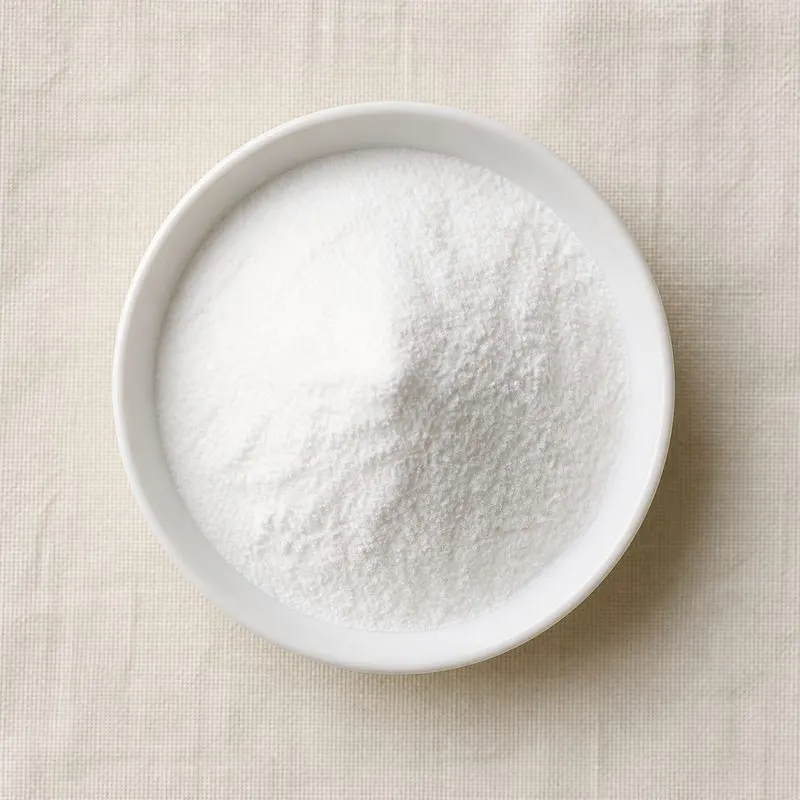
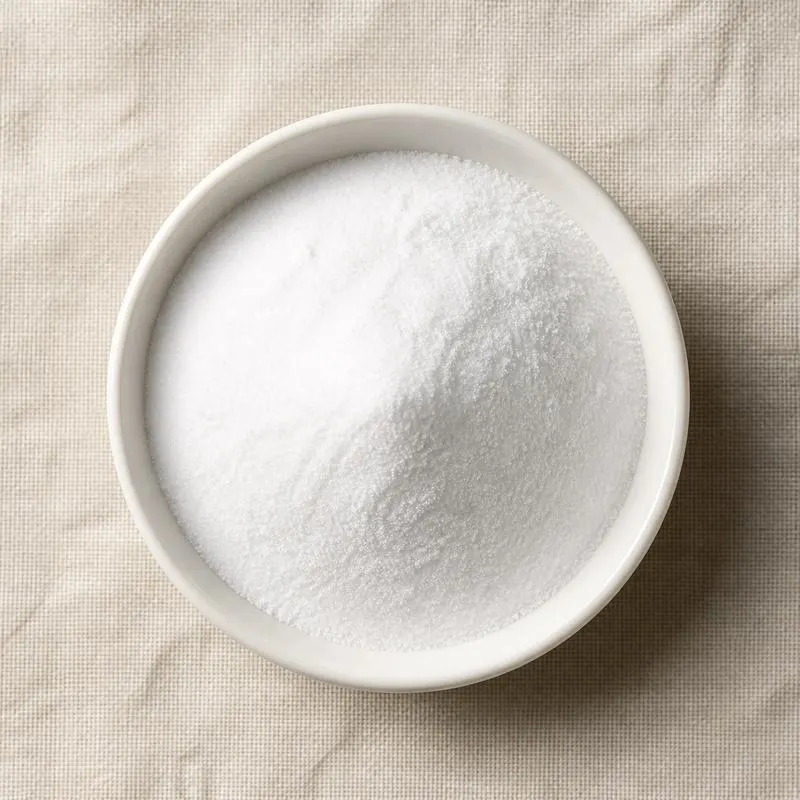
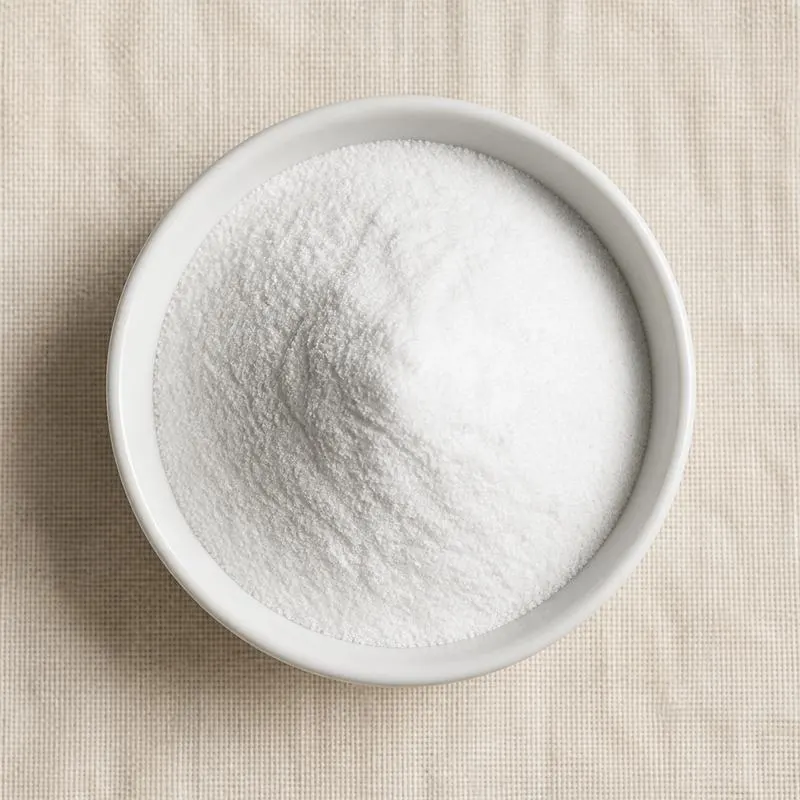
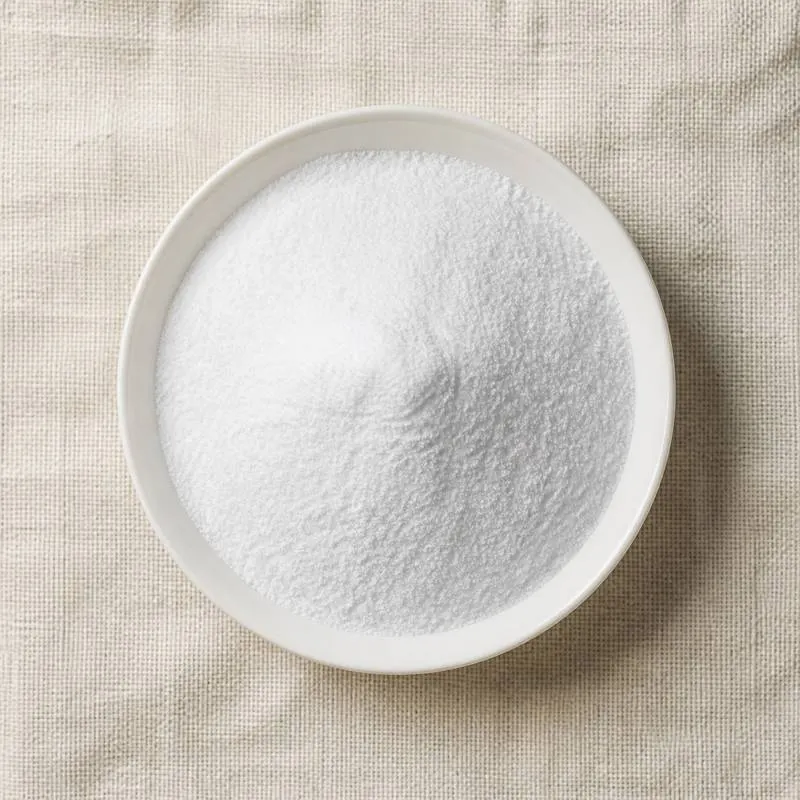
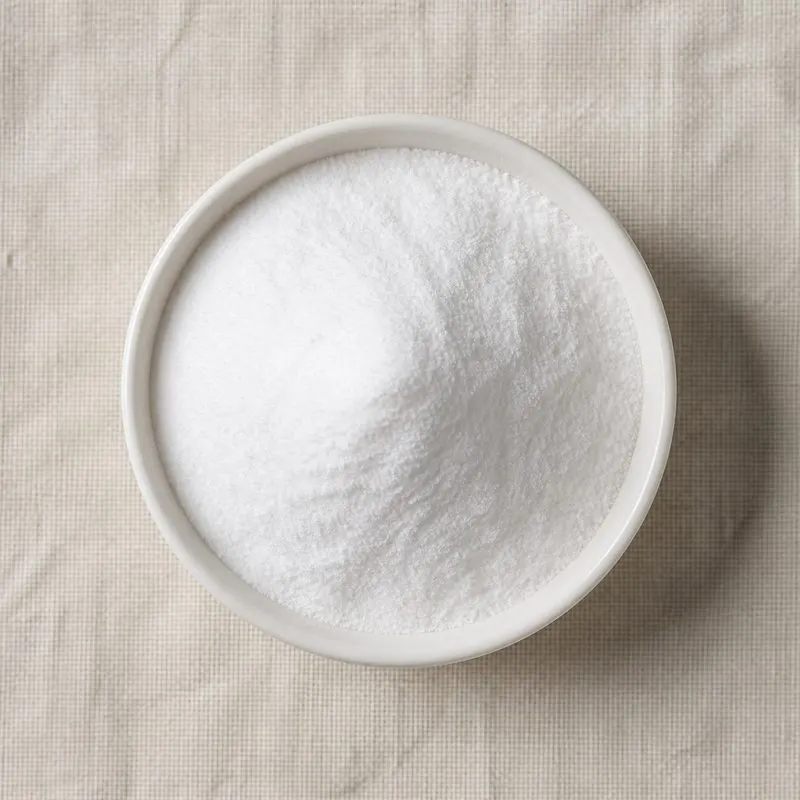
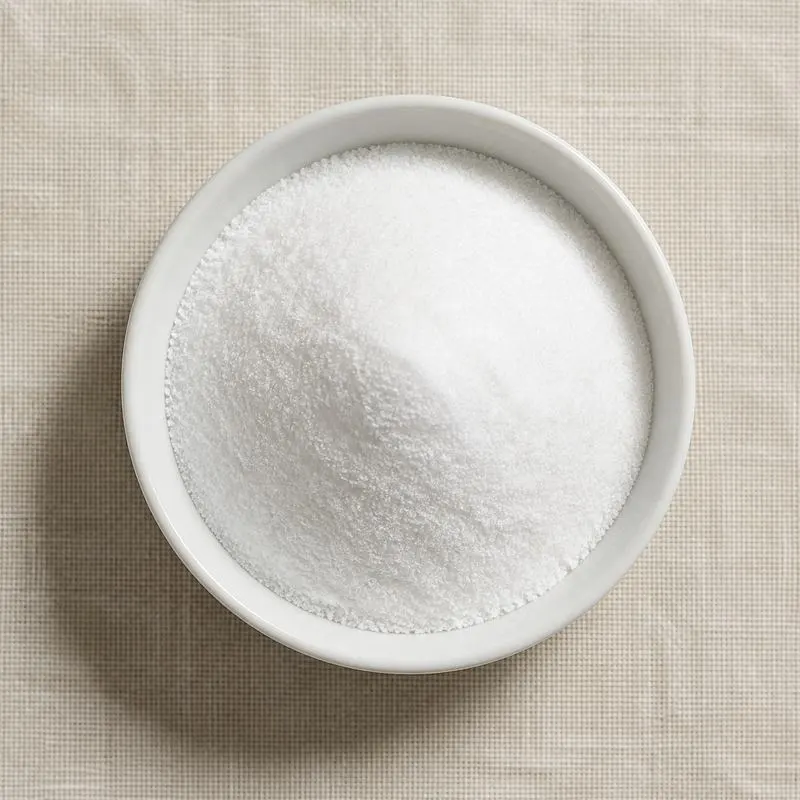
Rebaudioside D is one of the steviol glycosides of Stevia rebaudiana, a diterpene in which the steviol aglycone carries five glucose units, two more than rebaudioside A. Its formula is C50H80O28 with a molar mass of 1129.15 grams per mole, and the solid is a white to off-white crystalline powder.
The additional glucose units are what make it commercially interesting. Sweetness is around 200 to 250 times that of sucrose, comparable to rebaudioside A, but the bitter and liquorice-like aftertaste that limits how far rebaudioside A can be pushed is markedly reduced, and the temporal profile is closer to sugar. This makes rebaudioside D one of the glycosides used to build high replacement stevia systems rather than partial sugar reductions.
The trade off is solubility. Each added glucose unit lowers water solubility, and rebaudioside D dissolves at only a fraction of a percent in cold water, an order of magnitude less than rebaudioside A. Solutions supersaturate readily and then throw a sediment over shelf life, so it is generally dosed as part of a blend, or with a solubilising carrier, rather than alone. It is heat stable through pasteurisation and baking, stable across the pH range of most beverages, and non fermentable and non cariogenic.
We source bulk Rebaudioside D from top China manufacturers for our partners. The manufacturers are in Jiangsu and Shandong. A smaller requirement can ship in a combined container with other ingredients.
Please send the grade you need, the volume and your destination port, and we will come back with a solution and a price.
or call +86-21-6858 0751
- Function
- Sweetener
Specifications
| Item | Specification |
|---|---|
| Appearance | White to off-white crystalline powder |
| Odour and Taste | Odourless, intensely sweet |
| Rebaudioside D (dry basis) | ≥ 95.0% |
| Total Steviol Glycosides (dry basis) | ≥ 95.0% |
| Identification | Conforms by HPLC retention against reference standard |
| Loss on Drying | ≤ 6.0% |
| Residue on Ignition | ≤ 1.0% |
| pH (1% solution) | 4.5 to 7.0 |
| Solubility in Water at 25 C | ≥ 0.3 g/100 mL |
| Residual Methanol | ≤ 200 mg/kg |
| Residual Ethanol | ≤ 5,000 mg/kg |
| Heavy Metals (as Pb) | ≤ 10 mg/kg |
| Lead | ≤ 1.0 mg/kg |
| Arsenic | ≤ 1.0 mg/kg |
| Total Plate Count | ≤ 1,000 cfu/g |
| Yeast and Mould | ≤ 200 cfu/g |
| Escherichia coli | Negative in 1 g |
| Salmonella | Negative in 25 g |
Common Markets Grades
The material is traded by assay and by the route used to make it. Extraction derived rebaudioside D, purified from leaf extract, is limited by the low natural abundance of the glycoside in the leaf, generally well under one percent, and is offered at 90 to 95 percent purity. Bioconversion or fermentation derived material, made by adding glucose units enzymatically to a more abundant glycoside, reaches 95 to 98 percent and is the volume source.
Purity grades are quoted on a dry basis as rebaudioside D content and, separately, as total steviol glycosides, since the specification for steviol glycosides as an additive is written around total glycoside content. Particle size and physical form are the other variables, with micronised, granular and agglomerated grades made for different dosing routes, and solubilised or co-processed grades in which the glycoside is combined with a carrier to overcome the dissolution limit. Blends with rebaudioside A, rebaudioside M or erythritol are finished sweetener systems rather than grades of the pure compound.
Applications
- Carbonated soft drinks at high sugar replacement, where the cleaner profile permits deeper reduction than rebaudioside A alone
- Still and flavoured waters, dosed as part of a soluble glycoside blend
- Dairy drinks and yoghurts, where the sugar-like temporal profile matters
- Sports and electrolyte beverages, contributing sweetness without carbohydrate
- Tabletop sweeteners, blended with a bulking agent
- Bakery products, where the glycoside survives oven temperatures
- Confectionery and chewing gum, in combination with polyols
- Nutrition bars and powders, as a non cariogenic sweetener
- Sweetener systems built with rebaudioside M and A, where each glycoside covers a different part of the sweetness curve
China Manufacturers of Rebaudioside D
Top Rebaudioside D manufacturers in China.
 Biocatsyn (Jiangsu) Biotechnology Co., Ltd.4 ingredients in the directory
- Taste Legend Bio-Tech Co., Ltd.7 ingredients in the directory
Company names and logos are the property of the manufacturers themselves. They are listed here because our own directory records them as producing this ingredient. A listing is not an endorsement by them, and we do not represent them or speak on their behalf.
Regulatory Status
In the United States, steviol glycosides of specified purity, including rebaudioside D obtained both by extraction and by enzymatic bioconversion, are the subject of GRAS notifications to which the FDA responded without objection for use as general purpose sweeteners in food. The GRAS position attaches to preparations meeting a defined minimum total steviol glycoside content and to the particular manufacturing route, so the notification covering the material in hand should be identified. Whole stevia leaf and crude leaf extracts remain unapproved for use as sweeteners.
In the European Union, steviol glycosides are authorised food additives carrying the number E 960, with the additives regulation setting the food categories and maximum levels and the specifications regulation setting identity and purity criteria; enzymatically produced steviol glycosides are covered by their own subdivision of that entry, E 960c, reflecting the different manufacturing route. JECFA has evaluated steviol glycosides and adopted a specification monograph covering the named glycosides including rebaudioside D, and Codex lists steviol glycosides among the additives permitted in its general standard for food additives with maximum levels by food category.
Manufacturing Process
Two routes are in commercial use. The extraction route treats dried stevia leaf with hot water or aqueous alcohol, clarifies the extract by flocculation and filtration, and passes it over adsorbent and ion exchange resins that bind the glycosides and release the sugars, pigments and salts. The bound glycosides are eluted with alcohol, and the mixture is separated by repeated crystallisation and preparative chromatography. Because rebaudioside D is a minor component of the leaf, this route gives limited yield and is used mainly where a wholly extraction based claim is wanted.
The bioconversion route is the dominant one. It starts from purified stevioside or rebaudioside A obtained by leaf extraction, and adds glucose units enzymatically to reach the target glycoside. A glycosyltransferase, usually a UDP-glucosyltransferase expressed in a microbial host, transfers glucose from a donor onto the acceptor glycoside in a stirred reactor under controlled pH and temperature, with a sucrose synthase system regenerating the sugar nucleotide donor so that inexpensive sucrose serves as the ultimate glucose source. The reaction is stopped by heating, the enzyme and any cells are removed by filtration, and the product is purified by adsorption resin, decolourised on activated carbon and crystallised from aqueous alcohol. The crystals are separated by centrifuge, washed, dried under vacuum, milled and sieved.