Spice Oil Essence
Spice oil essence is a concentrated liquid flavouring carrying the aroma of one or more spices, made either as a steam distilled essential oil, as a solvent extracted oleoresin, or as a compounded blend of the two diluted in a food grade carrier. It replaces ground spice in applications where a standardised, particle free and heat resistant aroma is needed.
Its advantage over milled spice lies in concentration and consistency. The volatile oil of a dried spice is only one to fifteen percent of its weight, so an oil delivers the same aroma at a small fraction of the dosage, carries no starch, cellulose or microbial load, and is standardised on a marker compound so that batches match. What a distilled oil does not carry is the non volatile fraction, the piperine, capsaicinoids and gingerols that give pungency, which is why an oleoresin, containing both fractions, is used where the pungent effect matters as much as the aroma.
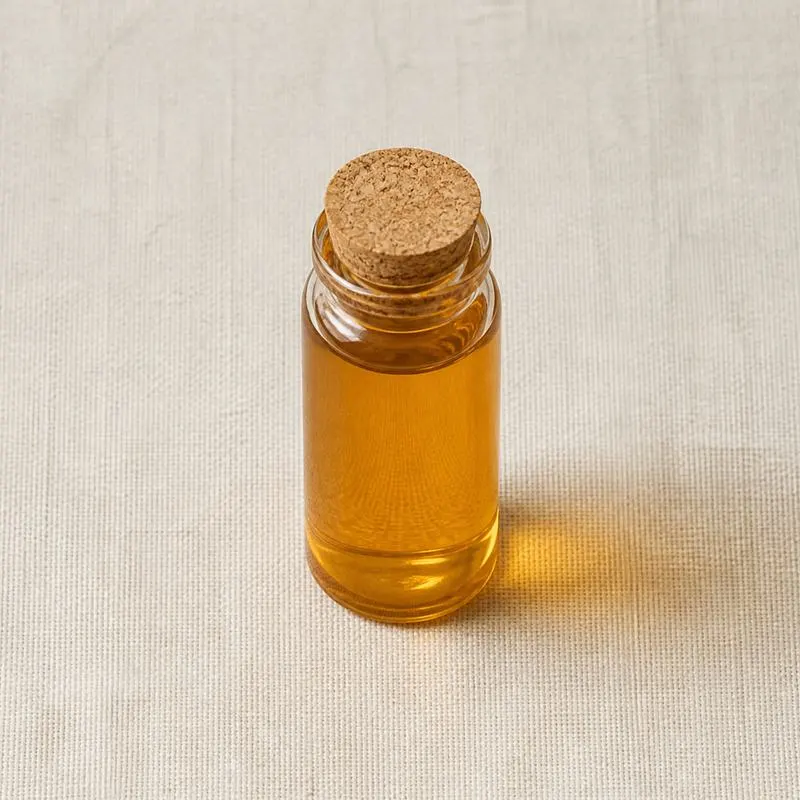
The material is a mobile to viscous liquid, from colourless through yellow to the deep red of capsicum and the orange of paprika, diluted in vegetable oil, propylene glycol, triacetin or ethanol depending on whether the target system is fat or water based. Terpene rich oils oxidise and polymerise on exposure to air and light, developing a turpentine like note, so the product is packed full in lined drums under nitrogen and stored cold.
We source bulk Spice Oil Essence from top China manufacturers for our partners. The manufacturer is in Shandong. A smaller requirement can ship in a combined container with other ingredients.
Please send the grade you need, the volume and your destination port, and we will come back with a solution and a price.
or call +86-21-6858 0751
- Function
- Flavours and Aromas
Specifications
| Item | Specification |
|---|---|
| Appearance | Clear to viscous liquid, colourless to deep red according to the named spice |
| Odour and Taste | Characteristic of the named spice, no turpentine, rancid or solvent note |
| Identification | Gas chromatography profile conforms to retained reference |
| Characterising Constituent | Not less than declared for the named spice, by gas chromatography |
| Volatile Oil, oleoresin grades | Not less than declared, ml/100 g |
| Specific Gravity at 25 C | Within declared range for the named spice |
| Refractive Index at 20 C | Within declared range for the named spice |
| Optical Rotation | Within declared range for the named spice |
| Acid Value | Not more than 3.0 mg KOH/g |
| Residual Solvent | Not more than 25 mg/kg for hexane extracted grades |
| Solubility | Clear solution in the declared carrier at stated dilution |
| Heavy Metals | Not more than 10 mg/kg |
| Lead | Not more than 2.0 mg/kg |
| Arsenic | Not more than 1.0 mg/kg |
Common Markets Grades
The first distinction is between an essential oil, a natural oleoresin and a dispersed or standardised preparation. Essential oils are quoted on optical rotation, refractive index, specific gravity and on the content of a characterising constituent, eugenol for clove, cinnamaldehyde for cassia, anethole for star anise and fennel, zingiberene for ginger. Oleoresins are quoted on volatile oil content in millilitres per hundred grams together with the non volatile active, piperine for pepper, capsaicinoid content or Scoville units for capsicum, curcuminoid content or ASTA colour for turmeric and paprika.
Preparation grades then follow the target system. Oil soluble grades are diluted in refined vegetable oil for fat phases, water dispersible grades are emulsified with polysorbate or a gum for brines and beverages, and dry soluble grades are plated onto salt, dextrose or silica, or spray dried onto a carbohydrate carrier, for dry blends. Deterpenated and folded grades have had part of the terpene hydrocarbon fraction removed by vacuum distillation, which improves solubility and oxidative stability at the cost of some natural character, and decolourised grades are used where the colour of the oleoresin would be visible in a pale food.
Applications
- Retorted and canned foods, where ground spice aroma is destroyed during sterilisation
- Meat injection brines and marinades, which cannot tolerate undissolved particulate
- Snack seasonings, plated onto a carrier so that a low dosage distributes evenly
- Soft drinks and botanical beverages, using deterpenated ginger, cardamom and citrus grades
- Confectionery and chewing gum, using peppermint, cinnamon and clove oils at high concentration
- Bakery fillings and creams, where a low microbial ingredient is required
- Sauces, dressings and mayonnaise, where a clear or pale appearance rules out ground spice
- Instant noodle oil sachets and seasoning oils, dissolved directly into the fat phase
- Colouring of foods with paprika and turmeric oleoresins within the applicable colour rules
- Pharmaceutical and oral care flavouring, using peppermint, clove and cinnamon oils
China Manufacturers of Spice Oil Essence
Top Spice Oil Essence manufacturers in China.

Company names and logos are the property of the manufacturers themselves. They are listed here because our own directory records them as producing this ingredient. A listing is not an endorsement by them, and we do not represent them or speak on their behalf.
Regulatory Status
Spice oils and oleoresins are flavourings rather than food additives and carry no E number. In the United States 21 CFR 182.20 lists them as generally recognised as safe among the essential oils, oleoresins and natural extractives derived from spices, and the FEMA GRAS programme further supports flavouring use. Where paprika oleoresin or turmeric is used for its colour rather than its flavour it falls instead under the colour additive regulations and must be declared as a colour.
In the European Union these materials are flavouring preparations under the flavourings framework, which governs their use and the conditions under which they may be declared natural, and the same framework sets maximum levels for certain biologically active constituents that occur naturally in spice oils, among them estragole, methyleugenol, safrole and coumarin, which is the practical limit on the dosage of some materials in this class. Extraction solvent residues are separately regulated in both markets, in the European Union under the extraction solvents directive and in the United States under the applicable food additive provisions. Codex covers the class through its guidelines for the use of flavourings, with individual constituents evaluated by JECFA.
Manufacturing Process
Cleaned and milled spice is charged into a stainless still and steam distilled, the steam rupturing the oil cells and carrying the volatile fraction overhead. The vapour is condensed and the oil separated from the aqueous distillate in a Florentine flask by density difference, with the water layer often cohobated back to the still to recover dissolved oxygenates. Heat sensitive material is distilled under reduced pressure so that the boiling point falls and thermal rearrangement is avoided. The crude oil is dried over a desiccant, filtered and, where a folded or deterpenated grade is wanted, fractionated under vacuum to strip the hydrocarbon terpenes.
Oleoresins are made on a separate train. Milled spice is percolated with a food grade solvent, usually ethanol, acetone or hexane, or is extracted with supercritical carbon dioxide, and the miscella is filtered and taken to a falling film or wiped film evaporator where the solvent is removed under vacuum at low temperature and recovered for reuse. The residual solvent is stripped to within the permitted limit. The oleoresin is then standardised on its marker active by blending batches or by adding back distilled oil, diluted in the specified carrier, homogenised, filtered and filled under nitrogen into lined drums.