Sucrose Fatty Acid Ester
Sucrose Fatty Acid Esters (SFAE, E473) are non-ionic emulsifiers produced by esterifying sucrose with one to eight food-grade fatty acids per molecule. The mainstream commercial fatty acids are stearic, palmitic, oleic, and lauric acid.
The product family covers HLB values from approximately 1 (octa-ester) to 16 (mono-ester), making it the broadest single-family HLB range in commercial food use. Sucrose esters are valued for their neutral taste, low animal toxicity, and the ability to design tailored emulsifiers for specific applications.
We source bulk Sucrose Fatty Acid Ester from top China manufacturers for our partners, working with several of them. The manufacturers are in Guangxi and Zhejiang. A smaller requirement can ship in a combined container with other ingredients.
Please send the grade you need, the volume and your destination port, and we will come back with a solution and a price.
or call +86-21-6858 0751
- Packaging
- 25 kg kraft paper bag with PE inner liner
- ISO 9001
- HACCP
- Halal
- Kosher
Specifications
| Item | Specification |
|---|---|
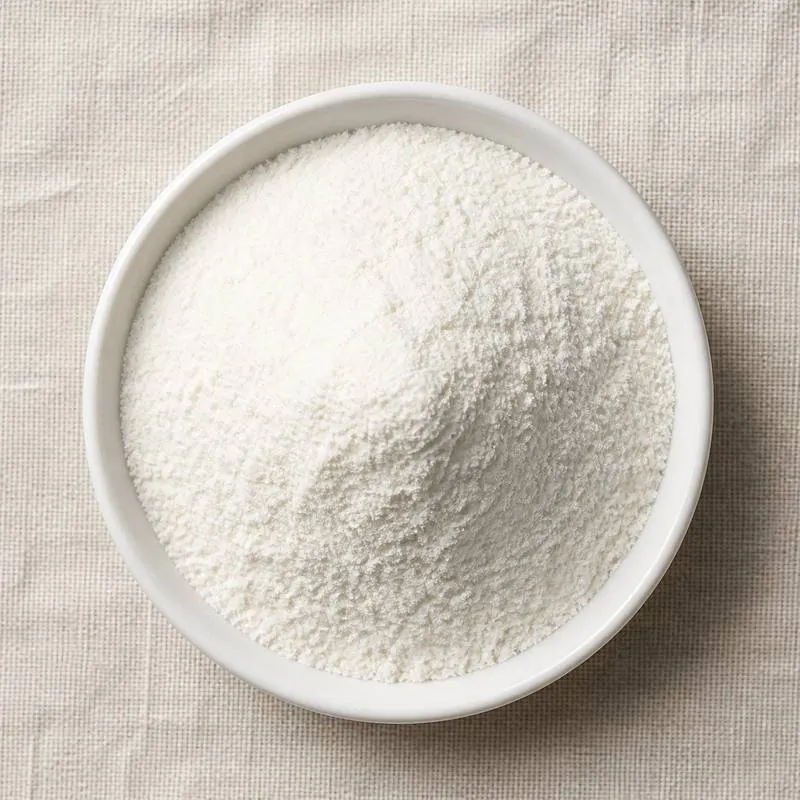
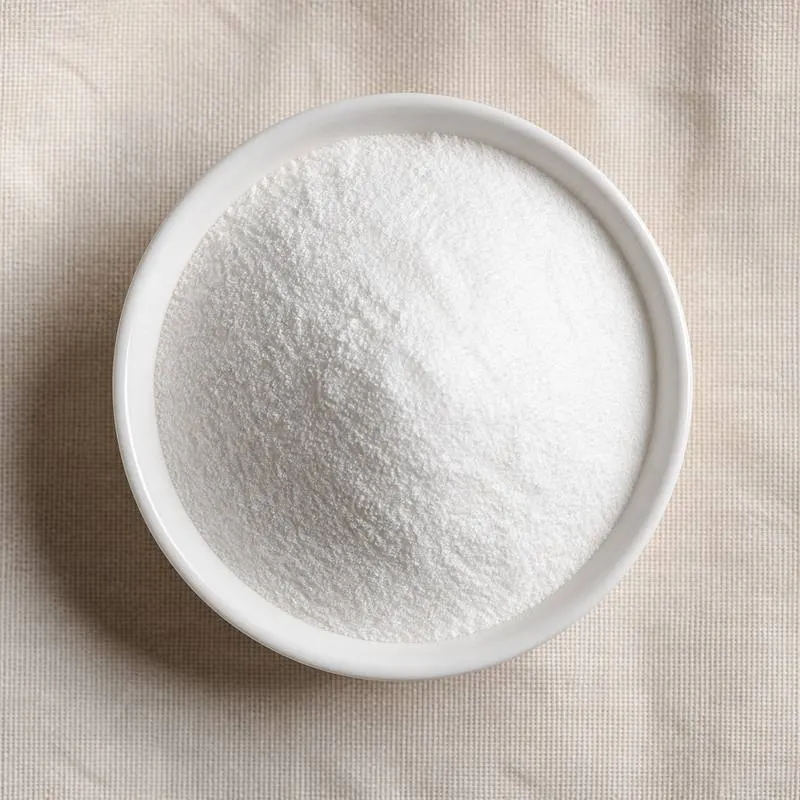
| Appearance | White to off-white fine powder |
| Assay (Sucrose Ester) | ≥ 80% |
| Free Sucrose | ≤ 10% |
| Free Fatty Acids | ≤ 3.0% |
| Sulfated Ash | ≤ 2.0% |
| HLB Value | 1-16 (grade-dependent) |
| Heavy Metals (as Pb) | ≤ 2 mg/kg |
| Arsenic | ≤ 3 mg/kg |
| Acid value (calculated asKOH)/(mg/g)≤ | 6.0 |
| Free sugar (calculated as sucrose),w/%≤ | 10.0 |
| Moisturew/%≤ | 4.0 |
| Ash residue, w/%≤ | 4.0 |
| Total arsenic (asAs)/(mg/kg)≤ | 1.0 |
| Lead (Pb)/(mg/kg)≤ | 2.0 |
Common Markets Grades
Sucrose esters are specified by HLB value and fatty acid identity.
High-HLB grades (HLB 11 to 16) are predominantly monoesters and are used as oil-in-water emulsifiers in beverages, dairy alternatives, and pharmaceutical solubilisation.
Mid-HLB grades (HLB 5 to 11) are mixed mono-, di-, and triesters used in bakery, confectionery, and processed-food applications.
Low-HLB grades (HLB 1 to 5) are predominantly poly-esters and are used as water-in-oil emulsifiers, fat crystal modifiers, and chocolate viscosity controllers.
The fatty acid identity (stearic, palmitic, oleic, lauric, or mixed) determines the polarity, melting point, and oxidative stability. Stearate and palmitate grades dominate.
Food grade meets the JECFA specifications with controlled residual solvent (DMSO or DMF if used in manufacture), free fatty acid below 3 percent, and assay above 70 percent sucrose ester.
Plant-source fatty acids and beet- or cane-source sucrose are the standard supply routes; Kosher and Halal certifications are widely available.
Applications
- Bakery products including bread, cakes, and cookies for crumb softening and dough conditioning
- Confectionery and chocolate as viscosity modifiers and bloom inhibitors
- Ice cream and frozen desserts for fat destabilization and texture control
- Dairy products including UHT milk and recombined dairy for emulsion stability
- Beverage cloud and flavour emulsions in non-alcoholic drinks
- Coffee whiteners and powdered creamers
- Plant-based milk alternatives and barista creamers
- Bakery shortenings and aerated cake fats
- Pharmaceutical solubilisation of lipophilic drugs in oral and topical formulations
- Cosmetic emulsions, micellar cleansers, and sunscreens
- Fruit and vegetable surface coatings for shelf-life extension
- Sugar coating and panning aids in confectionery
Brands Using Sucrose Fatty Acid Ester
Widely-distributed consumer products that list Sucrose Fatty Acid Ester on the ingredient label.
- Hi-ChewOriginal Mix Bag ↗Listed: 'GLUCOSE SYRUP, SUGAR, HYDROGENATED PALM KERNEL OIL, LESS THAN 2% OF GELATIN, MALIC ACID, CITRIC ACID, NATURAL AND ARTIFICIAL FLAVORS, SUCROSE FATTY ACID ESTERS, SORBITAN TRISTEARATE, ...'Label verified 2026-05-24
- Hi-ChewFantasy Mix Bag ↗Listed: 'GLUCOSE SYRUP, SUGAR, HYDROGENATED PALM KERNEL OIL, ... SUCROSE FATTY ACID ESTERS, SORBITAN TRISTEARATE, ...'Label verified 2026-05-24
Brand names, product names and logos are the property of their owners. They appear here as published evidence that the ingredient is used, taken from the brand's own label or website. Their appearance is not an endorsement, and it does not mean the brand buys from us or from any manufacturer listed on this site.
China Manufacturers of Sucrose Fatty Acid Ester
Top Sucrose Fatty Acid Ester manufacturers in China.
 Guangxi Fusai Food Additives Co., Ltd.2 ingredients in the directory
 Guangxi Gaotong Food Technology Co., Ltd.6 ingredients in the directory
 Hangzhou Ruilin Chemical Industry Co., Ltd.3 ingredients in the directory
 Zhejiang Synose Tech Co., Ltd.2 ingredients in the directory
Company names and logos are the property of the manufacturers themselves. They are listed here because our own directory records them as producing this ingredient. A listing is not an endorsement by them, and we do not represent them or speak on their behalf.
How We Help Source Sucrose Fatty Acid Ester
Direct Factory Sourcing
We run the whole process: selecting the manufacturer from the top Chinese food ingredient producers, negotiating the price, verifying quality, and coordinating the logistics. You deal with us instead of with several factories at once.
Original Packaging and Documents from the Manufacturer
The manufacturer sends your Sucrose Fatty Acid Ester out of its own factory in the original packing, through to your destination port. The COA, COO, MSDS, TDS and any certifications reach you from the manufacturer as well.
Free Samples and Lead Time
We send 100 to 500 g free for your own laboratory to test and you cover only the courier, usually within 2 to 3 working days. ETD is usually within 7 to 15 days once the order is confirmed, and we check that date against the factory's own manufacturing schedule before we give it to you.
Combined Shipment
We can load Sucrose Fatty Acid Ester together with other ingredients such as Polyglycerol Esters of Fatty Acids, Non-Dairy Creamer and Mono- and Diglycerides of Fatty Acids into one 20' FCL. If your quantity is small, we can also ship LCL.
Regulatory Status
Sucrose esters of fatty acids are approved as food emulsifiers in essentially every regulated market.
In the European Union they carry the E number E473 and are permitted under Regulation 1333/2008 with category-specific use limits. The European Food Safety Authority re-evaluated sucrose esters of fatty acids (E473) and sucrose-glycerides (E474) in 2018 and confirmed a group acceptable daily intake.
The U.S. Food and Drug Administration permits sucrose esters of fatty acids under 21 CFR 172.859 with category-specific use limits and a maximum residual DMF of 10 ppm and DMSO of 2 ppm.
JECFA assigned sucrose esters an ADI in 1989, later harmonised with the EFSA assessment. Pharmacopoeial monographs appear in USP-NF and JP.
Kosher and Halal certifications are widely available when fatty acid and sucrose sourcing is documented to compliant origin.
Manufacturing Process
Two industrial routes are used for sucrose ester manufacture.
The solvent process, originally developed by Snell and Hass at C.H. Boehringer Sohn in the 1950s, reacts sucrose with fatty acid methyl esters in dimethyl formamide (DMF) or dimethyl sulfoxide (DMSO) at 90 to 120 degrees Celsius with potassium carbonate as catalyst. The polar solvent dissolves both the sucrose and the fatty acid methyl ester, allowing transesterification to proceed. After reaction the solvent is removed by vacuum distillation, the crude is washed to remove residual solvent and salts, and the product is bleached and packaged.
The solvent-free process developed by Mitsubishi-Kagaku Foods in the 1980s uses a melt-phase reaction. Sucrose, fatty acid methyl ester, and a soap (potassium soap of the fatty acid) act together to homogenise the reaction mixture at 120 to 140 degrees Celsius without added organic solvent. Methanol is continuously stripped to drive the reaction forward. After reaction the crude is bleached, washed, and dried.
The solvent-free route is preferred for food applications because it avoids residual DMF or DMSO. The solvent route is still used for some specialty high-purity grades.