Tetrahydrocurcumin
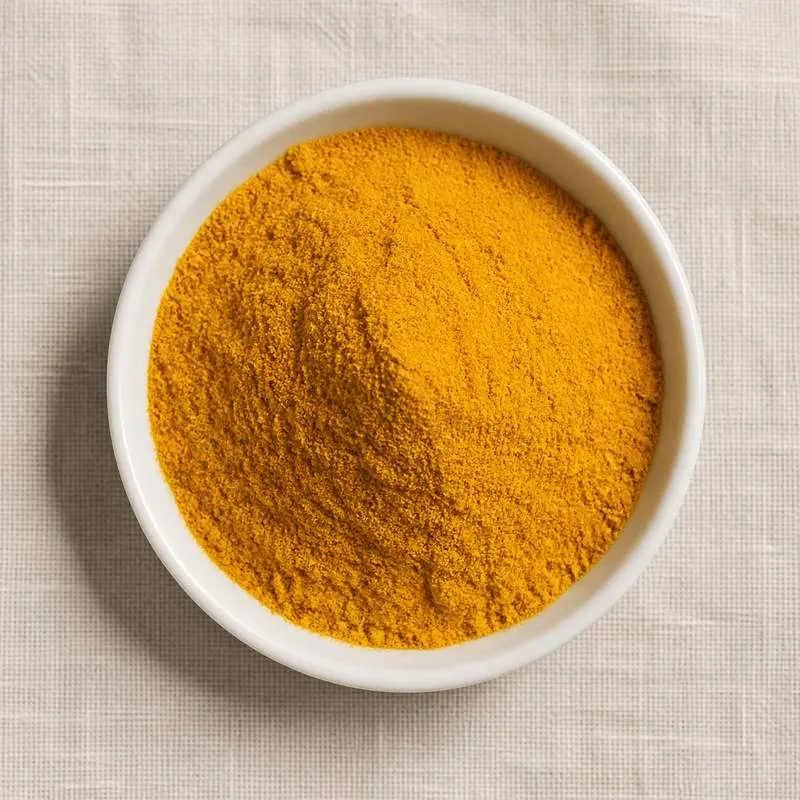
Tetrahydrocurcumin is the fully reduced form of curcumin, in which the two carbon-carbon double bonds of the heptadienone chain have been hydrogenated. That single change removes the conjugation responsible for curcumin's intense yellow colour, so tetrahydrocurcumin is a white to off-white powder rather than a pigment, and it is used in applications where curcumin's staining and colouring would be unacceptable.
The reduction also changes its behaviour. Tetrahydrocurcumin is the principal mammalian metabolite of curcumin, formed by reductase enzymes in the gut and liver, and it is more stable than the parent compound in neutral and alkaline aqueous conditions, where curcumin degrades within minutes. Its phenolic hydroxyl groups are retained, so it remains a hydrogen-donating antioxidant, and it inhibits tyrosinase, which is the basis of its use in skin brightening formulations.
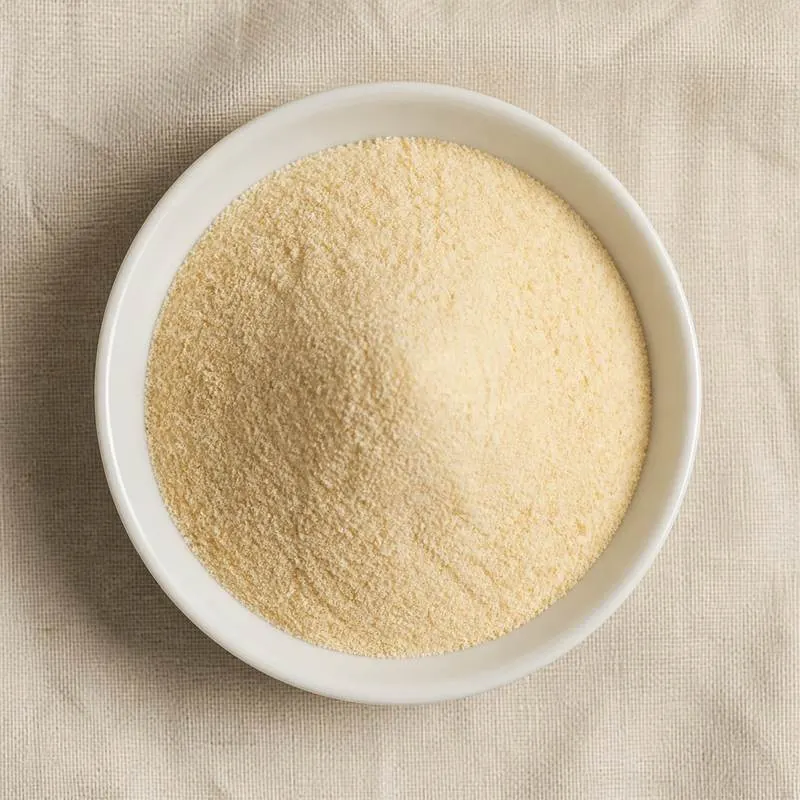
The material is a fine white to cream crystalline powder, effectively insoluble in water and soluble in ethanol, propylene glycol and dimethyl sulphoxide. As with curcumin, the poor aqueous solubility is the formulation constraint, and micronised, cyclodextrin-complexed and phospholipid grades are used to address it.
We source bulk Tetrahydrocurcumin from top China manufacturers for our partners. The manufacturers are in Zhejiang. A smaller requirement can ship in a combined container with other ingredients.
Please send the grade you need, the volume and your destination port, and we will come back with a solution and a price.
or call +86-21-6858 0751
- Function
- Plant extract
Specifications
| Item | Specification |
|---|---|
| Appearance | White to cream fine crystalline powder |
| Assay (HPLC, dry basis) | 98.0 percent minimum |
| Identification | HPLC retention and infrared spectrum conform to reference standard |
| Residual curcuminoids | 0.5 percent maximum |
| Colour in solution | Absorbance at 420 nm below 0.05 for a 1 percent ethanolic solution |
| Melting point | 93 to 98 degrees C |
| Loss on drying | 2.0 percent maximum |
| Residue on ignition | 0.5 percent maximum |
| Palladium | 10 mg/kg maximum |
| Residual solvents (ethanol) | 5000 mg/kg maximum |
| Lead | 1.0 mg/kg maximum |
| Arsenic | 1.0 mg/kg maximum |
| Total plate count | 1000 cfu/g maximum |
| Salmonella | Absent in 25 g |
Common Markets Grades
The material is traded mainly at 95 and 98 percent assay by HPLC, with the specification distinguished by residual curcuminoid content, since incomplete hydrogenation leaves curcumin and demethoxycurcumin behind and even small amounts reintroduce a yellow tint that defeats the purpose of the ingredient. Colour is therefore a functional specification here rather than a cosmetic one, and buyers should ask for a colour value alongside the assay.
Cosmetic and nutraceutical grades differ chiefly in their residual solvent and catalyst metal limits, with palladium or nickel residues from the hydrogenation catalyst controlled to low parts per million. Delivery grades include micronised powder with a stated particle size, gamma-cyclodextrin inclusion complexes, phospholipid dispersions and oil-based solutions for softgels. Some suppliers offer a mixed tetrahydrocurcuminoid grade containing the reduced forms of all three curcuminoids, which is not the same article as pure tetrahydrocurcumin.
Applications
- Skin brightening serums and creams, where tyrosinase inhibition without yellow staining is the point
- Anti-ageing and antioxidant cosmetic formulations
- Nutraceutical capsules positioned as a more stable curcumin alternative
- Joint and inflammatory support supplement blends
- Metabolic and liver support formulations
- Functional beverages using a cyclodextrin-complexed grade, where curcumin would tint the drink
- Softgels formulated with oil or phospholipid dispersions to improve absorption
- Colourless antioxidant addition to cosmetic emulsions and oils
- Sun care and after-sun products aimed at limiting pigmentation
Brands Using Tetrahydrocurcumin
Widely-distributed consumer products that list Tetrahydrocurcumin on the ingredient label.
Brand names, product names and logos are the property of their owners. They appear here as published evidence that the ingredient is used, taken from the brand's own label or website. Their appearance is not an endorsement, and it does not mean the brand buys from us or from any manufacturer listed on this site.
China Manufacturers of Tetrahydrocurcumin
Top Tetrahydrocurcumin manufacturers in China.


Company names and logos are the property of the manufacturers themselves. They are listed here because our own directory records them as producing this ingredient. A listing is not an endorsement by them, and we do not represent them or speak on their behalf.
Regulatory Status
In the United States tetrahydrocurcumin is used as a dietary ingredient in supplements and as a cosmetic ingredient. It does not share curcumin's position as a colour additive, since it is not coloured, and turmeric and curcumin colour listings do not extend to it. A supplier offering it for conventional food use should be able to document the basis for that use, and cosmetic use falls under the general safety and labelling provisions rather than any pre-market approval. Claims in supplements are structure and function claims with the standard disclaimer.
In the European Union curcumin is authorised as the food colour E100, but tetrahydrocurcumin is a distinct substance and is not covered by that authorisation, so it has no E number and may not be used as a colour. As a food or supplement ingredient it would be expected to require assessment under the novel food framework, since it does not have an established history of consumption in isolated form. Cosmetic use is governed by the cosmetic products regulation with the ingredient declared by its INCI name. JECFA has evaluated curcumin as a colour but has not adopted specifications for tetrahydrocurcumin.
Manufacturing Process
Manufacture starts from curcumin, itself isolated from the rhizome of Curcuma longa by solvent extraction of the oleoresin followed by crystallisation. Purified curcumin is dissolved in a suitable solvent, commonly ethanol, ethyl acetate or a mixture, and hydrogenated over a supported metal catalyst, usually palladium on carbon, under moderate hydrogen pressure and controlled temperature. The reaction is followed by chromatography and stopped when the conjugated double bonds have been reduced but before over-reduction produces hexahydro and octahydro species, which is the point that determines product quality.
The catalyst is removed by filtration and recovered, and the filtrate is concentrated under vacuum. The crude solid is recrystallised from aqueous alcohol, often more than once, to strip residual curcuminoids and the over-reduced by-products, since it is these that carry colour and depress the assay. Crystals are washed, dried under vacuum at moderate temperature, milled to the specified particle size and packed under nitrogen away from light. Residual palladium is measured on the finished powder and controlled by the filtration and recrystallisation train rather than by any dedicated removal step.