Vanilla Essential Oil
Vanilla essential oil is the trade name for a concentrated oil soluble vanilla aromatic obtained by extracting cured vanilla beans, rather than a true steam distilled essential oil, because the compounds that carry vanilla character are too heavy and too heat sensitive to survive distillation intact.
What is sold under the name falls into three groups: a supercritical carbon dioxide extract of the ground bean, a solvent extracted oleoresin or absolute, and a dilution of either of these in a neutral carrier oil such as fractionated coconut oil. The aroma rests on vanillin, which accounts for most of the perceived odour, supported by several hundred minor constituents including p hydroxybenzaldehyde, vanillic acid, guaiacol, anisyl compounds and a range of aliphatic acids and esters that separate a bean extract from synthetic vanillin.
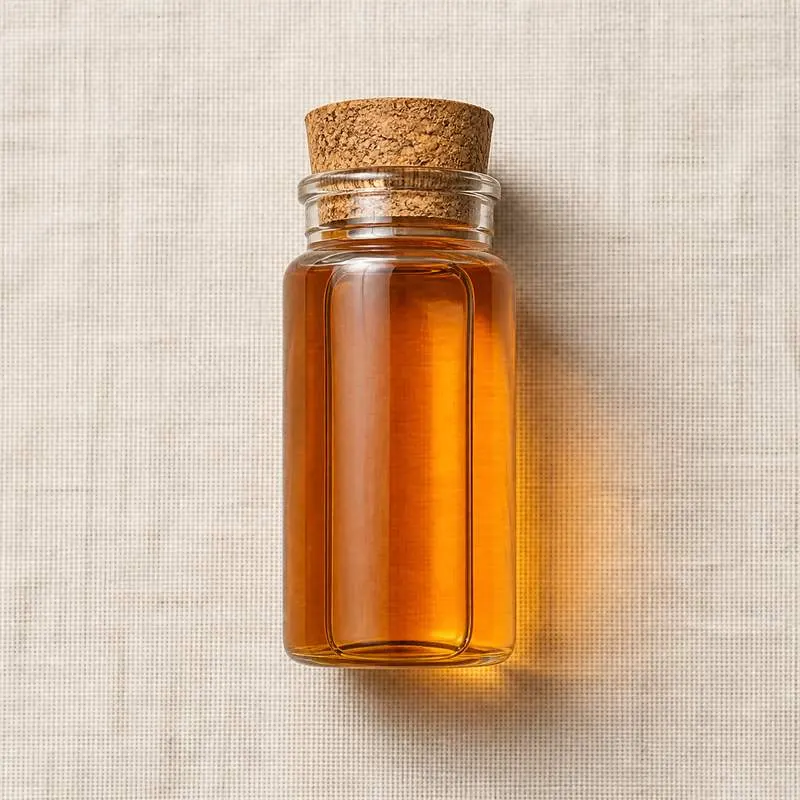
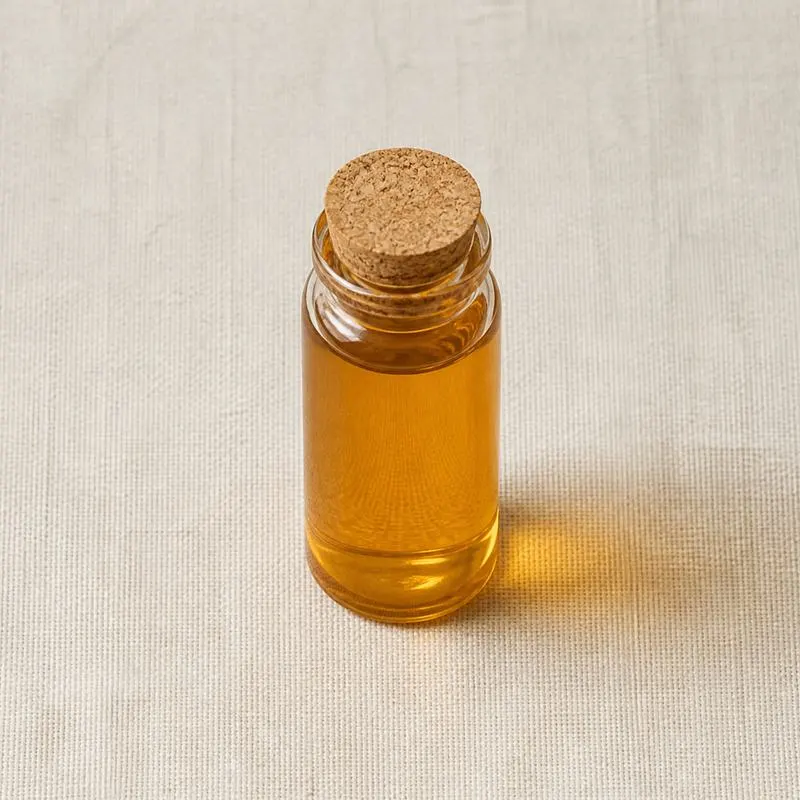
The neat extract is a dark brown to almost black viscous liquid or soft resinous mass with a sweet, balsamic, faintly smoky odour. It is soluble in ethanol and in fats and oils but only sparingly dispersible in water, and it can deposit vanillin crystals on cold storage. Heat, light and alkaline conditions degrade the phenolic constituents, so it is packed in dark containers and stored cool.
We source bulk Vanilla Essential Oil from top China manufacturers for our partners. The manufacturer is in Hainan. A smaller requirement can ship in a combined container with other ingredients.
Please send the grade you need, the volume and your destination port, and we will come back with a solution and a price.
or call +86-21-6858 0751
- Function
- Flavours and Aromas
Specifications
| Item | Specification |
|---|---|
| Appearance | Dark brown to near black viscous liquid or soft resinous mass |
| Odour | Sweet, balsamic, characteristic of cured vanilla bean |
| Identification | Conforms by high performance liquid chromatography profile of vanillin and p hydroxybenzaldehyde |
| Vanillin content | Declared per grade, not less than 8.0% for the neat extract |
| Loss on drying | Not more than 5.0% |
| Refractive index at 20 degrees Celsius | 1.500 to 1.560 |
| Residual ethanol | Not more than 2.0% where ethanol extraction is used |
| Residual hexane | Not more than 25 mg/kg where hexane extraction is used |
| Ash | Not more than 6.0% |
| Lead | Not more than 2.0 mg/kg |
| Arsenic | Not more than 1.0 mg/kg |
| Total plate count | Not more than 1,000 cfu/g |
| Yeast and mould | Not more than 100 cfu/g |
| Salmonella | Absent in 25 g |
Common Markets Grades
Grades are quoted first by extraction route. Supercritical carbon dioxide extract is the cleanest, carries no residual organic solvent and gives the closest aroma match to the bean, and it commands the highest price. Ethanol and hexane derived oleoresins are cheaper and stronger in colour, and are specified where the extract sits in a coloured food anyway. Absolutes, produced by taking a solvent extract through an ethanol wash to remove waxes, are used mainly in fragrance.
Strength is then declared as vanillin content, which for a neat extract typically runs from a few percent to well over twenty percent depending on bean origin and extraction yield, and diluted grades are sold to a fixed vanillin figure so a buyer can dose reproducibly. Bean origin is quoted separately, since Madagascar, Indonesian, Ugandan, Papua New Guinean and Tahitian beans give distinguishable profiles, with Tahitian material being notably higher in anisic compounds. Organic and fair trade certified versions are traded, as are versions standardised with a permitted carrier such as propylene glycol or medium chain triglyceride oil.
Applications
- Chocolate and compound coatings, where an oil soluble form is required because water based extract would seize the fat phase
- Bakery fillings, creams and fat based icings, dosed into the fat rather than the water phase
- Ice cream and frozen dessert bases, contributing the rounded balsamic notes that synthetic vanillin alone does not give
- Confectionery, caramel and toffee, where the extract survives the cooking temperatures better than a dilute alcoholic extract
- Dairy drinks and flavoured milk, delivered through an emulsion because the neat extract will not disperse in water
- Vanilla flavour compounding, as the natural fraction blended with vanillin to build a complete profile at controlled cost
- Fine fragrance, where the absolute grade supplies a sweet balsamic base note
- Personal care products such as body oils, balms and lotions, in the carrier oil diluted form
- Aromatherapy and candle applications, the outlet for which the carrier oil dilution is principally sold
China Manufacturers of Vanilla Essential Oil
Top Vanilla Essential Oil manufacturers in China.

Company names and logos are the property of the manufacturers themselves. They are listed here because our own directory records them as producing this ingredient. A listing is not an endorsement by them, and we do not represent them or speak on their behalf.
Regulatory Status
In the United States the standards of identity in 21 CFR Part 169 define vanilla extract, vanilla oleoresin and related articles in terms of the extractive matter obtained from a defined weight of vanilla beans, and a product must meet the corresponding definition to be labelled with those names. Vanilla oleoresin made with a permitted extraction solvent is a natural flavouring under 21 CFR 101.22, and residual solvent levels are controlled by the secondary direct food additive provisions covering solvent extraction. A carbon dioxide extract carries no solvent residue issue. A material described as vanilla essential oil that does not meet a standard of identity is labelled by its actual composition.
In the European Union vanilla extracts are flavouring preparations under Regulation (EC) No 1334/2008, which allows preparations obtained from food by physical, enzymatic or microbiological processes to be used without individual authorisation and to be described as natural. The solvents that may be used to make them, and the residues permitted in the finished extract, are fixed by the extraction solvents directive. The material carries no E number. Codex addresses the raw material through a commodity standard for vanilla beans and through the code of hygienic practice for spices and dried aromatic herbs, and the finished extract through the general standard for the labelling of prepackaged foods.
Manufacturing Process
Production begins with cured beans, which have already been through killing, sweating, slow drying and conditioning over several months, the stage at which the enzymatic release of vanillin from its glucoside takes place. The beans are cut and milled to a coarse particle, since a fine grind blocks the extraction bed, and moisture is trimmed to the level the extraction step requires.
In the carbon dioxide route the milled bean is packed into a high pressure vessel and carbon dioxide is passed through it above its critical point, with pressure and temperature set to dissolve the aroma fraction. The loaded fluid then passes into a separator where the pressure is dropped, the carbon dioxide flashes off for recycling and the extract falls out, leaving no solvent residue. In the solvent route the milled bean is percolated with ethanol or hexane in a battery of counter current extractors, the miscella is filtered and the solvent stripped under vacuum in a falling film evaporator to leave an oleoresin, with a further ethanol wash and chilling step where an absolute is wanted. The extract is standardised for vanillin, blended with a carrier oil if a diluted grade is being made, filtered and filled into lined or dark containers under nitrogen.