Folic Acid
Folic Acid is the fully oxidised, synthetic form of vitamin B9, chemically known as pteroylmonoglutamic acid (CAS 59-30-3).
The molecule combines a pteridine ring system with para-aminobenzoic acid and a single glutamate residue. It does not occur in significant amounts in nature and is reduced in the body to dihydrofolate and tetrahydrofolate, the active cofactors for one-carbon transfer reactions.
We source bulk Folic Acid from top China manufacturers for our partners, working with several of them. The manufacturers are in Jiangxi, Jiangsu and Shandong. For this ingredient the minimum order is 200 kg and a 20-foot container takes 6.75 MT, and a smaller requirement can ship in a combined container with other ingredients.
Please send the grade you need, the volume and your destination port, and we will come back with a solution and a price.
or call +86-21-6858 0751
- Minimum order
- 200 kg
- Qty in 20' FCL
- 6.75 MT
- Packaging
- 25 kg kraft paper bag with PE inner liner
- ISO 9001
- HACCP
- Halal
- Kosher
Specifications
| Item | Specification |
|---|---|
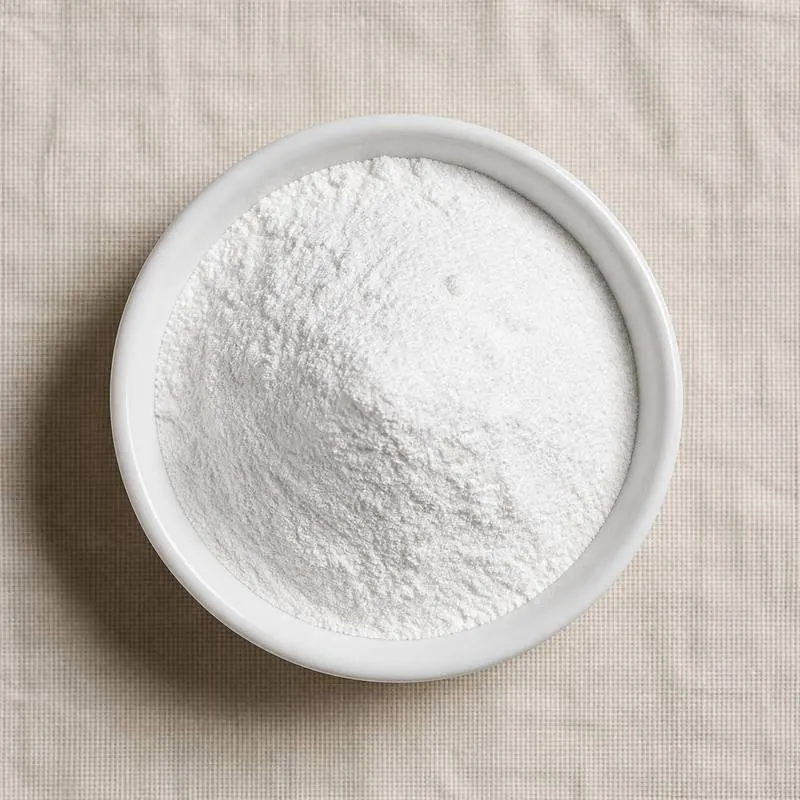
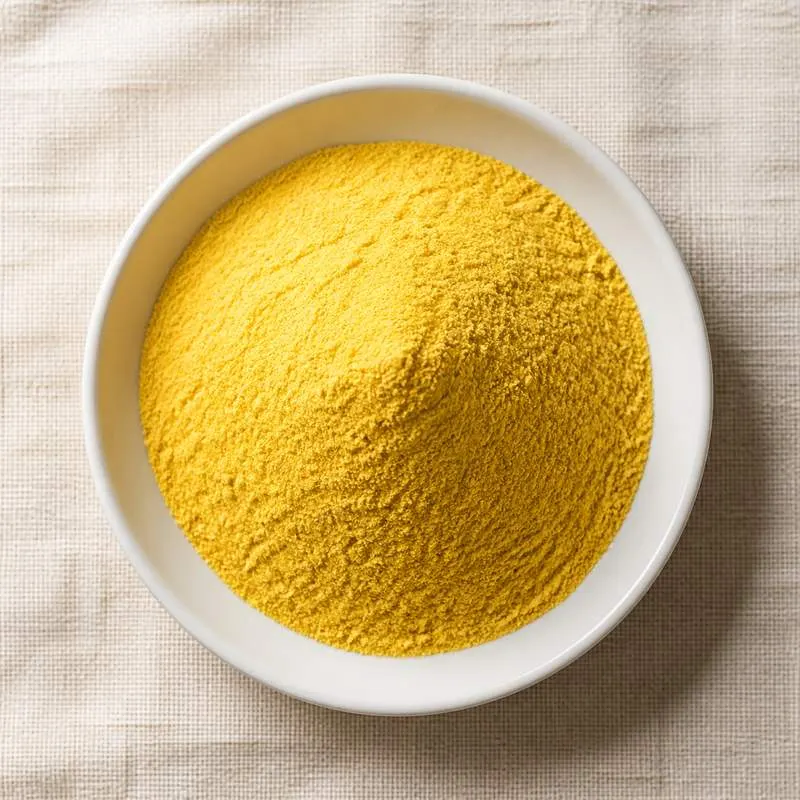
| Appearance | Yellow to yellow-orange fine powder |
| Assay (HPLC, dry basis) | ≥96.0% |
| Loss on Drying | ≤8.5% |
| Ash (sulphated) | ≤0.5% |
| Specific Rotation | +18° to +22° |
| Residual Solvents | Complies with USP |
| Heavy Metals (as Pb) | ≤10 mg/kg |
| Arsenic | ≤2 mg/kg |
| Particle Size (100 mesh) | ≥98% |
| Total Plate Count | ≤1,000 cfu/g |
| Salmonella | Absent in 10g |
Common Markets Grades
The USP, Ph. Eur., and JP monographs set folic acid at 95 to 102 percent assay on a dried basis.
The neat crystalline material is too potent for direct use in most formulations, so 1 percent, 2 percent, and 10 percent triturations on dicalcium phosphate, mannitol, or maltodextrin are the standard premix grades. Fine-powder pharmacopoeial grade serves tablet, capsule, and oral-liquid manufacture.
Granulated and direct-compression grades are produced for high-speed tableting and effervescent applications. Coated and microencapsulated variants are used in chewable tablets and gummies to mask the slightly bitter taste and protect from moisture.
For applications requiring better conversion in carriers of the MTHFR polymorphism, the related ingredient L-5-methyltetrahydrofolate (sold as calcium or glucosamine salts) is produced separately, typically alongside folic acid in B-complex premixes.
Applications
- Mandatory flour fortification programs in the United States since 1998 and in 80-plus other countries
- Cereal, pasta, and bread enrichment in countries with mandatory or voluntary programs
- Prenatal vitamin tablets and capsules at 400 to 800 mcg per daily dose for neural tube defect prevention
- Multivitamin tablets, capsules, gummies, and powders as a B-complex component
- Infant formula and follow-on formula to meet Codex compositional standards
- Energy drinks, sports nutrition, and meal-replacement products as part of the B-vitamin complex
- Clinical and enteral nutrition formulas for hospital and tube feeding
- Pharmaceutical preparations for treatment of megaloblastic anemia and methotrexate rescue
- Combination therapies with vitamin B12 and B6 for homocysteine management
- Animal feed premixes for poultry, swine, ruminants, and aquaculture
- Pet food fortification across dry, wet, and treat formats
- Reference and analytical standards for serum folate assay calibration
Brands Using Folic Acid
Widely-distributed consumer products that list Folic Acid on the ingredient label.
- General MillsTotal Whole Grain Cereal ↗Fortified breakfast cereal; ingredient list includes folic acid (100% DV per serving).Label verified 2026-05-24
- General MillsLucky Charms Cereal ↗Ingredient list includes a B Vitamin (Folic Acid) as added nutrient.Label verified 2026-05-24
- Kellogg'sFrosted Flakes Cereal ↗Fortified cereal ingredient list includes folic acid.Label verified 2026-05-24
- CentrumAdults Multivitamin ↗Daily multivitamin lists Folic Acid 195 mcg per tablet.Label verified 2026-05-24
- Nature MadeSuper B-Complex with Vitamin C Tablets ↗Provides Folate 665 mcg DFE (400 mcg folic acid) per serving.Label verified 2026-05-24
- One A DayMen's Multivitamin ↗Active ingredient list includes Folate (as folic acid) for heart support.Label verified 2026-05-24
Brand names, product names and logos are the property of their owners. They appear here as published evidence that the ingredient is used, taken from the brand's own label or website. Their appearance is not an endorsement, and it does not mean the brand buys from us or from any manufacturer listed on this site.
China Manufacturers of Folic Acid
Top Folic Acid manufacturers in China.
 Jiangxi Tianxin Pharmaceutical Co., Ltd.16 ingredients in the directory
 Nantong Changhai Food Additive Co., Ltd.8 ingredients in the directory
- Qingdao Hualilang New Technology Industrial Co., Ltd.1 ingredient in the directory
Company names and logos are the property of the manufacturers themselves. They are listed here because our own directory records them as producing this ingredient. A listing is not an endorsement by them, and we do not represent them or speak on their behalf.
How We Help Source Folic Acid
Direct Factory Sourcing
We run the whole process: selecting the manufacturer from the top Chinese food ingredient producers, negotiating the price, verifying quality, and coordinating the logistics. You deal with us instead of with several factories at once.
Original Packaging and Documents from the Manufacturer
The manufacturer sends your Folic Acid out of its own factory in the original packing, through to your destination port. The COA, COO, MSDS, TDS and any certifications reach you from the manufacturer as well.
Free Samples and Lead Time
We send 100 to 500 g free for your own laboratory to test and you cover only the courier, usually within 2 to 3 working days. ETD is usually within 7 to 15 days once the order is confirmed, and we check that date against the factory's own manufacturing schedule before we give it to you.
Combined Shipment
We can load Folic Acid together with other ingredients such as Vitamin C, Vitamin D3 and Vitamin E into one 20' FCL. If your quantity is small, we can also ship LCL.
Regulatory Status
Folic acid is approved as a nutrient and fortificant in essentially every regulated market.
In the European Union, Regulation (EC) No 1925/2006 authorises it for food fortification and Directive 2002/46/EC authorises it for food supplements. EFSA has set a tolerable upper intake level of 1000 mcg/day for adults from supplemental sources, reflecting concerns about masking B12 deficiency at high chronic intakes.
The U.S. Food and Drug Administration mandates folic acid fortification of enriched cereal-grain products under 21 CFR 137, a measure introduced in 1998 that reduced neural tube defect prevalence by 25 to 35 percent. It is also recognised as GRAS under 21 CFR 184.1492, with the same 1000 mcg/day upper intake from supplements per IOM guidance.
JECFA has reviewed folic acid and assigned it acceptable nutrient status. Pharmacopoeial monographs appear in the USP, Ph. Eur., JP, and BP.
The MTHFR C677T polymorphism, present in around 40 percent of the global population, reduces conversion of folic acid to the active 5-methyltetrahydrofolate. This biological gap has driven a substantial market for finished-form 5-MTHF supplements that bypass the conversion step, positioned alongside or in place of folic acid.
Manufacturing Process
Folic acid is produced entirely by chemical synthesis. The classical route, developed in the late 1940s, condenses three building blocks: 2,4,5-triamino-6-hydroxypyrimidine, a three-carbon aldehyde such as 1,1,3-trichloroacetone, and para-aminobenzoyl-L-glutamic acid.
The pyrimidine and the chloroaldehyde first react to form the pteridine ring, then couple with the PABA-glutamate fragment to give crude folic acid. The reaction is typically run in dilute aqueous medium under controlled pH and temperature, and yields the desired regioisomer in modest selectivity alongside biopterin-type byproducts.
Purification proceeds through acid-base recrystallisation, with the final product isolated as the yellow-orange dihydrate crystalline powder. Charcoal treatment and recrystallisation from sodium bicarbonate solution remove coloured impurities and isomers to meet pharmacopoeial limits.
Global production is concentrated in a small number of Chinese plants, with smaller historical capacity in India and Europe. The synthesis is multi-step and the cost structure reflects both the building-block prices and the rigorous purification needed for pharmacopoeial quality.