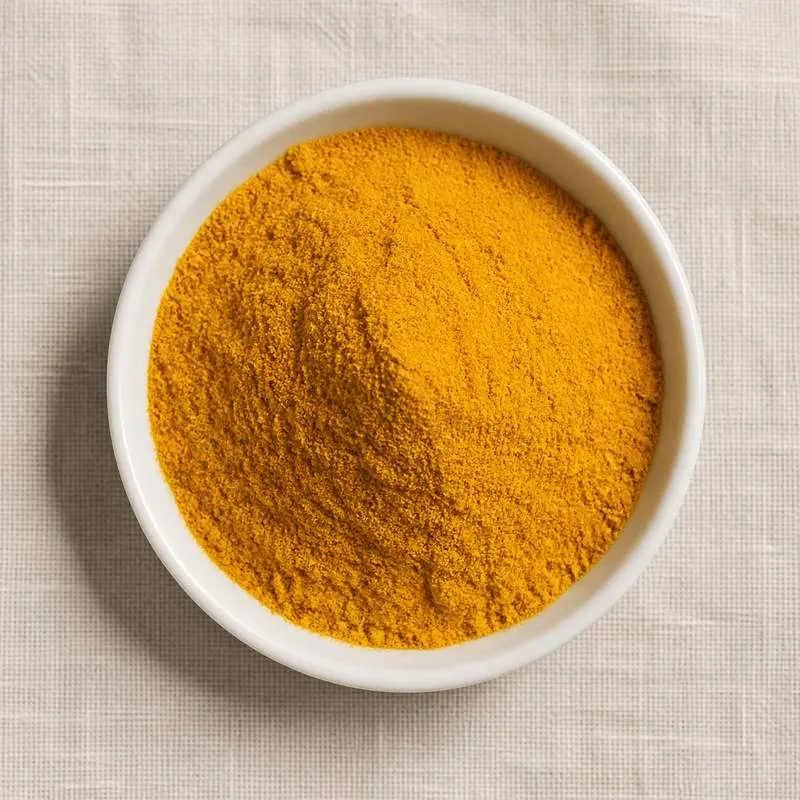
Zanthoxylum Extract
Zanthoxylum extract is the concentrated flavour fraction of the dried pericarp of Sichuan pepper, principally Zanthoxylum bungeanum and Zanthoxylum schinifolium, sold as an oleoresin, an essential oil or a standardised sanshool concentrate. Despite the common name the plant is unrelated to black pepper and to chilli; it belongs to the citrus family, which shows in its bright lemony aroma.
Its defining constituents are the sanshools, a family of unsaturated fatty acid amides led by hydroxy-alpha-sanshool. These produce the tingling, buzzing numbness known in Chinese cooking as ma, an effect on touch and vibration sensing nerve endings quite distinct from the burn of capsaicin or the pungency of piperine. Alongside them sits a volatile oil rich in linalool, limonene, geraniol and beta-myrcene that carries the citrus and floral top note.
The oleoresin is a viscous yellow brown to dark green liquid, soluble in ethanol and vegetable oil and insoluble in water, so aqueous systems use polysorbate emulsions or spray dried powders on a gum acacia carrier. The sanshools are chemically fragile: they degrade under heat, light and alkaline conditions and isomerise on storage, losing tingling potency, so material is filled under nitrogen and held cold.
We source bulk Zanthoxylum Extract from top China manufacturers for our partners. The manufacturer is in Shaanxi. A smaller requirement can ship in a combined container with other ingredients.
Please send the grade you need, the volume and your destination port, and we will come back with a solution and a price.
or call +86-21-6858 0751
- Function
- Plant extract
Specifications
| Item | Specification |
|---|---|
| Appearance | Viscous yellow brown to dark green liquid |
| Odour and Taste | Characteristic citrus and floral, strongly tingling |
| Total Sanshools (HPLC) | ≥ 8.0% |
| Hydroxy-alpha-sanshool | ≥ 5.0% |
| Volatile Oil | 10 to 20 ml per 100 g |
| Identification | Conforms by HPLC and GC against reference |
| Specific Gravity at 25°C | 0.920 to 1.000 |
| Refractive Index at 20°C | 1.480 to 1.510 |
| Moisture | ≤ 2.0% |
| Residual Solvent | ≤ 25 mg/kg |
| Heavy Metals (as Pb) | ≤ 10 mg/kg |
| Lead | ≤ 2.0 mg/kg |
| Arsenic | ≤ 1.0 mg/kg |
| Total Plate Count | ≤ 1,000 cfu/g |
| Yeast and Mould | ≤ 100 cfu/g |
| Salmonella | Absent in 25 g |
Common Markets Grades
Grades divide by extraction route and by which fraction is being sold. Steam distilled Sichuan pepper oil carries only the volatile fraction and gives aroma without tingle, and is specified on linalool and limonene content. Solvent and supercritical carbon dioxide oleoresins carry both the volatile oil and the amide fraction, and are quoted on total sanshools by HPLC, commonly 3 to 15 percent, together with volatile oil content in millilitres per hundred grams. Purified hydroxy-alpha-sanshool concentrates at higher assay are traded in small volume.
Species and origin are stated because they change the profile: red Sichuan pepper from Zanthoxylum bungeanum gives the stronger numbing character while green pepper from Zanthoxylum schinifolium is more citrus and floral. Delivery forms cover neat oleoresin in drums, water dispersible emulsions, oil dilutions at a stated tingle intensity, and encapsulated powders on modified starch for dry seasoning blends. A tingle intensity value determined by sensory panel is often quoted alongside the analytical figures, since the two do not track perfectly.
Applications
- Sichuan style seasoning blends and hot pot bases, where the numbing character is the defining sensation
- Mala flavoured snack seasonings for crisps and extruded snacks, applied as a dry topical blend
- Instant noodle sachets and soup bases, delivering tingle at very low dosage
- Chilli oils and infused condiment oils, where the oleoresin dissolves directly in the fat phase
- Processed meat and marinades in Chinese style products
- Ready meals and retort dishes, where extract gives consistency that whole pepper cannot
- Confectionery and chocolate in the tingling novelty category
- Beverages and cocktails using a water dispersible grade for a mouthfeel effect
- Oral care and lip products, using the tingling amides for the sensation they give
- Cosmetic formulations, where sanshool containing extracts are used for a lip plumping tingle
China Manufacturers of Zanthoxylum Extract
Top Zanthoxylum Extract manufacturers in China.
Company names and logos are the property of the manufacturers themselves. They are listed here because our own directory records them as producing this ingredient. A listing is not an endorsement by them, and we do not represent them or speak on their behalf.
Regulatory Status
In the United States Sichuan pepper is a spice and its oil and oleoresin are natural flavourings. Zanthoxylum species appear among the spices and natural seasonings and in the essential oils, oleoresins and natural extractives listings that the Food and Drug Administration maintains at 21 CFR 182.10 and 182.20 for flavouring use. Extraction solvents used to make the oleoresin are controlled as secondary direct food additives under 21 CFR 173. The whole spice was for many years subject to an import restriction because of citrus canker concerns, which was lifted once a heat treatment requirement was put in place, and that history still shapes how raw material is qualified.
In the European Union Zanthoxylum extracts are natural flavouring preparations under Regulation 1334/2008 and carry no E number. Extraction solvent residues fall under Directive 2009/32/EC. Because the species has been used in food in parts of the Union for many years the pericarp itself is generally not treated as novel, though highly concentrated sanshool preparations made by processes without a use history could require assessment under Regulation 2015/2283. The Joint FAO WHO Expert Committee has evaluated a number of the individual volatile constituents through its flavouring programme, and Codex maintains a standard for spices and culinary herbs that covers the raw material.
Manufacturing Process
Ripe pericarp is harvested, dried in the sun or in warm air, and the seeds and stems separated, since the black seed carries no sanshool and dilutes the extract. The cleaned pericarp is milled to a coarse meal at controlled temperature so that the oil glands open without heating the amide fraction, which begins to degrade well below the temperatures used for other spices.
For oleoresin the meal is extracted in counter current flow with ethanol, ethyl acetate or hexane in a percolation battery, or with supercritical carbon dioxide, which is increasingly preferred here because it runs cool and leaves no solvent residue in a product whose actives are heat sensitive. The miscella is filtered and the solvent recovered in a falling film evaporator followed by vacuum stripping at the lowest workable temperature. Essential oil is made instead by steam distilling the milled pericarp and separating the oil from the aqueous distillate, though this route loses the sanshools entirely, since they are not volatile. Crude oleoresin is assayed by HPLC for total sanshools and by gas chromatography for the volatile profile, standardised by blending with vegetable oil to a target tingle intensity, and either drummed neat, emulsified with polysorbate, or spray dried onto a gum acacia carrier. All filling is done under nitrogen into light resistant containers.