Advantame
Advantame is an ultra-high-intensity sweetener derived from aspartame by N-alkylation with a hydrocinnamaldehyde-based side chain. It is the most potent commercial sweetener currently approved for general food use, delivering a sweetness intensity of roughly 20,000 times that of sucrose.
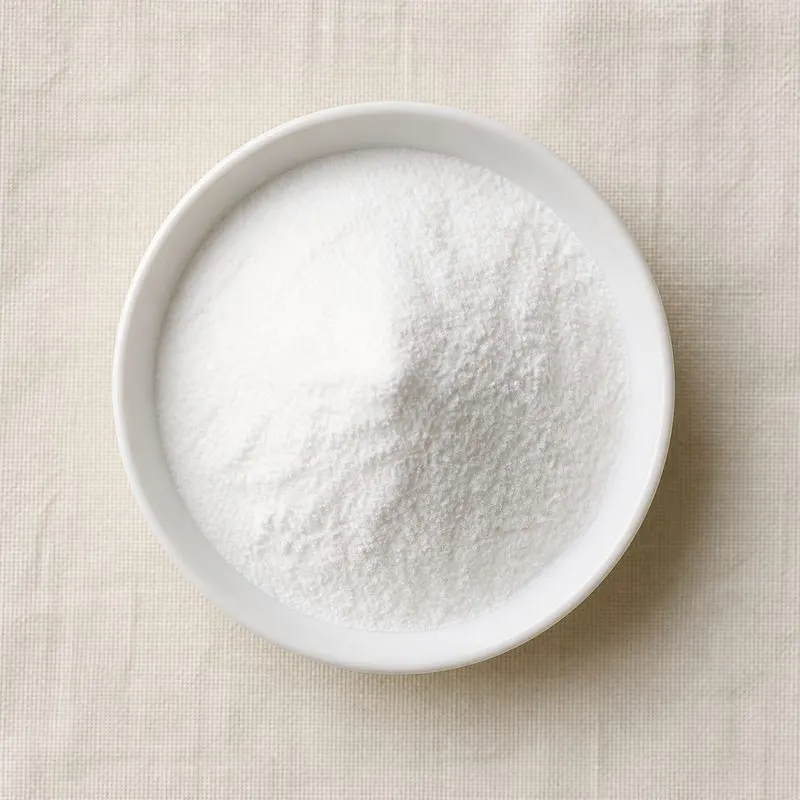
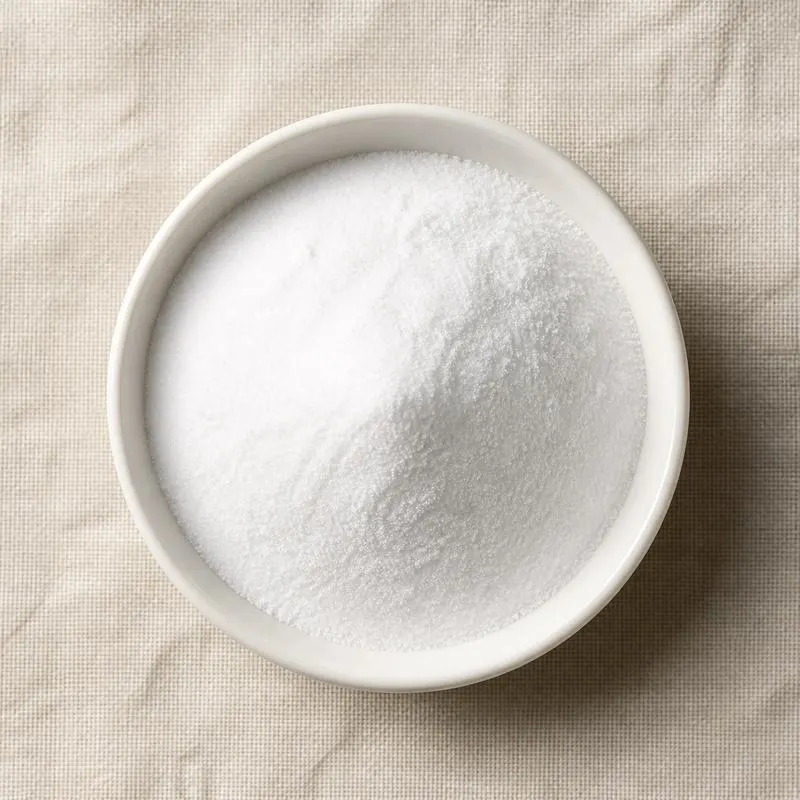
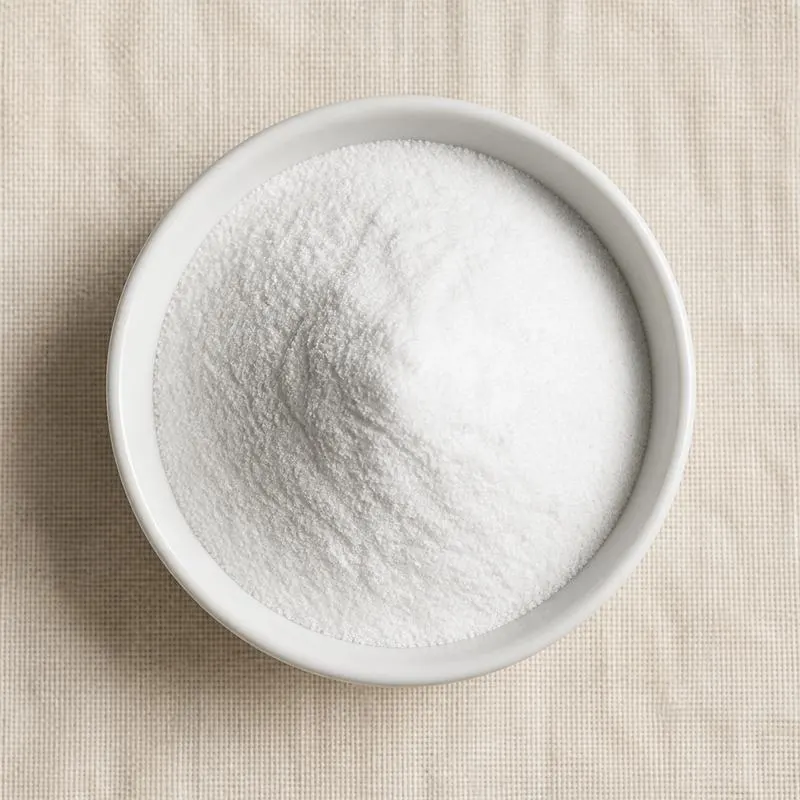
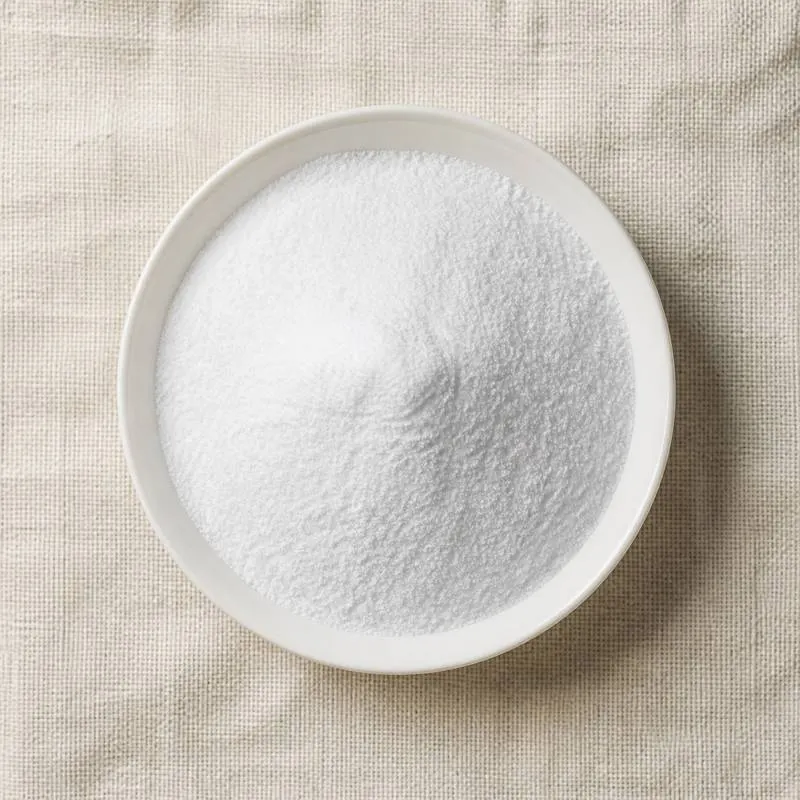
The molecule has the formula C₂₄H₃₀N₂O₇ and a molar mass of 458.51 g/mol. It is an off-white to pale yellow crystalline powder, sparingly soluble in water and freely soluble in ethanol and methanol.
Because the potency is so high, the use level required to sweeten a finished food is measured in single-digit parts per million. The sweetness profile is clean and sucrose-like with extended duration, and the molecule also enhances certain fruit and dairy flavour notes at sub-sweetening doses.
We source bulk Advantame from top China manufacturers for our partners. The manufacturer is in Hubei. A smaller requirement can ship in a combined container with other ingredients.
Please send the grade you need, the volume and your destination port, and we will come back with a solution and a price.
or call +86-21-6858 0751
- Packaging
- 25 kg kraft paper bag with PE inner liner
- ISO 9001
- HACCP
- Halal
- Kosher
Specifications
| Item | Specification |
|---|---|
| Appearance | White to slightly yellow crystalline powder |
| Assay | ≥ 97.0% |
| Loss on Drying | ≤ 2.0% |
| Residue on Ignition | ≤ 0.2% |
| Specific Rotation | +42.4° to +46.4° |
| Heavy Metals (as Pb) | ≤ 10 ppm |
| Sweetness | 20,000 times sweeter than sucrose |
| Moisture | ≤5% |
| Solubility | 0.1 g/L at room temperature |
Common Markets Grades
Advantame trades as one grade only, food and pharmaceutical, at 97 percent minimum assay on the dried basis.
The standard form is a fine crystalline powder. A micronized grade is produced for tablet manufacture and ultra-low-dose dry beverage mixes, where the very small per-serving dose places a premium on uniform particle distribution.
Because the use level is in the low parts-per-million range, formulators typically prepare working dilutions on a carrier such as maltodextrin or dextrose to ease accurate dosing into production-scale batches. The food-grade material complies with the FCC monograph.
Applications
- Diet and reduced-sugar carbonated soft drinks, especially in synergistic blends with acesulfame potassium
- Sugar-free chewing gum, breath mints, and hard candies
- Tabletop sweetener blends with bulking agents such as erythritol or maltodextrin
- Yogurt, drinkable yogurt, and flavoured dairy beverages
- Frozen desserts, ice cream, and frozen novelty bars
- Sugar-free jams, jellies, fruit spreads, and table syrups
- Baked goods, breakfast cereals, and reduced-sugar cereal bars
- Flavour enhancement at sub-sweetening levels in fruit-flavoured beverages and dairy
- Pharmaceutical chewable tablets and lozenges for taste masking
- Oral suspensions and pediatric syrups
- Sauces, dressings, and condiments such as low-calorie ketchup
- Sugar-free desserts, puddings, and gelatin preparations
China Manufacturers of Advantame
Top Advantame manufacturers in China.

Company names and logos are the property of the manufacturers themselves. They are listed here because our own directory records them as producing this ingredient. A listing is not an endorsement by them, and we do not represent them or speak on their behalf.
How We Help Source Advantame
Direct Factory Sourcing
We run the whole process: selecting the manufacturer from the top Chinese food ingredient producers, negotiating the price, verifying quality, and coordinating the logistics. You deal with us instead of with several factories at once.
Original Packaging and Documents from the Manufacturer
The manufacturer sends your Advantame out of its own factory in the original packing, through to your destination port. The COA, COO, MSDS, TDS and any certifications reach you from the manufacturer as well.
Free Samples and Lead Time
We send 100 to 500 g free for your own laboratory to test and you cover only the courier, usually within 2 to 3 working days. ETD is usually within 7 to 15 days once the order is confirmed, and we check that date against the factory's own manufacturing schedule before we give it to you.
Combined Shipment
We can load Advantame together with other ingredients such as Stevia, Erythritol and Maltitol into one 20' FCL. If your quantity is small, we can also ship LCL.
Regulatory Status
Advantame is one of the most recently approved intense sweeteners.
The U.S. Food and Drug Administration approved advantame as a general-purpose sweetener and flavour enhancer in May 2014 under 21 CFR 172.803, following a food additive petition submitted by Ajinomoto.
In the European Union it carries the E number E969 under Regulation (EC) No 1333/2008, with use levels defined per food category in Annex II. The European Food Safety Authority (EFSA) issued a favorable scientific opinion in 2013 that supported the EU listing.
JECFA evaluated advantame in 2013 and assigned acceptable status under the Codex framework. Approval has also been granted by Food Standards Australia New Zealand (FSANZ), Health Canada, and a number of other regulators in Asia and Latin America.
Because the daily exposure at typical use levels is exceptionally low, the warning required for aspartame regarding phenylketonuria is not applied to advantame in the United States or the European Union, since the dose of liberated phenylalanine from advantame metabolism is negligible.
Manufacturing Process
Advantame is manufactured from aspartame through a reductive amination on the free amino group of the aspartic acid residue.
Aspartame is first prepared by the same enzymatic or chemical synthesis used for the parent sweetener. The free alpha-amino group is then condensed with 3-(3-hydroxy-4-methoxyphenyl)propionaldehyde, also called 3-hydroxy-4-methoxyhydrocinnamaldehyde, under reductive amination conditions using a borohydride or hydrogen with a heterogeneous metal catalyst.
The reaction installs the N-(3-(3-hydroxy-4-methoxyphenyl)propyl) side chain that distinguishes advantame from aspartame and from neotame. The product is isolated by crystallisation from an aqueous-organic solvent system, treated to remove residual catalyst and side-chain precursor, and recrystallised to specification purity.
The dried crystals are milled to the target particle size and screened. Process control focuses on enantiomeric purity at the new stereocenter introduced during the reductive amination, since only one diastereomer carries the full sweetness intensity.