Baking Flavour
Baking flavour describes flavourings engineered for the specific problem of an oven: most of the aroma a formulator adds is lost before the product leaves the tunnel. During a bake the crumb holds at around 98 degrees Celsius while the surface climbs past 150, so light esters and aldehydes evaporate with the steam and only the higher boiling and matrix bound fraction reaches the consumer. A baking flavour is built and delivered to survive that loss.
Two design strategies are used. The first weights the formula towards thermally robust molecules: vanillin, ethyl vanillin, maltol, ethyl maltol, furaneol, cyclotene, delta and gamma lactones, pyrazines and diacetyl derivatives, all of which are either stable at bake temperature or are themselves products of browning chemistry. The second protects volatile top notes physically, by encapsulating them in a glassy carbohydrate shell or in a hardened fat that only opens once the product is eaten.
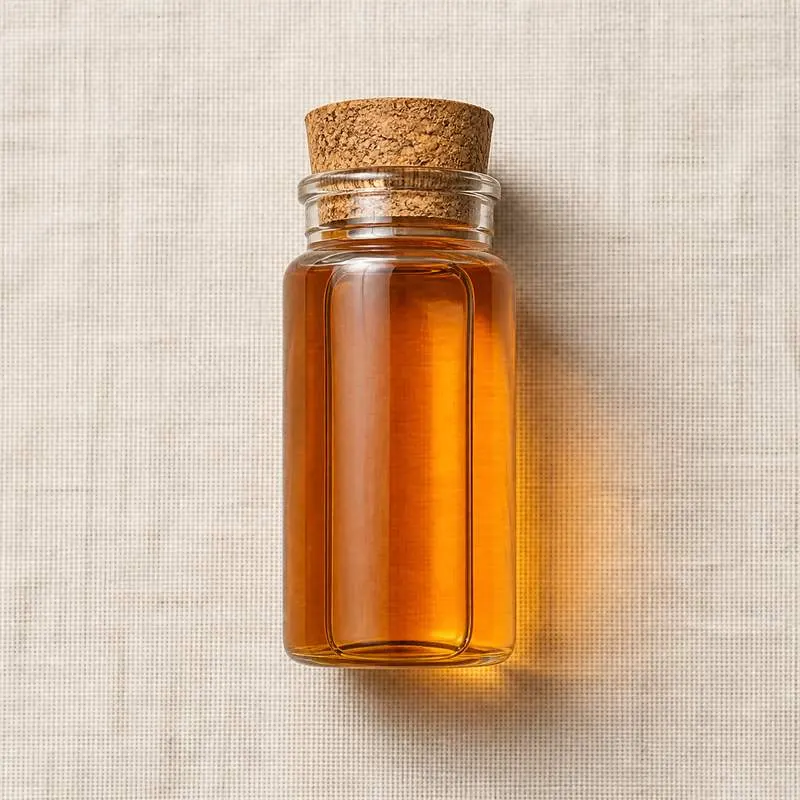
Physical forms follow that logic: liquids in propylene glycol or oil for wet dosing at the mixer, viscous pastes for high load natural profiles, and free flowing encapsulated powders for dry premixes and continuous dosing lines. Dosage is quoted on flour weight, generally between 0.05 and 0.5 percent.
We source bulk Baking Flavour from top China manufacturers for our partners. The manufacturer is in Guangdong. A smaller requirement can ship in a combined container with other ingredients.
Please send the grade you need, the volume and your destination port, and we will come back with a solution and a price.
or call +86-21-6858 0751
- Function
- Flavours and Aromas
Specifications
| Item | Specification |
|---|---|
| Appearance | Homogeneous liquid, paste or free flowing powder as declared |
| Colour | To retained standard for the declared profile |
| Odour and flavour | Characteristic, conforms to retained standard after bake test |
| Identification | Gas chromatographic profile matches reference batch |
| Flavour load, encapsulated grades | 10.0 to 25.0 percent as declared |
| Moisture, powder grades | Not more than 5.0 percent |
| Surface oil, powder grades | Not more than 2.0 percent |
| Relative density, liquid grades at 20 degrees Celsius | 0.900 to 1.100 |
| Lead | Not more than 1 mg per kg |
| Arsenic | Not more than 1 mg per kg |
| Total plate count | Not more than 1000 cfu per g |
| Yeast and mould | Not more than 100 cfu per g |
| Escherichia coli | Absent in 1 g |
| Salmonella | Absent in 25 g |
Common Markets Grades
Grades are specified by what the flavour has to do in the formula rather than by an assay. Bake stable liquid grades carry the profile in propylene glycol or vegetable oil and are chosen by whether the dough is water continuous or fat continuous, since an aqueous carrier dosed into a laminating margarine will not disperse. Encapsulated powder grades are quoted on flavour load, typically 10 to 25 percent on a modified starch, gum acacia or maltodextrin carrier, and on the release trigger: a spray dried carbohydrate shell dissolves in the mouth, a spray chilled fat matrix opens at its melting point in the oven.
The market also separates by function. Top note grades are used to rebuild the fresh baked impression on part baked, frozen and long shelf life products. Body or crumb grades reinforce the profile a reduced butter, reduced egg or reduced sugar formulation has lost. Masking grades sit over the notes contributed by soya protein, wholemeal bran, vitamin and mineral fortification or a chemical leavening system. Labelling status splits each of these into natural, flavour with other natural flavours, and artificial or nature identical.
Applications
- Industrial bread lines, where a fresh baked or crust flavour is dosed to restore aroma lost during cooling, slicing and packaging
- Part baked and frozen dough, where the flavour has to survive freezing, thawing and a second bake
- Long life cakes and snack cakes, where a bake stable butter or vanilla profile must hold across a shelf life of several months
- Reduced butter and vegetable fat formulations, where flavour replaces the sensory contribution of the removed dairy fat
- Reduced sugar bakery, where maltol and furaneol restore the perception of sweetness and browning
- Wholemeal, high fibre and protein enriched products, where a masking grade covers bran and soya notes
- Chemically leavened cakes and muffins, where the flavour covers residual notes from the leavening acid
- Cake, bread and pancake dry premixes, dosed as an encapsulated powder that stays stable in the ambient mix
- Wafer, biscuit and cracker lines, where a fat carried flavour is added with the shortening
- Fillings, toppings and glazes applied after the bake, where volatile top notes can be used freely
China Manufacturers of Baking Flavour
Top Baking Flavour manufacturers in China.
Company names and logos are the property of the manufacturers themselves. They are listed here because our own directory records them as producing this ingredient. A listing is not an endorsement by them, and we do not represent them or speak on their behalf.
Regulatory Status
In the United States the compounded flavour is not itself a regulated article; every component must be a permitted flavouring ingredient, whether a synthetic flavouring substance listed at 21 CFR 172.515, a GRAS flavouring at 21 CFR 182.60, a spice or natural extractive at 21 CFR 182.10 and 182.20, or an independently determined GRAS substance such as those on the FEMA GRAS list. Encapsulating carriers such as modified food starch, gum acacia and maltodextrin have their own listings, and hydrogenated vegetable fats used for spray chilling must meet the applicable fat regulations. The finished baked good declares the flavour under 21 CFR 101.22.
In the European Union Regulation (EC) No 1334/2008 covers flavourings, sets the Union list of authorised flavouring substances and defines when a flavouring may be described as natural. Carriers, solvents, emulsifiers and anticaking agents used in the delivery system must be authorised additives under Regulation (EC) No 1333/2008 for the food category concerned, and are declared by E number on the finished product where they carry over at a functional level. Milk, egg, soya, nut, wheat and other allergenic components of the blend must be declared under Regulation (EU) No 1169/2011. The Joint FAO/WHO Expert Committee on Food Additives evaluates flavouring agents by structural class, and Codex Alimentarius sets out general principles for the use of flavourings.
Manufacturing Process
Liquid grades are compounded. Aroma chemicals, oleoresins, essential oils and natural extracts are weighed to formula, with trace components pre diluted so that quantities of a few parts per million can be dosed reliably, and dissolved into the propylene glycol or oil carrier in a jacketed stainless vessel under nitrogen. The batch matures for a set period so that the components equilibrate, is compared against a retained sensory standard and an instrumental profile, then polish filtered and filled. Paste grades add a hydrocolloid thickener and any milled solids under high shear.
Encapsulated grades start from an emulsion. The flavour oil is dispersed into a solution of modified starch, gum acacia or maltodextrin and passed through a two stage high pressure homogeniser until the droplet size is small enough to be retained during drying. That emulsion is spray dried in a co current tower, with the inlet air near 180 degrees Celsius and the outlet near 90, so that the carrier vitrifies around each droplet as the water leaves. Fat encapsulated grades are made by dispersing the flavour in a molten hydrogenated vegetable fat and spray chilling it into a cooled chamber. Both powders are sieved, tested for surface oil and residual moisture, and packed in a foil laminate to keep the glassy or fat shell intact.