Calcium Alginate
Calcium alginate is the calcium salt of alginic acid, the uronic acid copolymer extracted from brown seaweed. Unlike the sodium, potassium and ammonium salts, it is insoluble in water, because the divalent calcium ion bridges guluronic acid sequences on adjacent polymer chains and locks them into the cross-linked egg-box structure that makes up an alginate gel.
That insolubility is the point of the material. As a dry powder it is a hydrophilic solid that swells but does not dissolve, so it acts as an insoluble bulking and film-forming agent rather than as a thickener. Far more often, calcium alginate is not bought as a powder at all but generated in place, by bringing a soluble alginate solution into contact with a calcium salt so that the gel forms exactly where it is wanted, whether as a bead, a fibre, a coating or a set block. Because the gel is formed by ionic cross-linking rather than by cooling, it is thermally irreversible and does not melt on reheating, which distinguishes it from gelatin and agar gels.
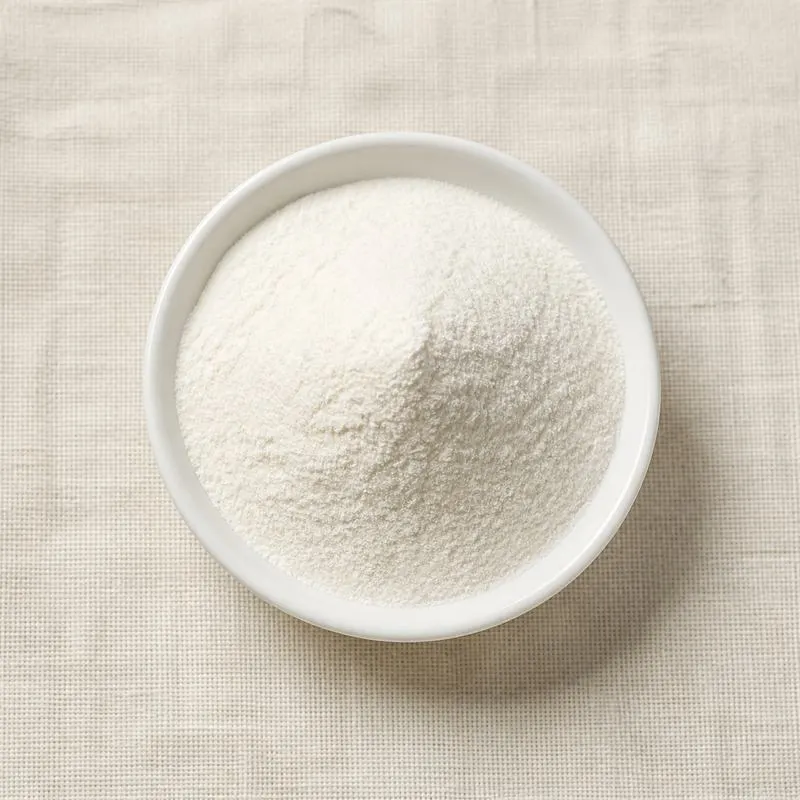
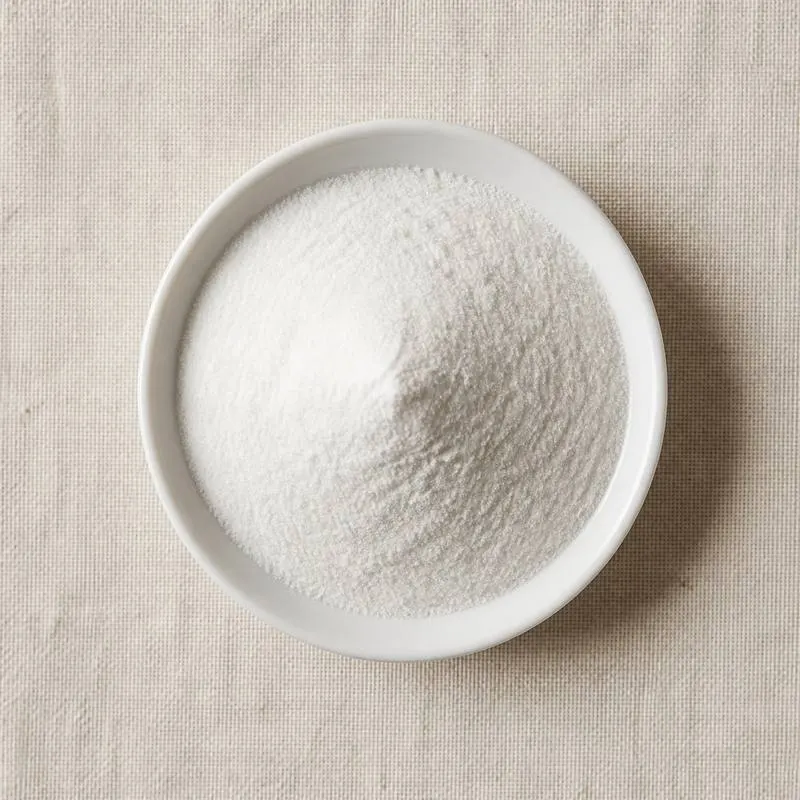
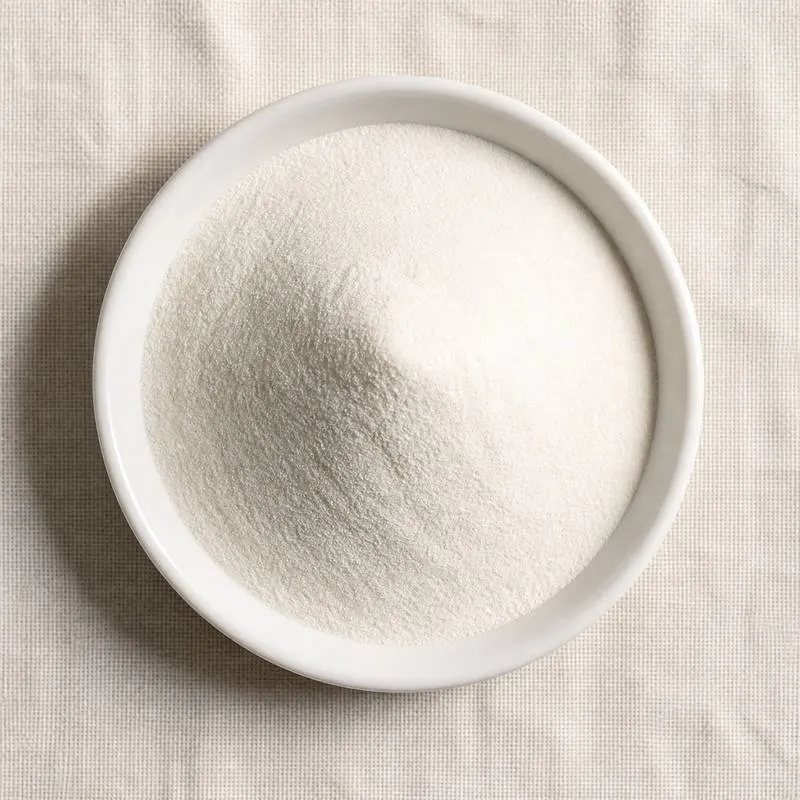
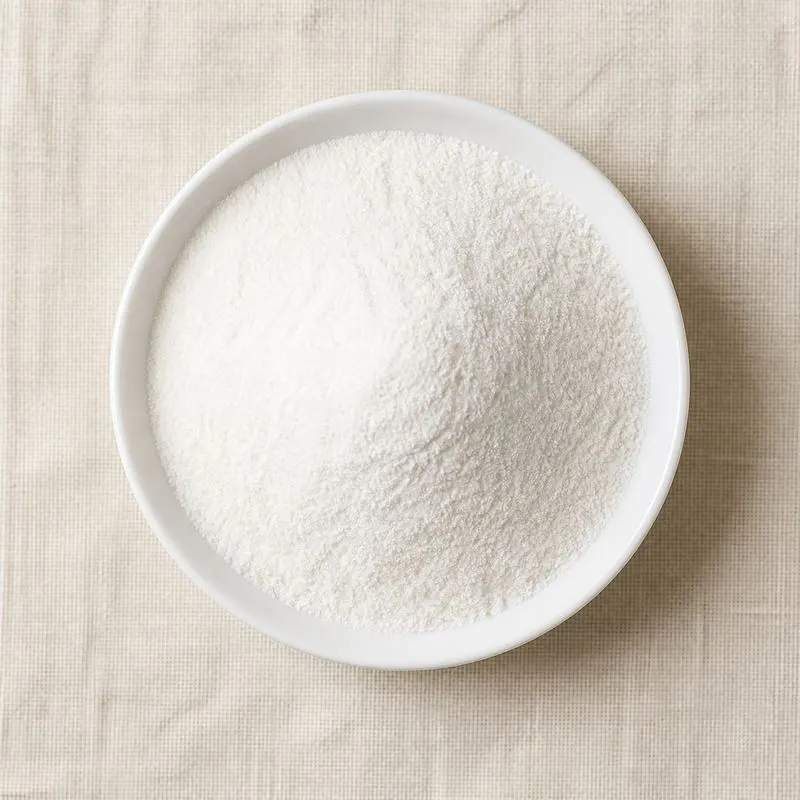
The commercial powder is white to pale yellowish-brown, odourless and bland, insoluble in water and organic solvents but soluble in solutions of sequestrants such as citrate or phosphate, which strip the calcium and release the alginate back into solution.
We source bulk Calcium Alginate from top China manufacturers for our partners. The manufacturers are in Jiangsu and Shandong. A smaller requirement can ship in a combined container with other ingredients.
Please send the grade you need, the volume and your destination port, and we will come back with a solution and a price.
or call +86-21-6858 0751
Specifications
| Item | Specification |
|---|---|
| Appearance | White to pale yellowish-brown fibrous powder |
| Odour and Taste | Almost odourless, bland |
| Identification | Positive for alginate and for calcium |
| Assay, as calcium alginate on dry basis | 89.6% to 104.5% |
| Calcium, dry basis | 8.0% to 12.0% |
| Solubility in water | Insoluble, swells to a hydrated mass |
| Loss on Drying | Not more than 15.0% |
| Sulphated Ash, dry basis | Not more than 30.0% |
| pH, 3% suspension | 6.0 to 8.0 |
| Chloride | Not more than 1.0% |
| Particle Size | Not less than 95% through 60 mesh |
| Lead | Not more than 2 mg/kg |
| Arsenic | Not more than 3 mg/kg |
| Cadmium | Not more than 1 mg/kg |
| Total Plate Count | Not more than 5,000 CFU/g |
| Yeast and Mould | Not more than 500 CFU/g |
| Salmonella | Absent in 25 g |
Common Markets Grades
Calcium alginate is traded as a food grade powder and as a pharmaceutical and medical device grade, the latter dominating in value because it is the base of alginate wound dressings. Medical grade is made under tight microbiological and endotoxin control and takes the form of fibre for conversion into non-woven dressing rather than powder.
Food and technical powders are specified by assay, calcium content, particle size and swelling capacity rather than by solution viscosity, since the material does not dissolve. Where a producer offers a low viscosity or slowly soluble grade under the calcium alginate name, this is usually a mixed calcium and sodium alginate in which only part of the sodium has been exchanged, giving controlled partial solubility, and the sodium and calcium balance should be confirmed on the specification. Encapsulation users generally buy soluble sodium or potassium alginate and a separate calcium salt rather than the preformed calcium salt.
Applications
- Alginate wound dressings, where the fibre absorbs exudate and exchanges calcium for sodium to form a gel over the wound bed
- Encapsulation of probiotics, enzymes and live cells in gel beads formed by dropping alginate solution into a calcium bath
- Restructured meat, fish and fruit pieces, binding particles into a sliceable form without heat
- Immobilisation of enzymes and microorganisms in industrial biocatalysis and fermentation
- Edible films and coatings on fresh produce and meat, providing a moisture and oxygen barrier
- Bakery and dessert applications requiring a heat-stable gel that will not melt during baking
- Bulking and texturising agent in reduced calorie and fibre enriched foods
- Spherification systems, where the calcium source sets a membrane around a liquid core
- Pharmaceutical formulation as a disintegrant and as a matrix for controlled release
- Water treatment and industrial separation using alginate beads as an ion exchange or adsorption medium
China Manufacturers of Calcium Alginate
Top Calcium Alginate manufacturers in China.
 Lianyungang Tiantian Seaweed Industrial Co., Ltd.6 ingredients in the directory
 Shandong Jiejing Group Corporation9 ingredients in the directory
Company names and logos are the property of the manufacturers themselves. They are listed here because our own directory records them as producing this ingredient. A listing is not an endorsement by them, and we do not represent them or speak on their behalf.
Regulatory Status
In the United States calcium alginate is affirmed as generally recognised as safe under 21 CFR 184.1187 for use as a food ingredient in accordance with good manufacturing practice. Wound dressings made from it are regulated as medical devices rather than as food or drug ingredients, and are subject to the corresponding device requirements.
In the European Union it is authorised as E404 calcium alginate under the food additives regulation, with identity and purity criteria covering assay, calcium content, loss on drying, ash, water insoluble matter and heavy metals. Alginates are generally permitted at quantum satis in the food categories in which they are allowed and are declared in the ingredient list by name or E number, and their use in foods for infants and young children is restricted to defined categories. Medical grade material used in dressings falls under the EU medical devices regulation. Codex and JECFA recognise the substance as INS 404, covered by the JECFA specifications for alginic acid and its salts.
Manufacturing Process
Production follows the standard alginate extraction to the point of the clarified sodium alginate solution. Washed and milled brown seaweed is pretreated with dilute mineral acid, digested with sodium carbonate so the alginate dissolves as the sodium salt, then heavily diluted and clarified by screening, filtration and flotation to remove cellulosic residue.
Calcium alginate is then made by adding a calcium chloride solution to the clarified extract. The polymer precipitates immediately as fibrous calcium alginate, and because the reaction is instantaneous the way the two streams are brought together determines the shape of the fibre, so the extract is normally injected through nozzles or a perforated plate into the calcium bath to give a workable fibre rather than a lump. The fibres are separated on a screen or in a press and washed thoroughly to remove sodium chloride and excess calcium. For food and technical powder the washed fibre is dewatered, dried and milled to the specified mesh. For medical dressing manufacture the alginate is instead spun as a continuous filament into a calcium bath, washed, drawn and cut into staple for carding into non-woven fabric. Calcium alginate produced as a process intermediate is not dried but converted straight to alginic acid with mineral acid on the way to the soluble salts.