Sodium Alginate
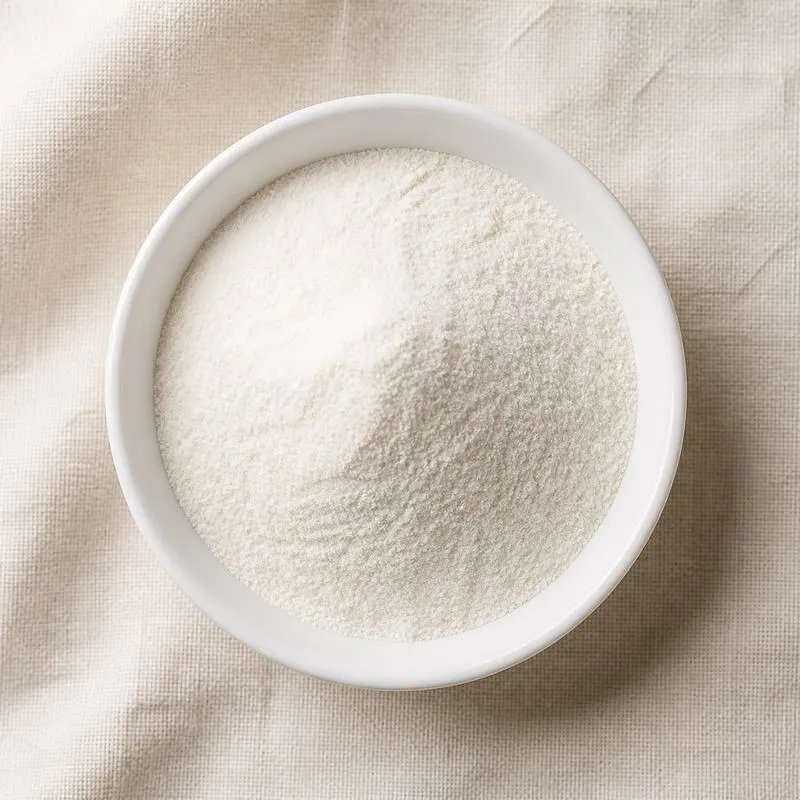
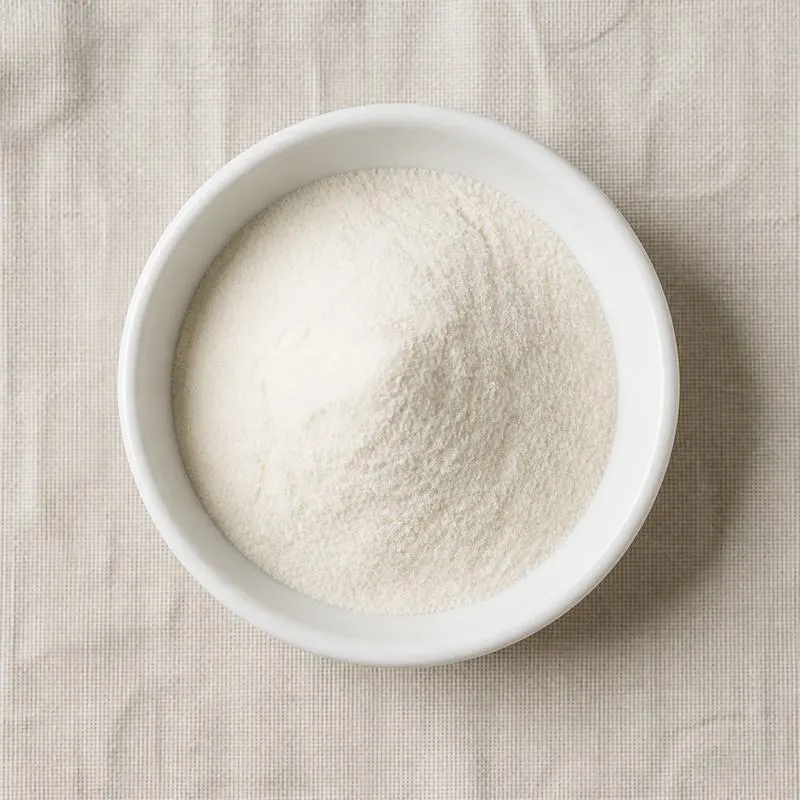
Sodium Alginate is the sodium salt of alginic acid, a linear polysaccharide extracted from brown seaweed. It is the most widely used member of the alginate family and the default form for thickening, film forming, and reaction-set gels with calcium.
The polymer is a copolymer of β-D-mannuronate (M) and α-L-guluronate (G) residues. The G-block fraction reacts cooperatively with calcium ions through the egg-box mechanism to form a fast cold-set gel.
We source bulk Sodium Alginate from top China manufacturers for our partners, working with several of them. The manufacturers are in Shandong and Jiangsu. For this ingredient the minimum order is 500 kg and a 20-foot container takes 18 MT, and a smaller requirement can ship in a combined container with other ingredients.
Please send the grade you need, the volume and your destination port, and we will come back with a solution and a price.
or call +86-21-6858 0751
- Minimum order
- 500 kg
- Qty in 20' FCL
- 18 MT
- Packaging
- 25 kg kraft paper bag with PE inner liner
- ISO 9001
- HACCP
- Halal
- Kosher
Specifications
| Item | Specification |
|---|---|
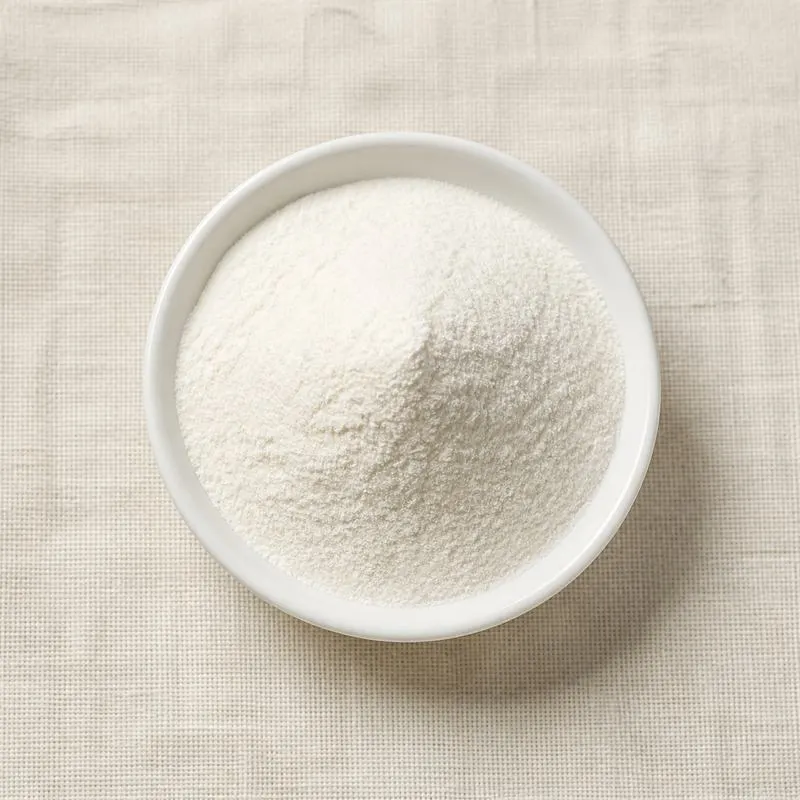
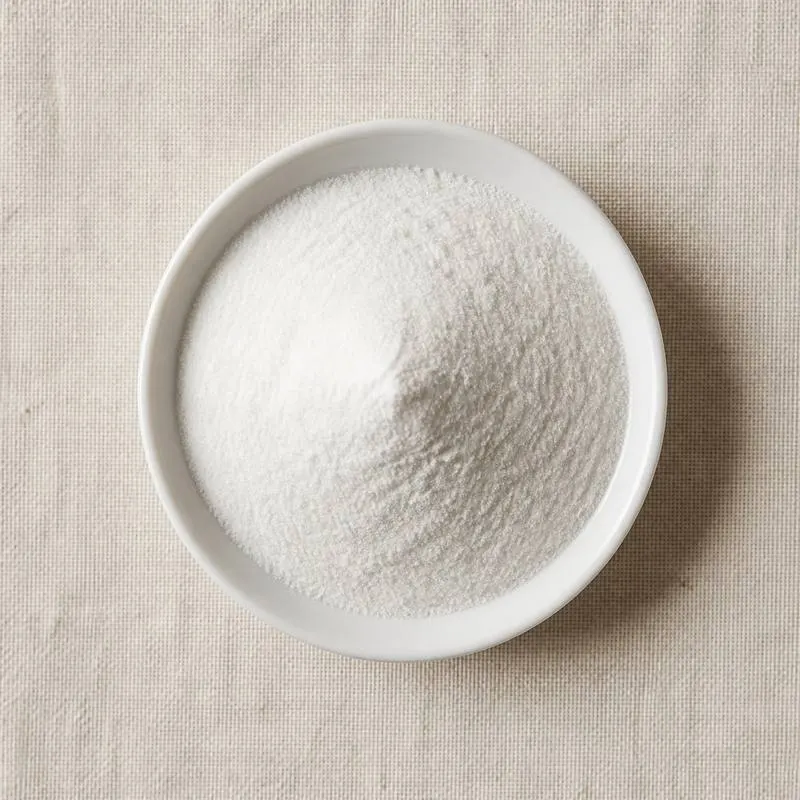
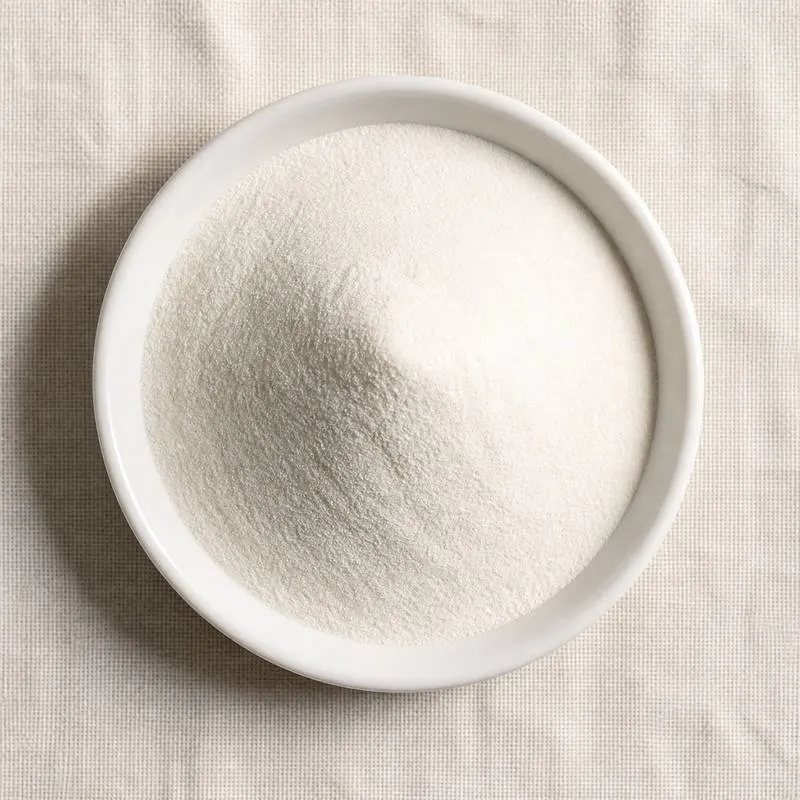
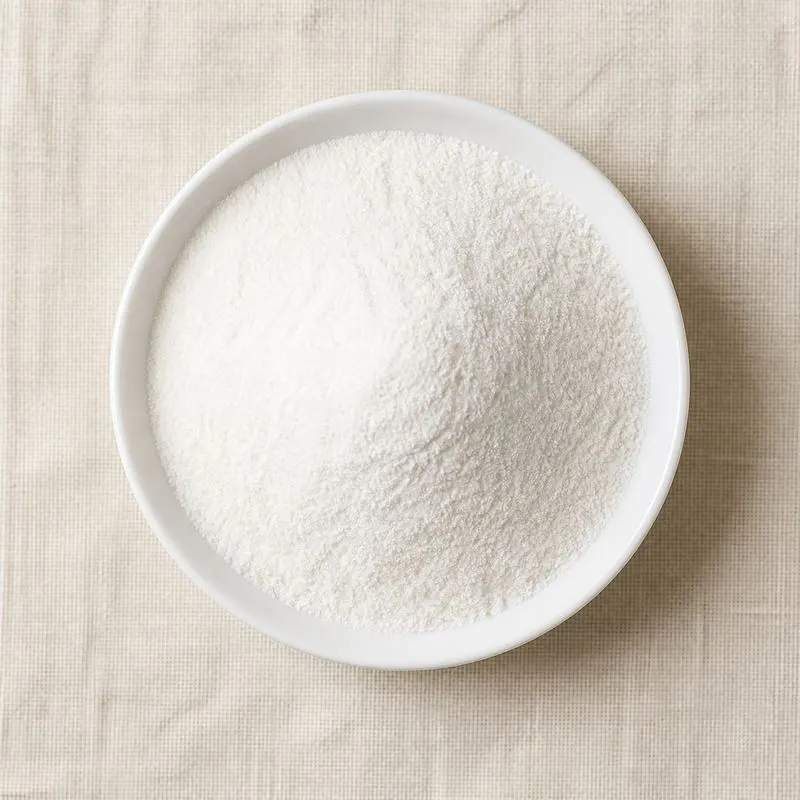
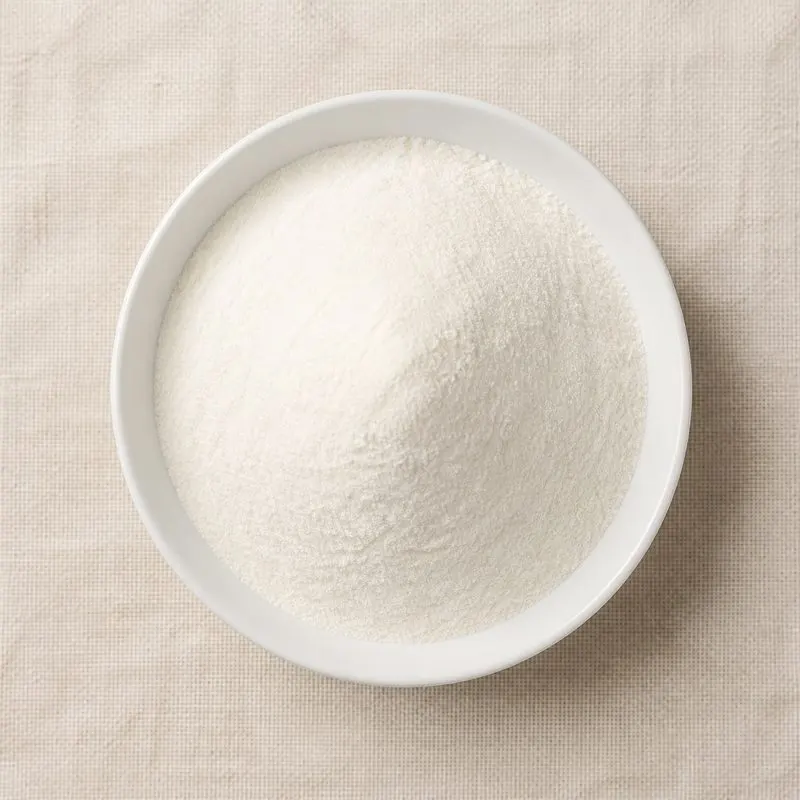
| Appearance | White to pale yellow fibrous or granular powder, almost odourless |
| Assay (as sodium alginate, dried basis) | 90.8-106.0% |
| Viscosity (1% solution, 20 °C) | 100-3,000 mPa·s according to grade, ± 15% of nominal |
| Loss on Drying (105 °C, 4 h) | ≤ 15.0% |
| Ash (dried basis) | 18.0-27.0% |
| Water-Insoluble Matter | ≤ 0.5% |
| pH (1% solution) | 6.0-8.0 |
| Calcium (as Ca) | ≤ 0.3% |
| Particle Size | ≥ 90% through 80 mesh |
| Heavy Metals (as Pb) | ≤ 10 mg/kg |
| Lead (as Pb) | ≤ 2 mg/kg |
| Arsenic (as As) | ≤ 3 mg/kg |
| Total Plate Count | ≤ 5,000 CFU/g |
| Yeast and Mould | ≤ 500 CFU/g |
| E. coli / Salmonella | Negative/25g |
Common Markets Grades
Sodium Alginate is graded by viscosity, M/G ratio, and particle size.
Low-viscosity grades (around 100 to 400 cP at 1 percent) are used in fruit fillings, beverage stabilisation, and printing pastes where rapid hydration matters.
Medium-viscosity grades (500 to 1,500 cP) cover the bulk of food applications including dairy and bakery.
High-viscosity grades (above 2,000 cP) are used in restructured foods, encapsulation, and dental impression materials.
High-G grades give firm, brittle calcium gels for restructured foods. High-M grades give soft, elastic gels for film and dressing applications. Pharmaceutical grades meet USP and Ph. Eur. monographs.
Applications
- Restructured meat, fish balls, and seafood analogues set with calcium
- Olives stuffed with pimento paste set into shape with calcium
- Fruit preparations and bakery fillings for bake stability
- Onion ring batters and breading systems for adhesion
- Ice cream and dairy desserts as a viscosity adjuster and ice-crystal controller
- Wound dressings and haemostatic gauzes in medical use
- Dental impression powders for fast-setting calcium reaction
- Encapsulation of probiotics, flavours, and pharmaceutical actives
- Textile reactive-dye printing pastes
- Molecular gastronomy spherification, caviar, and ravioli formats
Brands Using Sodium Alginate
Widely-distributed consumer products that list Sodium Alginate on the ingredient label.
- Beyond MeatBeyond Sausage Brat Original ↗Brand confirms casing is made of sodium alginate (alginate from algae); ingredient list shows 'Sodium Alginate Casing' on Beyond Sausage Brat Original.Label verified 2026-05-24
- Field RoastClassic Pizzeria Plant-Based Pepperoni ↗Listed: '...DRIED GARLIC, ANNATTO EXTRACT (COLOR), SODIUM ALGINATE, PAPRIKA EXTRACT (COLOR)...'Label verified 2026-05-24
Brand names, product names and logos are the property of their owners. They appear here as published evidence that the ingredient is used, taken from the brand's own label or website. Their appearance is not an endorsement, and it does not mean the brand buys from us or from any manufacturer listed on this site.
China Manufacturers of Sodium Alginate
Top Sodium Alginate manufacturers in China.
 Benefit Ocean3 ingredients in the directory
 Lianyungang Tiantian Seaweed Industrial Co., Ltd.6 ingredients in the directory
 Qingdao Bright Moon Seaweed Group Co., Ltd.7 ingredients in the directory
 Qingdao Gather Great Ocean Algae Industry Group Co., Ltd.5 ingredients in the directory
 Shandong Jiejing Group Corporation9 ingredients in the directory
 Yantai Hongri Biotech Co., Ltd.2 ingredients in the directory
 Yantai Taishen Biotechnology Co., Ltd.4 ingredients in the directory
 Yantai Zhouji Marine Biotechnology Co., Ltd.2 ingredients in the directory
Company names and logos are the property of the manufacturers themselves. They are listed here because our own directory records them as producing this ingredient. A listing is not an endorsement by them, and we do not represent them or speak on their behalf.
How We Help Source Sodium Alginate
Direct Factory Sourcing
We run the whole process: selecting the manufacturer from the top Chinese food ingredient producers, negotiating the price, verifying quality, and coordinating the logistics. You deal with us instead of with several factories at once.
Original Packaging and Documents from the Manufacturer
The manufacturer sends your Sodium Alginate out of its own factory in the original packing, through to your destination port. The COA, COO, MSDS, TDS and any certifications reach you from the manufacturer as well.
Free Samples and Lead Time
We send 100 to 500 g free for your own laboratory to test and you cover only the courier, usually within 2 to 3 working days. ETD is usually within 7 to 15 days once the order is confirmed, and we check that date against the factory's own manufacturing schedule before we give it to you.
Combined Shipment
We can load Sodium Alginate together with other ingredients such as Carrageenan, Sodium Carboxymethyl Cellulose and Agar Agar into one 20' FCL. If your quantity is small, we can also ship LCL.
Regulatory Status
Sodium Alginate is approved in essentially every regulated market.
Regulation (EC) No 1333/2008 lists it as E401 in the European Union, and it is GRAS in the U.S. at 21 CFR 184.1724. JECFA has assigned an ADI not specified.
Pharmaceutical grades meet USP-NF and European Pharmacopoeia monographs. Halal, Kosher, vegan, and non-GMO certifications are routinely available.
Manufacturing Process
Production starts with brown seaweed, typically Lessonia, Macrocystis, or Laminaria, sourced from Chile, Peru, China, Norway, and France.
The dried seaweed is digested with sodium carbonate, which extracts the alginate into a viscous solution. Sand, cell debris, and pigment are removed by sedimentation, filtration, and flotation.
The clarified extract is acidified to precipitate alginic acid as a fibrous mass. This is then re-dissolved with sodium carbonate to produce a controlled sodium alginate solution.
The final paste is dewatered, dried in a fluid-bed or drum dryer, and milled to the target particle size. Bleaching with hypochlorite is optional for premium light-colour grades.