Potassium Alginate
Potassium alginate is the potassium salt of alginic acid, a linear polysaccharide of beta-D-mannuronic and alpha-L-guluronic acid residues extracted from brown seaweed. It is the potassium counterpart of the more common sodium alginate and behaves almost identically in solution, the difference lying in the cation supplied to the formulation rather than in the polymer.
It dissolves in cold water to give a viscous pseudoplastic solution whose viscosity depends on chain length and on the mannuronic to guluronic ratio of the source weed. The defining functional property is cold gelation with divalent cations: when calcium is introduced, sequences of guluronic acid residues on neighbouring chains chelate the ion in the egg-box arrangement, forming a heat-stable gel without any cooking step. Guluronic-rich material gives firm brittle gels, mannuronic-rich material gives softer elastic ones.
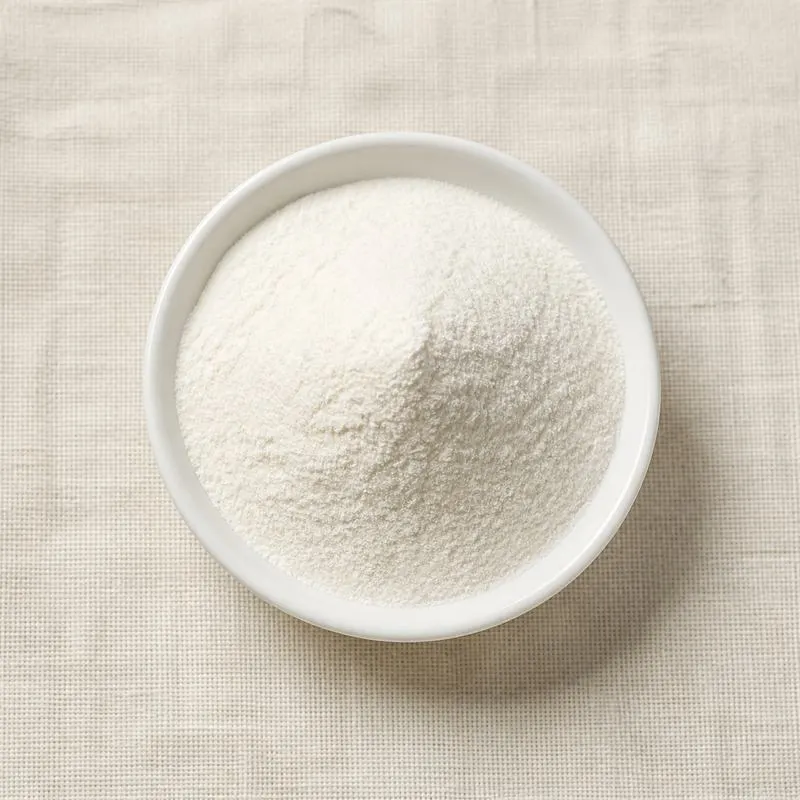
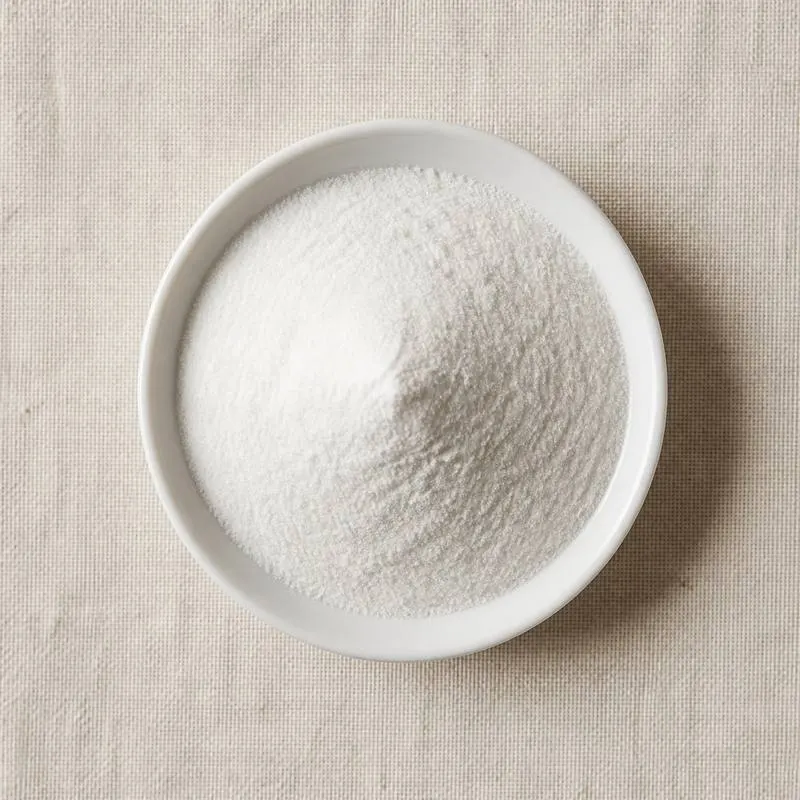
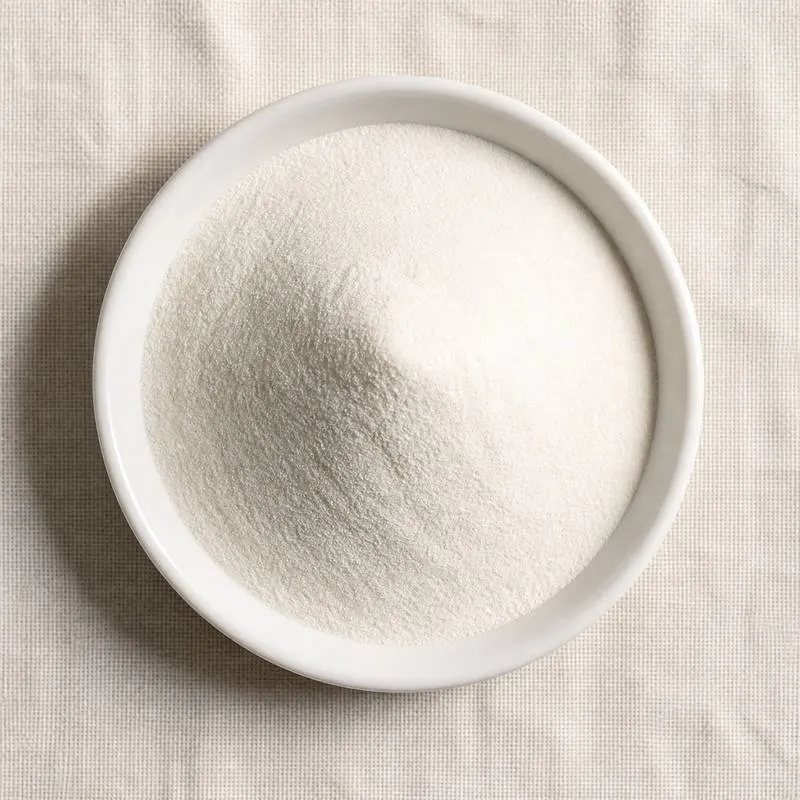
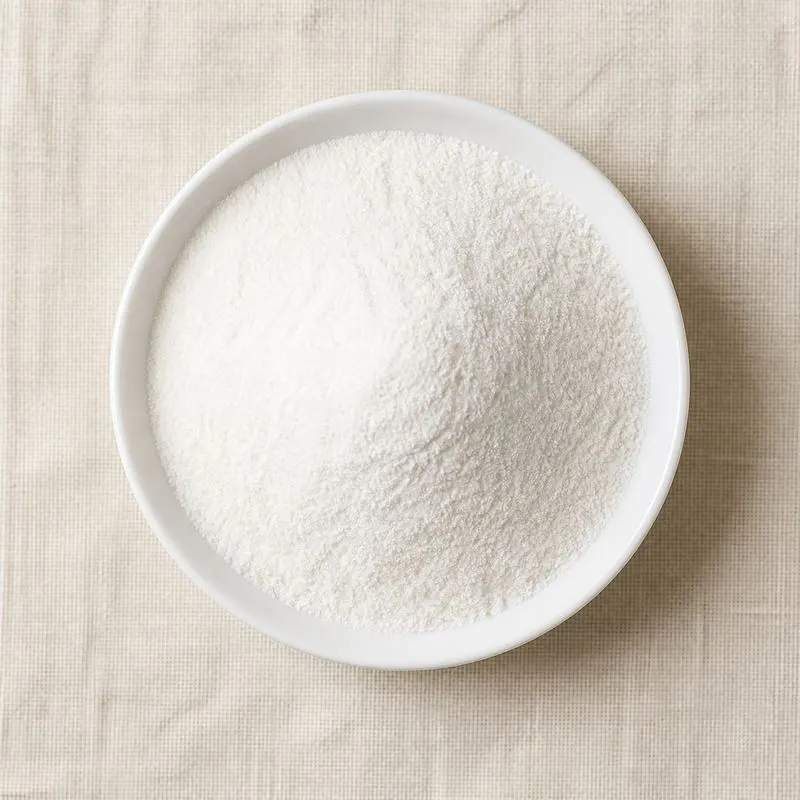
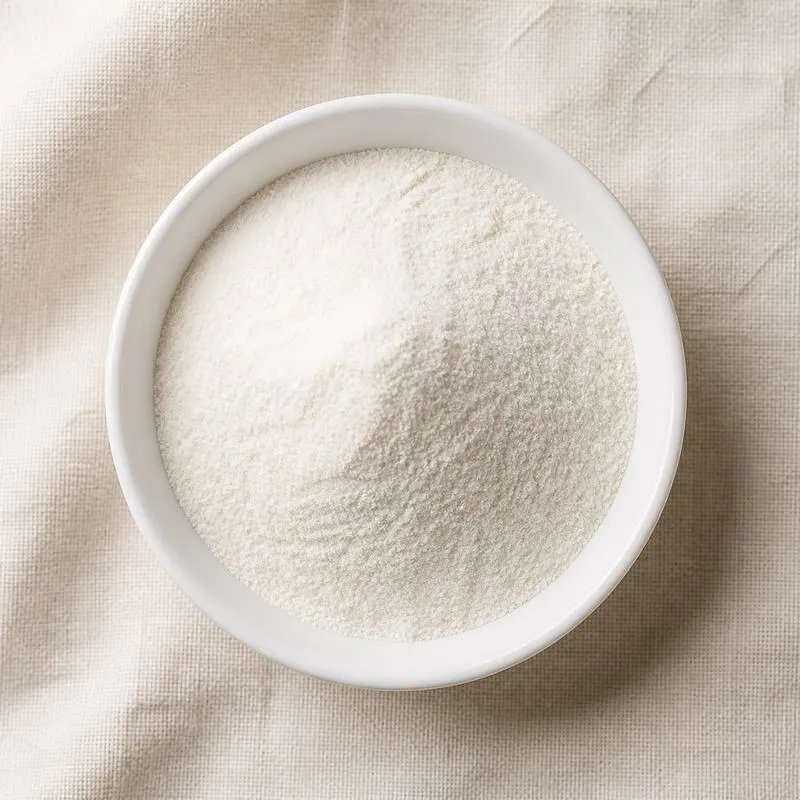
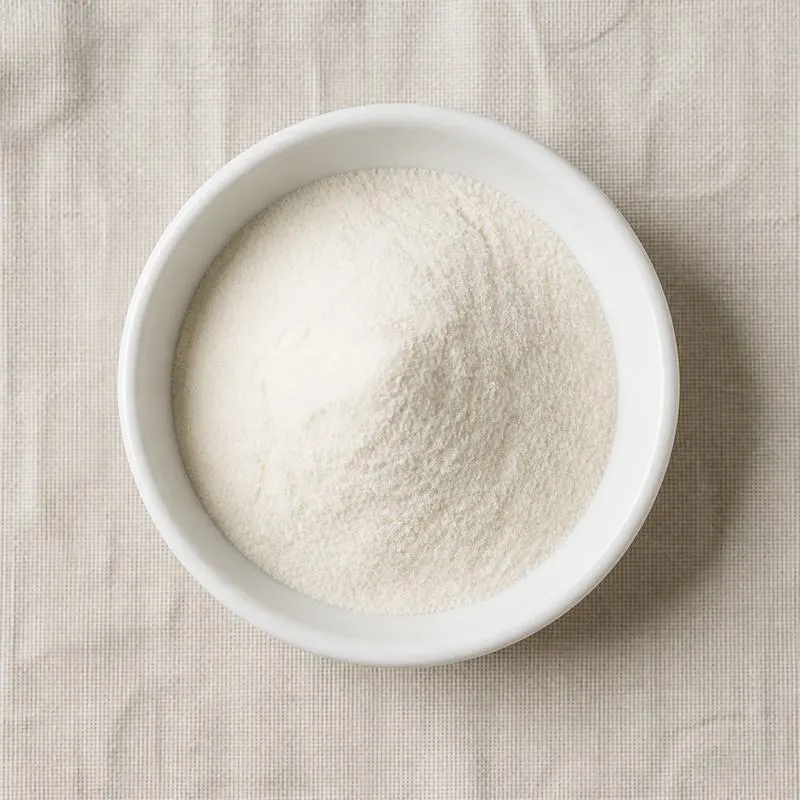
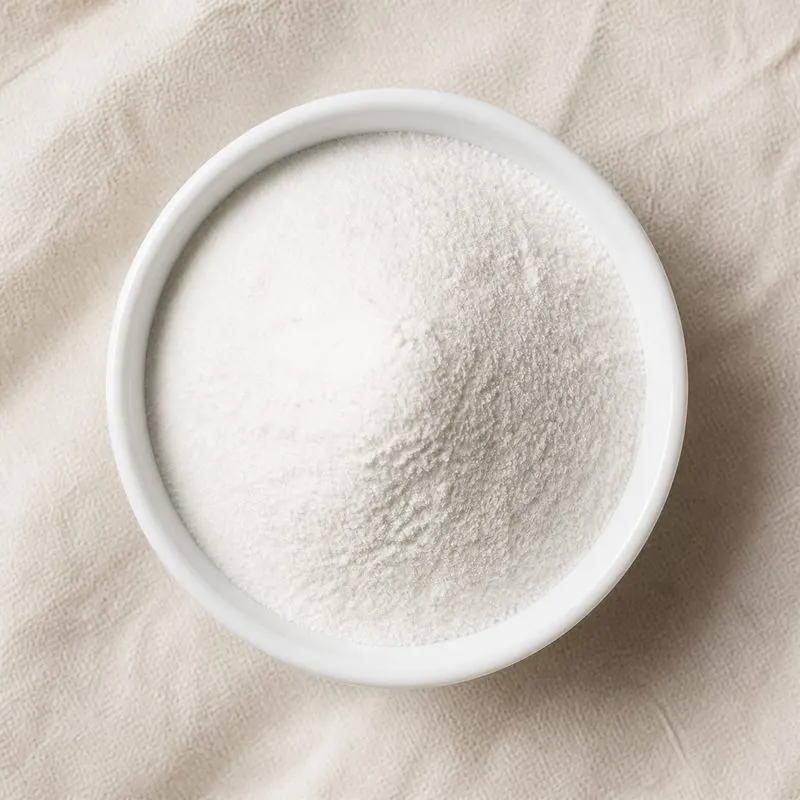
Potassium alginate is a white to pale yellow fibrous or granular powder, odourless and bland. It is insoluble in alcohol and in solutions of high alcohol content, and its solutions are stable between roughly pH 5 and 10 but precipitate as alginic acid below about pH 3.5. It is chosen over sodium alginate where sodium intake is being reduced, where potassium is wanted for nutritional reasons, or where the sodium ion would interfere with the rest of the formulation.
We source bulk Potassium Alginate from top China manufacturers for our partners, working with several of them. The manufacturers are in Shandong and Jiangsu. A smaller requirement can ship in a combined container with other ingredients.
Please send the grade you need, the volume and your destination port, and we will come back with a solution and a price.
or call +86-21-6858 0751
- Function
- Thickener / Hydrocolloid
Specifications
| Item | Specification |
|---|---|
| Appearance | White to pale yellow fibrous or granular powder |
| Odour and Taste | Almost odourless, bland |
| Identification | Positive for alginate and for potassium |
| Assay, as potassium alginate on dry basis | 89.2% to 105.5% |
| Viscosity, 1% solution at 20 degrees Celsius | 300 to 600 mPa s |
| Loss on Drying | Not more than 15.0% |
| Sulphated Ash, dry basis | 18.0% to 27.0% |
| pH, 1% solution | 6.0 to 8.0 |
| Water Insoluble Matter | Not more than 2.0% |
| Particle Size | Not less than 95% through 80 mesh |
| Lead | Not more than 2 mg/kg |
| Arsenic | Not more than 3 mg/kg |
| Cadmium | Not more than 1 mg/kg |
| Total Plate Count | Not more than 5,000 CFU/g |
| Yeast and Mould | Not more than 500 CFU/g |
| E. coli | Absent in 1 g |
| Salmonella | Absent in 25 g |
Common Markets Grades
Potassium alginate is traded by solution viscosity, which is the principal ordering specification, with low, medium and high viscosity grades measured on a 1 percent solution. Alongside viscosity, buyers specify the guluronic content or, more usually, the gel character the grade delivers with calcium, since a high guluronic grade and a high mannuronic grade of the same viscosity give very different textures.
Particle size is the other main variable. Coarse granular grades disperse without lumping and hydrate slowly, which suits dry blending, while fine powders hydrate quickly but need good dispersion equipment or a dry carrier such as sugar. Food grade and pharmaceutical grade are both produced, the latter against pharmacopoeial expectations for potassium alginate. Volumes are much smaller than for sodium alginate, so lead times and grade choice are narrower.
Applications
- Reduced sodium formulations, supplying alginate functionality without contributing sodium to the nutrition panel
- Restructured fruit, vegetable and seafood pieces, set by cold diffusion of calcium into an alginate solution
- Spherification in food manufacture and in modernist cooking, forming a gelled skin around a liquid centre
- Bakery creams and fillings, giving heat-stable body that survives baking
- Ice cream and frozen desserts, controlling ice crystal growth and improving meltdown behaviour
- Dressings, sauces and emulsions, stabilising the dispersed phase and preventing separation
- Reformed and coated meat products, binding pieces into a sliceable mass without heat
- Beverages, supplying suspension for pulp and cocoa particles
- Pharmaceutical and wound care preparations that call for the potassium salt specifically
- Encapsulation of probiotics, enzymes and flavours in calcium-set beads
China Manufacturers of Potassium Alginate
Top Potassium Alginate manufacturers in China.
 Lianyungang Tiantian Seaweed Industrial Co., Ltd.6 ingredients in the directory
 Shandong Jiejing Group Corporation9 ingredients in the directory
 Yantai Taishen Biotechnology Co., Ltd.4 ingredients in the directory
Company names and logos are the property of the manufacturers themselves. They are listed here because our own directory records them as producing this ingredient. A listing is not an endorsement by them, and we do not represent them or speak on their behalf.
Regulatory Status
In the United States potassium alginate is affirmed as generally recognised as safe under 21 CFR 184.1610 for use as a food ingredient in accordance with good manufacturing practice.
In the European Union it is authorised as E402 potassium alginate under the food additives regulation, with identity and purity criteria covering assay, loss on drying, ash, water insoluble matter and heavy metals. Alginates are generally permitted at quantum satis in the food categories in which they are allowed, and the additive is declared in the ingredient list by name or E number. Their use in foods intended for infants and young children is restricted to defined categories rather than being open. Codex and JECFA recognise the substance as INS 402, with JECFA specifications published for alginic acid and its ammonium, calcium, potassium and sodium salts as a group. Pharmacopoeial monographs exist for the alginate salts used in pharmaceutical manufacture.
Manufacturing Process
Brown seaweed is washed free of sand and salt, milled, and treated with dilute mineral acid so that the alginate held in the weed as calcium and magnesium salts is converted to insoluble alginic acid while pigments, mannitol and soluble salts are washed away. The pretreated weed is then digested with sodium carbonate, which neutralises the alginic acid and dissolves it as sodium alginate, giving a highly viscous crude extract that has to be diluted before it can be handled.
The diluted extract is clarified by screening, filtration and flotation to strip out cellulose residue, then the alginate is recovered by precipitation, either directly with mineral acid to give alginic acid or first with calcium chloride to give calcium alginate fibres that are subsequently acid converted. The washed alginic acid, a wet fibrous mass, is then reslurried in aqueous alcohol and neutralised with potassium carbonate or potassium hydroxide, which converts it to potassium alginate while the alcohol keeps the salt from dissolving and turning the mass into an unmanageable gel. The neutralised product is pressed to remove liquor, dried in a fluid bed or belt dryer, milled to the specified particle size and blended to a uniform viscosity before packing. Alcohol is recovered by distillation and recycled.