Coated Citric Acid
Coated citric acid is ordinary food grade citric acid whose crystals have been enclosed in a continuous shell of hydrogenated vegetable oil, or less often of maltodextrin or a modified starch, so that the acid stays chemically isolated until heat or moisture breaks the barrier. The core acid is unchanged; what is bought is the delay, and the specification that matters is the release temperature rather than the acid assay.
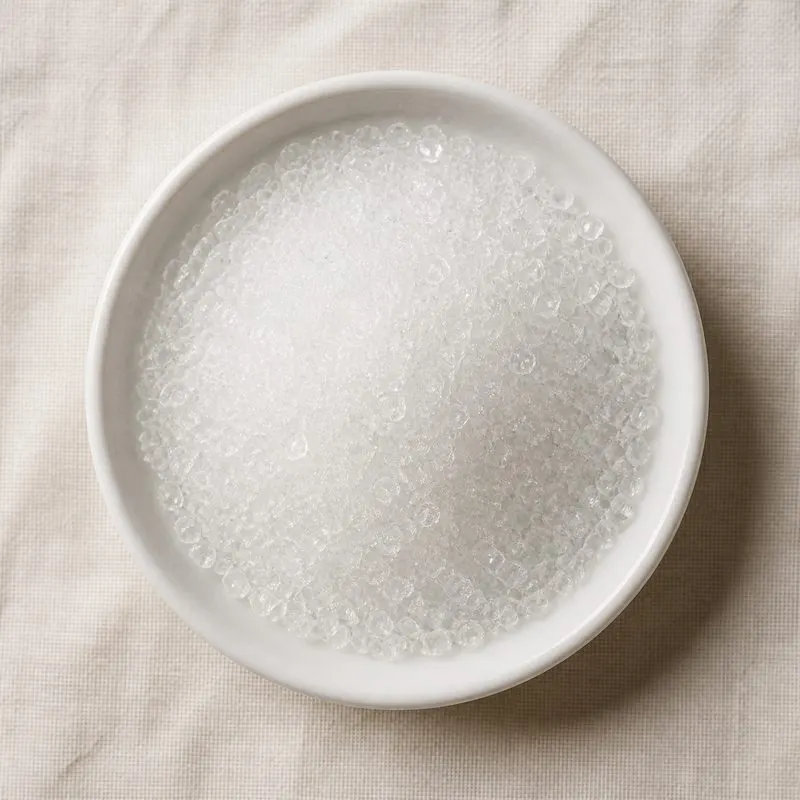
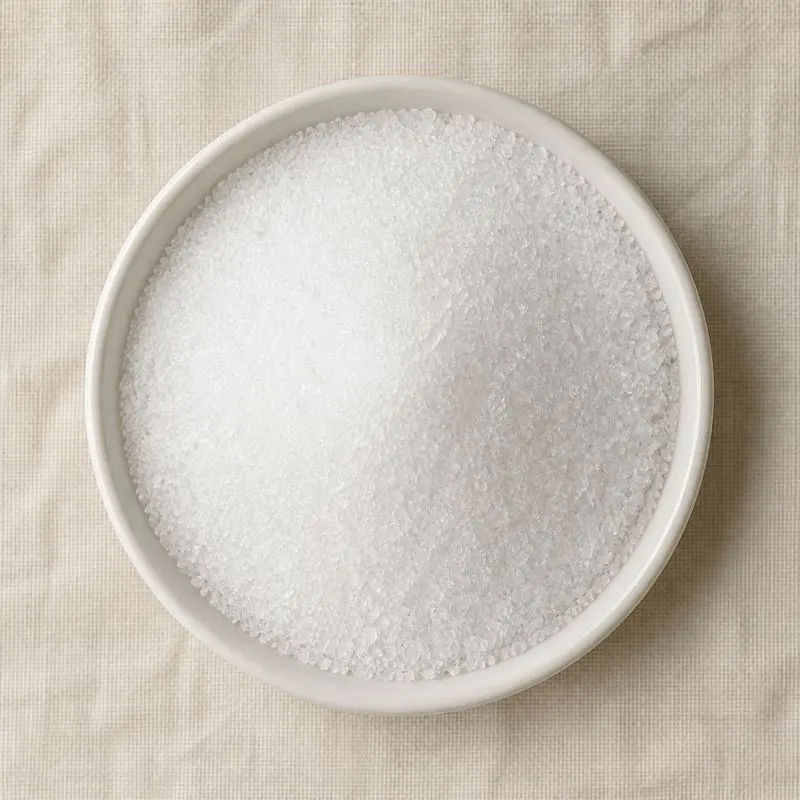
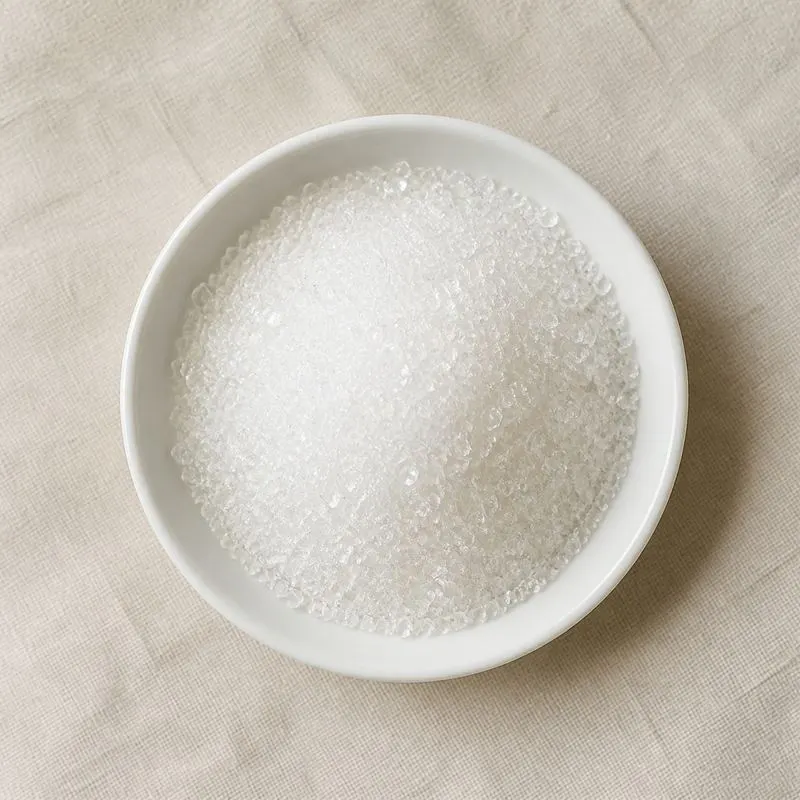
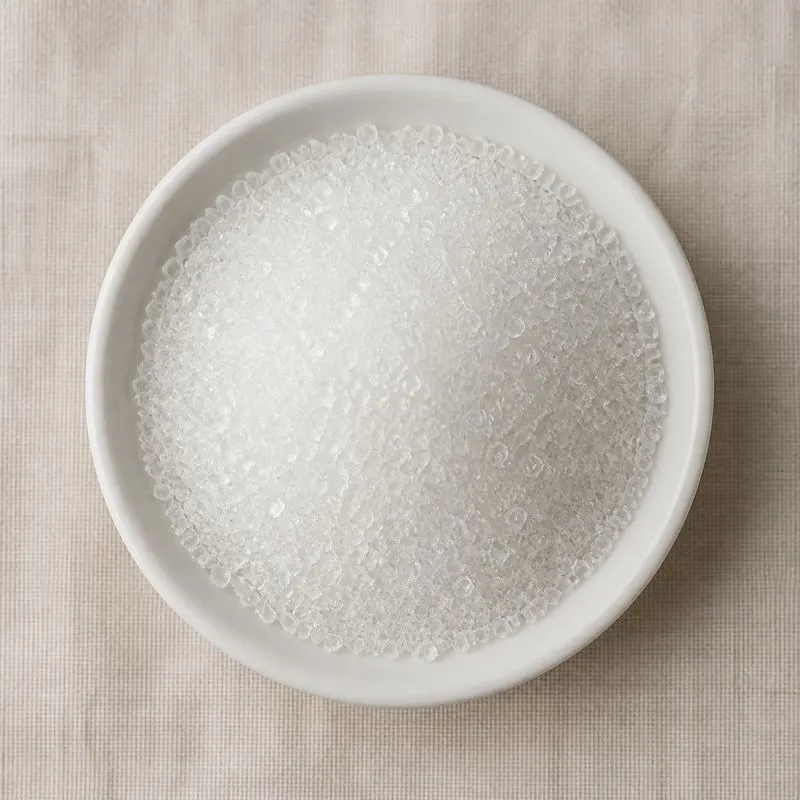
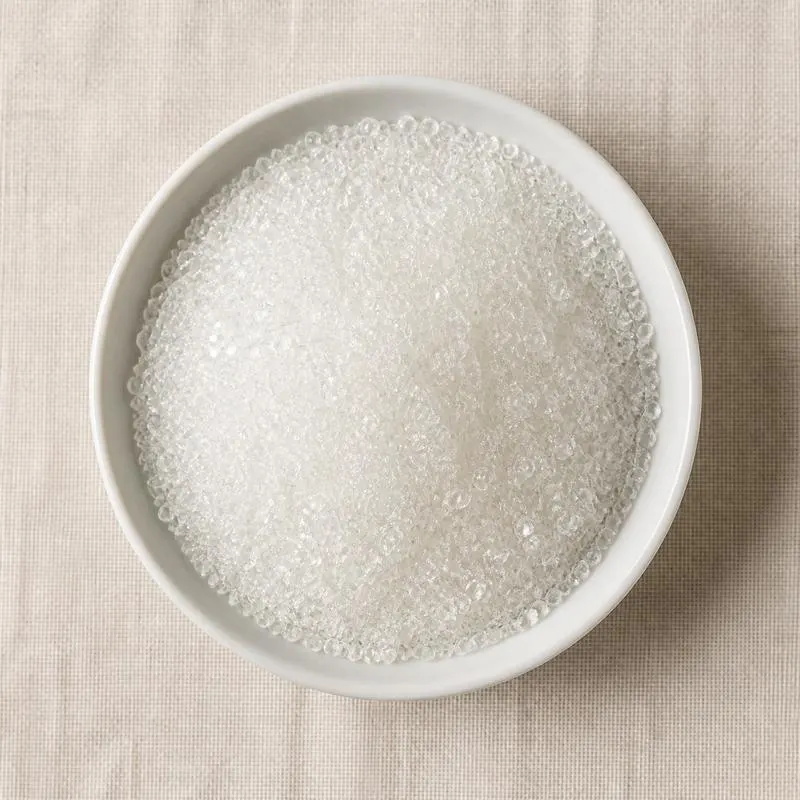
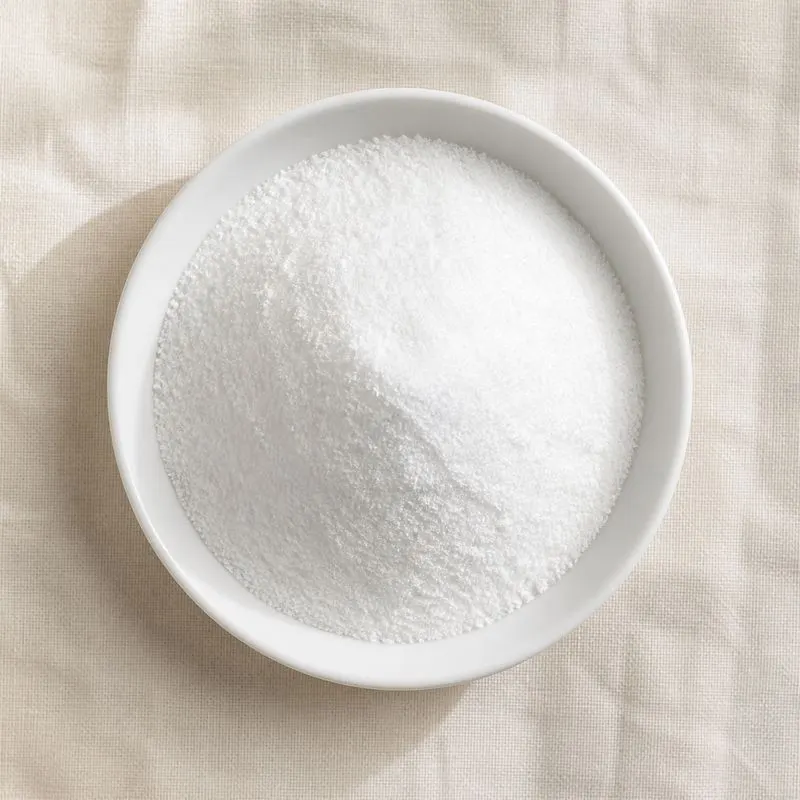
The product is a free flowing white to cream coloured powder or granule, noticeably less acidic to the tongue than uncoated acid because the shell prevents immediate contact with saliva. Typical coating load is 8 to 25 percent by weight of a fully hydrogenated fat, most often palm or cottonseed based, with a melting point selected between about 50 and 70 degrees Celsius. Below that temperature the particle is inert in a dry blend, and above it the shell melts and the acid dissolves at once.
The coated material is essentially non-hygroscopic, which is its second practical advantage, since uncoated citric acid picks up moisture and cakes in dry blends and attacks bicarbonate, flavours, colours and vitamins on contact. The lipid coating is stable to normal storage and to mechanical handling, though excessive shear in a high speed mixer will fracture the shell and defeat the purpose.
We source bulk Coated Citric Acid from top China manufacturers for our partners. The manufacturer is in Hubei. A smaller requirement can ship in a combined container with other ingredients.
Please send the grade you need, the volume and your destination port, and we will come back with a solution and a price.
or call +86-21-6858 0751
- Function
- Acidulant
Specifications
| Item | Specification |
|---|---|
| Appearance | White to cream free flowing powder or granule |
| Odour | Odourless to faintly fatty |
| Citric Acid Content | 75 to 92 percent, grade dependent |
| Coating Content as Hydrogenated Fat | 8 to 25 percent |
| Release Temperature | 50 to 70 degrees Celsius, declared per grade |
| Free Surface Acid | Not more than 2.0 percent |
| Loss on Drying | Not more than 0.5 percent |
| Particle Size | Not less than 90 percent through 30 mesh |
| Bulk Density | 0.60 to 0.85 g per mL |
| Peroxide Value of Coating | Not more than 5 meq per kg |
| Lead | Not more than 1 mg per kg |
| Arsenic | Not more than 1 mg per kg |
| Total Plate Count | Not more than 1000 cfu per g |
| Yeast and Mould | Not more than 100 cfu per g |
Common Markets Grades
Grades are defined by coating type, coating load and particle size rather than by purity of the acid, which is simply the standard food grade material at 99.5 percent. The main split is between fat coated grades, which release on heat and are used in baking, meat and confectionery, and hydrocolloid or maltodextrin coated grades, which release on contact with water and are used where the delay needs to be measured in seconds rather than degrees.
Within the fat coated family the release temperature is the primary selection criterion, with lower melting coatings chosen for chilled and fermented meat and higher melting ones for oven and fryer applications. Coating load determines how complete the barrier is, with heavier loads giving better protection but diluting the acid and slowing release. Particle size is matched to the rest of the dry blend to prevent segregation, typically 30 to 80 mesh, since a coated granule that separates out in the hopper delivers its acid unevenly.
Applications
- Fermented and dry sausage, where the coating holds the acid back until the cook step so the meat emulsion is not broken during mixing
- Chemically leavened bakery goods, as the delayed acid partner to sodium bicarbonate, giving oven rise rather than bench rise
- Chewing gum, where it prevents the acid from breaking down the gum base and from scorching the tongue on the first chew
- Effervescent tablets and drink powders, keeping acid and bicarbonate apart during storage and tabletting
- Dry seasoning and marinade blends, where uncoated acid would cake, discolour and degrade spices during shelf life
- Hard boiled and chewy confectionery, where the acid must survive the cook without inverting the sugar
- Extruded snacks and fried coatings, releasing sourness at the point of frying rather than in the dough
- Instant soups, sauces and noodle seasonings, protecting the acid from moisture during long ambient shelf life
- Pet treats and semi moist products, where delayed acidification supports preservation without early flavour loss
China Manufacturers of Coated Citric Acid
Top Coated Citric Acid manufacturers in China.
Company names and logos are the property of the manufacturers themselves. They are listed here because our own directory records them as producing this ingredient. A listing is not an endorsement by them, and we do not represent them or speak on their behalf.
Regulatory Status
The regulatory position is that of the two components. In the United States citric acid is affirmed as generally recognised as safe under 21 CFR 184.1033 for use as a buffer, acidifier, flavour enhancer and sequestrant at levels consistent with good manufacturing practice. Hydrogenated vegetable oils used as coatings are food fats permitted under their own clearances, and maltodextrin is affirmed as generally recognised as safe. The coated product is therefore used without a separate listing and is declared on the label by its constituents.
In the European Union, Regulation (EC) No 1333/2008 authorises citric acid as food additive E 330 and permits it quantum satis in most categories, with purity criteria in Regulation (EU) No 231/2012. The coating material is treated as a carrier or a food ingredient depending on its identity, and hydrogenated vegetable fat used as a coating falls under the general rules for carriers set out in Annex III of that Regulation. JECFA has evaluated citric acid and concluded that a numerical limit is not required, and it is listed in the Codex General Standard for Food Additives.
Manufacturing Process
Coating is a physical operation applied to finished crystalline citric acid, which is itself made by submerged fermentation of a glucose feedstock with Aspergillus niger followed by recovery, purification and crystallisation. The acid is first screened to a narrow particle size band, because a wide distribution coats unevenly and leaves fines with excessive coating and coarse crystals with too little.
Two routes dominate. Fluid bed coating, usually in a Wurster or bottom spray configuration, suspends the acid crystals in a warm air stream while molten hydrogenated fat is atomised onto them through a nozzle. The droplets spread and solidify on contact, and successive passes build a continuous shell whose thickness is controlled by spray time and rate. Air temperature is held above the coating melting point at the nozzle but low enough that the bed does not agglomerate. The alternative is hot melt spray congealing, in which acid crystals are dispersed in molten fat and the slurry is atomised into a chilled tower, producing a matrix particle rather than a true core and shell.
Whichever route is used, the coated material is cooled to fully crystallise the fat, sieved to remove agglomerates and fines, checked for release temperature and for free surface acid, and packed into moisture barrier bags. Free acid on the surface is the standard quality indicator, since it shows the shell is incomplete.