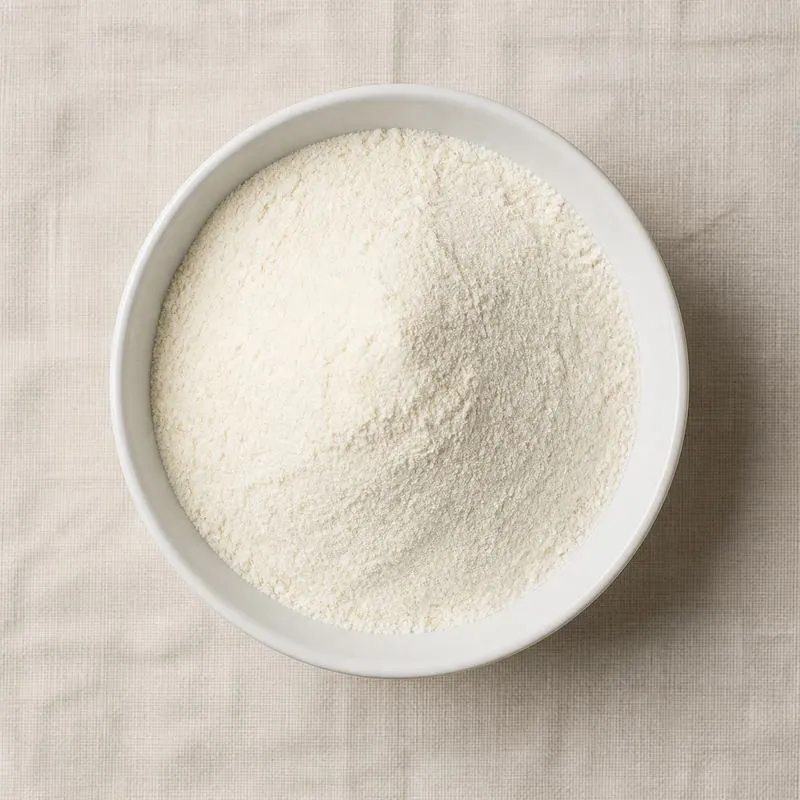
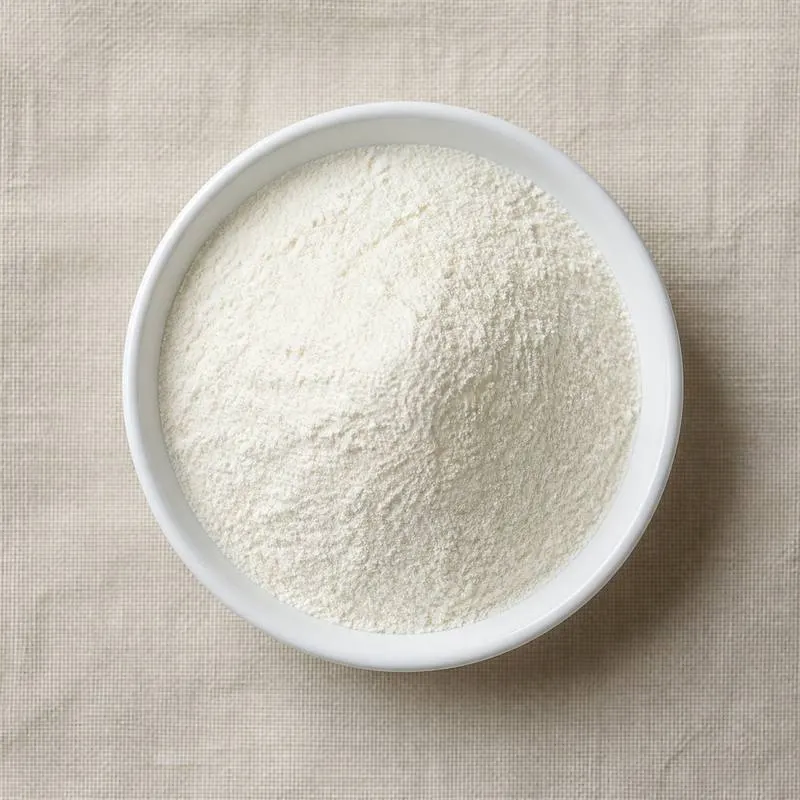
Cream Cheese
Cream Cheese is a soft, unripened acid-set cheese made from a standardised mixture of milk and cream, coagulated with a lactic starter culture and, in most industrial processes, a small addition of rennet. It is defined by its composition rather than by ripening, with a high fat content and a moisture level well above that of pressed cheese.
Its functional character comes from a fine casein gel in which fat globules are trapped and from the stabiliser system that holds the structure together after hot processing. The result is a spreadable body that softens with shear, sets again on cooling, and resists syneresis over shelf life. In baking it behaves as an emulsified fat and protein system rather than as a melting cheese, contributing the tender crumb and acid dairy note characteristic of cheesecake.
The product reaches the trade chilled in tubs, blocks, foil wraps and bulk pails, and in a frozen bulk format for industrial use. It is not water soluble, forming instead a stable dispersion when blended into aqueous systems. Typical pH sits between 4.5 and 4.8, low enough to contribute to shelf stability and to give the clean lactic tang that defines the product.
We source bulk Cream Cheese from top China manufacturers for our partners. The manufacturer is in Zhejiang. A smaller requirement can ship in a combined container with other ingredients.
Please send the grade you need, the volume and your destination port, and we will come back with a solution and a price.
or call +86-21-6858 0751
- Function
- Protein
Specifications
| Item | Specification |
|---|---|
| Appearance | Smooth white to cream soft paste, glossy, free from lumps or free whey |
| Flavour and odour | Clean mild lactic acid note, no bitterness or rancidity |
| Identification | Conforms to the compositional standard for cream cheese |
| Milkfat, as sold | Minimum 33.0 percent |
| Moisture | Maximum 55.0 percent |
| Protein | 5.5 to 7.5 percent |
| Salt | 0.6 to 1.0 percent |
| pH | 4.5 to 4.8 |
| Stabiliser system | Maximum 0.5 percent, gums and modified starch |
| Firmness at 10 degrees Celsius | 150 to 300 gram penetration force |
| Lead | Maximum 0.1 mg per kg |
| Listeria monocytogenes | Negative per 25 gram |
| Salmonella | Negative per 25 gram |
| E. coli | Maximum 10 CFU per gram |
| Yeast and mould | Maximum 100 CFU per gram |
| Coagulase positive staphylococci | Maximum 100 CFU per gram |
Common Markets Grades
Grades are defined chiefly by fat content. Full fat cream cheese carries a minimum milkfat of about 33 percent as sold, reduced fat grades run near 20 to 25 percent, and low fat and quark-style grades fall below 15 percent with a correspondingly higher protein and moisture level and a firmer, more granular body. Double cream grades above 40 percent fat are traded for higher priced retail and patisserie use.
Physical format is specified separately. Retail tub product is soft and cold-spreadable, block product is firmer and holds cut faces, and bulk industrial pails or bag-in-box are packed for onward use in fillings and cheesecake bases. Bake-stable grades are formulated with a modified starch and gum system so the filling holds its structure through the oven without weeping. Whipped grades carry gas overrun for lower density and easier spreading. Flavoured grades containing herbs, garlic or fruit preparations sit outside the plain compositional standard. Frozen bulk grades are stabilised to survive freeze and thaw without graininess.
Applications
- Baked and chilled cheesecake, where bake-stable grades supply structure, acidity and the characteristic dairy flavour
- Retail spreads for bread and bagels, plain and flavoured with herbs, garlic or smoked fish
- Frosting and buttercream for cakes and cupcakes, where the acidity balances icing sugar sweetness
- Savoury dips and cold sauces, where it provides body and a smooth mouthfeel
- Filled and topped bakery such as danish pastries, doughnuts and filled buns
- Sandwich and wrap manufacture, where it acts as a moisture barrier between bread and wet fillings
- Sushi and cold seafood preparations, a substantial food service application
- Soups and pasta sauces, where it enriches and thickens without the graininess of separated cream
- Chilled desserts, mousses and tiramisu-style products, where it substitutes for or blends with mascarpone
Brands Using Cream Cheese
Widely-distributed consumer products that list Cream Cheese on the ingredient label.
Brand names, product names and logos are the property of their owners. They appear here as published evidence that the ingredient is used, taken from the brand's own label or website. Their appearance is not an endorsement, and it does not mean the brand buys from us or from any manufacturer listed on this site.
China Manufacturers of Cream Cheese
Top Cream Cheese manufacturers in China.

Company names and logos are the property of the manufacturers themselves. They are listed here because our own directory records them as producing this ingredient. A listing is not an endorsement by them, and we do not represent them or speak on their behalf.
Regulatory Status
In the United States, cream cheese is subject to a standard of identity in Title 21 of the Code of Federal Regulations Part 133, which sets a minimum milkfat of 33 percent and a maximum moisture of 55 percent and lists the permitted stabilisers and other optional ingredients. Related standards cover cream cheese with other foods and neufchatel. Milk for the process must be pasteurised. Cheese is a milk-derived major food allergen and must be declared under the Food Allergen Labelling and Consumer Protection Act.
In the European Union, cream cheese is a foodstuff rather than an additive and carries no E number, although the stabilisers and thickeners used in it are additives permitted under Regulation EC 1333/2008 and must be declared in the ingredient list. Hygiene requirements follow Regulation EC 853/2004 for products of animal origin, and milk is a mandatory allergen under Annex II of Regulation EU 1169/2011. Codex Alimentarius maintains an individual standard for cream cheese within its general cheese framework, setting minimum milkfat in dry matter and maximum moisture for the named product.
Manufacturing Process
Milk and cream are blended to a standardised fat to protein ratio, then homogenised and pasteurised. The mix is cooled to about 30 degrees Celsius and inoculated with a mesophilic lactic starter, with a very small rennet addition in most industrial processes to firm the gel. Fermentation runs for several hours until the pH falls to approximately 4.6, at which point the casein has coagulated at its isoelectric point.
The acid curd is then heated and separated from the whey. Traditional plants use quark separators or nozzle centrifuges; some processes use ultrafiltration of the mix before fermentation so that little or no whey is drawn off. The concentrated curd is blended with salt, stabilisers such as locust bean gum, guar gum, carrageenan or modified starch, and additional cream to hit the target composition. The blend is heated to between 70 and 85 degrees Celsius and passed through a high pressure homogeniser, which is the step that creates the smooth, glossy body by reducing fat globule size and dispersing the protein. The hot product is filled directly into containers and cooled, the structure setting as it chills.