Crosslinking Starch
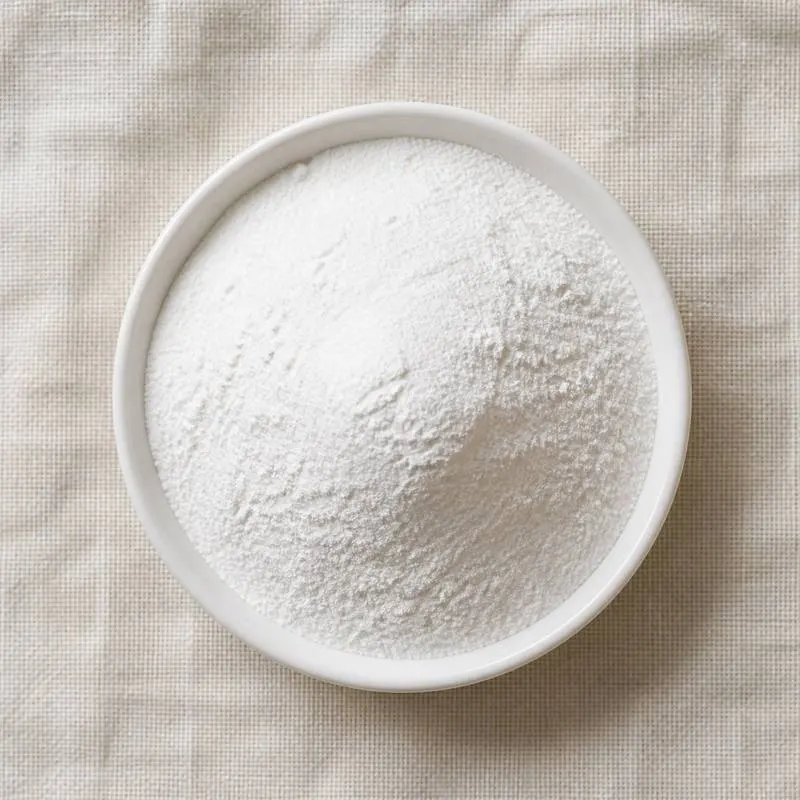
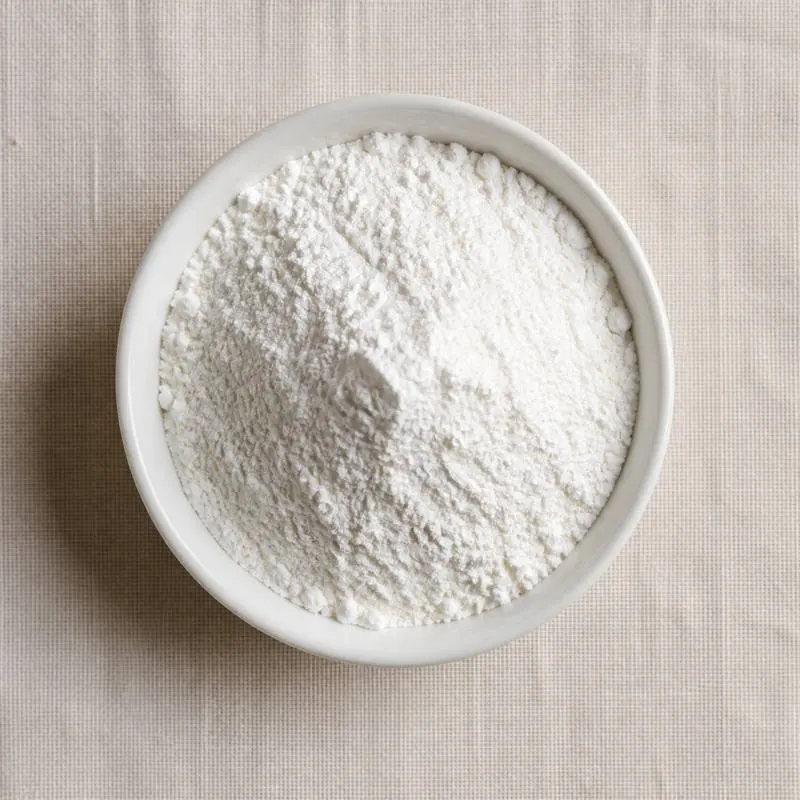
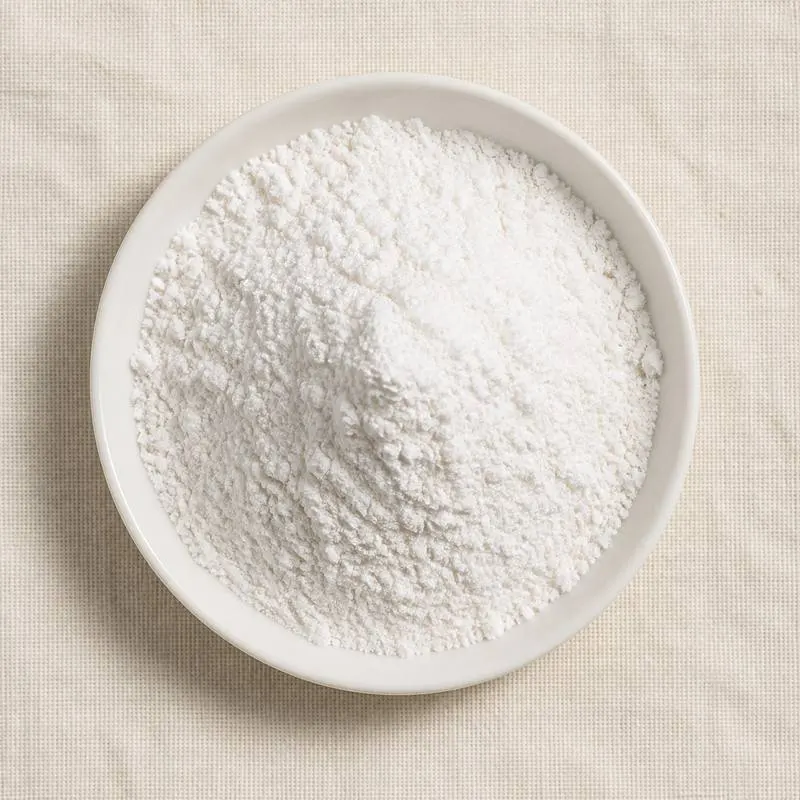
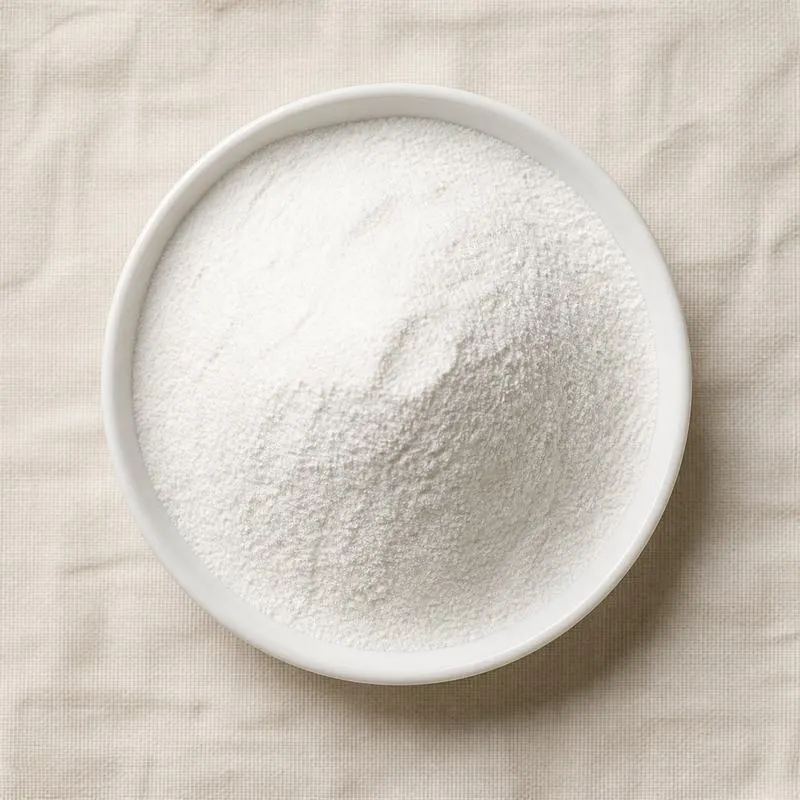
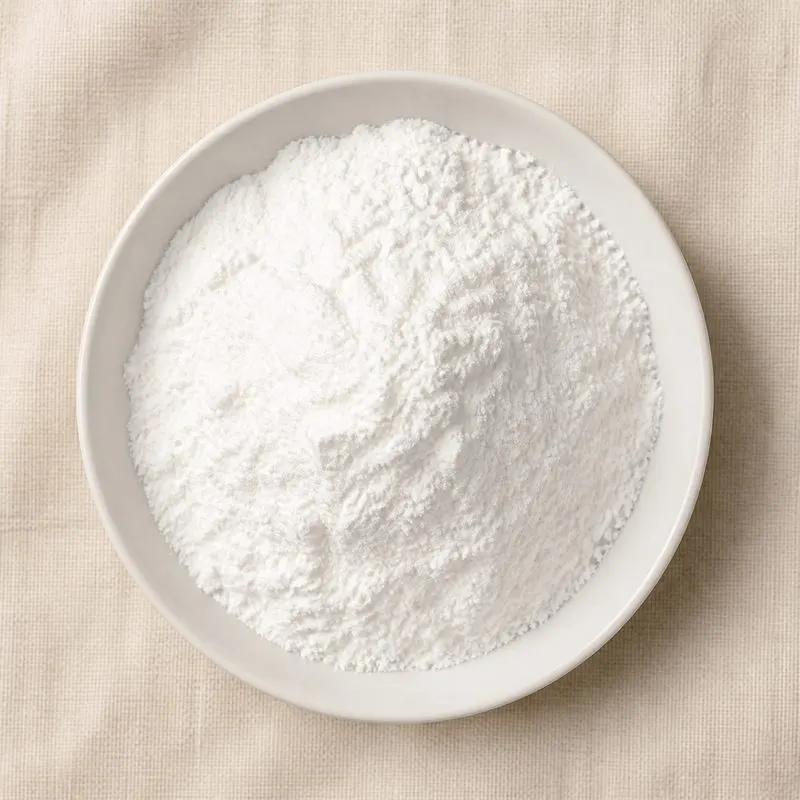
Crosslinking starch, more usually written cross linked starch, is the collective name for starches whose chains have been chemically joined to one another at scattered points within the granule, so that the granule behaves as a reinforced network rather than as a loose bundle of chains. It is a family rather than a single article, since several reagents give the same functional result under different additive identities.
The problem it solves is granule failure. A native starch granule swells as it heats, reaches a peak viscosity, and then bursts, after which the paste thins irreversibly and cannot be recovered. Retort temperature, prolonged pumping, homogenisation and low pH all accelerate that failure. A cross linked granule swells to a controlled extent and holds together, so the viscosity curve shows a lower but far more stable peak with much reduced breakdown, and the finished product thickens predictably whatever the process throws at it.
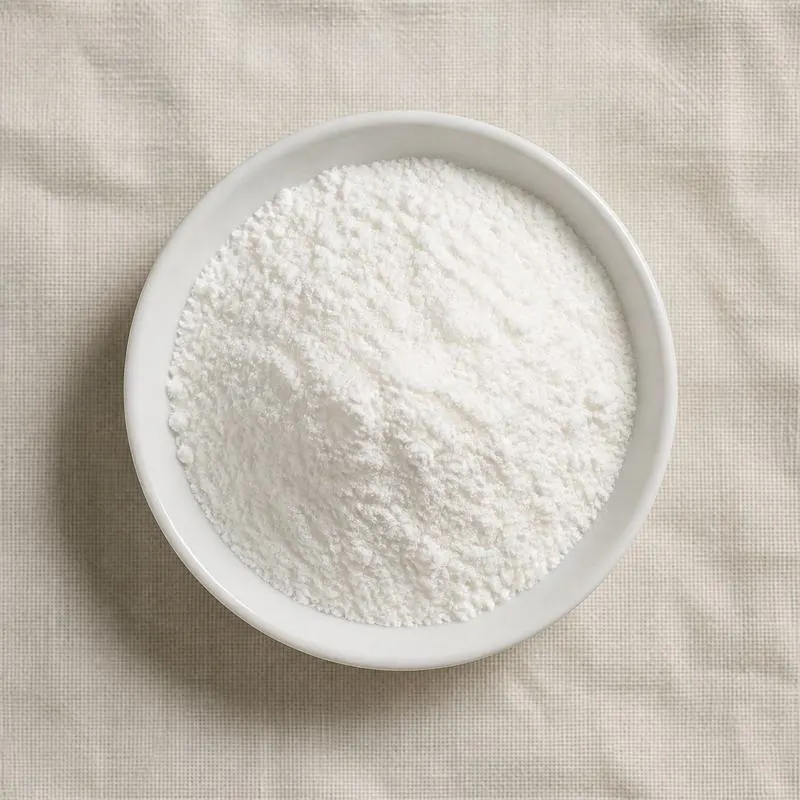
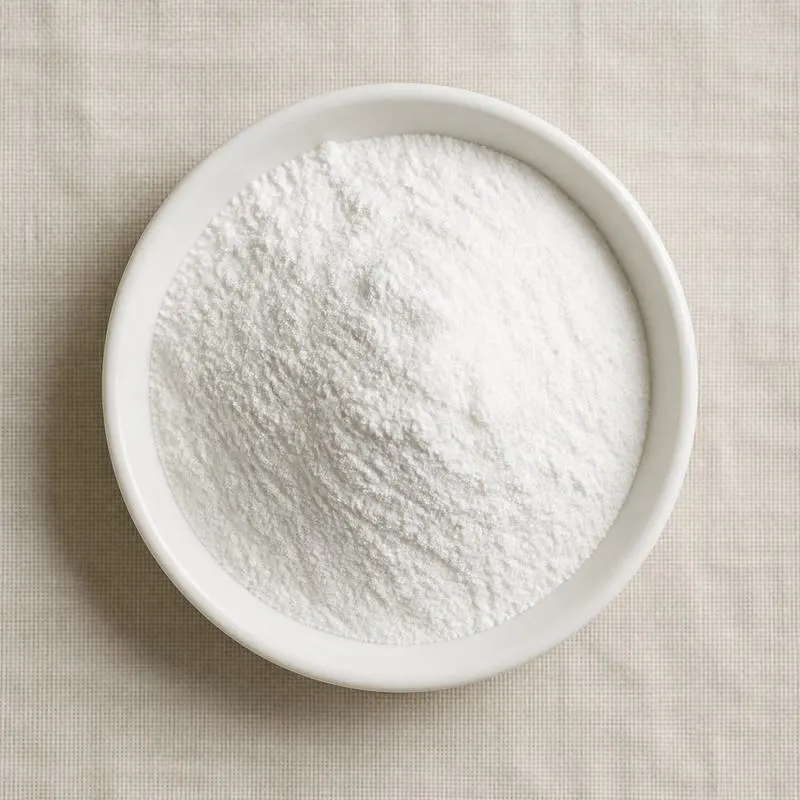
Degree of cross linking is described in the trade as inhibition, and it is a continuum. Very light inhibition barely changes the paste; medium inhibition covers pasteurised and hot filled products; heavy inhibition suits retorted and acidic systems; and at the extreme the granule scarcely swells at all and functions as a bulking agent or a moulding powder. Cross linking raises the gelatinisation temperature as it increases. What it does not do is stop retrogradation, so cross linked starches intended for chilled and frozen storage are also substituted by acetylation or hydroxypropylation. All grades are white to off white free flowing powders.
We source bulk Crosslinking Starch from top China manufacturers for our partners. The manufacturer is in Zhejiang. A smaller requirement can ship in a combined container with other ingredients.
Please send the grade you need, the volume and your destination port, and we will come back with a solution and a price.
or call +86-21-6858 0751
- Function
- Texturisers
Specifications
| Item | Specification |
|---|---|
| Appearance | White to off white free flowing powder, free of foreign matter |
| Odour and taste | Bland, no off odour |
| Identification | Iodine stain and granule microscopy conform to starch reference |
| Total starch, dry basis | 97.0 percent minimum |
| Residual phosphate, as phosphorus | 0.14 percent maximum for maize and wheat base |
| Adipate groups, where adipate cross linked | 0.135 percent maximum |
| Peak viscosity and breakdown | Conforms to agreed rapid visco analyser profile |
| Moisture | 14.0 percent maximum |
| Ash, dry basis | 0.6 percent maximum |
| pH, 10 percent slurry | 4.5 to 7.0 |
| Sulphur dioxide | 50 mg/kg maximum |
| Lead | 0.5 mg/kg maximum |
| Arsenic | 0.5 mg/kg maximum |
| Total plate count | 10000 cfu/g maximum |
| Yeast and mould | 500 cfu/g maximum |
| E. coli | Absent in 1 g |
| Salmonella | Absent in 25 g |
Common Markets Grades
Three chemistries dominate. Phosphate cross linking, using sodium trimetaphosphate or phosphorus oxychloride, gives distarch phosphate and is the most widely used. Adipate cross linking, using a mixed anhydride of adipic and acetic acid, gives distarch adipate and always brings some acetylation with it. Both are almost always sold in dual modified form, as acetylated or hydroxypropylated distarch phosphate or adipate, because process tolerance and storage stability are usually needed together. Glyceryl cross linked starch, made with epichlorohydrin, is permitted in some jurisdictions but has largely fallen out of food use.
A fourth route uses no reagent at all. Physically inhibited starches, produced by heat and moisture treatment of the granule under controlled conditions, achieve a comparable degree of process tolerance through thermal reorganisation of the granule rather than through covalent bridges. They perform less strongly than a chemically cross linked starch but are not additives, which is why they have grown quickly for clean label formulation. Across all routes, base starch is the other variable: waxy maize for clarity and cohesion, tapioca for clean flavour, potato for viscosity, regular maize and wheat for a firm opaque body at lower cost.
Applications
- Retorted and canned soups, sauces, vegetables and ready meals, holding viscosity through sterilisation
- Acidic products such as dressings, ketchup and fruit fillings, resisting the acid hydrolysis that thins a native starch
- Systems passing through homogenisers, colloid mills and high shear pumps, where an uninhibited granule would be torn apart
- Products held hot on a line or in food service, where prolonged heat would break down an uninhibited paste
- Bakery creams and custards cooked at high temperature, holding body through the process
- Canned pet food, giving structure to the gravy or loaf phase after retort
- Batters and coatings, providing controlled viscosity development during frying
- Confectionery moulding and dusting starch, in the heavily inhibited grades that swell very little
- Meat and poultry brines, binding water through cooking without paste collapse
- Instant and dry mix products, in the pregelatinised cross linked grades that hydrate cold
China Manufacturers of Crosslinking Starch
Top Crosslinking Starch manufacturers in China.
Company names and logos are the property of the manufacturers themselves. They are listed here because our own directory records them as producing this ingredient. A listing is not an endorsement by them, and we do not represent them or speak on their behalf.
Regulatory Status
In the United States, 21 CFR 172.892 permits cross linked starches as food starch modified, lists sodium trimetaphosphate, phosphorus oxychloride, adipic anhydride and epichlorohydrin among the permitted treatment agents, and sets limits on their use and on the residues in the finished starch. They are declared on United States labels as modified food starch or food starch modified rather than by chemical name. Physically inhibited starches involve no listed treatment agent and are labelled simply as starch.
In the European Union each chemistry has its own authorisation under the food additives framework: distarch phosphate is E 1412, phosphated distarch phosphate E 1413, acetylated distarch phosphate E 1414, acetylated distarch adipate E 1422, hydroxypropyl distarch phosphate E 1442 and distarch glycerol E 1411, each with purity criteria in the specifications regulation. All must be declared as food additives rather than simply as starch. Physically modified starches carry no E number and are regulated as foods. JECFA has evaluated the modified starches as a group and maintains specification monographs for the individual cross linked types, and Codex lists them among the permitted additives in the General Standard for Food Additives.
Manufacturing Process
The chemical route runs on the granule in aqueous suspension. Native starch is slurried at around 35 to 40 percent solids and the pH is raised, typically to 10 or 11, with sodium hydroxide, since the reagents attack the alkoxide form of the starch hydroxyl. Sodium sulphate or sodium chloride is added to raise the ionic strength and hold the granule from swelling, and the whole reaction is run below the gelatinisation temperature so that the starch stays granular and can be recovered by filtration afterwards.
The cross linking reagent is then metered in. Phosphorus oxychloride reacts within minutes and is dosed carefully because the reaction is fast and exothermic; sodium trimetaphosphate is slower and may be held for several hours at slightly raised temperature; the adipic and acetic mixed anhydride is added over a controlled period while caustic holds the pH. Progress is followed not by chemical assay but by drawing samples and running a viscosity curve, since inhibition is the property being bought. When the target is reached the slurry is neutralised with dilute hydrochloric or sulphuric acid, washed on a countercurrent hydrocyclone battery or rotary vacuum filter train to strip salts, unreacted reagent and monoester by products, then dewatered, flash dried in hot air, cooled, milled, sieved and packed. The physical route dispenses with all of this: refined starch is adjusted to a defined moisture and held in a heated vessel or fluidised bed under controlled temperature and time, which reorganises the granule internally, then cooled, sieved and packed.