Curcumin Diglucoside
Curcumin diglucoside is a glycosylated derivative of curcumin in which glucose units are attached to both phenolic hydroxyl groups of the parent molecule through a glycosidic bond. It is made from curcumin, the principal yellow pigment of turmeric, and exists commercially for one reason: to solve the solubility problem that limits curcumin in almost every aqueous application.
Curcumin itself is practically insoluble in water, dissolving at only a few micrograms per litre, which means it cannot be used in a clear beverage or a water based food without a carrier system. Adding two glucose units transforms that behaviour, giving a compound that dissolves readily in water at ordinary use concentrations while retaining the diarylheptanoid chromophore and therefore the yellow colour. The monoglucoside and the diglucoside are usually produced together and the commercial material is a mixture in which the diglucoside is the larger part.
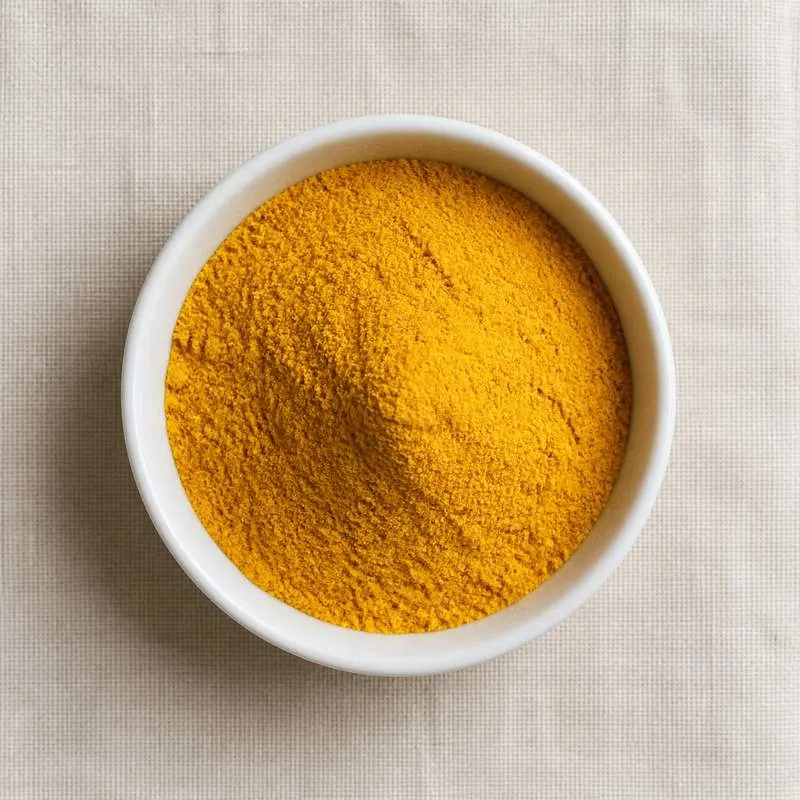
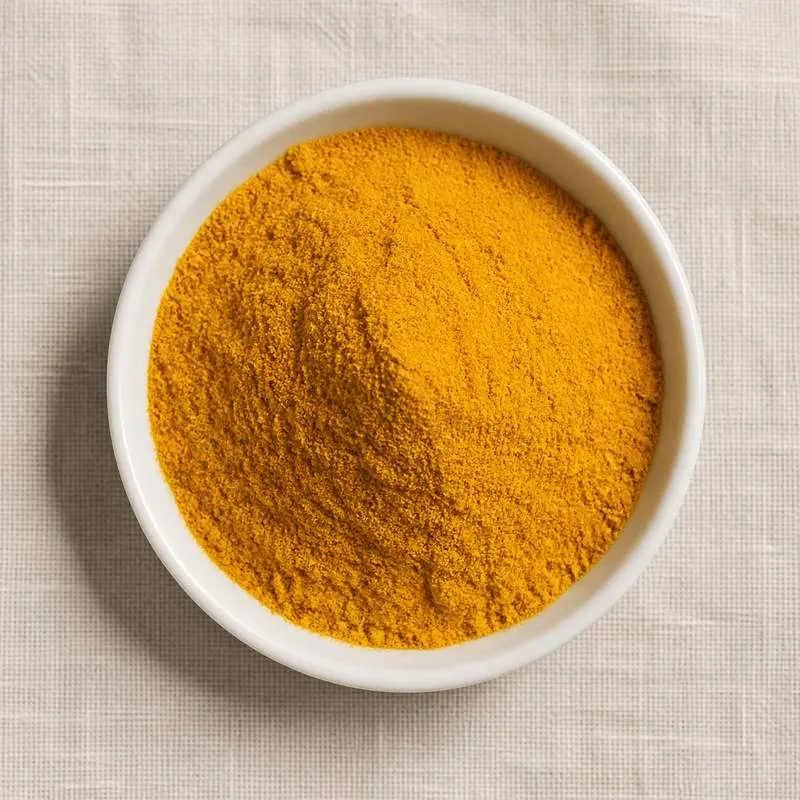
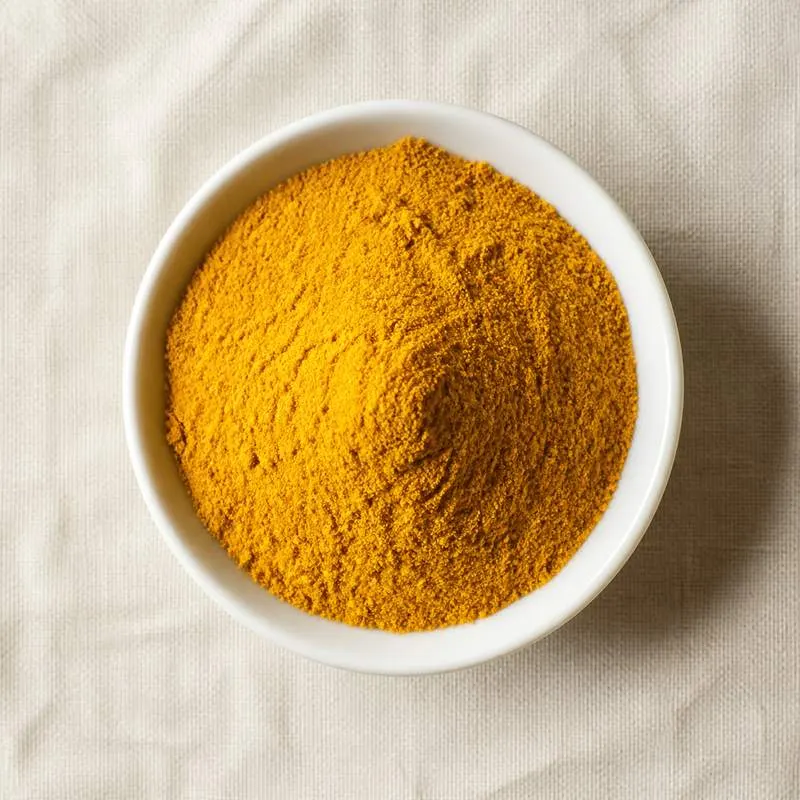
The product is a yellow to orange yellow powder that dissolves to a clear yellow solution. Glycosylation also improves stability at neutral pH compared with free curcumin, which degrades quickly above pH 7, though the material remains light sensitive and shifts towards red orange in strongly alkaline conditions. It is handled and packed away from light, and its colour intensity per unit weight is lower than that of curcumin because the sugar units contribute mass without contributing chromophore.
We source bulk Curcumin Diglucoside from top China manufacturers for our partners. The manufacturer is in Zhejiang. A smaller requirement can ship in a combined container with other ingredients.
Please send the grade you need, the volume and your destination port, and we will come back with a solution and a price.
or call +86-21-6858 0751
- Function
- Plant extract
Specifications
| Item | Specification |
|---|---|
| Appearance | Yellow to orange yellow fine powder |
| Odour and Taste | Slight characteristic odour, faintly bitter |
| Solubility | Freely soluble in water, giving a clear yellow solution |
| Identification | HPLC retention and UV maximum near 425 nm match reference |
| Total Curcuminoid Glucosides | ≥ 90.0% (HPLC) |
| Curcumin Diglucoside | ≥ 60.0% of total glucosides |
| Free Curcumin | ≤ 2.0% |
| Residual Reducing Sugars | ≤ 3.0% |
| Loss on Drying | ≤ 5.0% |
| Residue on Ignition | ≤ 2.0% |
| pH (1% solution) | 5.0 to 7.5 |
| Residual Ethanol | ≤ 0.5% |
| Lead | ≤ 2.0 mg/kg |
| Arsenic | ≤ 1.0 mg/kg |
| Total Plate Count | ≤ 1,000 cfu/g |
| Yeast and Mould | ≤ 100 cfu/g |
| Escherichia coli | Negative in 1 g |
| Salmonella | Negative in 25 g |
Common Markets Grades
The trade quotes total curcuminoid glucosides by HPLC, commonly at 80, 90 and 95 percent, with the ratio of diglucoside to monoglucoside stated because it decides water solubility. Residual free curcumin is reported as a separate limit, since unglycosylated material will precipitate out of an aqueous product and defeat the purpose of buying the derivative.
Grades also differ by whether the starting curcuminoid was purified curcumin alone or a mixed curcuminoid concentrate, the latter giving a glycosylated mixture that includes demethoxycurcumin and bisdemethoxycurcumin derivatives. Colour value, expressed as absorbance of a defined solution, is quoted where the material is bought as a colouring ingredient rather than as a supplement active. Powders run at 80 mesh, with an agglomerated grade for cold water dispersion and carrier borne versions on maltodextrin for lower assay applications. Because the compound is produced enzymatically, the specification records the enzyme source and confirms its removal.
Applications
- Clear beverages and functional waters, the application the compound exists for, where free curcumin cannot be used at all
- Sports and recovery drinks, delivering a curcuminoid dose in a transparent liquid
- Powdered drink mixes and effervescent tablets, which dissolve to a clear yellow solution
- Dairy and plant based drinks held near neutral pH, where glycosylation gives better stability than free curcumin
- Confectionery syrups, jellies and glazes, contributing a yellow colour in a water based system
- Capsule and tablet supplements, positioned on the improved aqueous behaviour of the ingredient
- Nutrition bars and chews, dosed into the aqueous phase of the formulation
- Skin care serums and toners, where a water soluble curcuminoid is required in a clear system
- Analytical and formulation development work, comparing glycosylated and free curcuminoid behaviour
China Manufacturers of Curcumin Diglucoside
Top Curcumin Diglucoside manufacturers in China.

Company names and logos are the property of the manufacturers themselves. They are listed here because our own directory records them as producing this ingredient. A listing is not an endorsement by them, and we do not represent them or speak on their behalf.
Regulatory Status
In the United States, curcumin is an approved colour additive exempt from certification when used as turmeric or turmeric oleoresin under 21 CFR 73.600 and 73.615, and curcuminoid preparations are marketed as dietary ingredients under the Dietary Supplement Health and Education Act with manufacture under 21 CFR Part 111. An enzymatically glycosylated derivative is a different article from turmeric oleoresin and does not inherit that colour additive listing, so material intended for the United States is positioned as a dietary ingredient or supported by its own regulatory determination for food use.
In the European Union curcumin is authorised as a food colour under E 100, and the specification for E 100 is written around curcumin obtained from turmeric rhizome by solvent extraction. A glycosylated derivative does not conform to that specification and cannot be sold as E 100. Because it is produced by an enzymatic modification and has no history of consumption in the Union, it falls within the scope of the novel food regulation for food and food supplement use, and any use as a colour would require authorisation as a new additive. Codex covers curcumin as a colour in the general standard for food additives, and JECFA has issued a specification for curcumin rather than for its glucosides.
Manufacturing Process
The starting material is purified curcumin or a mixed curcuminoid concentrate obtained from turmeric oleoresin. That oleoresin is itself made by extracting dried milled Curcuma longa rhizome with ethanol or another permitted solvent, stripping the solvent in a thin film evaporator, de oiling to remove the turmerone fraction and crystallising the curcuminoids from an alcohol solvent.
Glycosylation is carried out enzymatically. The curcuminoid is dispersed in a buffered aqueous system with a glucosyl donor, typically starch derived dextrin or maltose, and a transglycosylating enzyme such as a cyclodextrin glucanotransferase or a glucosyltransferase preparation. The reaction runs under controlled temperature and pH until the target conversion is reached, then is stopped by heat, which also denatures and precipitates the enzyme. The reaction mixture is filtered and passed over a macroporous adsorption resin or a chromatographic column that separates the glucosides from unreacted curcumin, residual sugars and the donor. The purified fraction is eluted with aqueous ethanol, concentrated under vacuum at low temperature with solvent recovery, and spray dried or freeze dried away from light. The powder is sieved, assayed by HPLC for the glucoside distribution and residual free curcumin, and packed in light protective foil laminate.