Double-Acting Baking Powde
Double acting baking powder is a chemical leavening blend that releases carbon dioxide in two stages, a first burst when the batter is mixed with liquid and a second, larger release when the batter reaches oven temperature.
Every baking powder contains three elements: sodium bicarbonate as the source of carbon dioxide, one or more acidulants that react with it, and a starch or flour diluent that separates the reactive components during storage and standardises the bulk. What makes a powder double acting is the choice of two acids with different reaction rates, typically a fast dissolving acid such as monocalcium phosphate together with a slow or heat activated one such as sodium acid pyrophosphate, sodium aluminium phosphate or dicalcium phosphate. A single acting powder, by contrast, releases all its gas within minutes of mixing and requires the batter to go straight into the oven.
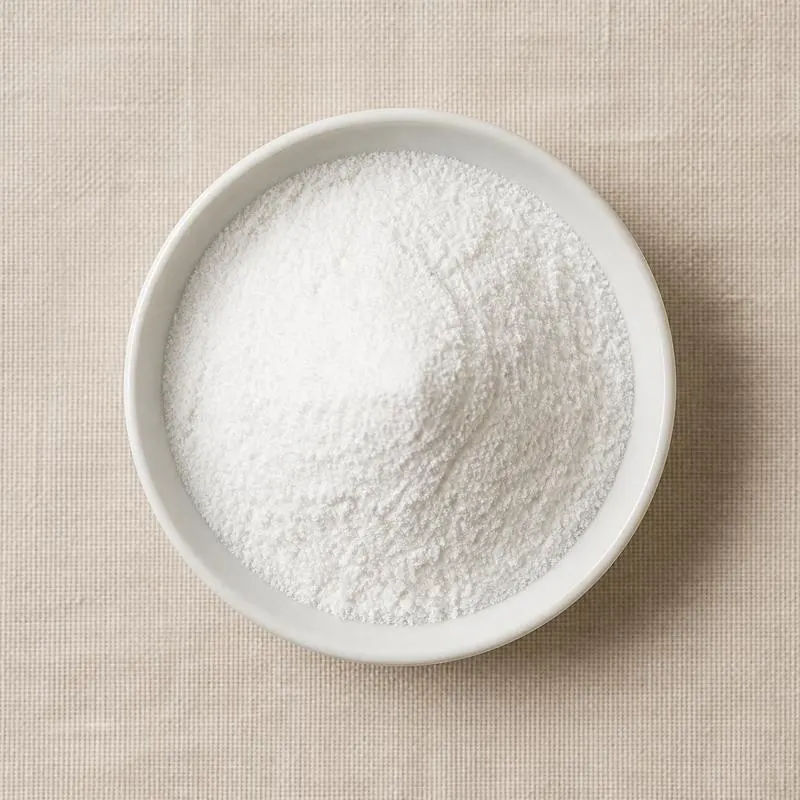
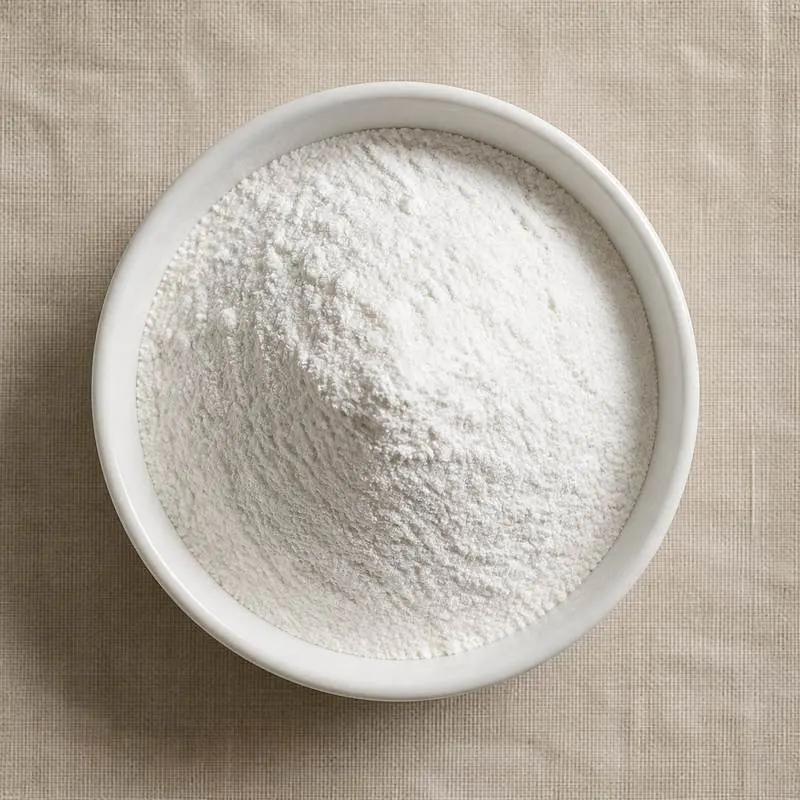
The finished product is a white, free flowing, faintly saline tasting powder. It takes up moisture readily, and that is a problem rather than a convenience, since even ambient humidity slowly starts the acid and bicarbonate reacting inside the tin. It is therefore packed in sealed moisture barrier containers and specified with a residual gas volume test at the end of shelf life. Formulations are balanced so that the acid and bicarbonate neutralise each other completely, leaving no alkaline residue to cause a soapy taste or a yellow crumb.
We source bulk Double-Acting Baking Powde from top China manufacturers for our partners. The manufacturer is in Shandong. A smaller requirement can ship in a combined container with other ingredients.
Please send the grade you need, the volume and your destination port, and we will come back with a solution and a price.
or call +86-21-6858 0751
- Function
- Mineral salt
Specifications
| Item | Specification |
|---|---|
| Appearance | White free flowing powder, free from lumps and foreign matter |
| Odour and taste | Odourless, faintly saline, free from soapy or bitter notes |
| Identification | Effervesces on addition of water and dilute acid |
| Available carbon dioxide | Not less than 12.0% |
| Gas released within 2 minutes at 27 degrees Celsius | 25 to 40% of the total |
| Residual gas after bench stage | Not less than 60% released at baking temperature |
| pH of 5% aqueous slurry | 6.0 to 8.0 |
| Loss on drying at 105 degrees Celsius | Not more than 2.0% |
| Neutralising balance | Residual alkalinity not more than 0.5% as sodium carbonate |
| Lead | Not more than 2.0 mg/kg |
| Arsenic | Not more than 3.0 mg/kg |
| Total plate count | Not more than 1000 cfu/g |
| Yeast and mould | Not more than 100 cfu/g |
| Particle size | Not less than 95% through 60 mesh |
Common Markets Grades
Grades differ mainly by the acid system used. Phosphate based powders built on monocalcium phosphate with sodium acid pyrophosphate are the general purpose type. Aluminium containing powders using sodium aluminium sulphate or sodium aluminium phosphate give the slowest and most heat dependent second action and the longest tolerance to standing before baking, and aluminium free powders that replace them with dicalcium phosphate dihydrate or glucono delta lactone are specified where an aluminium free declaration is wanted. Sodium free versions substitute potassium bicarbonate and potassium acids for reduced sodium baking.
Beyond composition, powders are specified by the volume of carbon dioxide released per gram, conventionally expressed as available carbon dioxide of not less than twelve percent, and by the split of that gas between the bench and the oven stage, measured in a dough rate of reaction test. Household and industrial grades are formulated differently, and the industrial versions are tuned to a particular process and often sold as components for a baker to blend in line rather than as a finished powder. Cornstarch is the usual diluent, with rice or tapioca starch used in gluten free grades.
Applications
- Cakes, muffins and quick breads, providing the whole of the lift where no yeast is used
- Scones, biscuits and soda breads, where a fast first action sets the initial rise
- Prepared cake and pancake mixes, whose shelf life depends on the acid system remaining unreacted
- Refrigerated and frozen dough products, where lift must survive cold storage before baking
- Batters for fried foods, giving a light open coating
- Steamed buns and cakes, in formulations balanced for a moist rather than a dry heat
- Gluten free baking, where chemical leavening compensates for the absent gluten network
- Doughnuts and cake style fried products, releasing gas during frying
- Household retail packs sold in tins and sachets for domestic baking
Brands Using Double-Acting Baking Powde
Widely-distributed consumer products that list Double-Acting Baking Powde on the ingredient label.
Brand names, product names and logos are the property of their owners. They appear here as published evidence that the ingredient is used, taken from the brand's own label or website. Their appearance is not an endorsement, and it does not mean the brand buys from us or from any manufacturer listed on this site.
China Manufacturers of Double-Acting Baking Powde
Top Double-Acting Baking Powde manufacturers in China.
Company names and logos are the property of the manufacturers themselves. They are listed here because our own directory records them as producing this ingredient. A listing is not an endorsement by them, and we do not represent them or speak on their behalf.
Regulatory Status
In the United States baking powder is a standardised food with a definition and standard of identity established in 21 CFR Part 136 for the bakery products in which it is used, and the individual components, sodium bicarbonate, the calcium and sodium phosphates, sodium aluminium sulphate and the starch diluent, are each affirmed as generally recognised as safe under 21 CFR Parts 182 and 184. A retail baking powder must declare its components in the ingredient statement rather than simply as baking powder, and a product using an aluminium bearing acid must name that salt.
In the European Union baking powder is a formulated preparation whose components Regulation (EC) No 1333/2008 authorises as food additives: sodium and potassium bicarbonate as E500 and E501, the phosphate acids within the E341 and E450 groups, glucono delta lactone as E575 and tartaric acid derivatives where used, all listed there with maximum levels by food category and purity criteria in Regulation (EU) No 231/2012. The European Food Safety Authority reassessed phosphates as a group, so the total added phosphate in a finished baked product is what is limited. Acidic sodium aluminium phosphate is authorised only in fine bakery wares under E541, and other aluminium containing additives were withdrawn on dietary exposure grounds, which is why aluminium free formulations dominate in that market. Codex includes the same additives in its general standard for food additives, and the Joint FAO WHO Expert Committee on Food Additives has published specifications for them.
Manufacturing Process
Production is a dry blending operation, and its whole difficulty lies in keeping the components apart until the consumer adds water. The sodium bicarbonate, the fast acid, the slow acid and the starch diluent are each received to their own food grade specification and are dried or conditioned to a low moisture content before use, since free moisture in any component starts the reaction inside the blender. Blending is carried out in a ribbon or plough mixer in a humidity controlled room, with the starch usually charged first so that it coats the reactive particles and acts as a physical barrier between them.
The order and duration of addition are fixed by the formula, and the blend is mixed only long enough to reach uniformity, since prolonged high shear generates heat and abrades the protective coatings on coated acid particles. Where the acid is a coated grade, that coating has already been applied at the phosphate plant and is not disturbed further. The blend is passed over a screen to break any agglomerates and through a metal detector, then filled immediately into lined tins, laminate sachets or sealed pails on a line that limits the time the powder is exposed to room air. Each batch is released against an available carbon dioxide assay, a dough rate of reaction curve and a moisture check, and retained samples are re-tested through shelf life.