Ethylcyclopentanol
Ethylcyclopentanol is the name under which ethyl cyclopentenolone is traded in the Chinese aroma chemical market. The substance is 3-ethyl-2-hydroxy-2-cyclopenten-1-one, registered under CAS number 21835-01-8 and carrying FEMA number 3152, and it is the ethyl homologue of methyl cyclopentenolone, the material known in the trade as cyclotene.
It is a cyclic enolone, and the arrangement of an enol hydroxyl next to a ring ketone is what gives the molecule its character, the same structural motif that makes maltol and furaneol powerful brown notes. Its odour is sweet, warm and caramellic, suggesting maple, brown sugar, burnt sugar and liquorice with rum and whiskey facets, and in dilution it carries a nutty, coffee like and toasted bread impression. It contributes depth and a cooked, caramelised quality rather than a recognisable flavour of its own, which is why it appears across many brown and savoury compounds at a few parts per million.
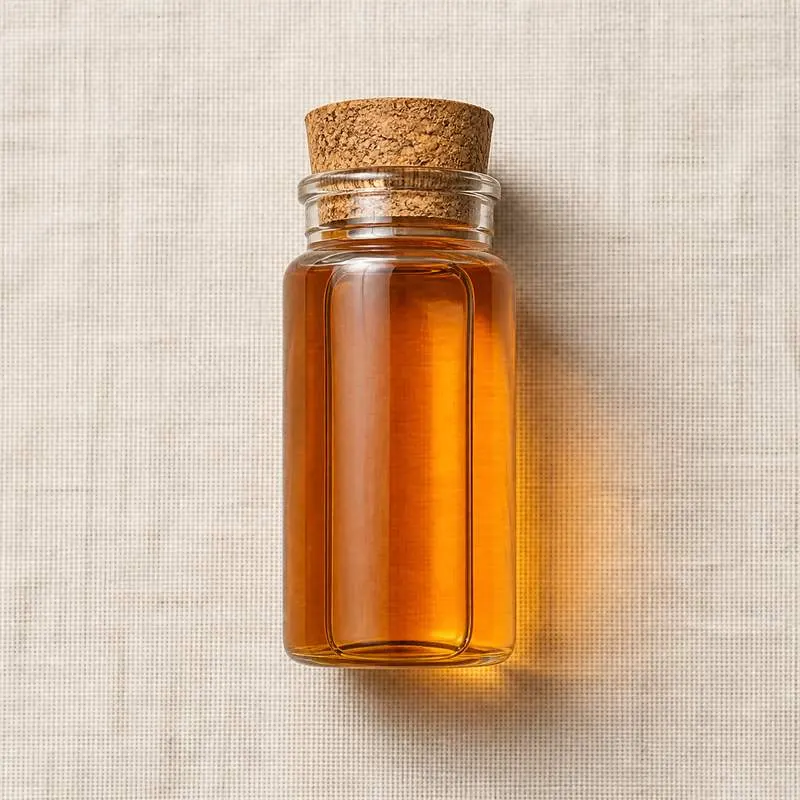
The material occurs naturally in coffee, roasted cereals, maple syrup, soy sauce and other products that have undergone Maillard browning, where it forms from sugar degradation. Commercially it is a colourless to pale yellow viscous liquid or a low melting crystalline mass depending on ambient temperature, soluble in ethanol and propylene glycol and sparingly soluble in water, and it darkens on exposure to air and light.
We source bulk Ethylcyclopentanol from top China manufacturers for our partners. The manufacturer is in Zhejiang. A smaller requirement can ship in a combined container with other ingredients.
Please send the grade you need, the volume and your destination port, and we will come back with a solution and a price.
or call +86-21-6858 0751
- Function
- Flavours and Aromas
Specifications
| Item | Specification |
|---|---|
| Appearance | Colourless to pale yellow viscous liquid or low melting crystalline mass |
| Odour | Sweet caramellic, maple and brown sugar, characteristic |
| Assay by GC | Not less than 98.0 percent |
| Identification | Infrared and mass spectra conform to reference |
| Related Substances | Any single impurity not more than 0.5 percent |
| Water Content | Not more than 0.5 percent |
| Residue on Ignition | Not more than 0.1 percent |
| Colour, Gardner | Not more than 4 |
| Acid Value | Not more than 5.0 mg KOH/g |
| Solubility | Soluble in ethanol and propylene glycol, sparingly soluble in water |
| Solution Clarity | Clear at 1 percent in 95 percent ethanol |
| Residual Solvent | Within the applicable limits for the solvents used |
| Iron | Not more than 10 mg/kg |
| Lead | Not more than 2 mg/kg |
| Arsenic | Not more than 1 mg/kg |
Common Markets Grades
Ethyl cyclopentenolone is a single defined substance, so grades differ by purity, presentation and origin. Flavour grade material assays at not less than ninety seven or ninety eight percent by gas chromatography, with related substances, colour and residual solvent controlled, since a discoloured lot carries oxidation products that shift the odour towards burnt and phenolic.
Origin is the commercially significant axis. Synthetic material accounts for most supply, while natural grades, produced from natural precursors by fermentation or by isolation from a natural extract, support a natural flavouring declaration and cost considerably more. Presentation covers the neat material in lined drums or bottles and, more commonly for the buyer, standardised solutions at one, ten or fifty percent in propylene glycol, ethanol or triacetin, because the neat product is potent, viscous and inconvenient to weigh accurately. Spray dried and encapsulated grades on maltodextrin or gum acacia are made for dry mixes and seasoning. The methyl homologue remains a separate article with a sharper and more distinctly maple character and is not a substitute at equal weight.
Applications
- Maple and brown sugar flavours, where it is a defining component
- Coffee and coffee substitute flavours, giving roasted depth
- Caramel, toffee and butterscotch compounds
- Chocolate and cocoa flavours, deepening the roasted impression
- Bakery and biscuit flavours, contributing a baked crust note
- Nut flavours, particularly walnut, hazelnut and peanut
- Savoury and meat reaction flavours, adding cooked and roasted background
- Soy sauce, bouillon and condiment flavourings
- Tobacco and vapour products, as a sweet warm background note
- Fine fragrance and personal care, in gourmand and tobacco accords
China Manufacturers of Ethylcyclopentanol
Top Ethylcyclopentanol manufacturers in China.

Company names and logos are the property of the manufacturers themselves. They are listed here because our own directory records them as producing this ingredient. A listing is not an endorsement by them, and we do not represent them or speak on their behalf.
Regulatory Status
In the United States ethyl cyclopentenolone is used as a flavouring substance and holds FEMA GRAS status under FEMA number 3152, which is the basis for its use in food and beverage, and it appears among the synthetic flavouring substances permitted in food. It is not a food additive requiring petition. The declaration on a finished food follows 21 CFR 101.22, and only material obtained by an appropriate process from a natural source can contribute to a natural flavour declaration.
In the European Union it is a flavouring substance handled under Regulation (EC) No 1334/2008, and a formulator must confirm that the substance appears on the Union list of authorised flavouring substances for the intended use before adding it to food. Flavouring substances carry no E number, although carriers and solvents blended with the material are additives or processing aids in their own right and are declared. The same regulation sets the conditions under which a flavouring substance may be described as natural, which depend on the process by which it was obtained rather than on its chemical identity. In fragrance and cosmetic use the International Fragrance Association standards and Regulation (EC) No 1223/2009 apply. Codex addresses the field through its general guidelines for the use of flavourings, which rest on the JECFA evaluations of individual flavouring substances, and the cyclic enolones have been evaluated within the relevant structural group.
Manufacturing Process
Almost all commercial material is made by synthesis, and the routes have in common the construction of a five membered ring carrying adjacent oxygen functions. One approach builds an open chain dicarbonyl precursor by condensing a short chain aldehyde or ketone with a diester or a diketone, then closes the ring by intramolecular aldol condensation under base catalysis. The product then tautomerises to the stable enol form that carries the odour. Another proceeds by ring contraction, in which a substituted cyclohexane dione or a related six membered intermediate is rearranged under alkaline conditions to the five membered enolone. The choice between routes depends on feedstock availability rather than by any difference in the finished molecule.
The reaction mass is quenched and neutralised, and the product recovered by solvent extraction or by direct crystallisation from the cooled liquor, since the compound is only sparingly soluble in water. Solvent is recovered by distillation, and purification is completed by vacuum fractional distillation for liquid grades or by recrystallisation from an alcohol or hydrocarbon solvent for crystalline ones, often after treatment with activated carbon to remove colour bodies. Because the enol is readily oxidised, the finished material is polish filtered, standardised into a diluent where a solution is being made, and filled under nitrogen into lined containers for cool and dark storage. Release covers assay by gas chromatography, related substances, colour, residual solvent, heavy metals and an odour comparison against a retained reference.