Fisetin
Fisetin is 3,3',4',7-tetrahydroxyflavone, a flavonol closely related to quercetin but lacking the 5-hydroxyl group on the A ring. It occurs in strawberry, apple, persimmon, onion and cucumber at low levels, and in much higher concentration in the wood of the smoke tree, Cotinus coggygria, and the related Rhus species, which are the practical raw materials for extraction.
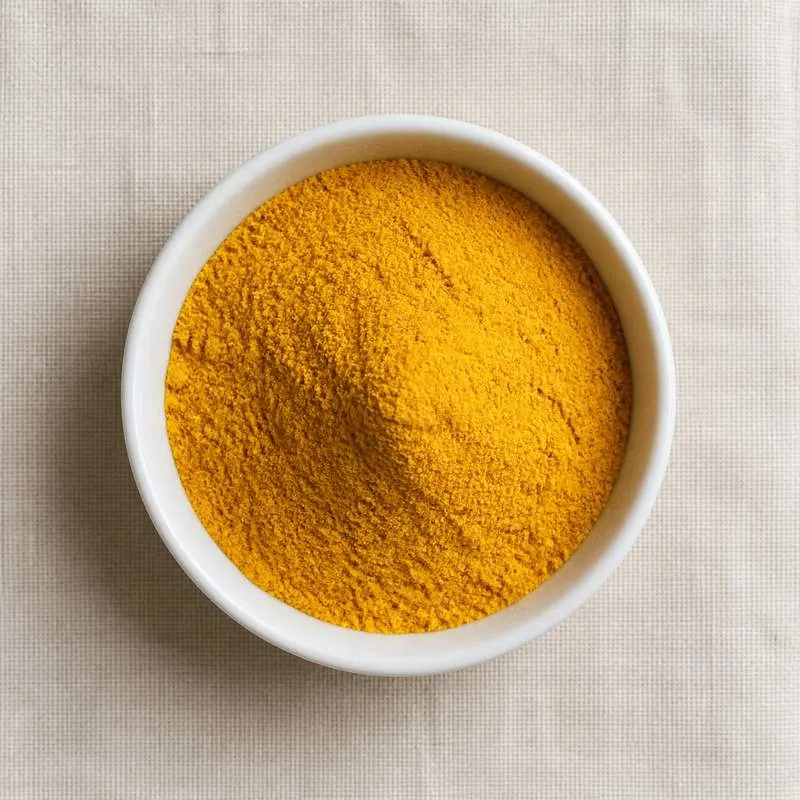
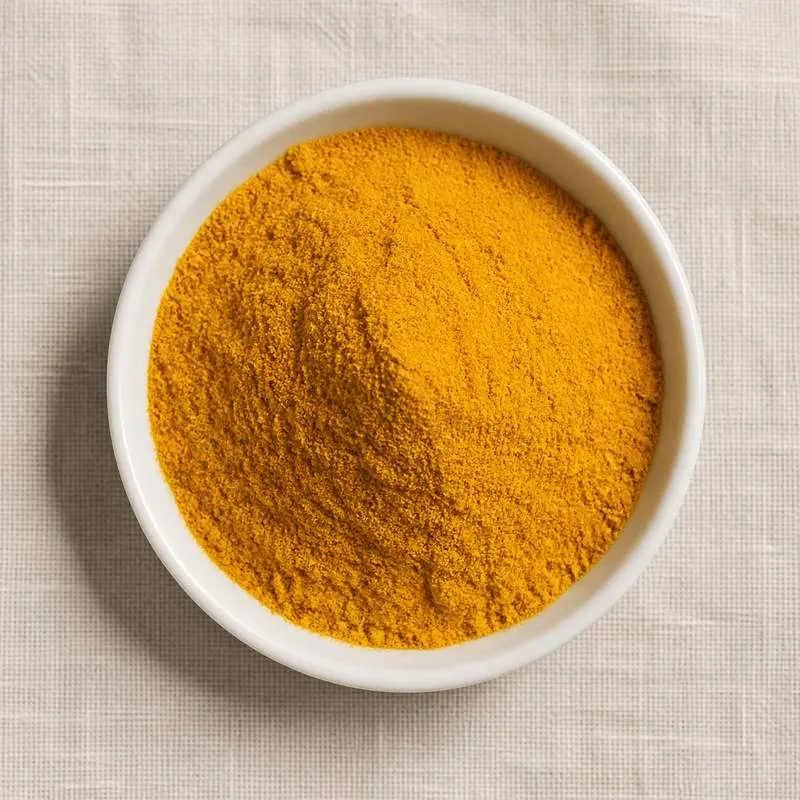
Interest in fisetin as a supplement ingredient comes from work on senescent cell clearance and on cellular ageing, and it is normally formulated at doses of a few hundred milligrams in capsules rather than used as a food ingredient. The compound is a mustard yellow crystalline powder, essentially insoluble in water and modestly soluble in ethanol and in dimethyl sulphoxide, with solubility rising sharply in alkaline solution where the phenolic groups ionise.
The catechol arrangement on the B ring makes it prone to oxidation, particularly in neutral to alkaline aqueous conditions and in the presence of iron or copper, so it is handled dry and formulations pair it with a chelating agent or an antioxidant. As with other poorly soluble flavonols, liposomal, phytosome and cyclodextrin grades are offered to raise the amount that dissolves.
We source bulk Fisetin from top China manufacturers for our partners, working with several of them. The manufacturers are mostly in Zhejiang, Guangdong and Shandong. A smaller requirement can ship in a combined container with other ingredients.
Please send the grade you need, the volume and your destination port, and we will come back with a solution and a price.
or call +86-21-6858 0751
- Function
- Plant extract
Specifications
| Item | Specification |
|---|---|
| Appearance | Mustard yellow to brownish-yellow crystalline powder |
| Assay (HPLC, dry basis) | 98.0 percent minimum |
| Identification | HPLC retention and UV maxima near 248 and 360 nm conform to reference |
| Fustin and related flavonoids | 1.0 percent maximum total |
| Melting point | 328 to 334 degrees C with decomposition |
| Loss on drying | 2.0 percent maximum |
| Residue on ignition | 1.0 percent maximum |
| Residual solvents (ethanol) | 5000 mg/kg maximum |
| Residual solvents (methanol) | 3000 mg/kg maximum |
| Lead | 1.0 mg/kg maximum |
| Arsenic | 1.0 mg/kg maximum |
| Total plate count | 1000 cfu/g maximum |
| Yeast and mould | 100 cfu/g maximum |
| Salmonella | Absent in 25 g |
Common Markets Grades
The trade runs from standardised extracts to purified compound. Smoke tree extract standardised to 20, 40 or 50 percent fisetin is the common bulk article and carries accompanying flavonoids and wood extractives, while purified grades of 98 percent minimum are used where a single-compound label claim is made. Buyers should confirm whether an assay is by HPLC against a fisetin reference or by a total flavonoid method, since the latter reads high.
Delivery grades sit above the assay grades. Micronised powder with a stated particle size, phospholipid complexes, gamma-cyclodextrin inclusion complexes and liposomal spray-dried powders are all traded, each sold on a stated fisetin content rather than on the purity of the underlying compound. Buyers wanting a natural declaration should specify plant-derived material, since synthetic fisetin is also produced.
Applications
- Longevity and cellular health capsules, frequently combined with quercetin, resveratrol and spermidine
- Senolytic-positioned supplement protocols taken at intermittent high doses
- Joint and inflammatory support formulas built on flavonoid blends
- Cognitive and neuroprotective supplement blends
- Softgels using a phospholipid or oil dispersion to improve absorption
- Functional beverages and shots using a cyclodextrin-complexed grade for clarity
- Gummies and chewables at low dose, where a micronised grade disperses in the gel
- Skin care formulations positioned on antioxidant claims
- Analytical reference standards for flavonol quantification
Brands Using Fisetin
Widely-distributed consumer products that list Fisetin on the ingredient label.
Brand names, product names and logos are the property of their owners. They appear here as published evidence that the ingredient is used, taken from the brand's own label or website. Their appearance is not an endorsement, and it does not mean the brand buys from us or from any manufacturer listed on this site.
China Manufacturers of Fisetin
Top Fisetin manufacturers in China.
 Great Forest13 ingredients in the directory
 Hygieia17 ingredients in the directory
- Shandong Yuanlitai Nutratech Co., Ltd.3 ingredients in the directory
- Suzhou Sanyi Polymer Chemical Technology Co., Ltd.9 ingredients in the directory
Company names and logos are the property of the manufacturers themselves. They are listed here because our own directory records them as producing this ingredient. A listing is not an endorsement by them, and we do not represent them or speak on their behalf.
Regulatory Status
Fisetin has no food additive approval in the United States and no independent GRAS listing of general application. It is present naturally in strawberries and other conventional foods, and it is marketed in supplements as a dietary ingredient, and in that role the supplier carries the burden of showing that the substance qualifies. Purified fisetin at supplement doses is substantially above the intake achievable from food, so suppliers should be able to document the basis for its use, and structure and function claims are subject to the usual substantiation and disclaimer requirements.
In the European Union isolated fisetin does not have a significant history of consumption in that form and would be expected to require assessment under the novel food framework before being placed on the market as a food or food supplement ingredient, even though it occurs naturally in fruit. It carries no E number. Codex and JECFA have not adopted specifications for fisetin, so the applicable Codex texts are the general provisions on contaminants and hygiene for plant materials.
Manufacturing Process
Commercial fisetin is extracted from the heartwood of Cotinus coggygria or Rhus species. The wood is chipped and milled, then extracted with aqueous ethanol or methanol at elevated temperature, sometimes with a preliminary hot water wash to remove tannins and sugars that would otherwise foul the resin downstream. The extract is filtered and concentrated under vacuum, and the concentrate is passed over macroporous adsorption resin, which retains the flavonols while polysaccharides and salts pass to waste; elution with increasing alcohol strength gives an enriched flavonol fraction.
That fraction is decolourised over activated carbon and then crystallised from aqueous alcohol, with fisetin separating from the closely related fustin and sulphuretin present in the same wood. Where a 98 percent grade is required the crude crystals are recrystallised, and preparative or simulated moving bed chromatography is used to resolve the remaining flavonols. Crystals are washed, dried under vacuum at moderate temperature to avoid oxidation, milled and packed under nitrogen away from light. Synthetic routes to fisetin exist and proceed through condensation of a protected resorcinol derivative with a substituted benzaldehyde followed by oxidative cyclisation and deprotection.