Vitamin B12
Vitamin B12 is a cobalt-containing corrinoid sold to industry in two main forms: cyanocobalamin (CAS 68-19-9) and methylcobalamin (CAS 13422-55-4). Hydroxocobalamin and adenosylcobalamin are also offered for specialty applications.
The molecule is the largest and most structurally complex of all vitamins, built around a corrin ring with a central cobalt atom. It is also the only vitamin synthesised exclusively by microorganisms, with no plant or animal source producing it de novo.
We source bulk Vitamin B12 from top China manufacturers for our partners. The manufacturers are in Hebei and Zhejiang. For this ingredient the minimum order is 500 kg and a 20-foot container takes 5 MT, and a smaller requirement can ship in a combined container with other ingredients.
Please send the grade you need, the volume and your destination port, and we will come back with a solution and a price.
or call +86-21-6858 0751
- Minimum order
- 500 kg
- Qty in 20' FCL
- 5 MT
- Packaging
- 25 kg kraft paper bag with PE inner liner
- ISO 9001
- HACCP
- Halal
- Kosher
Specifications
| Item | Specification |
|---|---|
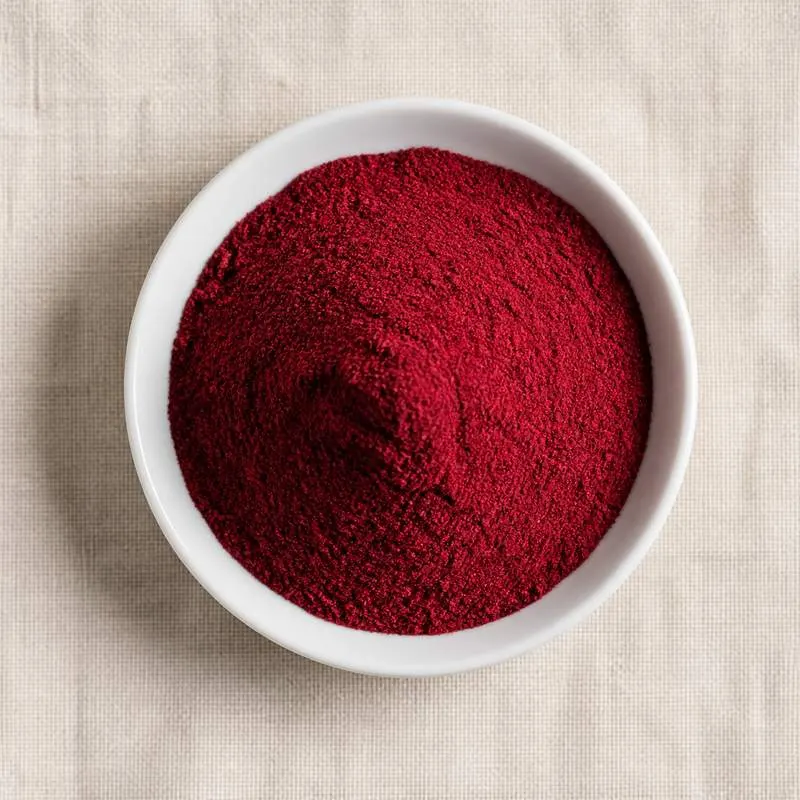
| Appearance | Dark red to crimson crystalline powder |
| Assay (dry basis, Cyanocobalamin) | 96.0% to 100.5% |
| Assay (dry basis, Methylcobalamin) | 98.0% to 102.0% |
| Loss on drying | ≤ 12.0% |
| Residue on ignition | ≤ 0.5% |
| Related substances | ≤ 2.0% |
| Heavy metals (as Pb) | ≤ 10 mg/kg |
| Arsenic | ≤ 3 mg/kg |
| Available forms | Cyanocobalamin, Methylcobalamin, Hydroxocobalamin, Adenosylcobalamin |
Common Markets Grades
Cyanocobalamin is the dominant commercial form, accounting for the majority of food, supplement, and pharmaceutical use.
It assays at 96 to 102 percent against the USP, Ph. Eur., and JP monographs. The neat crystalline material is intensely active, so most users buy 0.1 percent or 1 percent triturations on dicalcium phosphate, mannitol, or maltodextrin for accurate dosing in premixes and tablets.
Methylcobalamin runs at 98 percent assay, with corresponding diluted strengths. It is sold as the body-ready coenzyme form and costs more than cyanocobalamin in supplement and sublingual applications.
Hydroxocobalamin takes the acetate salt form at 98 percent for injectable use, including the high-dose antidote indication in cyanide poisoning. Adenosylcobalamin (dibencozide) is a smaller-volume specialty form.
Feed-grade cyanocobalamin is a 1 percent trituration on a carrier for poultry, swine, ruminant, and aquaculture premixes. All forms are light- and moisture-sensitive and require protected packaging.
Applications
- Multivitamin tablets, capsules, gummies, sublingual lozenges, and oral sprays
- Standalone B12 supplements positioned for vegetarian, vegan, and senior populations
- Energy drinks, sports nutrition, and shots that use the B12 energy claim
- Plant-based meat and dairy alternatives fortified to match animal-product B12 content
- Infant formula and follow-on formula to meet Codex compositional standards
- Cereal and flour fortification programs in countries with mandatory B-vitamin enrichment
- Clinical and enteral nutrition formulas for hospital and tube feeding
- Injectable preparations for pernicious anemia and dietary deficiency repletion
- Hydroxocobalamin antidote kits for hospital emergency treatment of cyanide poisoning
- Animal feed premixes for poultry, swine, ruminants, and farmed fish
- Pet food fortification across dry, wet, and treat formats
- Diagnostic and analytical reference standards for serum B12 assays
Brands Using Vitamin B12
Widely-distributed consumer products that list Vitamin B12 on the ingredient label.
- 5-Hour EnergyExtra Strength Energy Shot ↗Supplement Facts list Vitamin B12 (as Cyanocobalamin) 500 mcg (20833% DV) per shot.Label verified 2026-05-24
- Red BullRed Bull Energy Drink ↗Original 8.4 fl oz can contains Vitamin B12 5.1 mcg (212% DV).Label verified 2026-05-24
- NOW FoodsMethyl B-12 5000 mcg Lozenges ↗Single-nutrient B12 supplement as methylcobalamin, 5000 mcg per lozenge.Label verified 2026-05-24
- NOW FoodsB-12 5000 mcg Lozenges ↗Single-nutrient B12 (cyanocobalamin) supplement, 5000 mcg per lozenge.Label verified 2026-05-24
- SolgarVitamin B12 1000 mcg Nuggets ↗Sublingual nuggets delivering cyanocobalamin 1000 mcg per nugget, suitable for vegans.Label verified 2026-05-24
- Bang EnergyBang Energy Drink ↗Official Bang label lists Vitamin B12 (methylcobalamin) 1.5 mcg per 16 oz can.Label verified 2026-05-24
- General MillsTotal Whole Grain Cereal ↗Fortified cereal includes Vitamin B12 (100% DV per serving).Label verified 2026-05-24
Brand names, product names and logos are the property of their owners. They appear here as published evidence that the ingredient is used, taken from the brand's own label or website. Their appearance is not an endorsement, and it does not mean the brand buys from us or from any manufacturer listed on this site.
China Manufacturers of Vitamin B12
Top Vitamin B12 manufacturers in China.
- CSPC Pharmaceutical Group Co., Ltd.2 ingredients in the directory
 Zhejiang NHU Company Ltd.25 ingredients in the directory
Company names and logos are the property of the manufacturers themselves. They are listed here because our own directory records them as producing this ingredient. A listing is not an endorsement by them, and we do not represent them or speak on their behalf.
How We Help Source Vitamin B12
Direct Factory Sourcing
We run the whole process: selecting the manufacturer from the top Chinese food ingredient producers, negotiating the price, verifying quality, and coordinating the logistics. You deal with us instead of with several factories at once.
Original Packaging and Documents from the Manufacturer
The manufacturer sends your Vitamin B12 out of its own factory in the original packing, through to your destination port. The COA, COO, MSDS, TDS and any certifications reach you from the manufacturer as well.
Free Samples and Lead Time
We send 100 to 500 g free for your own laboratory to test and you cover only the courier, usually within 2 to 3 working days. ETD is usually within 7 to 15 days once the order is confirmed, and we check that date against the factory's own manufacturing schedule before we give it to you.
Combined Shipment
We can load Vitamin B12 together with other ingredients such as Vitamin C, Vitamin D3 and Vitamin E into one 20' FCL. If your quantity is small, we can also ship LCL.
Regulatory Status
Vitamin B12 is approved as a nutrient in essentially every regulated market.
In the European Union Regulation (EC) No 1925/2006 authorises cyanocobalamin, hydroxocobalamin, methylcobalamin, and adenosylcobalamin for food fortification, and Directive 2002/46/EC authorises them for food supplements. EFSA has not set an upper intake level, citing the absence of identified adverse effects from oral intake.
The U.S. Food and Drug Administration recognises cyanocobalamin as GRAS under 21 CFR 184.1945. The Institute of Medicine has not set a tolerable upper intake level.
JECFA has reviewed cyanocobalamin and assigned it acceptable nutrient status. Pharmacopoeial monographs appear in the USP, Ph. Eur., JP, and BP for cyanocobalamin and hydroxocobalamin.
Halal and Kosher certifications are routinely available since the fermentation organisms and substrates are non-animal. Vegan certification is also offered and is a key marketing claim given that natural B12 in food comes overwhelmingly from animal sources.
Manufacturing Process
All commercial vitamin B12 is produced by bacterial fermentation. Plant and animal cells lack the biosynthetic pathway, which involves more than thirty enzymatic steps in the cobalt-corrin assembly.
The two main industrial organisms are Pseudomonas denitrificans and Propionibacterium freudenreichii subsp. shermanii. Both are grown in stirred-tank fermenters on glucose or sugar-beet derived feedstocks, with controlled cobalt and dimethylbenzimidazole supplementation to steer the pathway towards cobalamin rather than other corrinoids.
After 5 to 7 days of fermentation, cells are harvested and the cobalamin is released by heat or solvent treatment. Conversion to cyanocobalamin is achieved by adding cyanide under controlled conditions, which displaces the native upper-axial ligand and yields the stable crystalline form for purification.
The crude cyanocobalamin is purified by extraction, adsorption on activated carbon or ion-exchange resin, and crystallisation from aqueous acetone or phenol-water. Methylcobalamin is obtained by reductive methylation of hydroxocobalamin with methyl iodide or methyl donors under anaerobic conditions.
Global capacity is concentrated in a small number of Chinese plants, with smaller volumes from France and Japan. The deep-red crystals are the most concentrated bioactive material in industrial fermentation, with adult daily requirements measured in micrograms.