Isoquercetin
Isoquercetin is quercetin-3-O-glucoside, CAS 482-35-9, with the molecular formula C21H20O12 and a molar mass of 464.38 g/mol. It is the flavonol quercetin carrying a single glucose unit at the 3-position, and that one sugar is the whole commercial point of the molecule: attaching a glucose in place of the rutinose of rutin, or in place of nothing at all in the free aglycone, raises aqueous solubility and markedly improves absorption relative to quercetin itself.
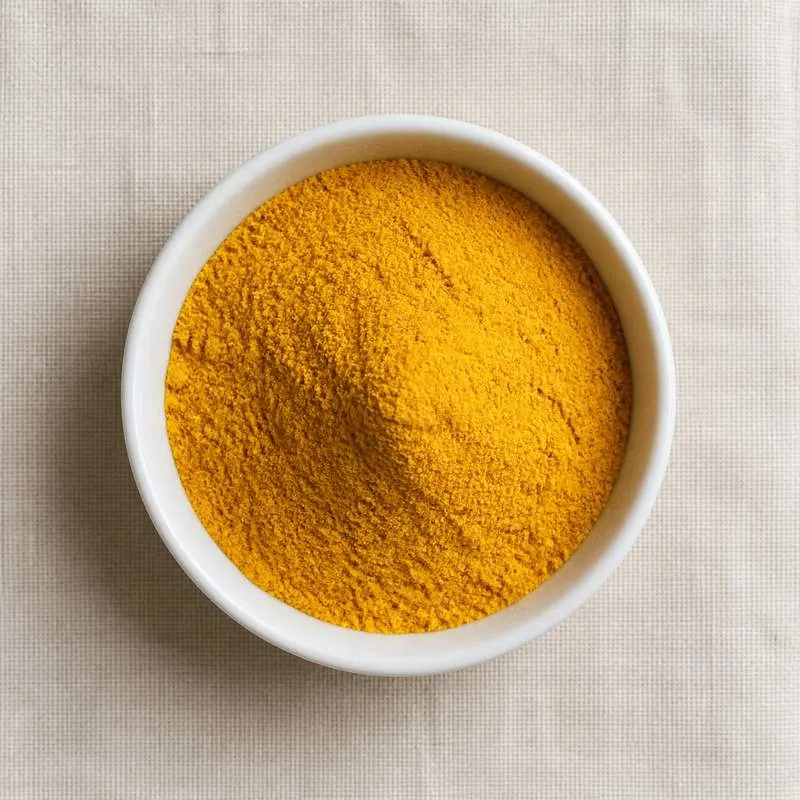
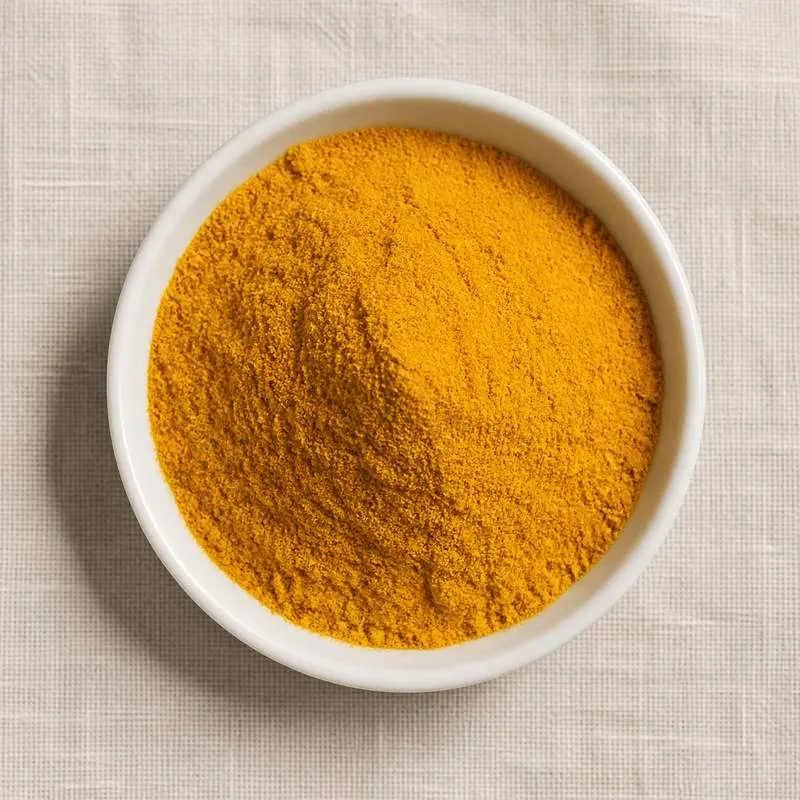
The material is a yellow to greenish yellow crystalline powder with a faint characteristic odour and a slightly bitter taste. It is sparingly soluble in water, considerably more so than quercetin aglycone but far from freely soluble, and dissolves well in ethanol, methanol and dimethyl sulphoxide and in alkaline aqueous solution. Beverage work therefore uses either low dose levels or the enzymatically glycosylated derivative, which carries additional glucose units and is far more water soluble.
The glycosidic bond hydrolyses under strong acid and prolonged heat, releasing quercetin and dropping the material out of solution, and the flavonol nucleus itself oxidises and browns under alkaline conditions and on long exposure to light and air. Commercial powder is packed in opaque containers with a moisture barrier. Isoquercetin occurs naturally in onions, apples, tea and many other plants, but at concentrations far too low to serve as a commercial source.
We source bulk Isoquercetin from top China manufacturers for our partners. The manufacturer is in Shaanxi. A smaller requirement can ship in a combined container with other ingredients.
Please send the grade you need, the volume and your destination port, and we will come back with a solution and a price.
or call +86-21-6858 0751
- Function
- Plant extract
Specifications
| Item | Specification |
|---|---|
| Appearance | Yellow to greenish yellow crystalline powder |
| Assay by HPLC | ≥ 98.0% |
| Identification | Conforms by HPLC retention time and UV spectrum |
| Residual Rutin | ≤ 1.0% |
| Free Quercetin | ≤ 1.0% |
| Loss on Drying | ≤ 5.0% |
| Residual Solvent (Ethanol) | ≤ 5,000 mg/kg |
| Heavy Metals (as Pb) | ≤ 10 mg/kg |
| Lead | ≤ 1.0 mg/kg |
| Arsenic | ≤ 1.0 mg/kg |
| Total Plate Count | ≤ 1,000 cfu/g |
| Yeast and Mould | ≤ 100 cfu/g |
| E. coli | Negative in 1 g |
| Salmonella | Negative in 25 g |
Common Markets Grades
The isolated compound is traded at 90, 95 and 98 percent by HPLC, with residual rutin and free quercetin quoted separately since both are the expected impurities from the manufacturing route. Reference grade at 99 percent and above is sold in small quantities for analytical work. Below the isolate, extracts of Sophora japonica flower bud standardised on isoquercetin at 10 to 50 percent are traded as a lower cost route into the same chemistry.
A commercially distinct product is enzymatically modified isoquercitrin, in which additional glucose units have been attached to the molecule by a transglucosylation reaction to give a mixture of mono- and oligoglucosides. It is far more water soluble than isoquercetin itself, is sold as a defined food additive preparation rather than as a single compound, and is specified on total quercetin glucoside content rather than on isoquercetin purity. Buyers should establish which of the two a quoted product is, since the names are used loosely in the trade. Solubilised presentations of plain isoquercetin, including cyclodextrin complexes and dispersions on a carrier, are also traded.
Applications
- Immune and antiviral support supplements, the largest outlet, usually in capsule or tablet form
- Cardiovascular and vascular health formulas, drawing on the flavonol tradition
- Sports nutrition and endurance products, where quercetin glucosides are used for their absorption advantage
- Antioxidant blends, combined with vitamin C, which is often co-formulated to improve stability
- Functional beverages, using the enzymatically modified glucoside for its far better solubility
- Antioxidant food additive applications, protecting oils, beverages and prepared foods from oxidation
- Allergy and histamine support supplements, a traditional quercetin application
- Cosmetic serums and creams using the flavonol fraction
- Analytical reference standard for quantifying quercetin glucosides in plant material
Brands Using Isoquercetin
Widely-distributed consumer products that list Isoquercetin on the ingredient label.
- Integrative TherapeuticsAlpha-Glycosyl Isoquercitrin ↗Capsules built on alpha-glycosyl isoquercitrin, an enzymatically modified isoquercetin used as a more absorbable quercetin source.Label verified 2026-08-31
- Integrative TherapeuticsAllQlear ↗Combines alpha-glycosyl isoquercitrin with a tributyrin base for seasonal support, using the glycosylated isoquercetin for absorption.Label verified 2026-08-31
- US EnzymesIsoQuercetin ↗Supplies a soluble isoquercetin described as roughly 25 times more bioavailable than plain quercetin.Label verified 2026-08-31
Brand names, product names and logos are the property of their owners. They appear here as published evidence that the ingredient is used, taken from the brand's own label or website. Their appearance is not an endorsement, and it does not mean the brand buys from us or from any manufacturer listed on this site.
China Manufacturers of Isoquercetin
Top Isoquercetin manufacturers in China.
Company names and logos are the property of the manufacturers themselves. They are listed here because our own directory records them as producing this ingredient. A listing is not an endorsement by them, and we do not represent them or speak on their behalf.
Regulatory Status
The regulatory position depends on which of the two related materials is in question. The Joint FAO/WHO Expert Committee on Food Additives has evaluated enzymatically modified isoquercitrin as an antioxidant food additive, and the Codex framework carries a specification for it, which is the basis on which it is used as an additive in a number of markets. In the United States enzymatically modified isoquercitrin has been the subject of generally recognised as safe notifications for defined food uses to which the Food and Drug Administration responded with no questions, and it also carries a FEMA GRAS listing for flavour use. Plain isoquercetin sold into supplements is a dietary ingredient under the Dietary Supplement Health and Education Act, manufactured under 21 CFR Part 111.
In the European Union the European Food Safety Authority has assessed the glycosylated derivative, and Regulation (EU) 2015/2283 authorises it as a novel food; the Union list sets out the conditions of use and specifications, so it settles the status rather than leaving it to assumption. Isoquercetin itself, where it is presented as a purified compound rather than as a constituent of a traditional plant extract, falls within the scope of the same Regulation and requires authorisation. No health claim for quercetin or its glucosides appears on the EU register of authorised claims.
Manufacturing Process
Commercial isoquercetin is made from rutin rather than isolated directly, because rutin is available cheaply and in bulk. Rutin, which is quercetin-3-O-rutinoside, is extracted from the flower buds of Sophora japonica or from buckwheat: the dried plant material is milled and extracted with hot water or dilute alkali, the liquor is acidified so that rutin crystallises out, and the crude crystals are recrystallised from aqueous alcohol to pharmaceutical purity.
The purified rutin is then converted by enzymatic hydrolysis. Rutin is dissolved or suspended in buffered aqueous solution and treated with alpha-L-rhamnosidase, an enzyme from Aspergillus or a related source, which cleaves the terminal rhamnose from the rutinose disaccharide and leaves the glucose in place, giving isoquercetin directly. Reaction pH and temperature are held tightly, because over-digestion by contaminating beta-glucosidase activity strips the remaining glucose and produces quercetin aglycone, which is the principal impurity in the finished product. When conversion is complete the enzyme is inactivated by heating, the mixture is cooled so the sparingly soluble product crystallises, and the crystals are collected by filtration or centrifugation, washed, recrystallised from aqueous ethanol and vacuum dried. Acid hydrolysis is an alternative route but gives poorer selectivity. Where the enzymatically modified derivative is the target, the isoquercetin is taken on to a transglucosylation step with cyclodextrin glucanotransferase and dextrin, which attaches further glucose units.