Enzymatically Modified Isoquercitrin
Enzymatically Modified Isoquercitrin (EMIQ) is a water-soluble quercetin glycoside mixture produced by enzymatic alpha-glucosylation of isoquercitrin extracted from Japanese pagoda tree (Sophora japonica) flower buds.
The compound consists of isoquercitrin (quercetin-3-O-beta-D-glucoside) with one to several additional alpha-1,4-linked glucose units attached to the 4'-hydroxyl group of the inner glucose. The added glucose residues sharply improve aqueous solubility and oral absorption relative to the parent aglycone quercetin.
We source bulk Enzymatically Modified Isoquercitrin from top China manufacturers for our partners. The manufacturer is in Sichuan. A smaller requirement can ship in a combined container with other ingredients.
Please send the grade you need, the volume and your destination port, and we will come back with a solution and a price.
or call +86-21-6858 0751
- Packaging
- 25 kg kraft paper bag with PE inner liner
- ISO 9001
- HACCP
- Halal
- Kosher
Specifications
Grades / Types Available: Food Grade, Pharmaceutical Grade
| Item | Specification |
|---|---|
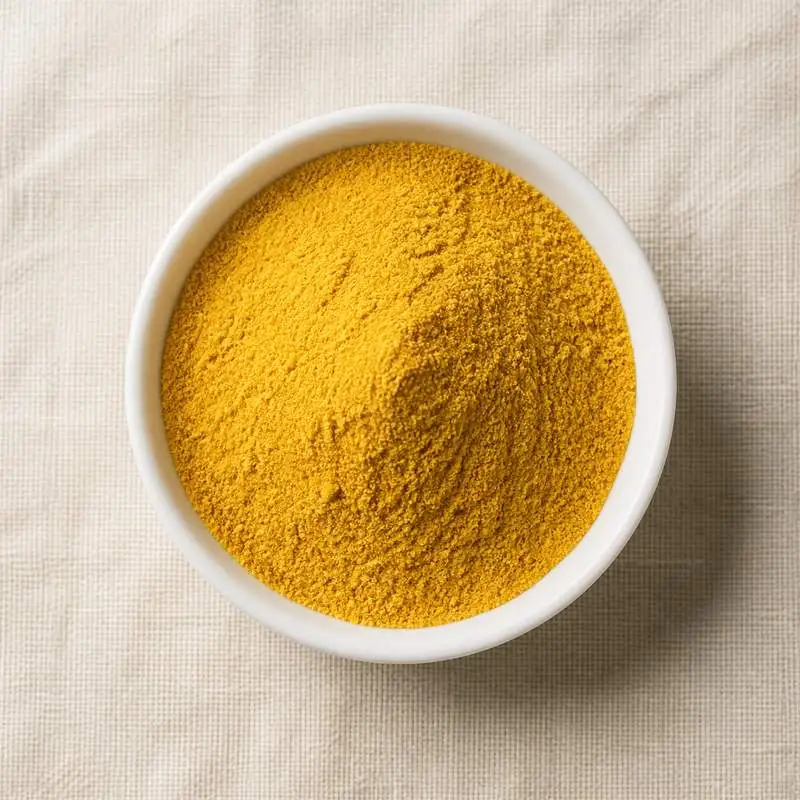
| Appearance | Yellow to brown powder |
| Assay (as isoquercitrin) | ≥ 80.0% |
| Moisture | ≤ 5.0% |
| Heavy Metals (as Pb) | ≤ 10 mg/kg |
| Purity (Food Grade) | ≥ 95% |
| Moisture/Loss on Drying | ≤ 5% |
| pH | 4.5 - 7.0 |
| Lead | ≤ 1 ppm |
| Arsenic | ≤ 0.5 ppm |
| Total Plate Count | ≤ 1000 cfu/g |
| Yeast & Mold | ≤ 100 cfu/g |
Common Markets Grades
EMIQ is produced principally by San-Ei Gen F.F.I. of Japan, the developer of the original process, alongside a small number of Chinese manufacturers operating analogous routes.
Standard food-grade EMIQ assays between 20 and 30 percent quercetin equivalents on an anhydrous basis, with the balance made up of the added glucose chain and residual dextrin from the enzyme step.
Higher-purity grades at 40 percent or more quercetin equivalents exist for supplement and tablet applications where dose per gram matters.
The product is a yellow to yellow-brown powder with high cold-water solubility, typically greater than 25 percent w/v at 20 degrees Celsius, in contrast to quercetin aglycone solubility of about 0.01 percent.
EMIQ is also offered as a pre-blended liquid concentrate for beverage and oral spray applications, a clear yellow solution at 5 to 10 percent active.
Applications
- Dietary supplements positioning bioavailable quercetin for allergy and seasonal respiratory support
- Sports nutrition products targeting recovery and oxidative stress
- Functional beverages and shots where aqueous solubility of quercetin is limiting
- Eye health formulations combined with lutein, zeaxanthin, and bilberry extracts
- Cardiovascular health blends paired with omega-3 and CoQ10
- Skin health supplements positioning antioxidant and photoprotection benefits
- Animal nutrition for performance horses and companion animals
- Topical cosmetic actives in serums and after-sun preparations
- Stabiliser and antioxidant in oxidation-sensitive food matrices such as fish oil emulsions
- Colour stabiliser in beverage applications protecting anthocyanin-based hues
- Reference standard for research on quercetin glycoside metabolism and absorption
- Ingredient in oral care products positioning gum and mucosal benefits
Brands Using Enzymatically Modified Isoquercitrin
Widely-distributed consumer products that list Enzymatically Modified Isoquercitrin on the ingredient label.
- Source NaturalsAllerStrength with EMIQ 17X Quercetin ↗Source Naturals AllerStrength is a fast-acting seasonal immune support tablet built around highly bioavailable enzymatically modified isoquercitrin (EMIQ), described as 17 times more bioavailable than standard quercetin.Label verified 2026-05-24
- Natural FactorsBioactive Quercetin EMIQ ↗Vegetarian capsules delivering 50 mg of enzymatically modified isoquercitrin (EMIQ), an enzymatically glycosylated form of quercetin.Label verified 2026-05-24
- Pure EncapsulationsQuercetin UltraSorb ↗Pure Encapsulations Quercetin UltraSorb provides 300 mg per capsule of Indena's Quercefit quercetin phytosome, a sunflower-lecithin-based enhanced-absorption quercetin used for cellular, immune and cardiovascular support.Label verified 2026-05-24
- ThorneQuercetin Phytosome ↗Thorne's Quercetin Phytosome uses a phytosome (sunflower lecithin) delivery system to provide quercetin with up to 20-fold greater bioavailability than unformulated quercetin, supporting immune health, respiratory function and seasonal allergy relief.Label verified 2026-05-24
Brand names, product names and logos are the property of their owners. They appear here as published evidence that the ingredient is used, taken from the brand's own label or website. Their appearance is not an endorsement, and it does not mean the brand buys from us or from any manufacturer listed on this site.
China Manufacturers of Enzymatically Modified Isoquercitrin
Top Enzymatically Modified Isoquercitrin manufacturers in China.

Company names and logos are the property of the manufacturers themselves. They are listed here because our own directory records them as producing this ingredient. A listing is not an endorsement by them, and we do not represent them or speak on their behalf.
How We Help Source Enzymatically Modified Isoquercitrin
Direct Factory Sourcing
We run the whole process: selecting the manufacturer from the top Chinese food ingredient producers, negotiating the price, verifying quality, and coordinating the logistics. You deal with us instead of with several factories at once.
Original Packaging and Documents from the Manufacturer
The manufacturer sends your Enzymatically Modified Isoquercitrin out of its own factory in the original packing, through to your destination port. The COA, COO, MSDS, TDS and any certifications reach you from the manufacturer as well.
Free Samples and Lead Time
We send 100 to 500 g free for your own laboratory to test and you cover only the courier, usually within 2 to 3 working days. ETD is usually within 7 to 15 days once the order is confirmed, and we check that date against the factory's own manufacturing schedule before we give it to you.
Combined Shipment
We can load Enzymatically Modified Isoquercitrin together with other ingredients such as Arachidonic Acid, Coenzyme Q10 and Chondroitin Sulphate Sodium into one 20' FCL. If your quantity is small, we can also ship LCL.
Regulatory Status
EMIQ has been authorised as a food ingredient in several major regulated markets.
In the United States, EMIQ from San-Ei Gen holds FDA-no-objection GRAS status, supported by GRAS Notice GRN 220 and subsequent expansions covering use in conventional foods, beverages, and supplements.
In Japan, EMIQ is listed in the official Specifications and Standards for Food Additives as an existing food additive and is widely used in functional foods and beverages.
In Australia and New Zealand, EMIQ is included in the Australia New Zealand Food Standards Code under Schedule 18 as a processing aid with associated specifications.
In the European Union, EMIQ has been the subject of a novel food application and is not yet broadly authorised for general food use at the time of writing. National authorities should be consulted for current status.
The compound is not associated with any approved disease or risk-reduction health claim. Marketing in regulated markets relies on general antioxidant and food ingredient descriptions rather than therapeutic claims.
Manufacturing Process
EMIQ production starts with isoquercitrin obtained from rutin, the principal flavonol glycoside of Sophora japonica flower buds.
Dried buds are extracted with hot aqueous ethanol to recover rutin (quercetin-3-O-rutinoside). The crude extract is purified by crystallisation and decolorisation to yield high-assay rutin.
Rutin is then treated with naringinase or a similar alpha-L-rhamnosidase to remove the rhamnose unit from the rutinose disaccharide, yielding isoquercitrin (quercetin-3-O-beta-D-glucoside) and free rhamnose.
The key step is enzymatic alpha-glucosylation. Isoquercitrin and a glucose donor, typically dextrin or starch hydrolysate, are incubated with a cyclomaltodextrin glucanotransferase (CGTase) from a Bacillus species. The enzyme transfers glucose units from the donor to the 4'-hydroxyl of the inner glucose of isoquercitrin, building an alpha-1,4-linked oligoglucoside chain of one to about eight glucose residues.
Excess glucose and oligosaccharides are removed by chromatography or by treatment with glucoamylase to trim the chain to a controlled length, followed by adsorption-desorption purification.
The final product is decolorised, concentrated, and spray-dried into a free-flowing powder. Standardisation is based on quercetin equivalents measured by HPLC after acid hydrolysis to the aglycone.