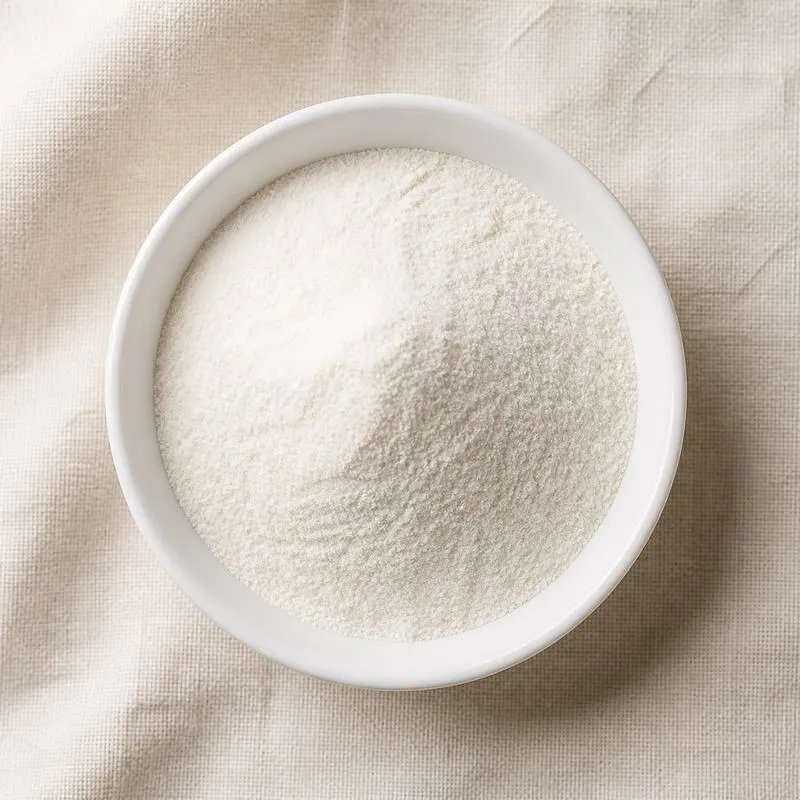
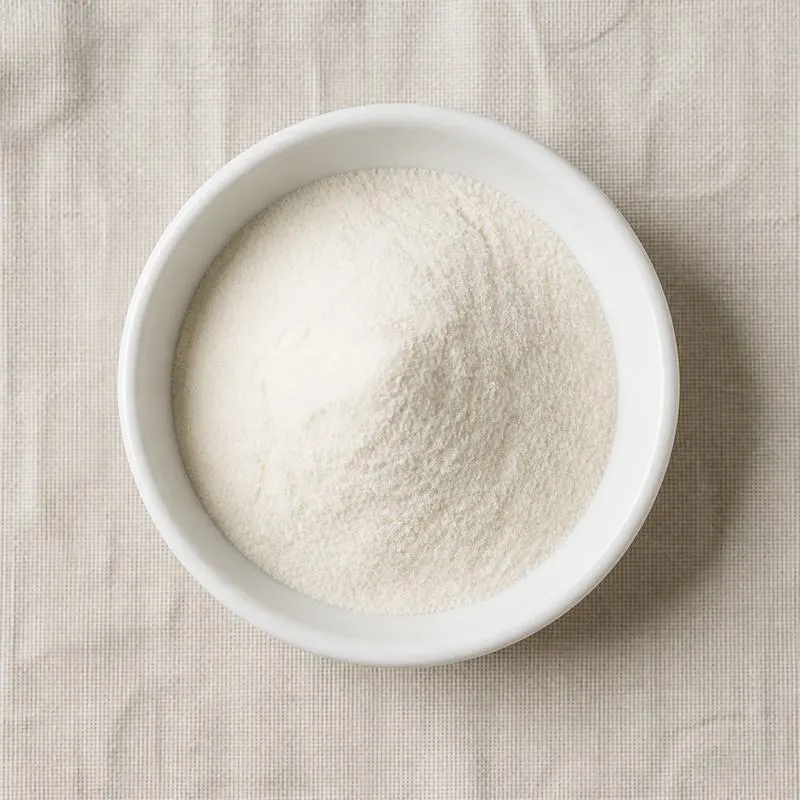
Konjac Micro
Konjac Micro is micronised konjac glucomannan, a konjac flour that has been ground and classified to a much finer particle band than standard gum so that it hydrates rapidly and disperses without forming lumps.
The polysaccharide itself is unchanged: a linear β-1,4-linked chain of D-mannose and D-glucose bearing acetyl substituents, extracted from the tuber of Amorphophallus konjac. What micronisation changes is surface area. Reducing median particle size from the 150 to 200 micron range of ordinary flour down to roughly 20 to 75 microns shortens the time to full viscosity from tens of minutes to a few minutes in cold water, which is the point of the grade.
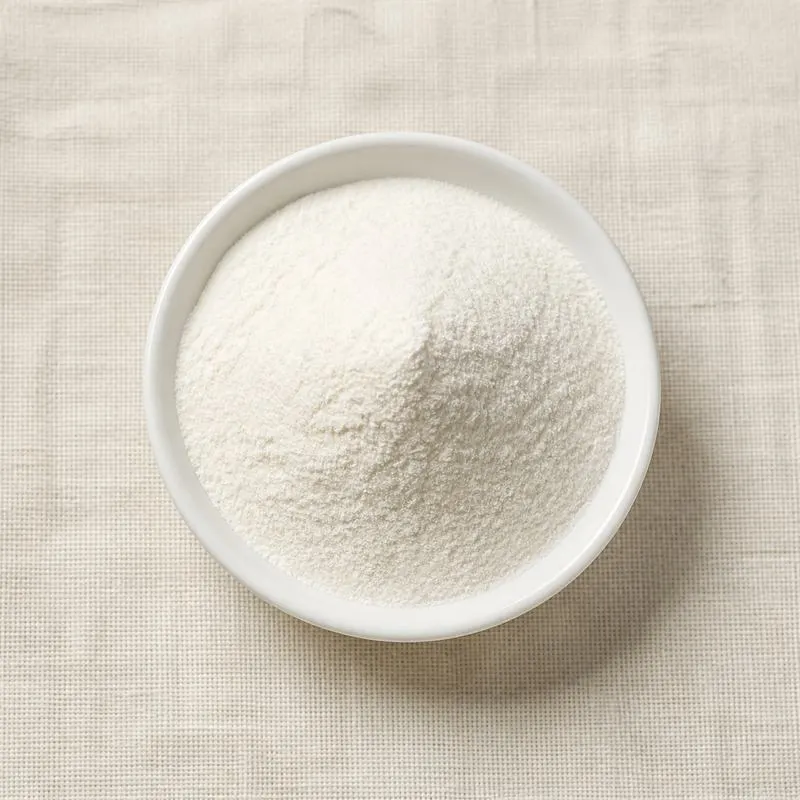
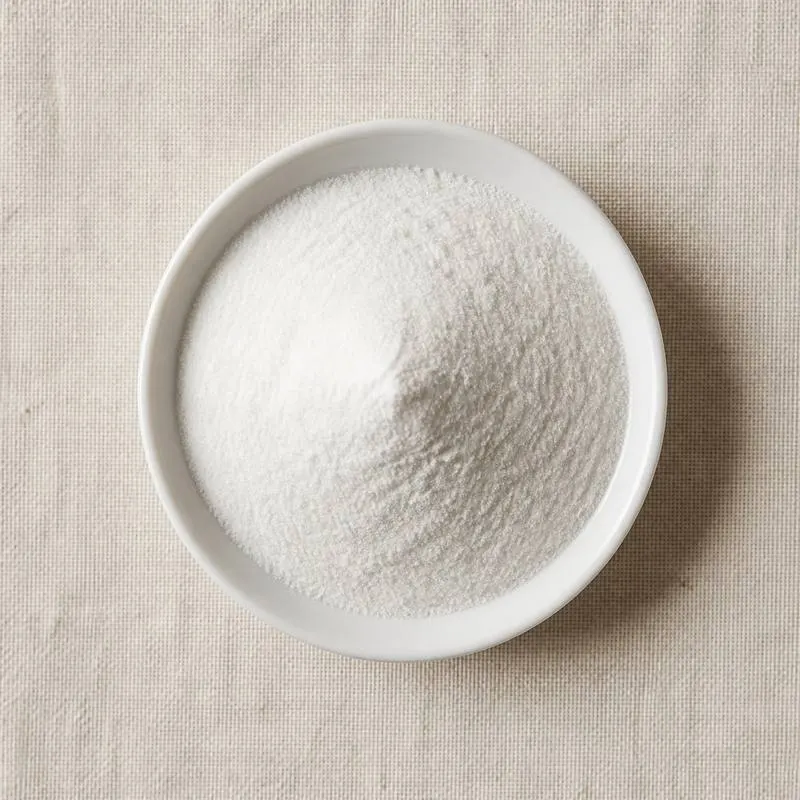
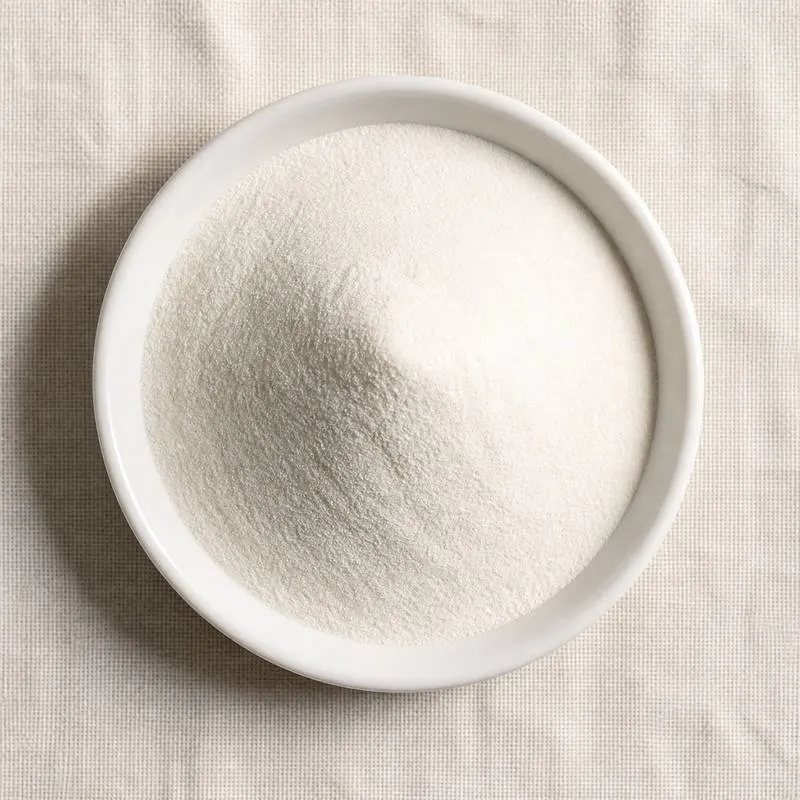
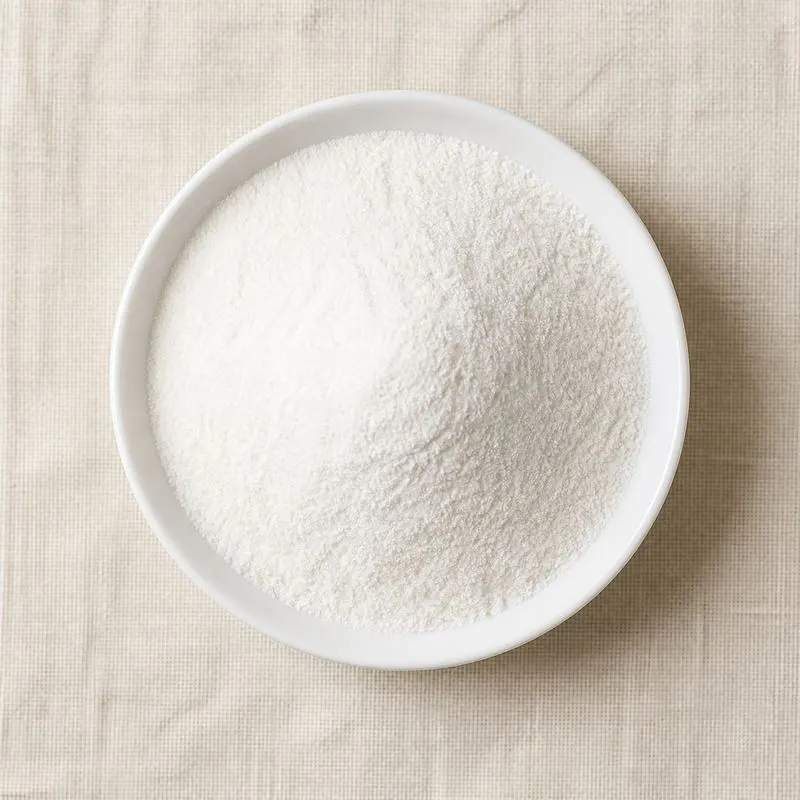
It is a fine off-white powder of low bulk density and noticeable dustiness, usually pre-blended with a dispersing carrier such as sugar, maltodextrin or a second gum when it is destined for dry mixes. Viscosity development is high, gels formed after alkaline deacetylation remain thermo-irreversible, and the material keeps konjac's characteristic synergy with xanthan gum and kappa carrageenan. Because the fines swell so quickly, dispersion equipment and order of addition matter more than they do with coarse flour.
We source bulk Konjac Micro from top China manufacturers for our partners. The manufacturer is in Hubei. A smaller requirement can ship in a combined container with other ingredients.
Please send the grade you need, the volume and your destination port, and we will come back with a solution and a price.
or call +86-21-6858 0751
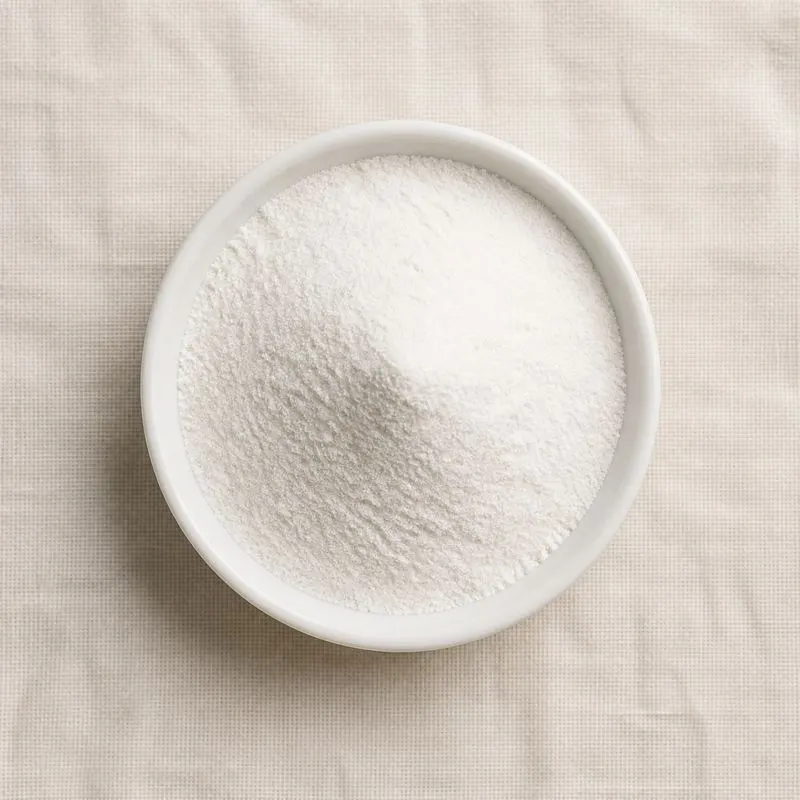
- Function
- Thickener / Hydrocolloid
Specifications
| Item | Specification |
|---|---|
| Appearance | Off-white fine powder, free from visible specks |
| Odour | Slight characteristic odour, no foreign smell |
| Glucomannan Content | ≥ 85% on dry basis |
| Viscosity, 1% solution | ≥ 24,000 mPa.s |
| Identification | Positive for glucomannan by Congo red and infrared |
| Particle Size | ≥ 95% through 200 mesh |
| Hydration Time | Full viscosity within 5 minutes at 25 °C |
| Loss on Drying | ≤ 10% |
| Ash | ≤ 3.0% |
| pH, 1% solution | 5.0 to 7.0 |
| Sulphur Dioxide | ≤ 0.5 g/kg |
| Lead | ≤ 1.0 mg/kg |
| Arsenic | ≤ 1.0 mg/kg |
| Total Plate Count | ≤ 5,000 cfu/g |
Common Markets Grades
Micronised konjac is specified by particle size band, glucomannan content and one percent viscosity. Common cuts are 120 mesh, 200 mesh and 300 mesh, with the finest material sold for instant beverage and supplement powders. Glucomannan content follows the purity of the feed flour, so ordinary micronised gum sits near 80 percent while material milled from alcohol-washed flour reaches 90 percent and above.
Agglomerated and instantised versions are produced for consumer sachets, where the particles are lightly bonded so they sink and wet out rather than floating as a raft. Dispersion-aided blends carrying an inert carrier are also traded, and low-viscosity hydrolysed micro grades are made for dietary fibre use where high viscosity would be a handling problem rather than a benefit.
Applications
- Instant beverage powders and meal replacement shakes, where a few minutes to full viscosity is the limiting requirement
- Glucomannan capsules and satiety tablets, where fine particles swell predictably on contact with gastric fluid
- Dry sauce, gravy and soup sachets that must thicken on stirring into hot water without lumping
- Gluten-free bakery premixes, as a water binder that hydrates in the short mixing time of a domestic recipe
- Low-fat dressings and mayonnaise analogues, where it builds body at low addition levels
- Frozen dessert and soft serve mixes, for ice crystal control and slower meltdown
- Emulsified meat and surimi products, where fast hydration limits free water before setting
- Reduced-sugar jams and fruit fillings, as a bulking and viscosity agent
- Konjac jelly and dessert gels, in combination with carrageenan for chew and set
China Manufacturers of Konjac Micro
Top Konjac Micro manufacturers in China.
Company names and logos are the property of the manufacturers themselves. They are listed here because our own directory records them as producing this ingredient. A listing is not an endorsement by them, and we do not represent them or speak on their behalf.
Regulatory Status
Regulation (EC) No 1333/2008 authorises konjac glucomannan in the European Union as E425(ii), with konjac gum listed as E425(i). The authorisation carries an explicit prohibition on the use of konjac in jelly mini-cup confectionery following choking incidents, and that restriction applies to micronised grades exactly as it does to ordinary flour.
In the United States konjac flour is used in food on a GRAS basis, with GRAS notifications for konjac products submitted to the FDA without objection, while konjac mini-cup jelly candies have been subject to import alerts and recalls on choking grounds. JECFA has evaluated konjac flour and published identity and purity specifications, and konjac appears in the Codex General Standard for Food Additives as a thickener, stabiliser and gelling agent.
Manufacturing Process
Production starts from dried konjac chips or from konjac flour already separated by impact milling and air classification. For purified micronised grades the flour is first washed in aqueous ethanol, which dissolves starch fines, soluble sugars, pigments and residual sulphite while leaving glucomannan insoluble, then pressed and dried at low temperature to protect chain length and viscosity.
The dried material is size-reduced in a jet mill or a mechanical pin mill running under controlled temperature, since heat and shear both degrade glucomannan and cost viscosity. Milled powder passes through an air classifier that returns oversize to the mill and takes only the target fraction forward. Fines are screened, blended across lots to a declared viscosity, optionally agglomerated with a fine water or ethanol spray in a fluid bed, and packed under conditions that keep moisture pickup low.