L-Sodium Lactate
L-sodium lactate is the sodium salt of L-(+)-lactic acid, formula NaC3H5O3, and is traded overwhelmingly as a clear aqueous solution rather than as a solid. It functions in food as a humectant, a mild flavour enhancer, a buffering salt and, most importantly commercially, as an antimicrobial that extends the refrigerated shelf life of meat and poultry by suppressing Listeria monocytogenes and lactic spoilage flora.
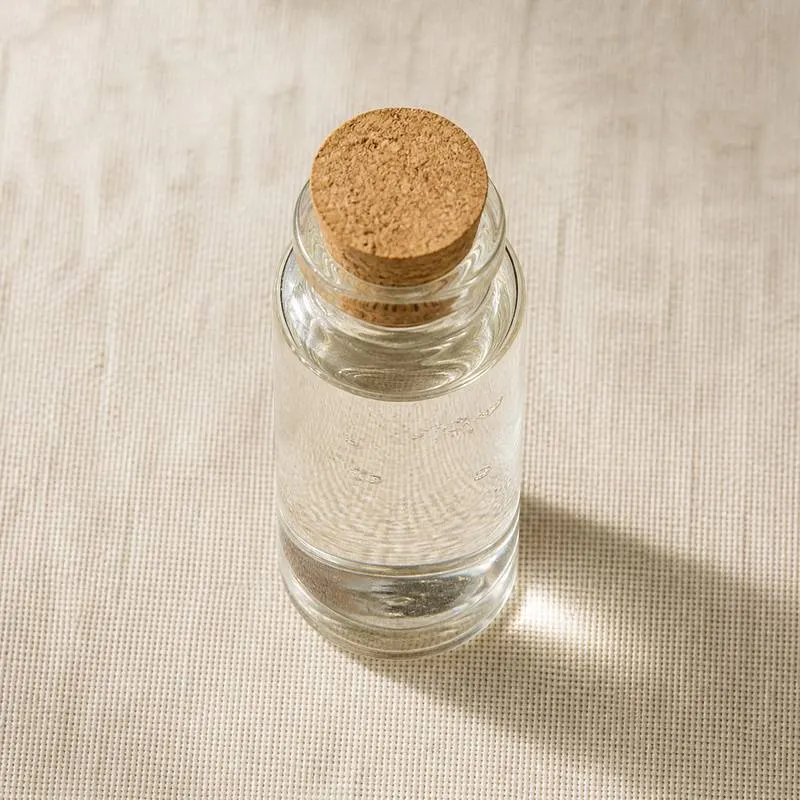
The standard article is a colourless to pale yellow syrupy liquid at 60 percent solids with a bland, slightly saline taste and a faint characteristic odour. It is fully miscible with water and hygroscopic enough that the solution resists drying out, which is the basis of its humectant role. Solutions are mildly alkaline, generally pH 6.5 to 8.5, and hold their pH well because the lactate ion buffers around the pKa of lactic acid at 3.86 when acid is present.
The salt is thermally stable through cooking, retorting and extrusion and does not brown or caramelise, so it can be added early in a process. The optically pure L form is specified where the material is intended for infant or clinical nutrition, since L-lactate is metabolised directly, while general food and technical use also accepts the racemic grade.
We source bulk L-Sodium Lactate from top China manufacturers for our partners. The manufacturers are in Jiangxi and Shandong. A smaller requirement can ship in a combined container with other ingredients.
Please send the grade you need, the volume and your destination port, and we will come back with a solution and a price.
or call +86-21-6858 0751
- Function
- Acidulant
Specifications
| Item | Specification |
|---|---|
| Appearance | Clear colourless to pale yellow syrupy liquid |
| Assay as Sodium Lactate | 59.0 to 61.0 percent |
| Identification | Positive for sodium and for lactate |
| Optical Purity, L isomer | Not less than 98.0 percent |
| pH, as supplied | 6.5 to 8.5 |
| Colour, APHA | Not more than 50 |
| Reducing Sugars | Not more than 0.1 percent |
| Chloride | Not more than 0.05 percent |
| Sulphate | Not more than 0.05 percent |
| Lead | Not more than 1 mg per kg |
| Arsenic | Not more than 1 mg per kg |
| Total Plate Count | Not more than 100 cfu per g |
| Yeast and Mould | Not more than 50 cfu per g |
| Salmonella | Absent in 25 g |
Common Markets Grades
Aqueous solution grades dominate. Sixty percent solids is the industry standard and the form in which most meat processors buy, with 50 percent offered where lower viscosity or easier winter handling matters. A spray dried powder at roughly 95 percent solids on a carrier is produced for dry seasoning blends, rubs and low moisture applications where adding a syrup is impractical, and it is priced above the equivalent solids in solution.
Beyond concentration, the specification splits on optical purity and on colour. Pharmaceutical and infusion grade solutions to pharmacopoeial monographs are made with tighter limits on colour, chloride, sulphate and endotoxin for use in Ringer's lactate and dialysis fluids. Food grade is judged largely on colour and residual sugar, since a dark or sweet smelling lot indicates incomplete purification of the fermentation liquor. Blended articles combining sodium lactate with sodium diacetate or potassium lactate are also traded as ready made meat preservation systems.
Applications
- Ready to eat deli meats, frankfurters and cooked sausage, as the principal antimicrobial extending refrigerated shelf life and controlling Listeria monocytogenes
- Fresh and marinated poultry, where it improves cook yield and water retention alongside its antimicrobial effect
- Injected and tumbled whole muscle products, as a humectant that keeps the cooked texture juicy at reduced phosphate levels
- Sodium reduced formulations, as a partial replacement for salt that carries some of the salty perception without the full chloride load
- Bakery and confectionery, as a humectant that controls water activity and slows staling
- Sauces, dressings and prepared meals, as a buffer holding pH steady over a long ambient or chilled shelf life
- Cheese and processed cheese, as a moisture control and flavour rounding agent
- Intravenous and dialysis fluids in the pharmaceutical trade, using the pharmacopoeia solution grade
- Personal care creams and lotions, as a humectant and part of the natural moisturising factor system
China Manufacturers of L-Sodium Lactate
Top L-Sodium Lactate manufacturers in China.
 Musashino Chemical (China) Co., Ltd.6 ingredients in the directory
 Qingdao Jiutai Biotechnology Co., Ltd.8 ingredients in the directory
Company names and logos are the property of the manufacturers themselves. They are listed here because our own directory records them as producing this ingredient. A listing is not an endorsement by them, and we do not represent them or speak on their behalf.
Regulatory Status
In the United States sodium lactate is affirmed as generally recognised as safe under 21 CFR 184.1768, with functions listed as flavour enhancer, flavouring agent, pH control agent, emulsifier and humectant, at levels consistent with good manufacturing practice, and it is specifically excluded from use in infant foods and infant formula under that section. Its use in meat and poultry is separately governed by the United States Department of Agriculture, which permits it as an antimicrobial and flavouring in defined product categories at capped use levels. A United States Pharmacopeia monograph covers the injection grade.
In the European Union Regulation (EC) No 1333/2008 authorises it as food additive E 325, with identity and purity criteria in Regulation (EU) No 231/2012, and permits it quantum satis across a broad set of categories. JECFA has evaluated the lactate salts and concluded that no numerical limit is required, and sodium lactate is listed in the Codex General Standard for Food Additives as an acidity regulator, humectant and antioxidant synergist.
Manufacturing Process
Manufacture is downstream of lactic acid fermentation. A refined carbohydrate feedstock, usually glucose from maize or cassava starch or sucrose from cane, is fermented anaerobically with homofermentative Lactobacillus strains selected to produce L-lactic acid at high optical purity. The fermentation is neutralised as it runs to keep the culture from being inhibited by its own acid. Some plants neutralise with sodium hydroxide directly and take sodium lactate out of the fermenter, while others neutralise with lime, recover and purify free lactic acid, then convert it in a separate step.
The broth or acid stream is heated to kill the organism and clarified by centrifugation and microfiltration or ultrafiltration to strip biomass, residual protein and cell debris. It is then neutralised or adjusted to the target pH with sodium hydroxide, decolourised over activated carbon, and polished through ion exchange to remove residual cations, sugars and colour precursors. Vacuum evaporation concentrates the clean liquor to 60 percent solids, and the finished solution is filtered again, standardised on assay and pH, and filled. Where the powder grade is the product, the concentrated solution is spray dried onto a carrier and the resulting powder is screened and packed against moisture.