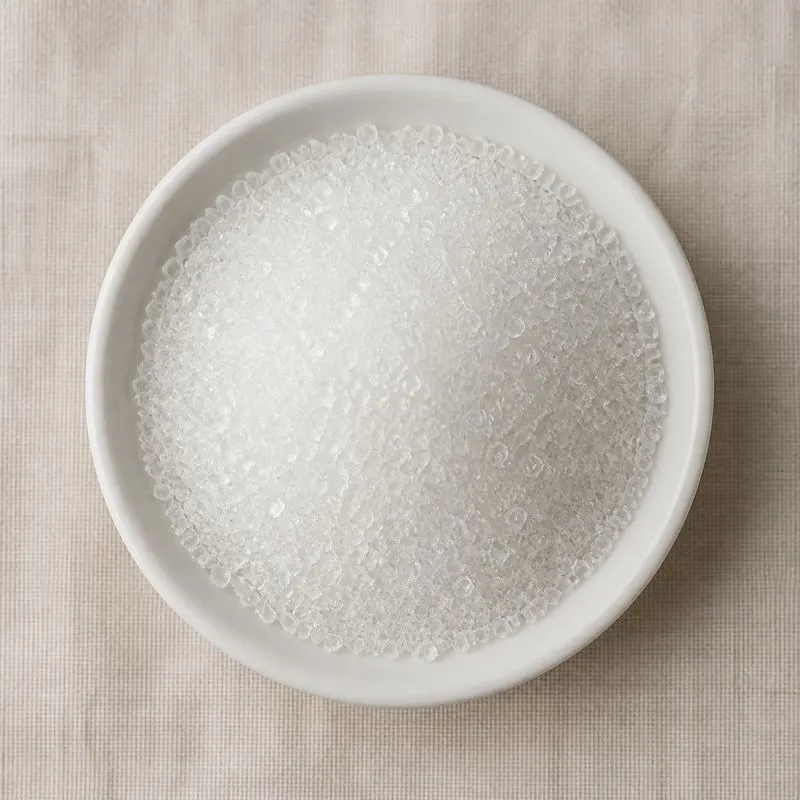
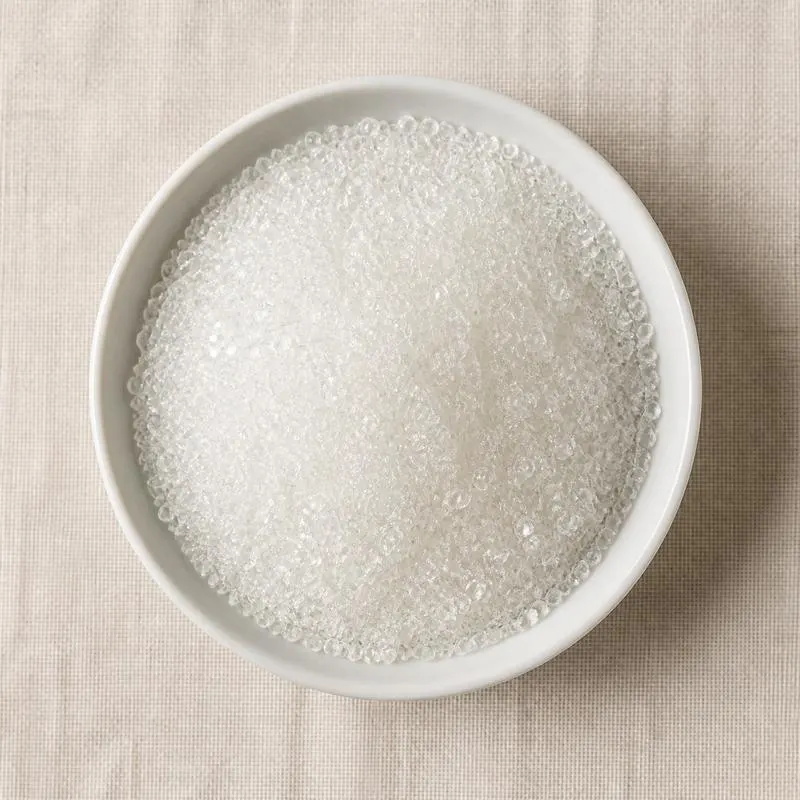
Monosodium Citrate
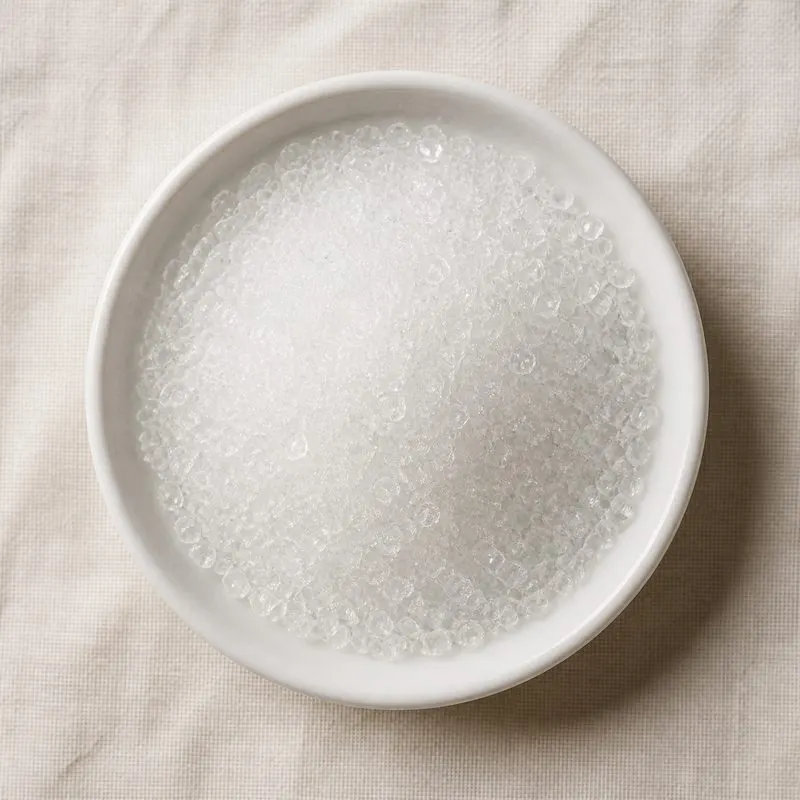
Monosodium citrate is the mono-substituted sodium salt of citric acid, formula NaH2C6H5O7, in which only one of the three carboxyl groups has been neutralised. That leaves it acidic in solution, which is what separates it commercially from the disodium and trisodium salts: it buffers on the acid side of the range rather than at neutral pH, and contributes sourness as well as pH control.
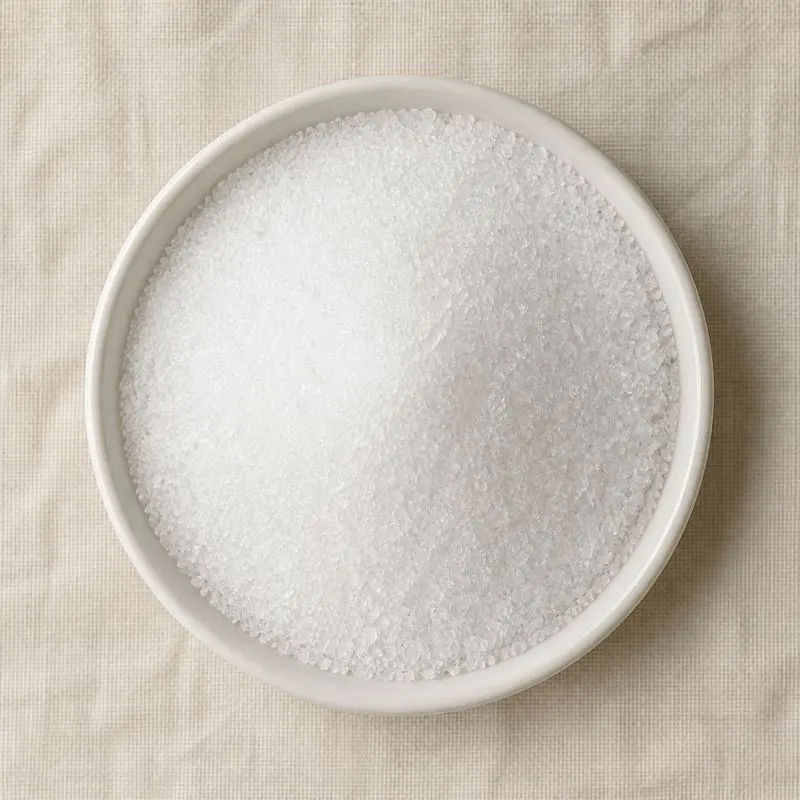
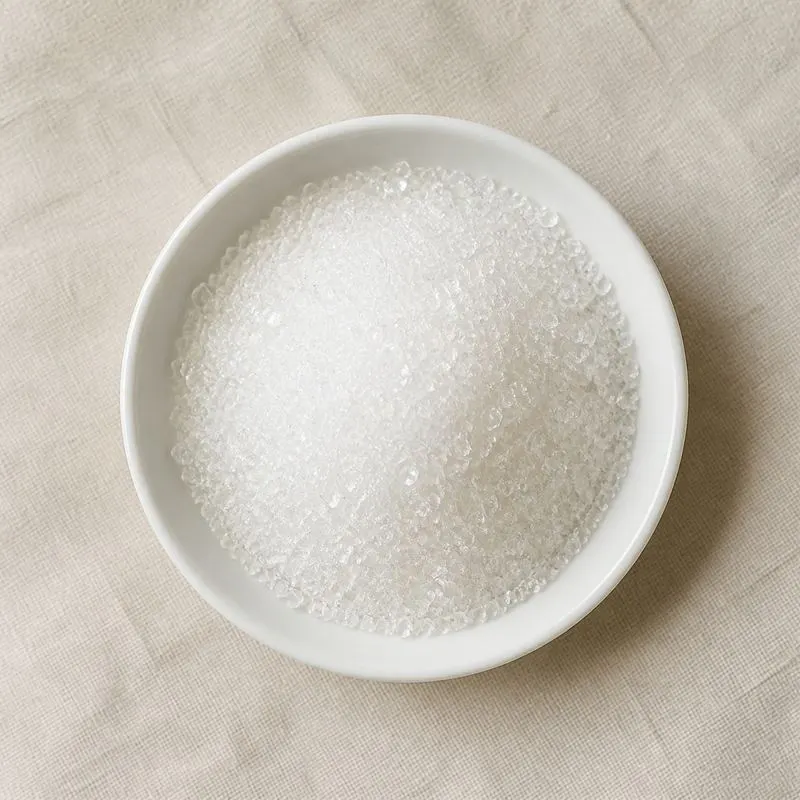
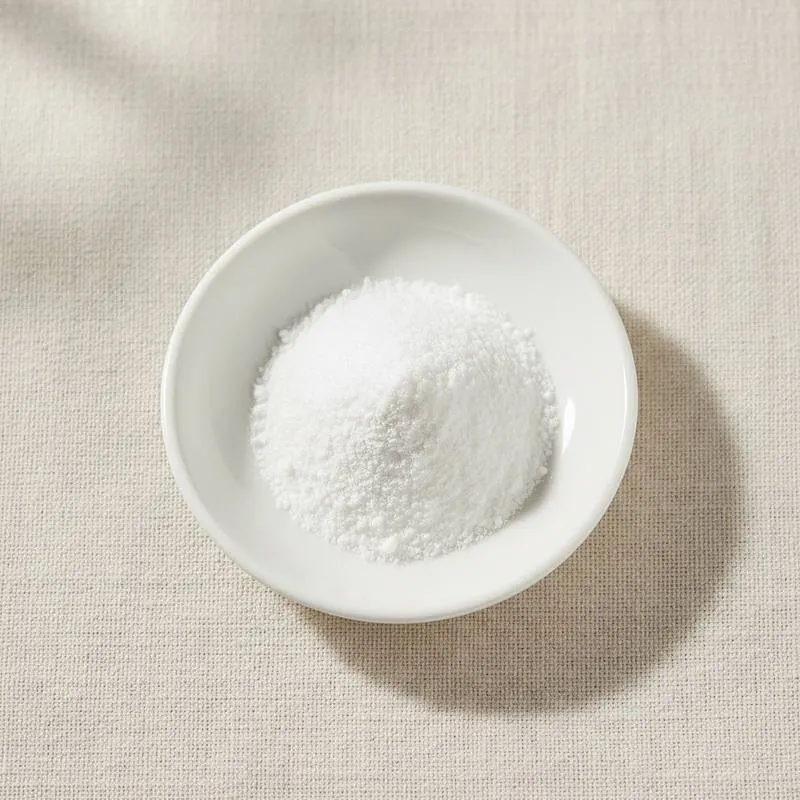
It is a white crystalline powder or granule, odourless, with a tart saline taste much softer than free citric acid at the same acidity. Solubility in water is high, above 70 g per 100 mL at room temperature, and a one percent solution measures roughly pH 3.5 to 3.8. It is practically insoluble in ethanol.
The salt is normally traded anhydrous and is only mildly hygroscopic, so it flows and blends better than citric acid monohydrate in dry systems. It is stable through spray drying, tabletting and pasteurisation, and retains the sequestering behaviour of the citrate ion, binding calcium, magnesium, iron and copper. That combination of buffering, mild acidity and chelation is why it appears in effervescent and mineral fortified systems where free acid would be too aggressive.
We source bulk Monosodium Citrate from top China manufacturers for our partners. The manufacturers are in Jiangsu and Shandong. A smaller requirement can ship in a combined container with other ingredients.
Please send the grade you need, the volume and your destination port, and we will come back with a solution and a price.
or call +86-21-6858 0751
Specifications
| Item | Specification |
|---|---|
| Appearance | White crystalline powder or granule |
| Odour and Taste | Odourless, tart saline |
| Assay, dried basis | 99.0 to 100.5 percent |
| Identification | Positive for sodium and for citrate |
| pH, 1 percent solution | 3.5 to 3.8 |
| Loss on Drying, 180 degrees Celsius | Not more than 1.0 percent |
| Clarity of Solution | Clear, free from insoluble matter |
| Readily Carbonisable Substances | Passes test |
| Oxalate | Not more than 100 mg per kg |
| Chloride | Not more than 0.005 percent |
| Sulphate | Not more than 0.015 percent |
| Lead | Not more than 0.5 mg per kg |
| Arsenic | Not more than 1 mg per kg |
| Total Plate Count | Not more than 1000 cfu per g |
Common Markets Grades
Monosodium citrate is essentially a single specification article. Food grade anhydrous material at 99 percent minimum assay on the dried basis covers almost all trade, meeting the food chemical and pharmacopoeial monographs, and there is no meaningful split into feed or technical qualities. A pharmaceutical grade to the same assay is produced for effervescent and oral rehydration formulations, differing in tighter microbiological and heavy metal limits rather than in purity.
Where offers differ is in particle size and bulk density. Fine powder passing 80 mesh is used for instant powders and dry blends that must dissolve quickly. Granular grades in the 20 to 60 mesh range are specified for direct compression tabletting and for effervescent tablets, where free flow and low dust are more important than dissolution speed. Agglomerated low density material is made for sachet and stick pack products that must take up water without lumping.
Applications
- Effervescent tablets and powders, as the acid component paired with sodium bicarbonate, giving a gentler reaction than citric acid alone
- Oral rehydration salts, as the citrate source that corrects acidosis and buffers the glucose and electrolyte solution
- Carbonated and still soft drinks, as a buffering acidulant that holds pH without the sharp attack of free citric acid
- Sports and electrolyte beverages, as a sodium and citrate source that also sequesters trace metals and protects added vitamins
- Dairy desserts and cultured products, as a pH regulator that prevents protein aggregation during heat treatment
- Jams, jellies and fruit fillings, as part of the buffered acid system that controls the pectin set point
- Confectionery, where it moderates pH so that acid does not hydrolyse gelatin or pectin gels during storage
- Processed cheese, as a minor emulsifying salt used alongside the trisodium salt to fine tune the final pH
- Blood collection and anticoagulant solutions in the pharmaceutical trade
China Manufacturers of Monosodium Citrate
Top Monosodium Citrate manufacturers in China.
 Jiangsu Weizhisheng Food Technology Co., Ltd.6 ingredients in the directory
- Natural Biological Group Co., Ltd.9 ingredients in the directory
Company names and logos are the property of the manufacturers themselves. They are listed here because our own directory records them as producing this ingredient. A listing is not an endorsement by them, and we do not represent them or speak on their behalf.
Regulatory Status
In the United States sodium citrate, which covers the mono, di and tri salts, is affirmed as generally recognised as safe under 21 CFR 184.1751 for use as a buffer, emulsifier, sequestrant and stabiliser at levels consistent with good manufacturing practice. A United States Pharmacopeia monograph covers the pharmaceutical grade used in effervescent and rehydration products.
In the European Union Regulation (EC) No 1333/2008 authorises it as E 331(i), monosodium citrate, within the citrates group E 331, and Regulation (EU) No 231/2012 sets its identity and purity criteria. It is permitted quantum satis across most food categories. JECFA has evaluated the citrate salts as a group and concluded that no numerical limit is required, and monosodium citrate is listed in the Codex General Standard for Food Additives as an acidity regulator, sequestrant and stabiliser.
Manufacturing Process
Production is a partial neutralisation carried out on citric acid, which is itself made by submerged fermentation of a glucose or molasses feedstock with Aspergillus niger. Most monosodium citrate is made in plants integrated with citric acid production, drawing either finished acid or a purified fermentation liquor.
Citric acid solution is reacted with sodium hydroxide or sodium carbonate at a controlled one to one molar ratio; the end point is set by pH rather than by charge weight, since overshooting produces the disodium salt and undershooting leaves free acid in the crystal. The neutral liquor is decolourised over activated carbon to strip residual fermentation colour, then filtered clear and in higher grades polished through ion exchange. Vacuum evaporation brings the solution to supersaturation and controlled cooling crystallisation grows the anhydrous crystal; the temperature profile determines crystal habit and therefore the flow properties of the finished powder. The slurry is centrifuged and the cake washed with clean condensate, then dried in a fluid bed and screened to grade. Oversize is milled and recycled, and granular grades are made by agglomerating fines in a separate fluid bed pass before final drying and packing into moisture barrier bags.