Nicotinamide Riboside Chloride
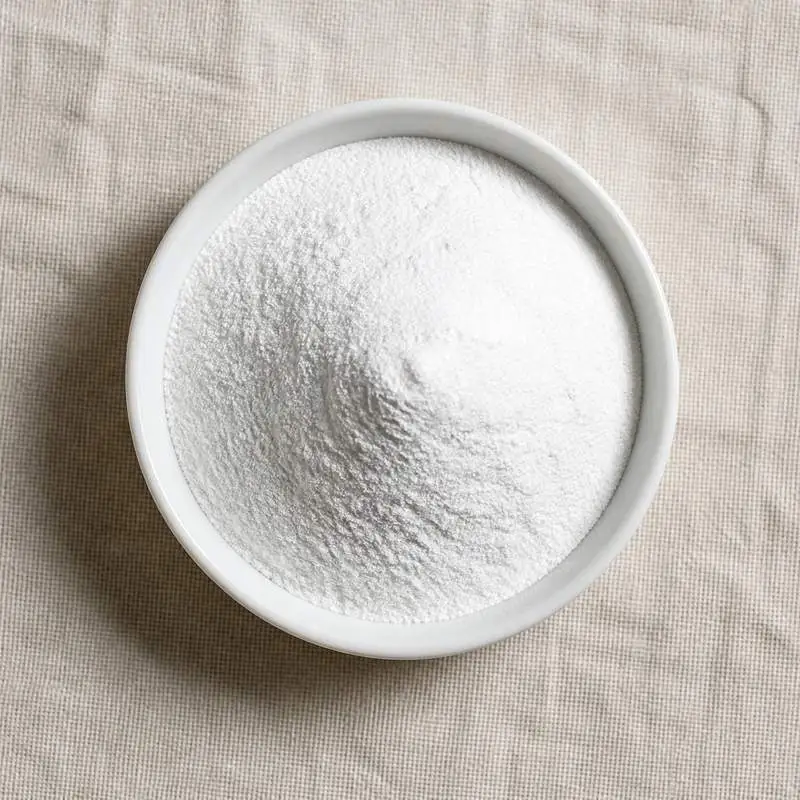
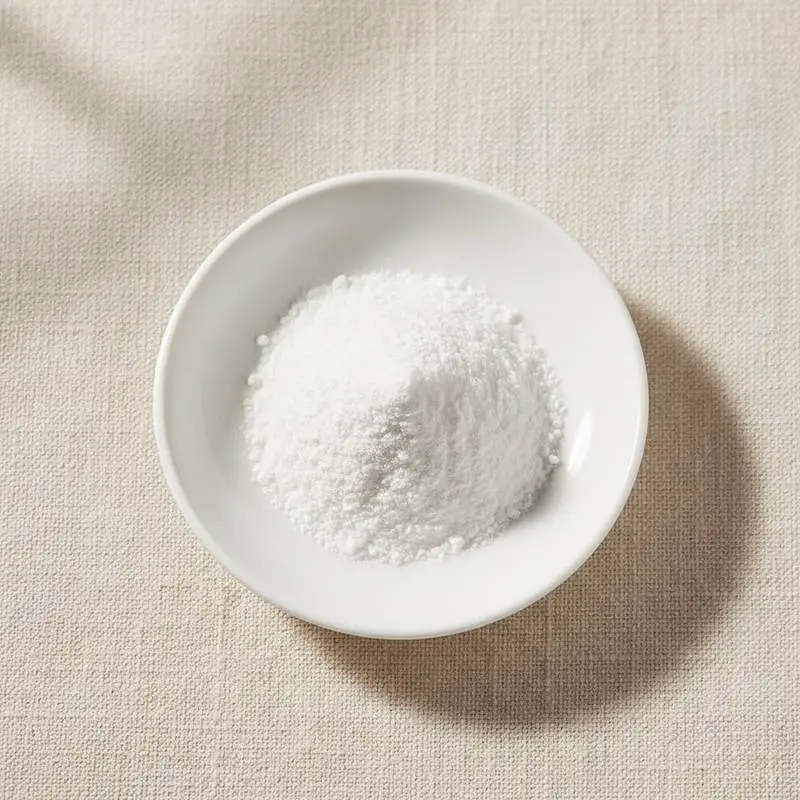
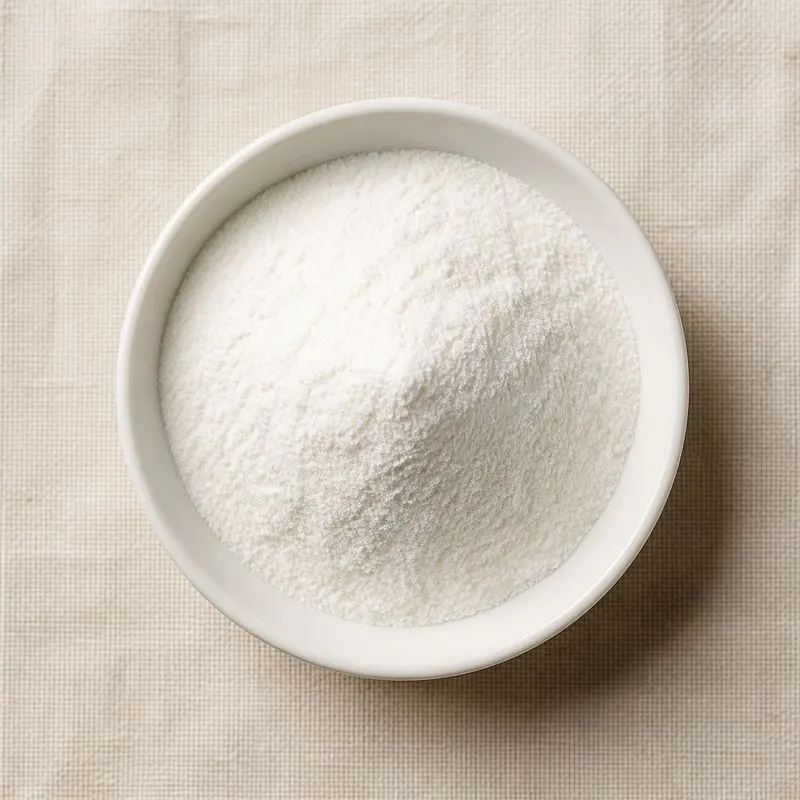
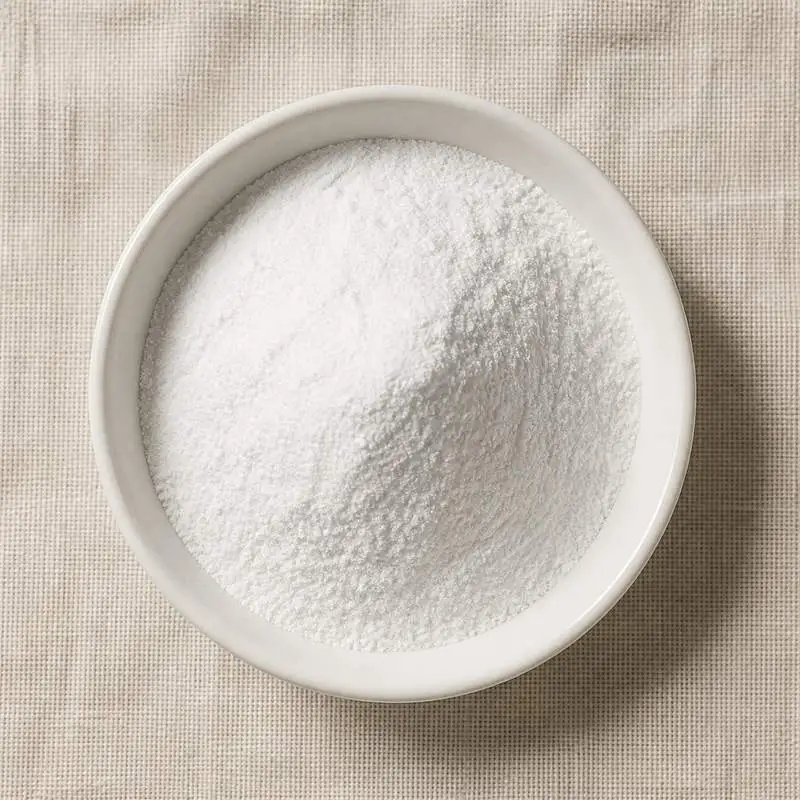
Nicotinamide riboside chloride is the chloride salt of nicotinamide riboside, a pyridinium nucleoside consisting of nicotinamide joined through its ring nitrogen to a ribose sugar, and it is the salt form in which this vitamin B3 derivative is traded. It is a white to off-white crystalline powder, and the chloride counterion is present because the free nucleoside carries a permanent positive charge on the pyridinium ring and cannot be isolated as a neutral molecule.
The compound is a precursor of nicotinamide adenine dinucleotide, entering the salvage pathway through phosphorylation by nicotinamide riboside kinase rather than through the nicotinamide route, and this alternative entry point is the basis of its use in supplements aimed at cellular energy metabolism and healthy ageing. Its molecular weight as the chloride is about 335, of which the nicotinamide riboside cation accounts for roughly 89 percent, and a label declaring the salt therefore states a different figure from one declaring the free base.
The salt is freely soluble in water and hygroscopic to the point of deliquescence, picking up moisture rapidly from the air. Its stability is the main handling issue. The glycosidic bond hydrolyses in aqueous solution to nicotinamide and ribose, and the rate rises sharply with temperature and with pH above about 5, so solutions are held cold and acidic. The dry powder is packed under nitrogen in foil laminate with desiccant and stored refrigerated where a long shelf life is required.
We source bulk Nicotinamide Riboside Chloride from top China manufacturers for our partners. The manufacturers are in Guangdong and Jiangsu. A smaller requirement can ship in a combined container with other ingredients.
Please send the grade you need, the volume and your destination port, and we will come back with a solution and a price.
or call +86-21-6858 0751
- Function
- Nutraceutical
Specifications
| Item | Specification |
|---|---|
| Appearance | White to off-white crystalline powder |
| Odour | Odourless or faint characteristic odour |
| Assay by HPLC, anhydrous basis | Not less than 98.0 percent |
| Identification | Infrared spectrum and HPLC retention correspond to reference standard |
| Beta anomer content | Not less than 99.0 percent of total nicotinamide riboside |
| Nicotinamide | Not more than 1.0 percent |
| Nicotinic acid | Not more than 0.1 percent |
| Chloride content | 10.0 to 11.5 percent |
| Loss on drying | Not more than 1.0 percent |
| Residue on ignition | Not more than 0.5 percent |
| Arsenic | Not more than 1.0 mg/kg |
| Total plate count | Not more than 1000 cfu/g |
| Yeast and mould | Not more than 100 cfu/g |
| Salmonella | Absent in 25 g |
Common Markets Grades
The material is traded as one chemical specification at 98 to 99 percent minimum assay on the anhydrous basis, with the related substances nicotinamide, nicotinic acid and free ribose controlled individually. Nicotinamide is the principal degradation product, and its level is the practical measure of how well a batch has been made and stored. Food and supplement grade and pharmaceutical grade differ in the tightness of the residual solvent, related substance and microbiological limits rather than in the assay.
Physical variation is limited. A standard crystalline powder is used for capsule filling, a milled grade for blend uniformity in low-dose premixes, and a granulated direct compression grade for tabletting. Because the pure salt is deliquescent, coated, microencapsulated and carrier-adsorbed grades are made for applications where the powder has to survive a humid process or a long shelf life alongside hygroscopic excipients, and these state the active content and the carrier explicitly. Anomeric purity, the proportion present as the beta anomer, is a defining specification point, since only the beta form is the biologically relevant species.
Applications
- Cellular energy and healthy ageing supplement capsules, the principal outlet for the material
- Nicotinamide adenine dinucleotide precursor blends formulated with resveratrol, pterostilbene and quercetin
- Sports and endurance supplements sold on mitochondrial function
- Cognitive support formulations combined with choline sources and B vitamins
- Effervescent tablets and drink sticks, where rapid consumption limits hydrolysis in solution
- Sublingual tablets and oral films designed to shorten the time the compound spends in an aqueous environment
- Ready-to-drink functional shots formulated at acidic pH and short shelf life
- Gummies and chewables using a coated or encapsulated grade to survive the moist matrix
- Skin and beauty-from-within formulations, marketed alongside collagen peptides
- Topical cosmetic preparations using the same active, outside food
Brands Using Nicotinamide Riboside Chloride
Widely-distributed consumer products that list Nicotinamide Riboside Chloride on the ingredient label.
- Tru NiagenTru Niagen 300 mg ↗Built on Niagen, the brand's patented nicotinamide riboside, at 300 mg per capsule as an NAD precursor.Label verified 2026-08-31
- NutricostNicotinamide Riboside + Resveratrol ↗Each two-capsule serving supplies 500 mg of nicotinamide riboside with 150 mg of resveratrol and quercetin.Label verified 2026-08-31
- BulkSupplementsNicotinamide Riboside Capsules ↗A single ingredient nicotinamide riboside capsule.Label verified 2026-08-31
Brand names, product names and logos are the property of their owners. They appear here as published evidence that the ingredient is used, taken from the brand's own label or website. Their appearance is not an endorsement, and it does not mean the brand buys from us or from any manufacturer listed on this site.
China Manufacturers of Nicotinamide Riboside Chloride
Top Nicotinamide Riboside Chloride manufacturers in China.
 Hygieia17 ingredients in the directory
- Suzhou Sanyi Polymer Chemical Technology Co., Ltd.9 ingredients in the directory
Company names and logos are the property of the manufacturers themselves. They are listed here because our own directory records them as producing this ingredient. A listing is not an endorsement by them, and we do not represent them or speak on their behalf.
Regulatory Status
In the United States nicotinamide riboside chloride is a lawful dietary ingredient. It has been the subject of new dietary ingredient notifications to FDA and of GRAS notifications covering defined food uses, to which the agency responded with no objection letters. It may therefore be used both in dietary supplements and, within the terms of those determinations, in specified conventional food categories. Claims are limited to structure and function statements with the required disclaimer, and disease claims are not permitted. The chloride content of the salt is a labelling consideration, since the nutrient declaration and the supplement facts panel must be clear about whether the stated quantity refers to the salt or to the nicotinamide riboside cation.
In the European Union nicotinamide riboside chloride has been authorised as a novel food. The authorisation was adopted by Commission implementing regulation in 2020 and entered in the Union list of novel foods established under Regulation (EU) 2015/2283. The authorisation specifies the permitted preparation, restricts its use to food supplements and certain foods for specific groups, and sets maximum use levels and labelling requirements, so lawful use in the Union follows the terms of that listing rather than a general permission. It is not a food additive and carries no E number, and it is distinct from the nicotinamide and nicotinic acid forms of vitamin B3 listed as permitted nutrient sources in Annex II to Directive 2002/46/EC. No health claim relating to nicotinamide riboside has been authorised. Codex Alimentarius has no standard specific to the compound.
Manufacturing Process
Two routes reach the compound. The chemical route builds it from nicotinamide and a protected ribose derivative, most often tetraacetyl ribofuranose or a ribose tetraacetate activated with a Lewis acid such as trimethylsilyl triflate, which couples the nicotinamide ring nitrogen to the anomeric carbon of the sugar with the required beta stereochemistry. The acetyl protecting groups are then removed under mild acidic or basic conditions, and the product is converted to the chloride salt by ion exchange or by treatment with hydrogen chloride in an alcoholic solvent.
The biocatalytic route starts instead from nicotinamide and ribose or from nicotinamide mononucleotide, using a phosphorylase or a phosphatase to make or unmask the nucleoside in aqueous buffer, which avoids the protecting group chemistry and the associated solvents. Whichever route is used, the crude product is purified by chromatography over ion exchange or reversed phase resin, since the related nicotinamide and nicotinic acid must be brought below their limits, and the purified solution is concentrated under vacuum at low temperature. Crystallisation is carried out from an alcoholic solvent under controlled cooling, and the crystals are separated, washed and dried under vacuum at low temperature to protect the glycosidic bond. Drying to a low residual moisture is essential given the hygroscopicity of the salt, and the dried solid is milled, sieved and packed under nitrogen with desiccant in a dehumidified room.