Oat Dietary Fibre
Oat dietary fibre is the concentrated fibre fraction of the oat grain, Avena sativa, recovered mainly from the bran layer. It contains two functionally distinct fractions. The soluble fraction is beta-glucan, a linear mixed-linkage polymer of glucose joined by beta-1,3 and beta-1,4 bonds, which dissolves to give a viscous solution and is the component behind the cholesterol and blood glucose claims associated with oats. The insoluble fraction is cellulose, hemicellulose and lignin from the cell wall and hull, which does not dissolve and acts by bulking.
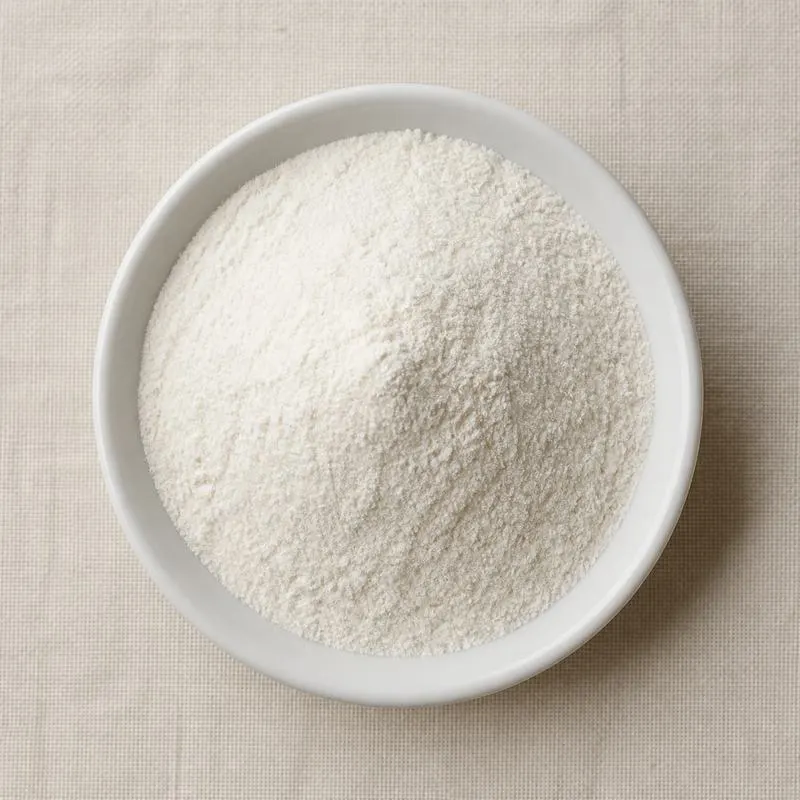
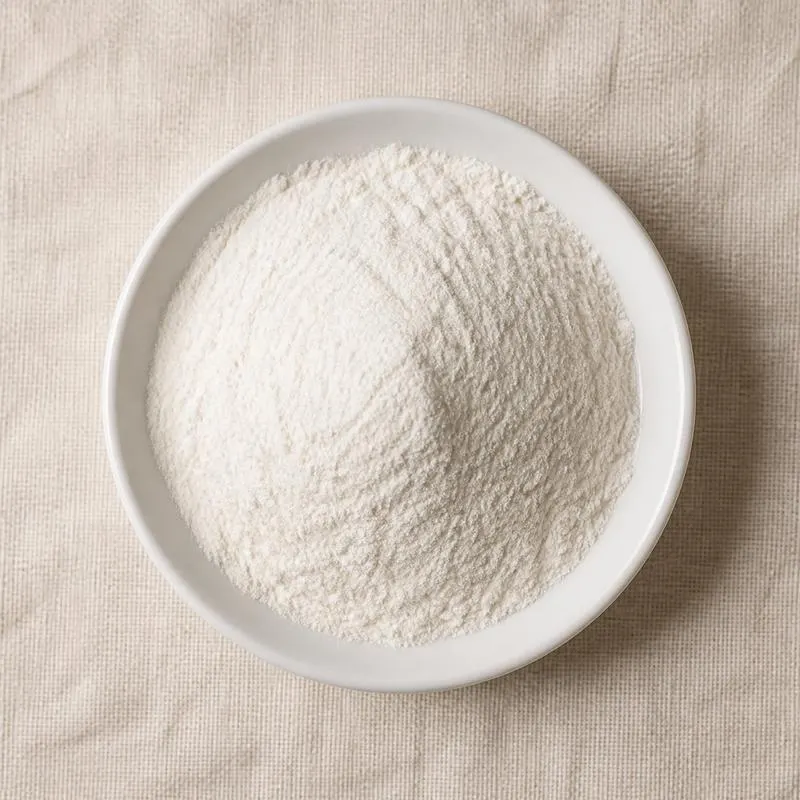
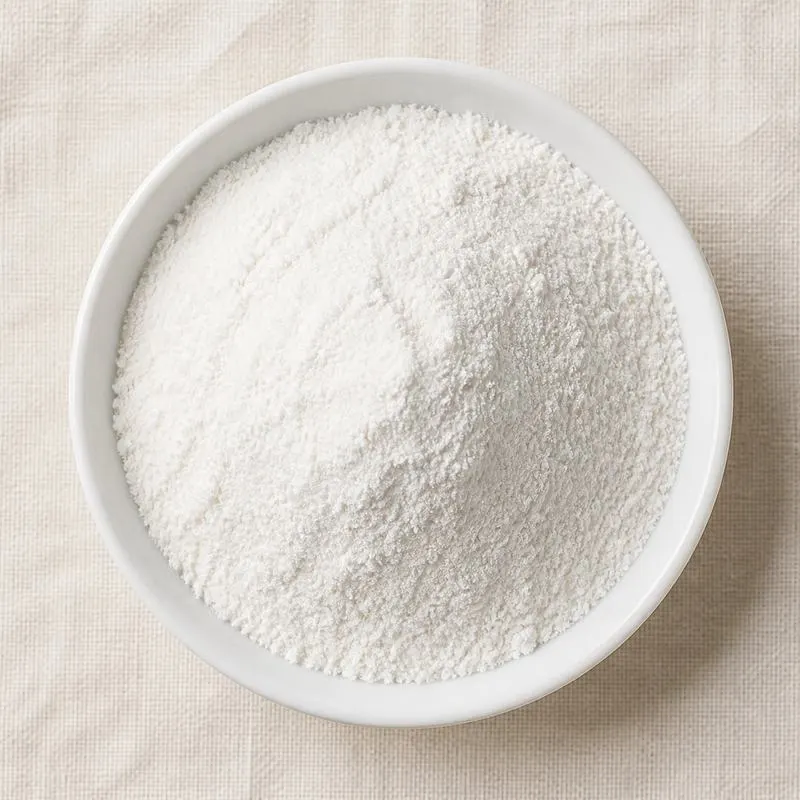
Commercial material spans that whole range. Oat bran concentrates carry perhaps 15 to 25 per cent total fibre with beta-glucan at 8 to 22 per cent; purified beta-glucan concentrates reach 70 per cent or more and are sold on beta-glucan assay alone; oat hull fibre sits at the other end, above 85 per cent insoluble fibre with almost no beta-glucan. The powders are cream to light brown, with a mild cereal flavour.
Hydration behaviour decides how the material is used. Beta-glucan-rich grades build viscosity in water and are limited by how much thickening a formulation will tolerate; hull grades hold water without dissolving and are used for bulking, water binding and calorie reduction. Beta-glucan viscosity is degraded by the grain's own beta-glucanase and by malt beta-glucanase, so enzyme control during processing is central to the value of the product.
We source bulk Oat Dietary Fibre from top China manufacturers for our partners, working with several of them. The manufacturers are in Hebei and Henan. A smaller requirement can ship in a combined container with other ingredients.
Please send the grade you need, the volume and your destination port, and we will come back with a solution and a price.
or call +86-21-6858 0751
- Function
- Dietary Fibres
Specifications
| Item | Specification |
|---|---|
| Appearance | Cream to light brown free-flowing powder |
| Total Dietary Fibre | Not less than 30.0 per cent on dry basis |
| Beta-Glucan | Not less than 16.0 per cent (concentrate grade) |
| Protein | 10.0 to 20.0 per cent |
| Fat | Not more than 9.0 per cent |
| Moisture | Not more than 10.0 per cent |
| Ash | Not more than 4.0 per cent |
| Gluten | Not more than 20 mg/kg for gluten-free grade |
| Lead | Not more than 0.5 mg/kg |
| Cadmium | Not more than 0.1 mg/kg |
| Total Plate Count | Not more than 10000 cfu/g |
| Yeast and Mould | Not more than 100 cfu/g |
| Escherichia coli | Absent in 1 g |
| Salmonella | Absent in 25 g |
Common Markets Grades
Grading is by beta-glucan content first. Bran-based grades at 8 to 22 per cent beta-glucan are the high volume grade for bakery and breakfast cereal. Concentrates at 30 to 70 per cent, produced by air classification or by wet processing, go into supplements, beverages and products carrying a heart-health claim, where the label needs a stated quantity per serving. Oat hull fibre at 85 per cent or more total dietary fibre, essentially insoluble, is a separate product traded for bulking and water binding.
Within each type, particle size options run from coarse bran flakes through 60 to 100 mesh general purpose powders to superfine grades below 200 mesh for beverages. Molecular weight of the beta-glucan is specified where viscosity matters, since hydrolysed low molecular weight material dissolves easily but delivers much less thickening. Food grade is the standard; organic and gluten-free certified lots are widely traded, the latter requiring segregated oat supply and testing because oats are commonly contaminated with wheat, barley and rye in the field and in transport.
Applications
- Breakfast cereals, muesli and granola, as the fibre and beta-glucan carrier in the base formulation
- Bread, rolls and flat breads, raising fibre content and improving crumb softness through water retention
- Biscuits, cereal bars and baked snacks, where the mild cereal flavour suits the base
- Instant oat drinks and porridge sachets, using the finer grades to avoid grittiness
- Plant-based milk and yoghurt alternatives, where beta-glucan contributes body and mouthfeel without added gum
- Soups, sauces and dressings, as a fat mimetic that supplies creaminess at reduced fat
- Meat products and analogues, binding water and improving slice integrity
- Dietary supplements and fibre powders sold on beta-glucan content
- Infant and toddler cereals, where oat is a common early grain
Brands Using Oat Dietary Fibre
Widely-distributed consumer products that list Oat Dietary Fibre on the ingredient label.
Brand names, product names and logos are the property of their owners. They appear here as published evidence that the ingredient is used, taken from the brand's own label or website. Their appearance is not an endorsement, and it does not mean the brand buys from us or from any manufacturer listed on this site.
China Manufacturers of Oat Dietary Fibre
Top Oat Dietary Fibre manufacturers in China.
- Root Fiber Bioengineering Co., Ltd.5 ingredients in the directory
- Zhangjiakou Beiyan Oat Food Development Co., Ltd.3 ingredients in the directory
- Zhangjiakou Beta Biotechnology Co., Ltd.2 ingredients in the directory
Company names and logos are the property of the manufacturers themselves. They are listed here because our own directory records them as producing this ingredient. A listing is not an endorsement by them, and we do not represent them or speak on their behalf.
Regulatory Status
Oat fibre and oat beta-glucan are food ingredients rather than additives. In the United States the Food and Drug Administration has authorised a health claim linking beta-glucan soluble fibre from whole oats to reduced risk of coronary heart disease, set out in the food labelling regulations, with a minimum quantity per serving required for a food to bear the claim. Oat beta-glucan is recognised as a dietary fibre for Nutrition Facts labelling purposes. Oat bran, oat flour and oat beta-glucan preparations used in food have generally recognised as safe status based on their history of use.
In the European Union, oat beta-glucan carries authorised health claims under Regulation (EC) No 1924/2006 relating to the maintenance of normal blood cholesterol concentrations and to the reduction of post-prandial glycaemic response, each subject to the specific conditions of use published with the authorisation. Fibre content is declared under the nutrition labelling rules of the Food Information to Consumers Regulation. Cereals containing gluten, including oats, appear in the allergen list, and oats may be handled as gluten-free only where they satisfy the requirements for gluten-free labelling. Codex covers oat products through commodity and labelling standards rather than through an additive specification.
Manufacturing Process
Oats are cleaned, dehulled and kilned. Kilning is a controlled heat treatment that deactivates the lipase which would otherwise turn the oat lipid rancid within weeks, and it also inactivates the beta-glucanase that degrades the beta-glucan chain. The kilned groats are milled and the bran layer is separated from the endosperm by roller milling and sieving, giving an oat bran fraction enriched in beta-glucan. Air classification, which separates by particle density and size in an air stream, raises the beta-glucan level further without any wet processing.
Higher concentrations require wet processing. The bran is slurried in water or dilute alkali under conditions that keep the beta-glucanase inactive, starch and protein are removed enzymatically or by centrifugation, and the beta-glucan is recovered by precipitation with ethanol or by ultrafiltration. The concentrate is dewatered, dried by spray or flash drying, then milled and sieved. Oat hull fibre takes a different line entirely: hulls removed at dehulling are cleaned, heat treated, mechanically refined to open the fibre structure, bleached where a pale colour is required, then dried, milled and classified.