Panax Ginseng Extract
Panax ginseng extract is a concentrated preparation of the dried root of Panax ginseng C.A. Meyer, standardised on its ginsenoside content. The ginsenosides are dammarane-type triterpene saponins, divided into the protopanaxadiol group, which includes Rb1, Rb2, Rc and Rd, and the protopanaxatriol group, which includes Rg1, Re and Rf. These saponins are the reference markers by which the whole trade specifies and prices the material.
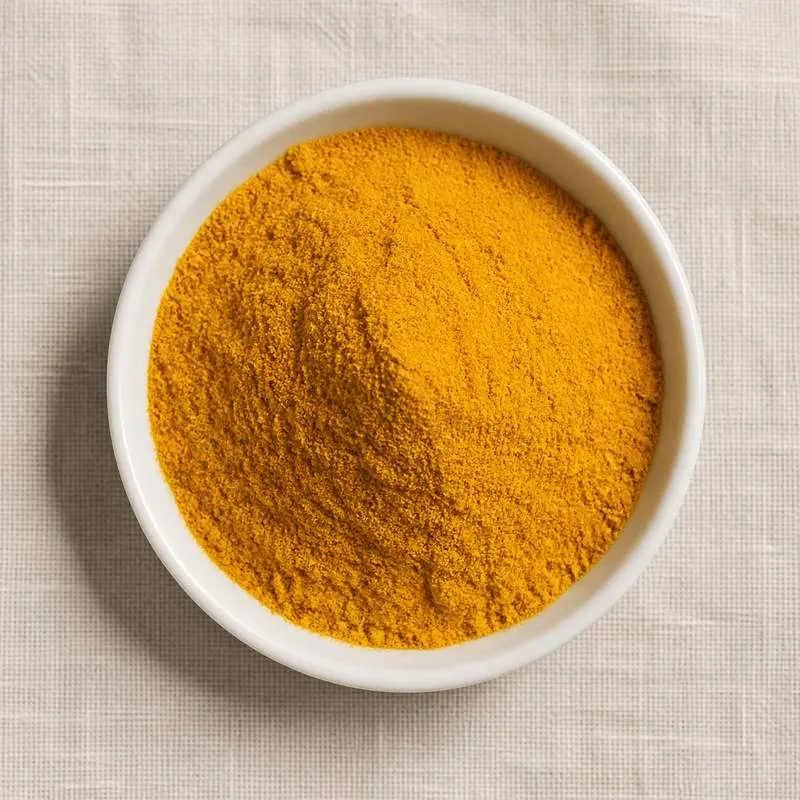
The extract is a fine powder, ranging from light yellowish brown for a low-ratio water extract to a deeper brown for ethanol extracts and red ginseng preparations. Ginsenosides are amphiphilic, so the powder disperses readily in water and in hydroalcoholic systems, giving a slightly turbid solution with a bitter, earthy taste that normally has to be masked. The saponins are stable to ordinary food processing but hydrolyse under strong acid and prolonged heat, which converts the parent glycosides to the less polar Rg3, Rg5 and compound K forms.
Two botanically distinct materials share the shelf and should not be confused. White ginseng extract comes from air-dried root, red ginseng extract from root steamed before drying, a step that alters the saponin profile toward the deglycosylated forms and gives a darker, sweeter product. American ginseng, Panax quinquefolius, and notoginseng, Panax notoginseng, are separate species with different marker profiles.
We source bulk Panax Ginseng Extract from top China manufacturers for our partners. The manufacturers are in Hunan and Jilin. A smaller requirement can ship in a combined container with other ingredients.
Please send the grade you need, the volume and your destination port, and we will come back with a solution and a price.
or call +86-21-6858 0751
- Function
- Plant extract
Specifications
| Item | Specification |
|---|---|
| Botanical Source | Panax ginseng C.A. Meyer, dried root |
| Appearance | Fine yellowish brown to brown powder |
| Total Ginsenosides by HPLC | ≥ 10.0% |
| Identification | Conforms by TLC and HPLC to reference extract |
| Extraction Solvent | Water and ethanol |
| Loss on Drying | ≤ 5.0% |
| Ash | ≤ 5.0% |
| Residual Solvent (Ethanol) | ≤ 5,000 mg/kg |
| Lead | ≤ 1.0 mg/kg |
| Arsenic | ≤ 1.0 mg/kg |
| Total Plate Count | ≤ 10,000 cfu/g |
| Yeast and Mould | ≤ 100 cfu/g |
| E. coli | Negative in 1 g |
| Salmonella | Negative in 25 g |
Common Markets Grades
The commodity grades are quoted on ginsenoside assay and on the method used to measure it, which matters because the two common methods give very different numbers. Extracts sold at 80 percent ginsenosides are measured by ultraviolet spectrophotometry against a colourimetric reaction, while extracts sold at 4, 7, 10 or 20 percent are measured by HPLC against individual reference standards. HPLC grades at 5 to 10 percent total ginsenosides are the ones normally accepted for European and North American supplement work.
Ratio extracts without a saponin claim are also traded, typically 4:1, 10:1 or 20:1 water or hydroalcoholic extracts, used where a whole-root profile rather than a marker level is wanted. Above these sit the enriched fractions: red ginseng extract standardised on Rg3, black ginseng and fermented ginseng extracts standardised on compound K or Rg3, and purified single ginsenosides at 90 percent and above for research and premium formulation. Physical forms run from spray dried powder, the volume grade, to soft fluid extract at 60 to 70 percent solids for jelly and drink work, and granulated or maltodextrin-carried grades for dry blending. Root part is also specified, since main root, lateral root and rootlet carry different saponin levels.
Applications
- Capsule and tablet energy and vitality supplements, the largest single outlet for the standardised powder
- Ginseng drinks, shots and tonics, where the soft fluid extract dissolves without leaving sediment
- Instant ginseng tea and granule sachets reconstituted in hot water
- Sports and pre-workout formulas, combined with caffeine and amino acids
- Functional confectionery, jellies and candies carrying a traditional health positioning
- Herbal liqueurs and fortified wines, where the hydroalcoholic extract is already solvent compatible
- Cosmetic serums, creams and masks, using the saponin fraction for skin conditioning claims
- Traditional herbal medicine preparations reformulated to a defined marker content for export
- Companion animal supplements positioned on vitality in older animals
Brands Using Panax Ginseng Extract
Widely-distributed consumer products that list Panax Ginseng Extract on the ingredient label.
- Nature MadeMulti + Ginseng Capsules ↗Each capsule of this multivitamin supplies 200 mg of Panax ginseng root extract, listed on the label as Asian ginseng.Label verified 2026-08-31
- Nature's WayAsian Ginseng Standardized Extract ↗The supplement facts panel lists Asian ginseng (Panax ginseng) root extract at 550 mg standardised to 7 percent ginsenosides.Label verified 2026-08-31
Brand names, product names and logos are the property of their owners. They appear here as published evidence that the ingredient is used, taken from the brand's own label or website. Their appearance is not an endorsement, and it does not mean the brand buys from us or from any manufacturer listed on this site.
China Manufacturers of Panax Ginseng Extract
Top Panax Ginseng Extract manufacturers in China.
 ACE Biotechnology Co., Ltd.5 ingredients in the directory
 Jilin Province Hongjiu Biotech Co., Ltd.9 ingredients in the directory
Company names and logos are the property of the manufacturers themselves. They are listed here because our own directory records them as producing this ingredient. A listing is not an endorsement by them, and we do not represent them or speak on their behalf.
Regulatory Status
In the United States ginseng root has a long food history and is used as a beverage and food ingredient, while standardised extracts are marketed as dietary ingredients under the Dietary Supplement Health and Education Act, with manufacture under 21 CFR Part 111. Ginseng also appears on the Food and Drug Administration list of substances used as natural flavouring, and the agency has taken enforcement action against ginseng products making disease claims, so labelling language is the practical constraint rather than ingredient status.
In the European Union Panax ginseng root is a traditional food and is not treated as a novel food in its conventional dried or water-extracted forms, though highly concentrated or otherwise unconventional fractions can fall within the novel food Regulation depending on the specification. The European Medicines Agency has published a herbal monograph for ginseng root, which places some presentations in the traditional herbal medicinal product route rather than the food supplement route, and no ginseng health claim appears on the EU register of authorised claims. The European Pharmacopoeia carries a monograph for ginseng root and for ginseng dry extract, and these are the specifications most buyers reference. The World Health Organisation has also published a monograph on Radix Ginseng.
Manufacturing Process
Production begins with dried ginseng root, four to six years old, which is washed, inspected and milled to a coarse powder to open the tissue. For red ginseng the fresh root is steamed before drying, and that thermal step is what shifts the saponin profile. The milled root is extracted by countercurrent percolation or by repeated reflux with hot water or with aqueous ethanol at 50 to 70 percent, the ethanol systems giving higher saponin recovery and a cleaner starch-free liquor.
The pooled extract is filtered and the solvent recovered by vacuum distillation, then the concentrate is passed over macroporous adsorption resin, which binds the ginsenosides while sugars, amino acids and inorganic salts pass through. Washing with water removes the polar impurities and elution with ethanol releases the enriched saponin fraction, and it is this resin step that sets the final assay. The eluate is concentrated under vacuum to a soft extract, standardised against reference material by blending or by adding a maltodextrin carrier, then spray dried or vacuum belt dried to a free-flowing powder, sieved and packed. Where an Rg3 or compound K enriched grade is wanted, an additional acid, thermal or enzymatic conversion step is inserted before the final concentration.