Paprika Red
Paprika red is the purified carotenoid colouring preparation obtained from the fruit of Capsicum annuum, standardised on colour strength and used where an orange red to deep red shade is required from a natural source.
The colouring principles are capsanthin and capsorubin, two ketocarotenoids found only in Capsicum, accompanied by smaller amounts of beta carotene, zeaxanthin and cryptoxanthin. Capsanthin is the major component and accounts for most of the red. Because these are carotenoids rather than water soluble pigments, the neat preparation is oil soluble and will not dissolve in an aqueous system, so it is either dosed into the fat phase of a food or formulated as an emulsion or a dispersion built with polysorbates, modified starch or gum acacia. Shade shifts with concentration and carrier, moving from a clear orange at low dose to a deep red at high dose.
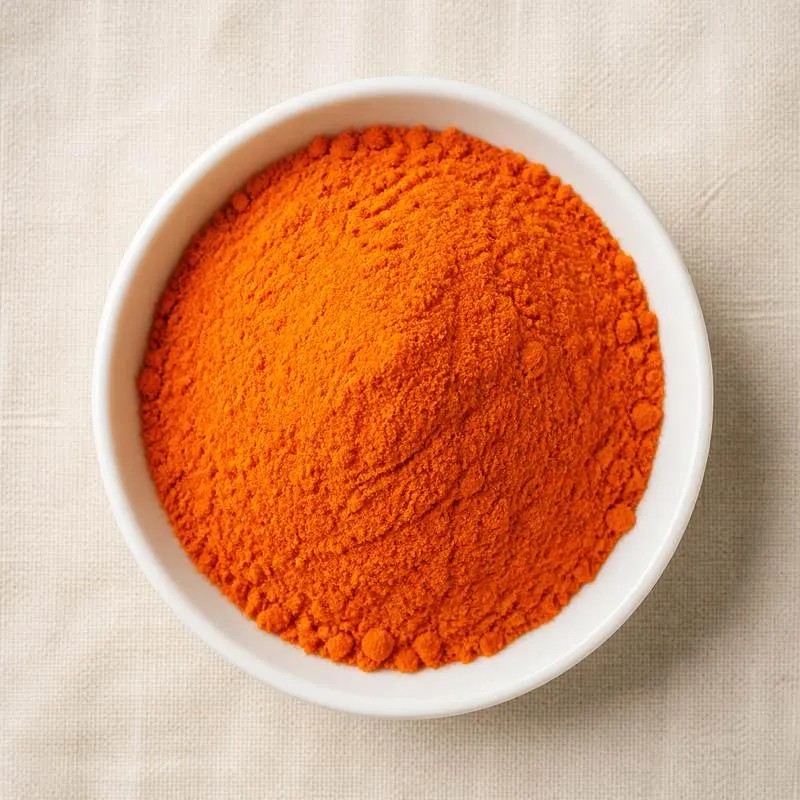
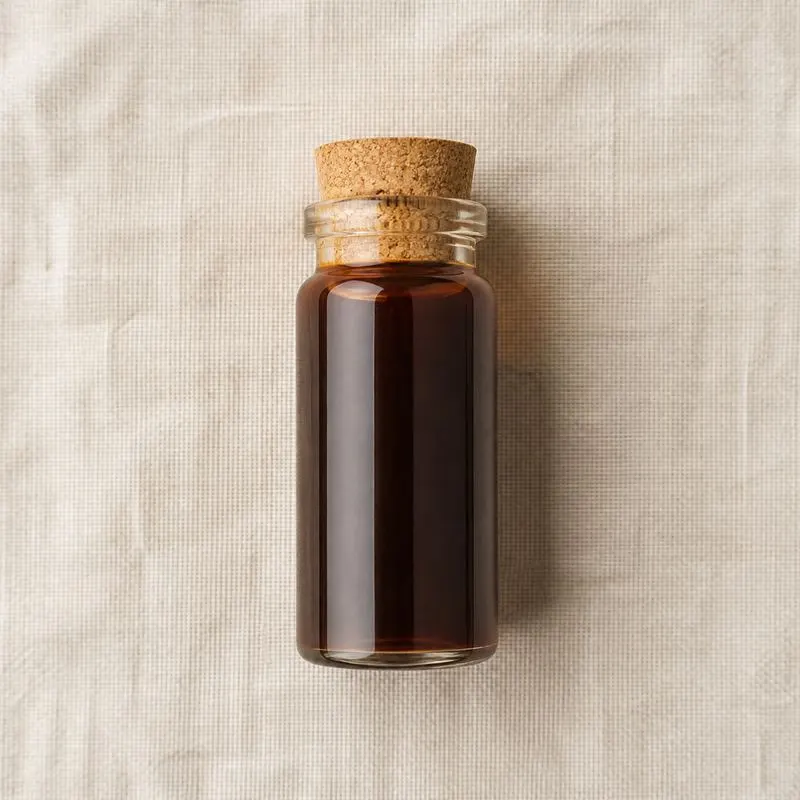
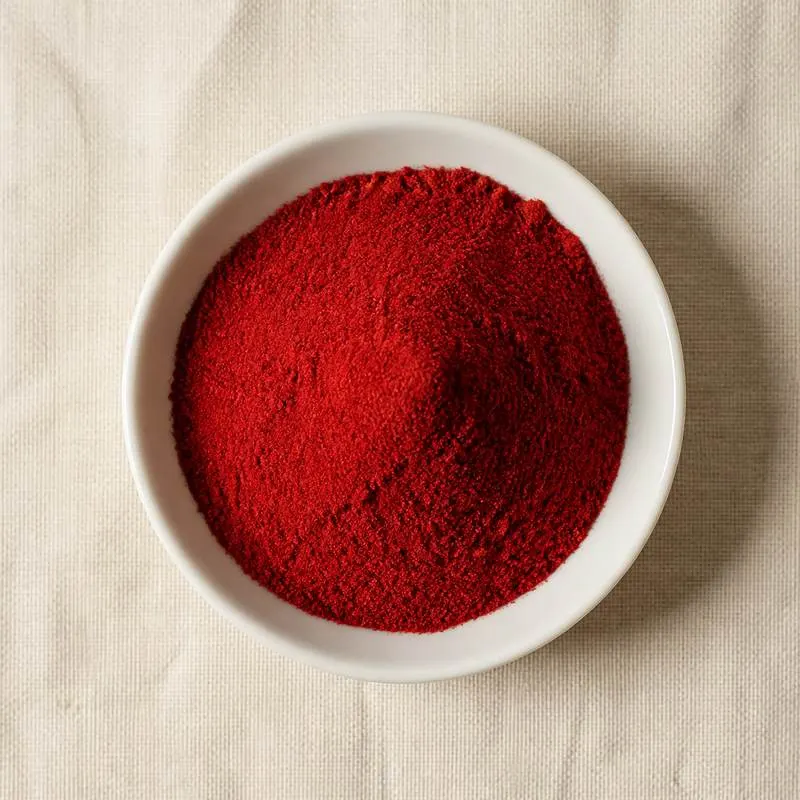
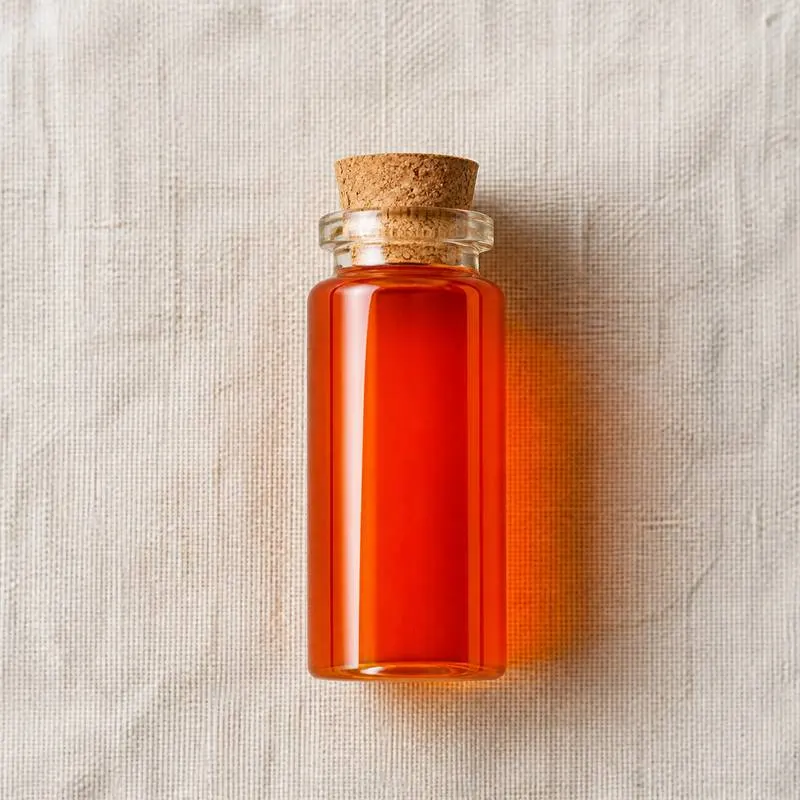
The material is traded as a deep red viscous oleoresin, as a diluted oil solution, as a water dispersible liquid and as a spray dried powder on a carrier, with the colour value rather than the weight being the basis of sale. Its practical weaknesses are light and oxygen sensitivity, which cause fading and the development of oxidised off notes, so preparations carry an antioxidant such as tocopherols or ascorbyl palmitate and are packed in opaque containers under nitrogen.
We source bulk Paprika Red from top China manufacturers for our partners, working with several of them. The manufacturers are mostly in Chongqing, Guangdong and Henan. A smaller requirement can ship in a combined container with other ingredients.
Please send the grade you need, the volume and your destination port, and we will come back with a solution and a price.
or call +86-21-6858 0751
- Function
- Colorant
Specifications
| Item | Specification |
|---|---|
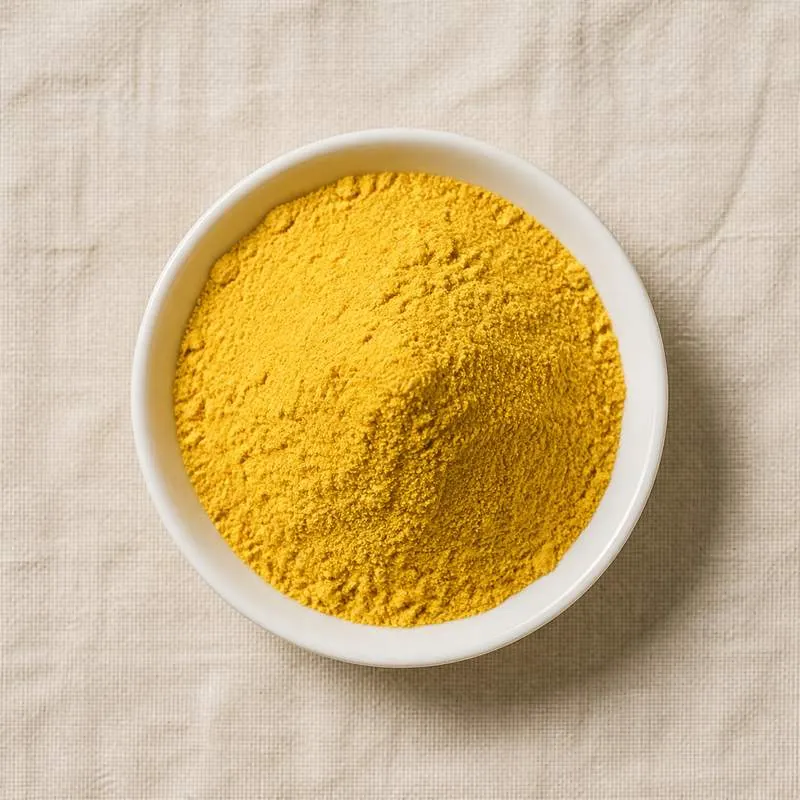
| Appearance | Deep red viscous liquid, dispersion or free flowing powder by grade, orange red to deep red, matched to reference standard |
| Odour and taste | Slight characteristic pepper note, none in deodorised grades |
| Colour value | 40,000 to 100,000 colour units, declared per grade |
| Total carotenoids as capsanthin | 7.0 percent minimum, neat oleoresin |
| Capsaicin | Not more than 250 mg/kg on the colouring principle |
| Solubility | Oil soluble or water dispersible according to grade |
| Residual hexane | 25 mg/kg maximum, solvent extracted grade |
| Sudan dyes and unauthorised colours | Not detected |
| Total aflatoxins | 10 microgram per kg maximum |
| Lead | 2.0 mg/kg maximum |
| Arsenic | 3.0 mg/kg maximum |
| Total plate count | 1000 cfu/g maximum |
| Yeast and mould | 100 cfu/g maximum |
| Salmonella | Negative in 25 g |
Common Markets Grades
Grades are defined by colour value, commonly 40,000, 60,000, 80,000 or 100,000 colour units, and by carrier system, which determines where the colour can be used. Oil soluble grades are diluted in a vegetable oil and go into fat containing foods. Water dispersible grades are emulsified with polysorbate or built into an emulsion with modified starch or gum acacia and are used in beverages, brines and aqueous sauces. Powder grades are spray dried onto maltodextrin or a similar carrier for dry blending into seasonings.
The second axis is pungency. Standard preparations from colour varieties carry only traces of capsaicinoids, while decapsaicinised grades have had the residual pungency removed by partition or chromatography and are specified where any perceptible heat would be a defect. A further distinction is extraction route, between solvent extracted material and supercritical carbon dioxide extracted material sold for a solvent free declaration, and deodorised grades are traded where the pepper flavour must not carry through into the finished food.
Applications
- Processed meat, sausage, salami and marinated products, the largest single outlet
- Surimi, seafood analogues and imitation shellfish, where surface colour is built with a red carotenoid
- Snack seasonings, crisp coatings and extruded snack dusts, using the powder grade
- Sauces, dressings, ketchups and condiment bases
- Cheese, processed cheese and dairy analogues
- Soups, ready meals and retort products
- Bakery and savoury pastry fillings
- Beverages and drink concentrates, using a water dispersible emulsion grade
- Confectionery and coated products where an orange red shade is wanted
- Pet food coatings and palatant systems
Brands Using Paprika Red
Widely-distributed consumer products that list Paprika Red on the ingredient label.
- Quest NutritionLoaded Taco Tortilla Style Protein Chips ↗Protein chips whose ingredient list names paprika extract as a colour, alongside turmeric oleoresin and ground paprika.Label verified 2026-08-31
- Quest NutritionSpicy Sweet Chili Tortilla Style Protein Chips ↗Tortilla style protein chips coloured with paprika extract and turmeric oleoresin according to the ingredient panel.Label verified 2026-08-31
- IRVINSSalted Egg Potato Chips ↗Potato chips whose chili powder seasoning lists paprika oleoresin, the oil soluble red extract of paprika, among its components.Label verified 2026-08-31
Brand names, product names and logos are the property of their owners. They appear here as published evidence that the ingredient is used, taken from the brand's own label or website. Their appearance is not an endorsement, and it does not mean the brand buys from us or from any manufacturer listed on this site.
China Manufacturers of Paprika Red
Top Paprika Red manufacturers in China.
 Chongqing Huacui Bio-technology Co., Ltd.10 ingredients in the directory
 Guangdong Tiansheng Food Technology Co., Ltd.8 ingredients in the directory
- Henan Sunlight Agricultural Hi-Tech Corporation2 ingredients in the directory
- Synthite (Dezhou) Biotech Co., Ltd.4 ingredients in the directory
- Yunnan Borui Bio-tech. Co., Ltd.11 ingredients in the directory
Company names and logos are the property of the manufacturers themselves. They are listed here because our own directory records them as producing this ingredient. A listing is not an endorsement by them, and we do not represent them or speak on their behalf.
Regulatory Status
In the European Union paprika extract, capsanthin and capsorubin is an authorised food colour designated E 160c. The additives regulation sets the food categories in which it may be used and the conditions attaching to each, while the purity criteria regulation fixes its specification, including limits on residual extraction solvent and on capsaicin content in the colouring preparation. It was re evaluated by the European Food Safety Authority as part of the programme covering previously authorised additives. Labelling of a food containing it declares the colour by name or by E number.
In the United States paprika oleoresin is a colour additive exempt from certification, listed in the Food and Drug Administration colour additive regulations at 21 CFR 73.345, with specifications and conditions of use attached to that listing, and the same material used as a flavouring rather than as a colour is handled as a spice oleoresin. Residual extraction solvent is controlled under the requirements applying to secondary direct food additives. The Joint FAO WHO Expert Committee on Food Additives has evaluated paprika extract and it is included in the Codex general standard for food additives. Sudan dyes and other unauthorised colours have been found used to adulterate Capsicum colour preparations, so testing for them is a standing requirement in international trade, and aflatoxin and ochratoxin A limits apply to the dried pepper raw material.
Manufacturing Process
Ripe red Capsicum annuum pods grown for colour rather than heat are dried in the sun or in hot air tunnels, cleaned, destemmed and deseeded, then milled with cooling so that friction heat does not degrade the carotenoids. The milled material is extracted in a countercurrent or batch extractor, using hexane or ethanol as a food grade solvent, or supercritical carbon dioxide where a solvent free product is specified. The resulting miscella is filtered to remove suspended plant solids.
Solvent is stripped from the miscella under vacuum, first in a falling film evaporator and then in a finishing stage that reduces residual solvent to within the specified limit, leaving a crude oleoresin containing both the carotenoids and any capsaicinoids that came through. Where a non pungent product is required, the crude oleoresin is decapsaicinised by liquid partition or by chromatographic separation. The purified oleoresin is analysed for colour value and standardised by dilution with refined vegetable oil to the traded strength, then formulated according to grade: blended with emulsifiers and homogenised for water dispersible liquids, or emulsified and spray dried onto a carbohydrate carrier for powders. Antioxidant is added and the product is packed in lined drums or opaque containers under nitrogen.