Puffed Grain Crispy
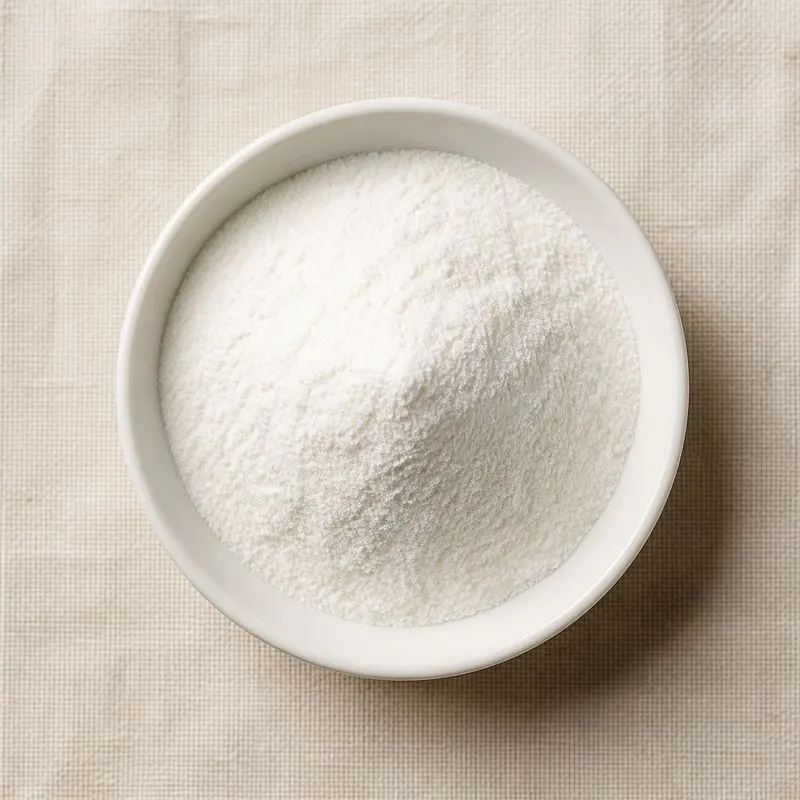
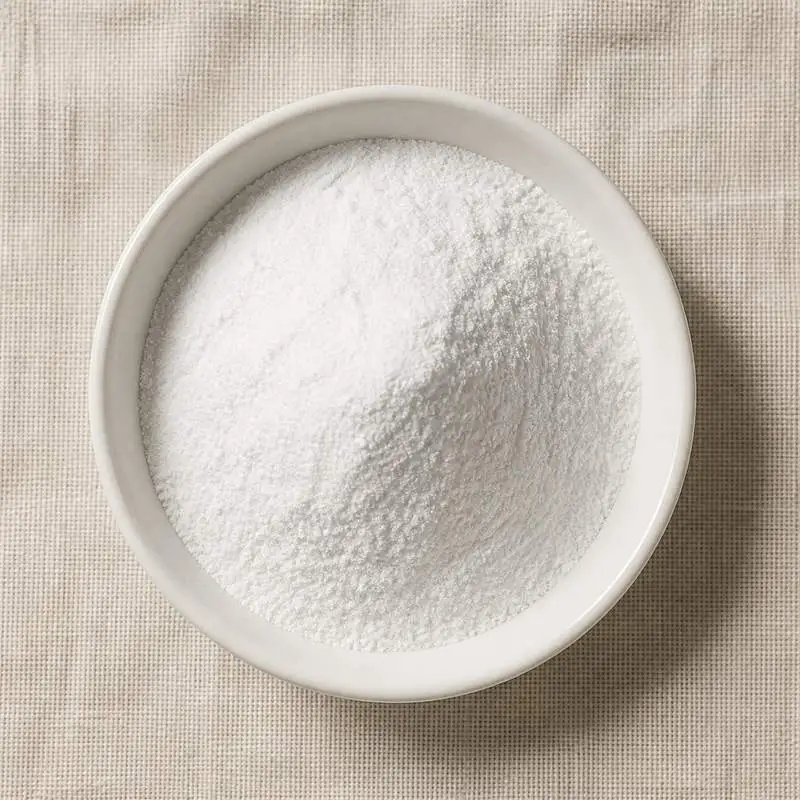
Puffed grain crispy, usually shortened in the trade to crisps or crispies, is a formed expanded cereal piece produced by extrusion rather than by puffing an intact kernel. Cereal flour or grits, often blended with protein, are cooked under pressure in a screw extruder and expanded at the die, then cut into small regular shapes, spheres, cylinders or balls of one to five millimetres, and dried.
The difference from puffed whole grain is structural. Because the matrix is reconstituted from flour, the cell structure can be engineered: the formulator sets density, cell size and wall thickness through the recipe and the extruder profile, which makes it possible to build a piece that is crisp but strong enough to survive mixing into a viscous syrup or a chocolate mass without shattering. Protein crisps, in which soy, whey, pea or rice protein is co-extruded into the matrix at 20 to 90 percent of the piece, are the fastest growing form and let a bar carry protein without the dense chewy texture that a powdered protein gives.
Crisps ship dry at 3 to 5 percent moisture, cream to light brown, free flowing and low in dust when well made. They do not dissolve; they hydrate and go soft, and their entire value in a formulation is the crunch, so water activity below about 0.3 and a moisture barrier between the crisp and any wet phase are the controlling requirements. Fat, chocolate or shellac type sealing coatings are applied where the surrounding matrix would otherwise soften the piece within days.
We source bulk Puffed Grain Crispy from top China manufacturers for our partners. The manufacturer is in Shanxi. A smaller requirement can ship in a combined container with other ingredients.
Please send the grade you need, the volume and your destination port, and we will come back with a solution and a price.
or call +86-21-6858 0751
- Function
- Nutraceutical
Specifications
| Item | Specification |
|---|---|
| Appearance | Uniform extruded pieces, cream to light brown, free of scorched or collapsed pieces |
| Identification | Conforms to extruded cereal crisp of the declared formulation |
| Odour and taste | Clean toasted cereal, free of rancid or bitter notes |
| Piece size | 2.0 to 3.0 mm, 90 percent within range |
| Moisture | 5.0 percent maximum |
| Water activity | 0.30 maximum |
| Bulk density | 0.15 to 0.30 g per cubic centimetre |
| Protein, protein crisp grades | 60.0 percent minimum |
| Fat | 3.0 percent maximum, uncoated grade |
| Fines through 1 mm screen | 2.0 percent maximum |
| Ash | 4.0 percent maximum |
| Lead | 0.2 mg/kg maximum |
| Cadmium | 0.1 mg/kg maximum |
| Acrylamide | 300 ug/kg maximum |
| Total plate count | 1,000 cfu/g maximum |
| Yeast and mould | 100 cfu/g maximum |
| Escherichia coli | Absent in 1 g |
| Salmonella | Absent in 25 g |
Common Markets Grades
Crisps are graded first by composition. Plain cereal crisps are made from rice, maize or wheat flour alone. Protein crisps are graded by protein content and by protein source: soy protein isolate crisps at 60 to 90 percent protein, whey protein crisps at 60 to 80 percent, and pea, rice and milk protein crisps for label reasons or for allergen avoidance. Wholegrain, high fibre and added starch versions cover the remaining formulation needs.
The second axis is physical. Piece size is specified on a screen basis, commonly 1 to 2 mm, 2 to 3 mm and 3 to 5 mm, along with shape, bulk density and, critically, crush strength, which predicts how much of the piece will survive the shear of a bar mixer. Fines tolerance is specified for the same reason.
Surface treatment is the third. Uncoated crisps are used in dry blends; oil or fat sealed crisps are specified for bars with a moderate water activity; chocolate, compound and sugar coated crisps are used both to seal and to flavour. Buyers also specify gluten free certified rice and maize crisps, non-GMO and organic certified material, and allergen segregated production where a soy or dairy protein is not acceptable in the finished product.
Applications
- Protein and cereal bars, the dominant outlet, where crisps supply crunch and, in the protein grades, a large part of the bar's protein content
- Chocolate confectionery, where crisps are folded into a chocolate mass to give an aerated bite at low added weight
- Coated and enrobed snacks, where crisps are the crunchy centre under a chocolate or yoghurt coating
- Breakfast cereals and cluster granola, where formed crisps give a uniform piece that whole grain puffing cannot
- Yoghurt and dessert topper packs, where the crisp is kept dry in a separate compartment until use
- Ice cream inclusions, where fat sealed crisps hold their texture through frozen storage
- Meal replacement and weight management products, where crisps raise protein and lower perceived density
- Dry beverage and smoothie toppers, where small crisps are used as a textural garnish
- Compressed and moulded snack products, where crisps are bound with syrup into clusters and bites
- Pet treats and functional animal snacks, where extruded crisps carry protein and palatants
China Manufacturers of Puffed Grain Crispy
Top Puffed Grain Crispy manufacturers in China.

Company names and logos are the property of the manufacturers themselves. They are listed here because our own directory records them as producing this ingredient. A listing is not an endorsement by them, and we do not represent them or speak on their behalf.
Regulatory Status
In the United States extruded cereal crisps are conventional foods requiring no additive clearance, assembled from ordinary food ingredients by a physical cooking process, and are regulated under the general adulteration and labelling provisions of the Federal Food, Drug, and Cosmetic Act. Each declared ingredient carries its own status: protein isolates are conventional food ingredients, while any added colour must be a listed colour additive and any added vitamin must be used consistent with the FDA fortification policy. Allergen labelling is the operational issue in this category, since soy, milk and wheat proteins are common in the matrix and must be declared under the Food Allergen Labelling and Consumer Protection Act; gluten free claims on rice and maize crisps require compliance with 21 CFR 101.91. Acrylamide formation during extrusion of cereal is recognised, and the FDA has issued non binding guidance on its reduction.
In the European Union extruded crisps are ordinary foods under general food law, and extrusion is a conventional process that does not bring the product within the Novel Food Regulation unless a novel ingredient is included in the matrix. Cereals containing gluten, soy and milk must be declared under the Food Information to Consumers Regulation. The product falls within Regulation (EU) 2017/2158 on acrylamide, which sets out mitigation measures and benchmark levels for cereal based products, and operators must apply the mitigation measures appropriate to the process. Regulation (EC) No 1333/2008 governs the additives used in the recipe, and statutory maximum levels for mycotoxins, lead and cadmium apply to the cereal raw material. Codex Alimentarius covers the product through its general standards for food additives and contaminants and its code of practice for the reduction of acrylamide in foods.
Manufacturing Process
Production starts as a dry blend. Cereal flour or fine grits, protein isolate or concentrate where a protein crisp is being made, starch, and minor ingredients such as salt, sugar, emulsifier and colour are weighed and mixed to a uniform premix. Particle size of the flour and the protein matters, because coarse material gives an uneven cell structure and a weak piece.
The premix is metered into a twin screw extruder with water injected in the first zone. Along the barrel the material is sheared, heated to between 120 and 170 degrees Celsius and taken to a pressure of 20 to 60 bar, which cooks the starch, denatures and aligns the protein, and forms a continuous melt while keeping the moisture liquid. Screw configuration, barrel temperature profile, moisture and throughput are the variables that set the density and crush strength of the finished crisp.
At the die the melt is forced through small orifices and the pressure drops to atmospheric. The superheated water flashes to steam and expands the melt into a foam, which is cut immediately by a rotating face cutter into the target piece size and shape. The pieces leave at 8 to 12 percent moisture and are dried in a belt or fluidised bed drier at moderate temperature to 3 to 5 percent, then cooled, which sets the glassy structure that gives the crunch.
Dried crisps are screened to remove fines and oversize, and either packed directly or passed to a coating drum where oil, chocolate, compound coating or sugar syrup is applied and set in a cooling tunnel. Finished material is passed over magnets and metal detection and packed in moisture barrier film or lined cartons, handled with as little free fall as possible because the pieces break on impact.