Sugar Cane Extract
Sugar cane extract is a family of concentrated preparations made from Saccharum officinarum, drawn either from the cane juice and its clarification streams or from the wax that coats the stalk rind, and traded on whichever fraction the buyer wants: polyphenols, policosanol long-chain alcohols, or the mixed mineral and flavour solids of unrefined cane juice.
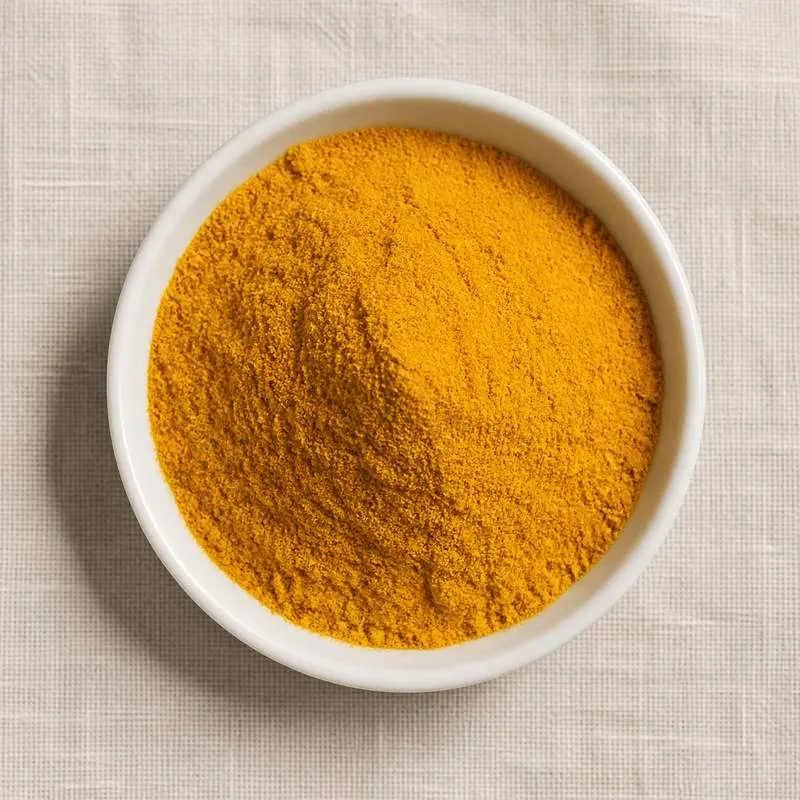
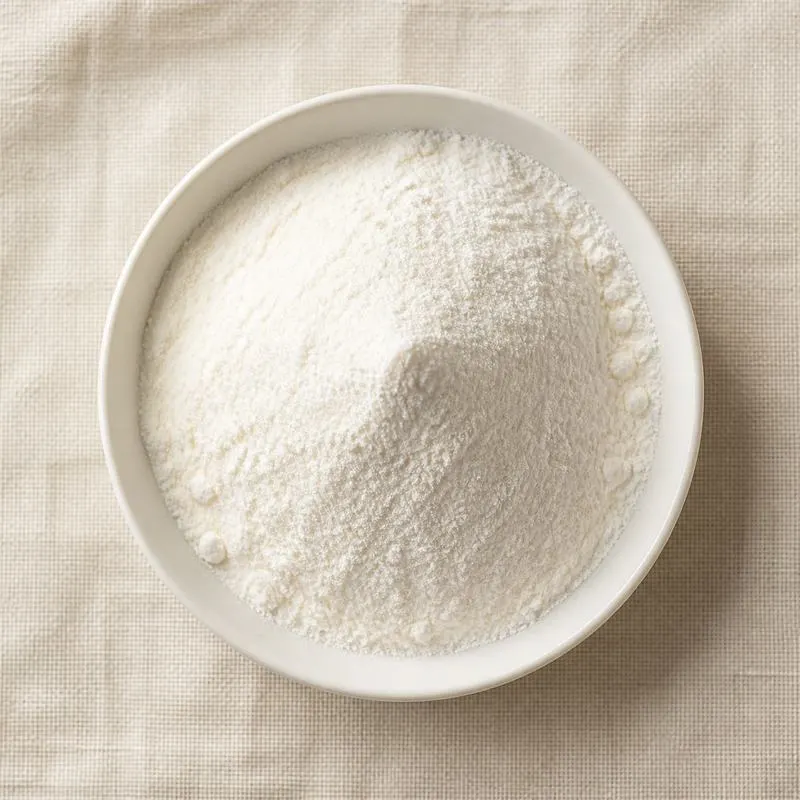
The polyphenol grades carry flavones of the tricin and apigenin series along with hydroxycinnamic acids such as chlorogenic and caffeic acid, and are pale to mid brown water-soluble powders. The policosanol grades are a defined mixture of saturated primary aliphatic alcohols, dominated by octacosanol with hexacosanol, triacontanol and dotriacontanol alongside, recovered from cane wax; these are white to off-white powders, insoluble in water and dispersible only in oils and hot solvents. A third and simpler grade is dried cane juice solids, which is not a selective extract at all but the evaporated juice, sold for its molasses flavour and mineral content.
Solubility therefore splits the family in two, and it decides application. Polyphenol and juice-solid grades dissolve readily in water and in aqueous ethanol and are stable through pasteurisation, browning further under prolonged heat. Policosanol grades melt above about 75 degrees Celsius, are chemically inert and heat stable, and reach a formulation only through an oil phase, a solid dispersion or an emulsified carrier.
We source bulk Sugar Cane Extract from top China manufacturers for our partners. The manufacturer is in Zhejiang. A smaller requirement can ship in a combined container with other ingredients.
Please send the grade you need, the volume and your destination port, and we will come back with a solution and a price.
or call +86-21-6858 0751
- Function
- Plant extract
Specifications
| Item | Specification |
|---|---|
| Appearance | Pale to mid brown free-flowing powder |
| Botanical source | Saccharum officinarum, cane juice and mill streams |
| Total polyphenols as gallic acid equivalents | 40.0 percent minimum |
| Identification | Conforms by HPLC fingerprint against reference |
| Total sugars | 10.0 percent maximum |
| Water solubility | Complete at 2 percent, no visible sediment |
| pH of 1 percent solution | 4.0 to 6.0 |
| Loss on drying | 6.0 percent maximum |
| Sulphated ash | 8.0 percent maximum |
| Particle size | 100 percent through 80 mesh |
| Residual ethanol | 0.5 percent maximum |
| Lead | 1.0 ppm maximum |
| Arsenic | 1.0 ppm maximum |
| Total plate count | 10,000 cfu per gram maximum |
| Yeast and mould | 500 cfu per gram maximum |
| Salmonella | Negative in 25 grams |
Common Markets Grades
Polyphenol grades are declared as total polyphenols by the Folin method, commonly 10 to 60 percent expressed as gallic acid equivalents, sometimes with a separate tricin or flavonoid figure. Policosanol grades are declared as total policosanol at 60, 90 or 95 percent with a compositional breakdown by chain length, and octacosanol content is the specification buyers negotiate on, typically 60 percent or more of the total. Dried cane juice solids are traded on colour, on ash and on residual sugar rather than on any marker compound.
Physical forms are spray-dried powder milled to pass 80 mesh for the water-soluble grades, agglomerated instant grades for sachet drinks, and micronised or carrier-adsorbed powder for policosanol where dispersion is the constraint. Non-GMO status is not usually at issue for cane, but organic certification and a declared feedstock, whether juice, filter cake, molasses or rind wax, are routine specification points because they determine what else the extract carries.
Applications
- Cholesterol-management and cardiovascular supplements, using the policosanol grade in tablets and softgels
- Sports and endurance supplements built around octacosanol, a long-established positioning for the material
- Antioxidant supplement capsules and functional drink powders, using the polyphenol grade
- Natural colour and flavour in bakery, cereal and confectionery, using dried cane juice solids for a molasses note
- Skin-care emulsions and body products, where cane-derived glycolic acid precursors and polyphenols are used
- Sugar reduction systems, where cane polyphenol extract is used to restore the mouthfeel and background flavour lost with the sucrose
- Animal feed and pet supplements, using policosanol and cane polyphenol as antioxidant additions
- Fermentation media and yeast nutrients, using cane juice solids and molasses fractions as a carbon and mineral source
China Manufacturers of Sugar Cane Extract
Top Sugar Cane Extract manufacturers in China.

Company names and logos are the property of the manufacturers themselves. They are listed here because our own directory records them as producing this ingredient. A listing is not an endorsement by them, and we do not represent them or speak on their behalf.
Regulatory Status
In the United States dried cane juice and cane syrup solids are conventional food ingredients, though the FDA has advised that the term evaporated cane juice is not an accurate label declaration for what is a sugar, and current guidance directs that such ingredients be declared as sugar. Policosanol and cane polyphenol extracts are marketed as dietary ingredients under the Dietary Supplement Health and Education Act rather than under a food additive regulation; policosanol has an established marketing history, and structure-function claims are permitted with the standard disclaimer while claims about treating raised cholesterol are not.
In the European Union sugar cane extracts have no E number, being food ingredients rather than additives. Cane sugar and cane juice products have a long history of consumption and are not novel. Concentrated policosanol and selectively enriched polyphenol preparations are a different matter and may require assessment under the novel food rules depending on whether significant consumption in the Union before May 1997 can be demonstrated for that specific preparation. No health claim on policosanol has been authorised under the EU nutrition and health claims framework, so cholesterol claims cannot be made in the Union. Codex commodity standards cover sugars and the general standard for contaminants applies to the traded material. JECFA has not adopted a specification for the isolated extracts.
Manufacturing Process
The route depends on the fraction. For polyphenol grades the feedstock is cane juice, the clarifier mud or filter cake from the raw sugar mill, or molasses. The stream is diluted, screened and clarified, then loaded onto a macroporous adsorption resin column, which binds the phenolic compounds while sugars, salts and organic acids pass to waste. The column is washed with water and eluted with aqueous ethanol, the eluate is concentrated under vacuum to recover the solvent, and the concentrate is spray dried and milled to the declared polyphenol assay.
For policosanol grades the feedstock is cane rind wax, recovered either from the filter cake of the mill or by scraping and solvent washing the stalk surface. The crude wax is refined and then saponified with alkali at elevated temperature, which converts the wax esters into fatty acid soaps and frees the long-chain alcohols. The unsaponifiable fraction carrying the alcohols is separated from the soaps by solvent extraction, then purified by repeated crystallisation from an organic solvent, which sharpens the chain-length distribution and raises the octacosanol share. The purified solid is filtered, washed, vacuum dried at moderate temperature, milled and screened. Residual solvent is stripped and verified before release. Dried cane juice solids are made by the simplest route of all: clarified juice is evaporated under vacuum and either spray dried or crystallised without refining.